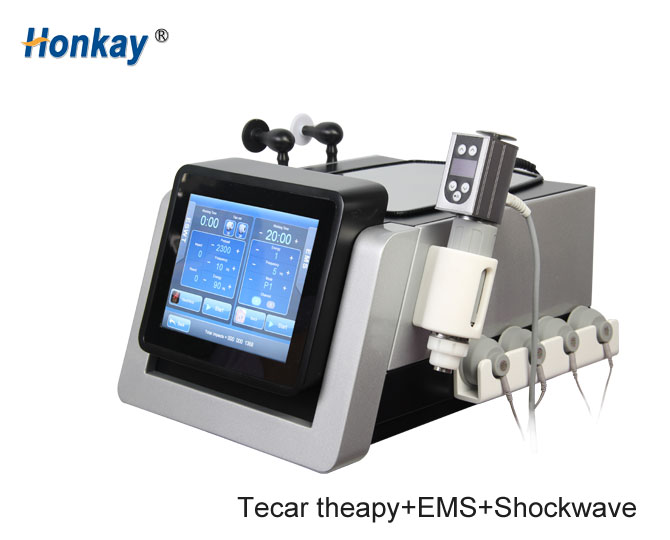
TECAR Therapy Machine: What a 448 kHz System Has to Include
A TECAR therapy machine sits between two familiar categories. It is not an ultrasound unit and it is not a shockwave device: it passes a radiofrequency current through the body between two electrodes, and the tissue in that path heats up as a result. That one difference changes what has to ship in the box, how a session is set up, and which cases the machine can be used on.
This is the equipment side of the decision — what a 448 kHz unit needs to include, how the two electrode families differ, and what to confirm in writing before ordering.
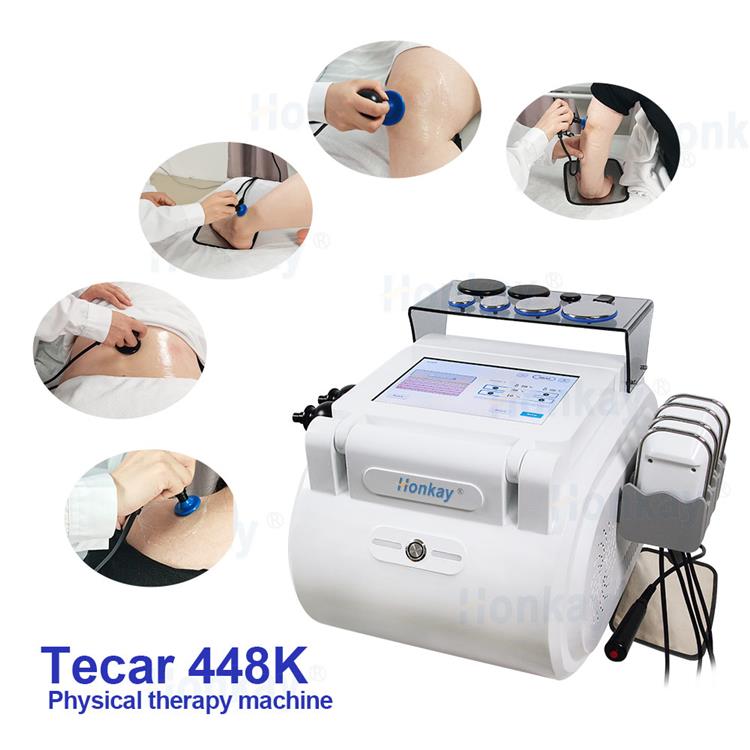
What a TECAR therapy machine does differently
Shockwave delivers mechanical energy from outside the skin. Ultrasound delivers sound waves through a coupling medium. A TECAR therapy machine works by closing a circuit: one electrode is active, the other is a return plate, and the current that travels between them meets resistance in the tissue, which is what produces the heat.
Two practical consequences follow. The treatment is not confined to the spot under the electrode — it works along the whole path between the two contact points. And the operator adjusts depth by changing which electrode is used and how the return path is arranged, not by turning up a power dial.
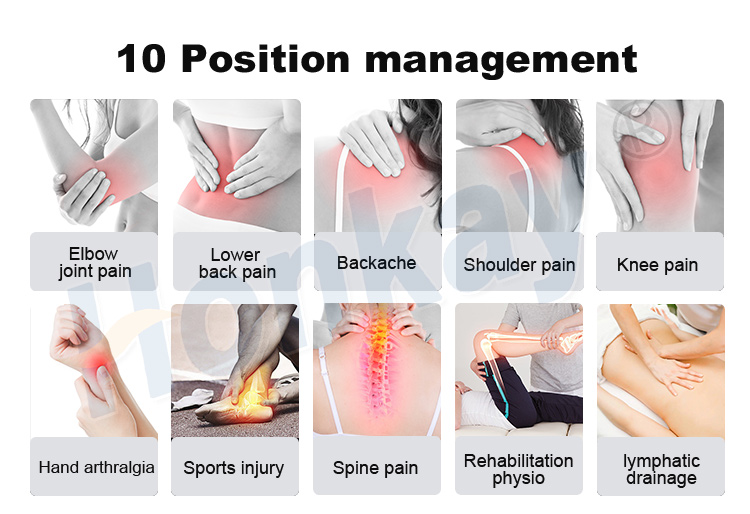
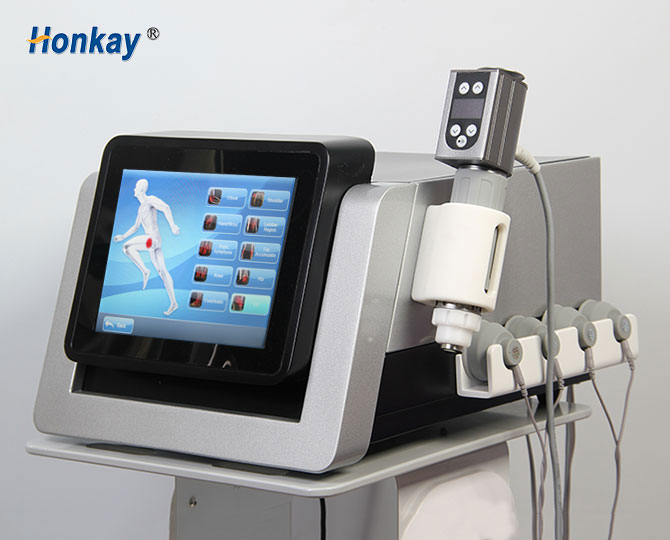
The position list above is the honest picture of where this modality is used in practice: joints, the spine, post-injury rehabilitation and soft-tissue work. It is a broad list, which is exactly why the electrode set matters more than the headline output figure.
CET and RET: two electrode families, two depths
Both operate at the same 448 kHz frequency. The difference is the tip, and the tip decides where the current concentrates.
- CET — capacitive electrodes. The active face is separated from the skin by an insulating layer, so the current has to bridge that gap and spreads as it goes. In practice this is the electrode family used where the target is a broad area of muscle or the tissue just under the skin.
- RET — resistive electrodes. The active face contacts the skin directly, so the current prefers the path of highest resistance — which in the body means the more fibrous and denser structures near tendon and bone. This is the family used where the target is a defined, deep structure rather than a region.
Changing from one family to the other mid-course is normal, and it is why a machine that ships with only one electrode type limits what the clinician can do — not because of power, but because the second path is simply unavailable.
The return path matters just as much and is the part buyers most often overlook:
- A negative plate carried under the limb or the body, which closes the circuit through the patient and lets the operator work hands-free on the active side.
- Pad boards with straps, used when the treatment area needs the return electrode held in a fixed position on the body.
- A second hand-held electrode, when the operator wants to control both contact points directly.
| Element | What it decides |
|---|---|
| Electrode family (CET / RET) | Which tissue the current concentrates in |
| Electrode diameter | How wide the field is at the surface |
| Return path (plate, pads, second electrode) | Where the circuit closes and how stable the setup is |
| Frequency | Fixed at 448 kHz on this class of machine |
What the standard configuration includes
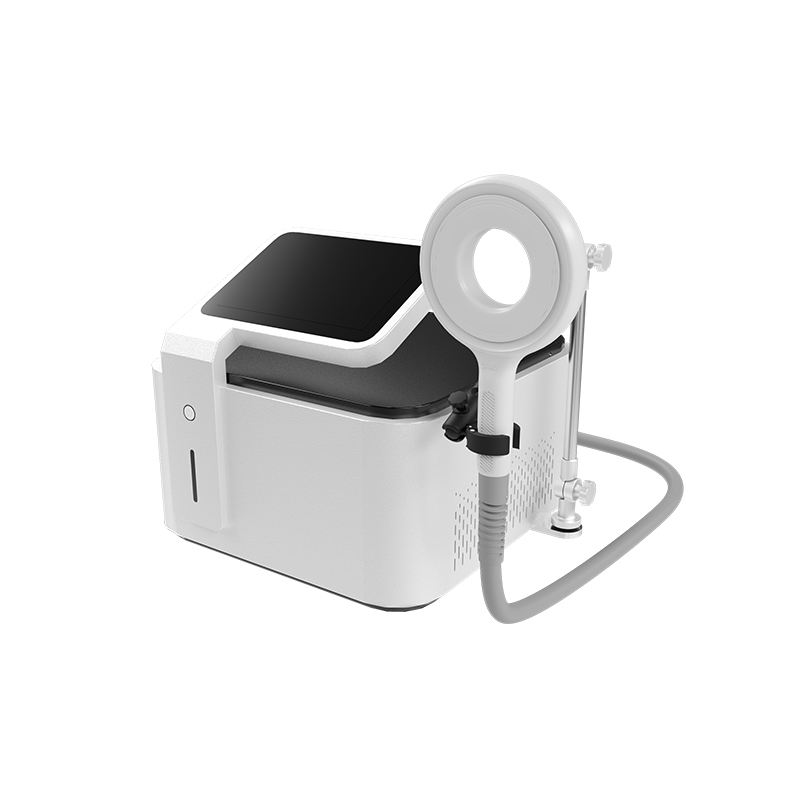
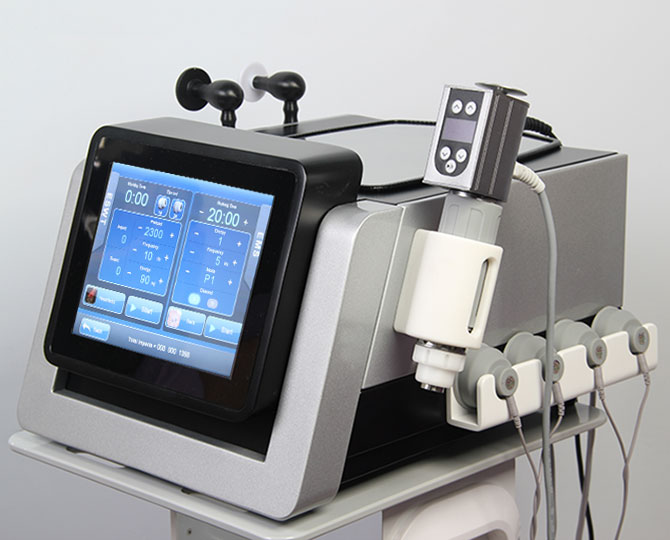
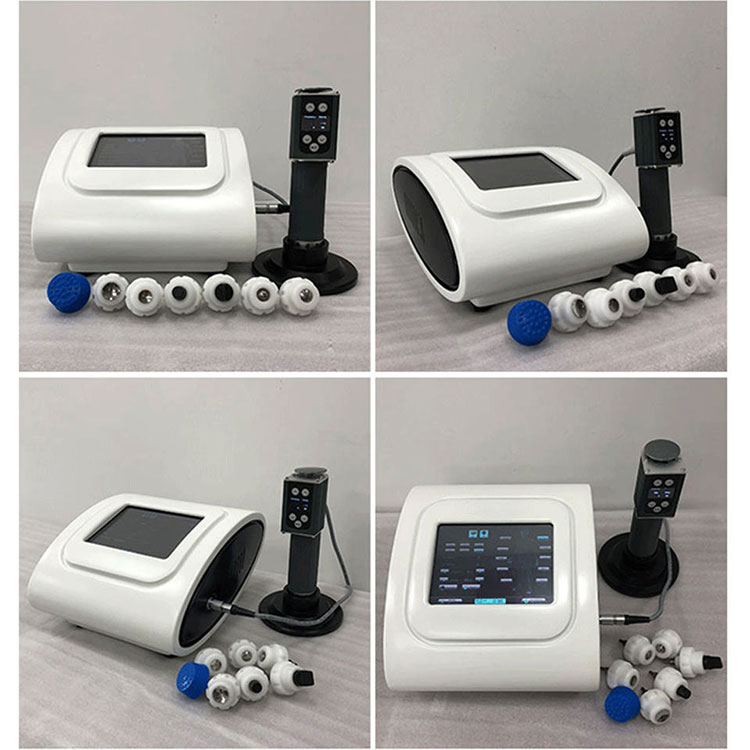
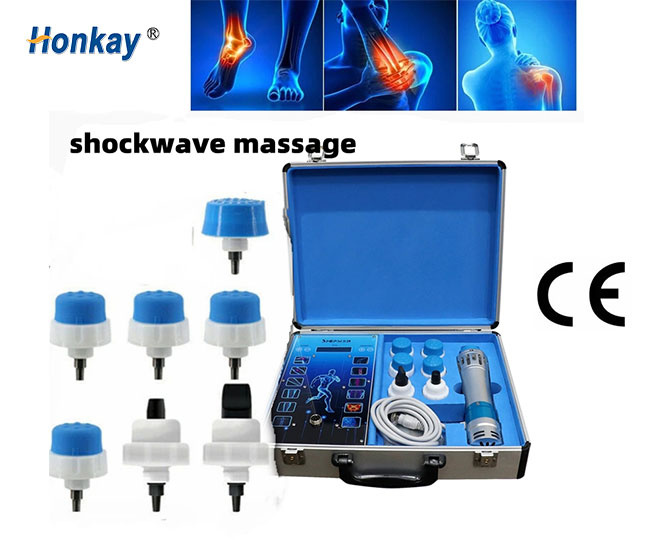
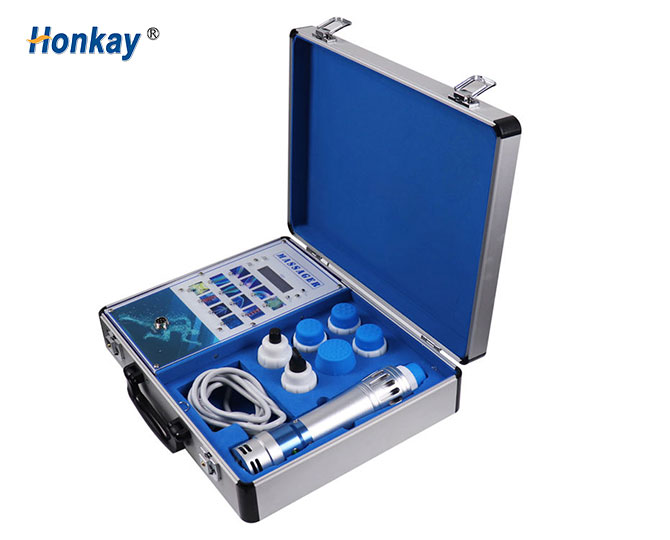
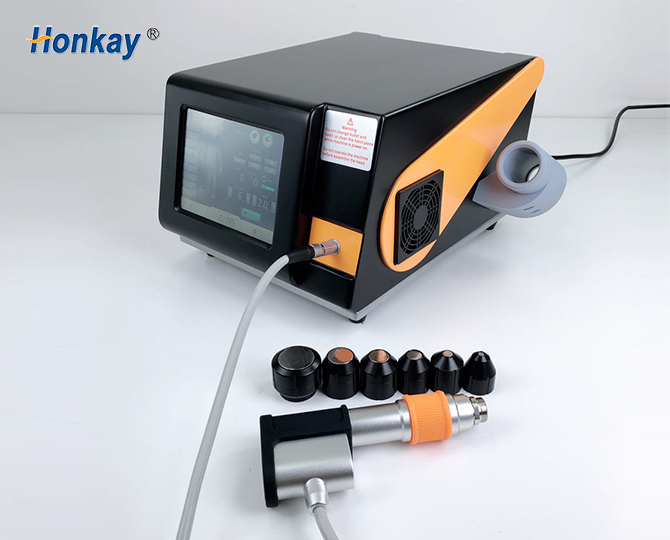
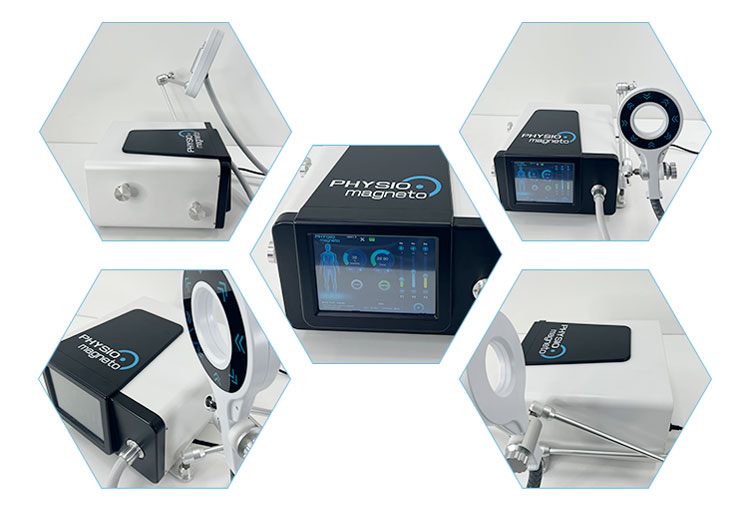
The single most useful thing a supplier can send you is a photograph of the kit laid out, with the electrode diameters written next to each item. Any unit can look complete in a hero shot; the accessory list is what tells you whether it is.
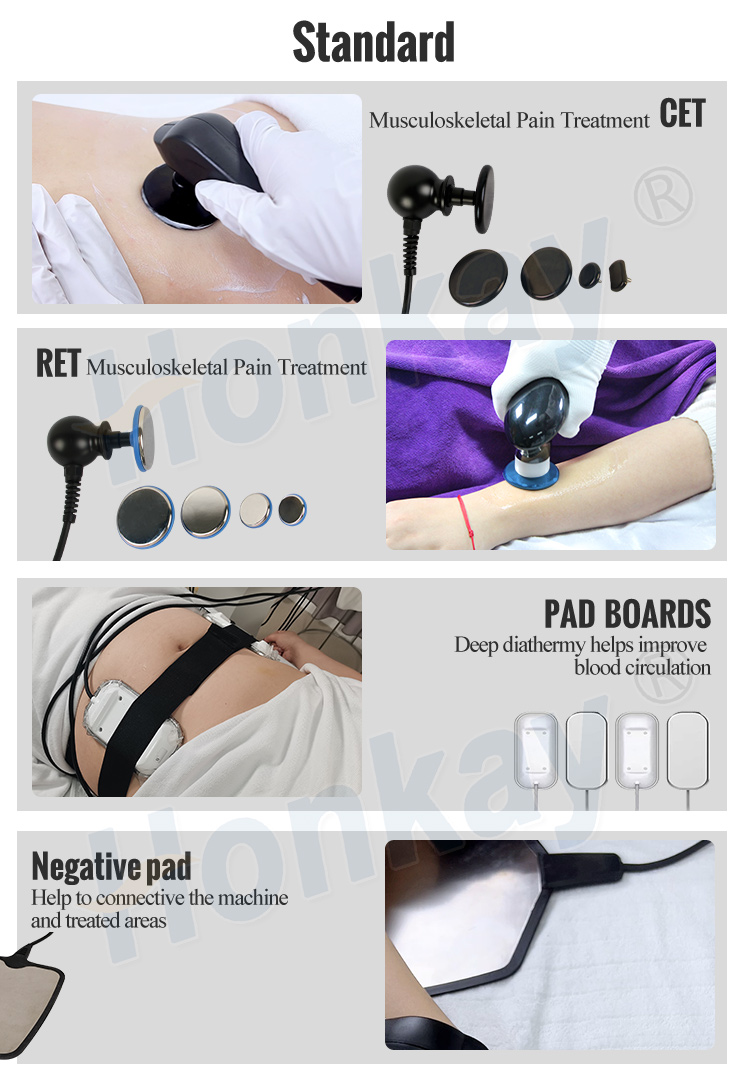
Four groups should be accounted for:
- The CET electrode set, with at least one body size and one smaller face or contour size. The large face is for broad muscle areas; the small ones are for the shape of a hand, foot or joint line.
- The RET electrode set, again in more than one diameter. A single RET electrode is a warning sign, because it fixes the field width for every case.
- The return path. At minimum one negative plate. Pad boards with straps are worth having if you intend to treat the spine or a limb that the patient cannot keep still against a plate.
- A stated electrode diameter for every item. Without it you cannot compare two quotations, because “small electrode” is not a specification.
Ask for the kit photograph and the diameter list as part of the quotation. It takes the supplier two minutes and it removes most of the ambiguity from the comparison.
Where it sits in a physical therapy equipment catalogue
Most clinics build their equipment list in the same order: a bed, an ultrasound unit, an electrotherapy channel, then a modality that adds something genuinely different. A 448 kHz unit usually arrives at that fourth step, because it is the one that works on a deep structure without a coupling medium and without a consumable per session.
Three practical notes for anyone pricing it in:
- It is one machine, not a treatment line. The realistic expectation is that it covers part of an existing caseload rather than creating a new service on its own. Buy it against the cases you already see.
- Room and power requirements are modest compared with a shockwave console, and there is no gel or pad consumable if the return path is a reusable plate. Confirm the mains requirement in writing for your region.
- Training is part of the product. A 448 kHz current behaves differently under a capacitive tip and a resistive tip, and the practical difference is what the training is for. If the quotation does not say who delivers it and how, ask.
When you compare suppliers, put the same four lines side by side: electrode families and their diameters, return path items, stated frequency and output range, and the training and warranty terms. Differences show up quickly, and they are almost never on the price line alone.
What to confirm in writing before ordering
| Item to confirm | Why it matters |
|---|---|
| Frequency and output range | The electrode choice is only meaningful against a stated current |
| Full electrode diameter list | Lets you compare two quotations item by item |
| Number of return-path items | A missing plate means a session cannot be set up as intended |
| Preset programs and whether user programs can be stored | Decides how much of the setup repeats on its own |
| Operator manual and training handover | The two electrode families are used differently in practice |
| Warranty terms | Confirm 24-month warranty from the factory shipment date, and the process for a claim |
| Spares and their lead time | Electrode tips are the part that gets replaced |
Frequently asked questions
What is the difference between CET and RET on a TECAR therapy machine?
They are two electrode families working at the same frequency. A capacitive (CET) electrode is insulated from the skin, so the current spreads and treats a broader area of muscle and tissue near the surface. A resistive (RET) electrode contacts the skin directly, so the current concentrates where resistance is highest — the denser, more fibrous structures near tendon and bone.
Does a TECAR machine need a gel or a pad for every session?
No consumable is required for the current itself. The return path is normally a reusable negative plate, and pad boards are reusable as well. The only recurring item is the electrode tip when it eventually wears.
How many electrodes should the machine ship with?
Enough to vary the field width. As a working minimum, one large and one small electrode in each family, plus a return plate. A single electrode per family means the field width is fixed for every case you treat.
What frequency do these machines run at?
448 kHz is the frequency used across this class of equipment, and it is what the electrode behaviour is designed around. If a supplier does not state the frequency, ask for it in writing.
Can one machine run CET and RET in the same session?
Yes, and switching between them mid-session is normal practice because the two cover different tissue depths. This is the main reason a machine with only one electrode family limits the clinician.
What should I check about the mains supply?
Confirm the voltage and plug type for your country in writing, and whether the unit needs a dedicated circuit in a treatment room. Requirements are modest compared with a console-based shockwave system, but they still need confirming before shipping.
Is training needed to use it?
Yes. The practical difference between a capacitive and a resistive tip is a clinical skill, not a button. Ask who delivers the training, in what form, and whether the operating manual is supplied in your language.
What should the quotation include?
The kit photograph with electrode diameters, the return-path items, stated frequency and output range, the mains requirement for your region, training handover, and the warranty terms — 24-month warranty from the factory shipment date, with the claim process written out.
Request a quotation
If you are specifying a 448 kHz unit for a clinic, send us the electrode list you need and the mains requirement for your country, and we will come back with a configuration and a price rather than a brochure.
Manager: Lisa
WhatsApp: +8613751821215
E-mail: hk6@huang-kai.com