Pulsed Electromagnetic Field Device: Specs, Applicators and Clinical Use
If you are comparing a pulsed electromagnetic field device for a clinic, the specification sheet will not tell you the thing that decides whether it earns its floor space. Two units can quote the same 8,000 Gauss and the same 1–10 Hz range and still be completely different machines, because the clinical range of a PEMF system lives in its applicators, not its console. A console with a wide intensity range and one 30 cm loop will treat one class of problem. The same console with ten applicators treats most of a physiotherapy case list.
This guide covers what the numbers mean, which applicators actually reach which tissue, why a dual-channel pemf device changes your appointment book, and the safety screening that has to happen before the first session.
1. What the numbers on the spec sheet actually mean
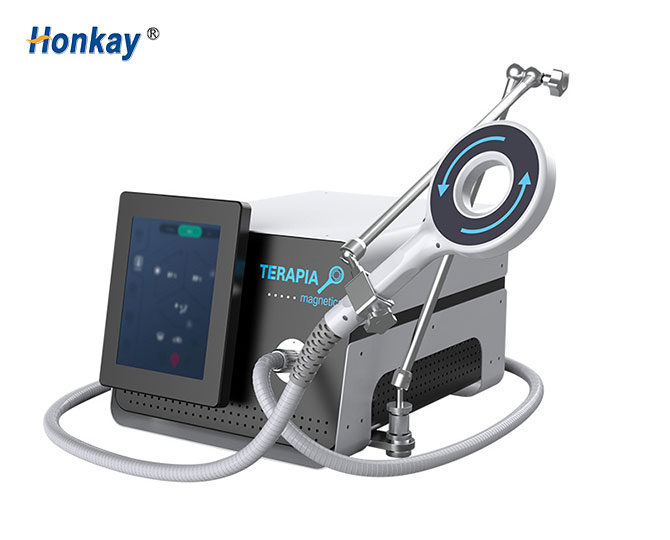
A pulsed electromagnetic field device — also sold under the longer name pulsed magnetic field therapy device — works by discharging large-capacity capacitors into an applicator coil. The coil converts that current into a magnetic field that passes through skin, muscle and bone. There is no gel, no electrode and no consumable, which is why the running cost of a session is electricity and staff time rather than a per-treatment supply charge.
Four numbers matter, and they are frequently conflated:
| Specification | What it describes | Typical value |
|---|---|---|
| Magnetic intensity | Peak field strength at the applicator, in Gauss | 1,000–8,000 Gauss, set in 5 levels |
| Pulse frequency | How often the field pulses per second | 1–10 Hz |
| Oscillation frequency | The carrier frequency within each pulse — a separate number | 4,500 Hz |
| Power | Consumption of the console | 850 W |
Pulse frequency and oscillation frequency are not the same specification, and a machine quoting only the larger number is telling you less, not more. Ask for both, and ask at what distance from the coil the intensity figure was measured — 8,000 Gauss at the coil surface and 8,000 Gauss at 5 cm are different products.
2. The applicator set is the clinical range
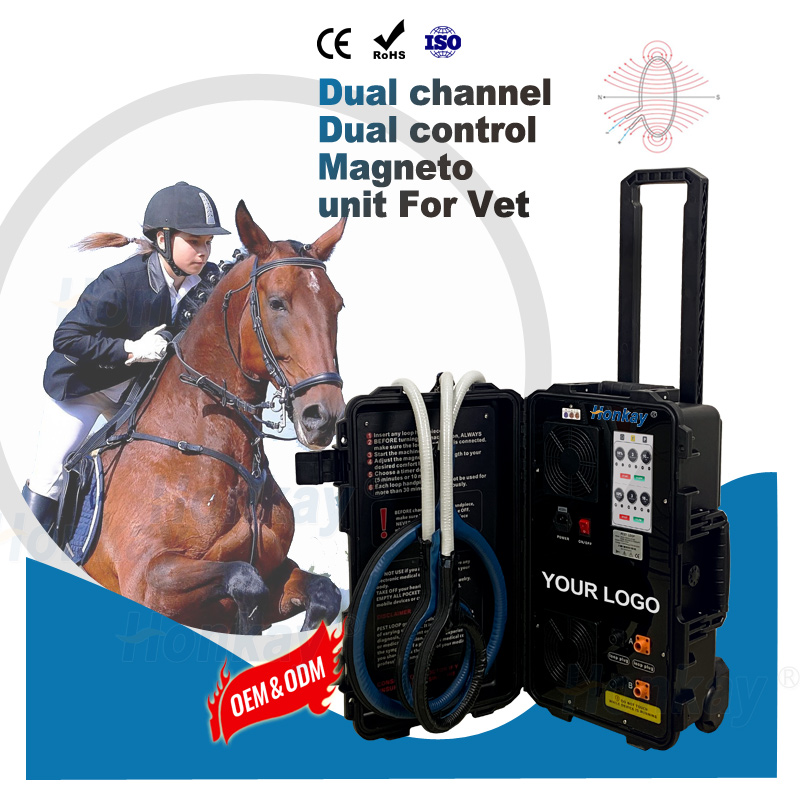
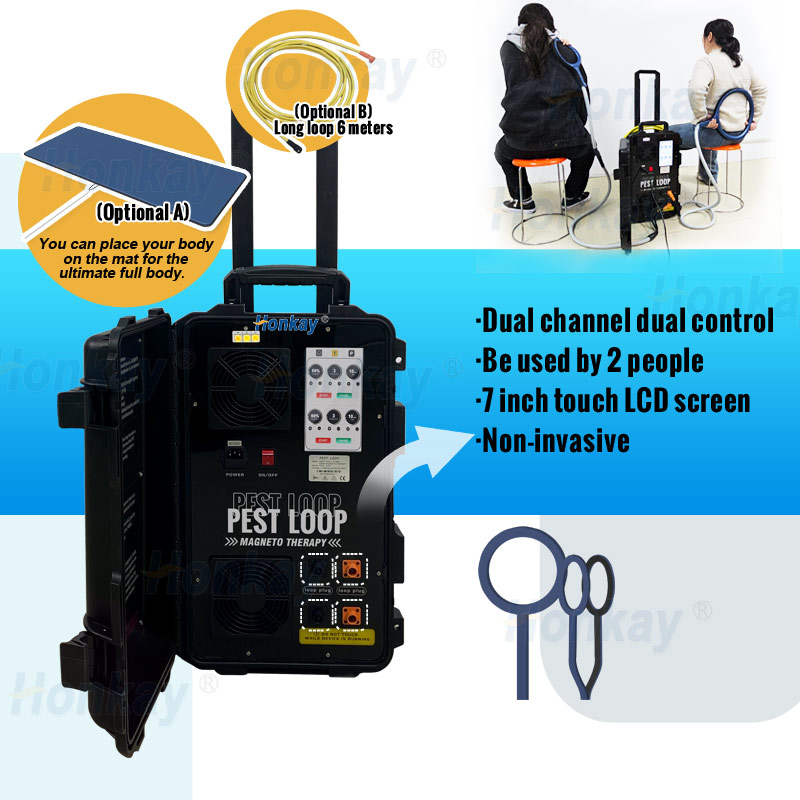
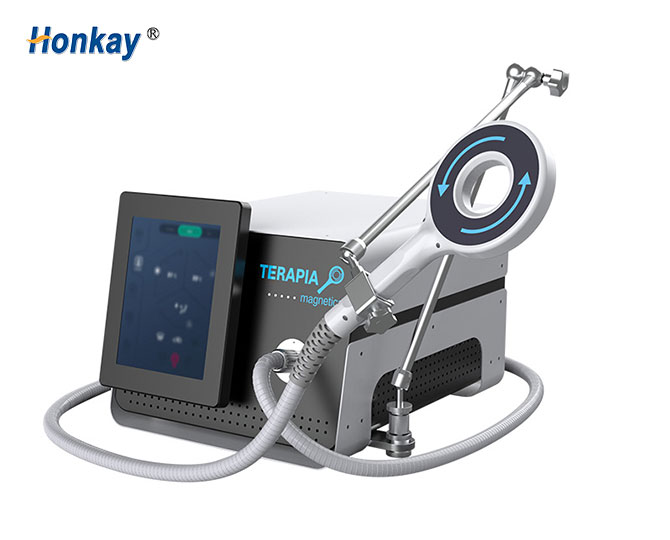
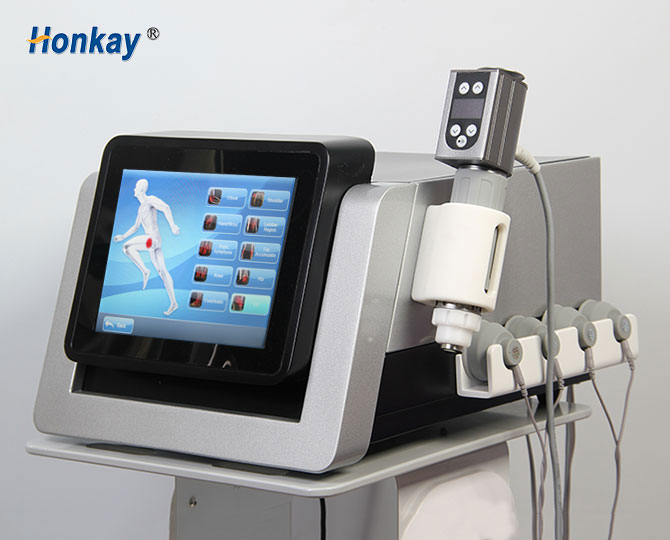
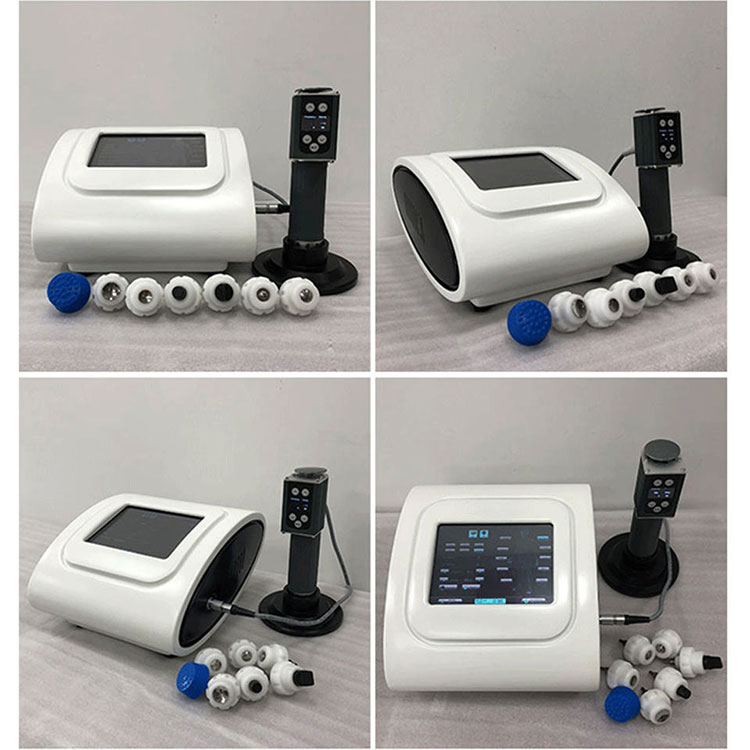
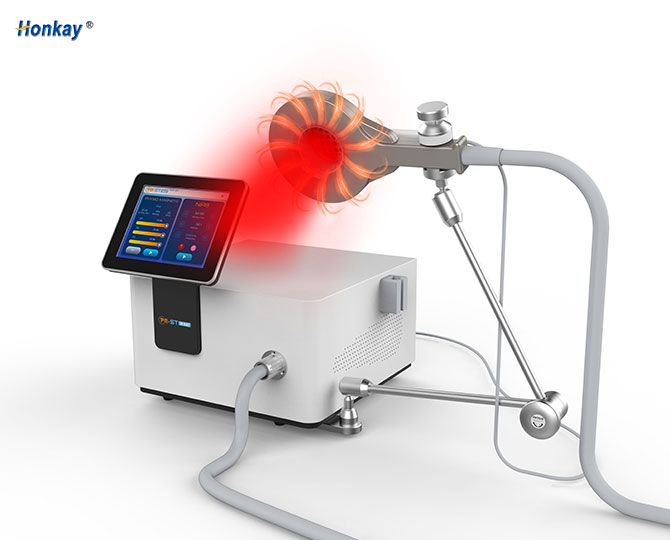
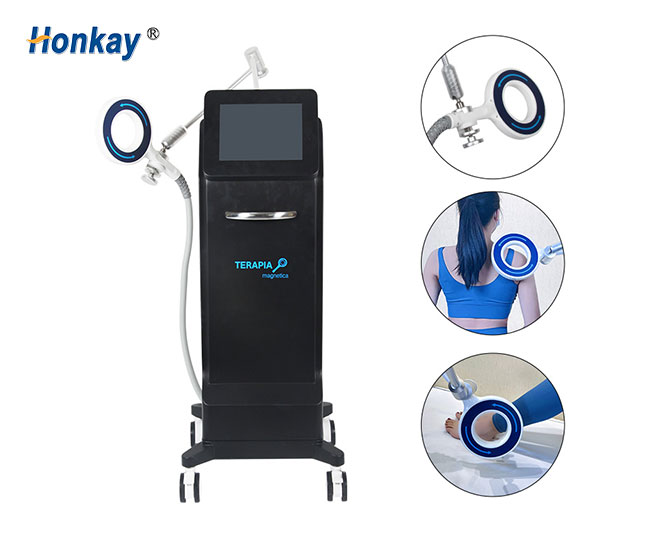
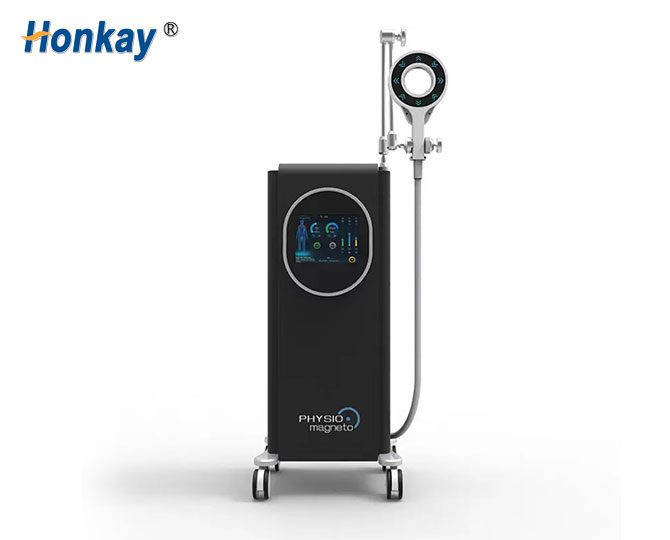
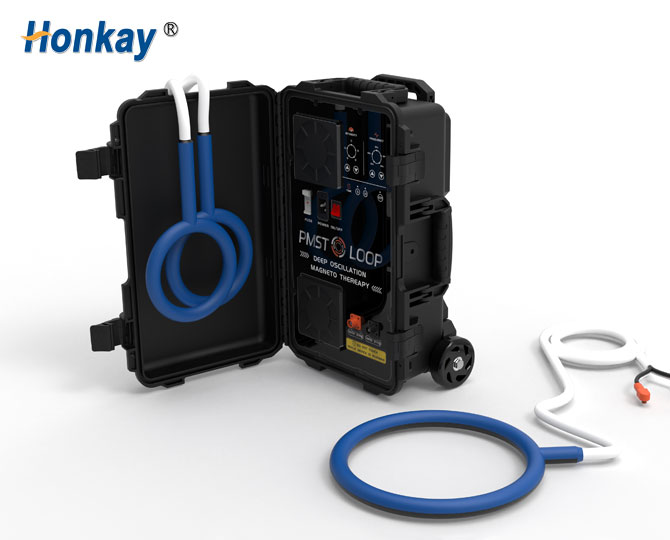
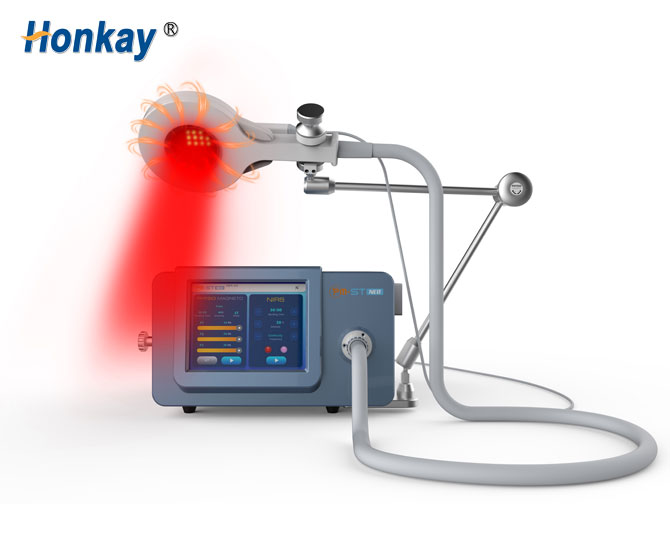
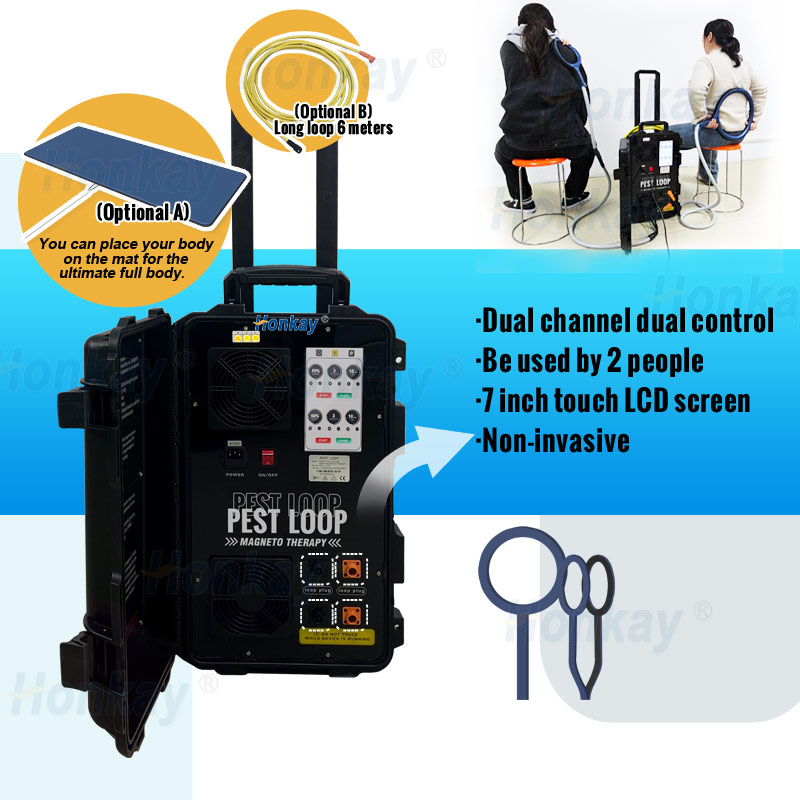
This is where systems separate. The dual-control platform below is supplied with a large loop and a butterfly loop as standard; the remaining applicators are optional, and each one exists to reach anatomy the others cannot.
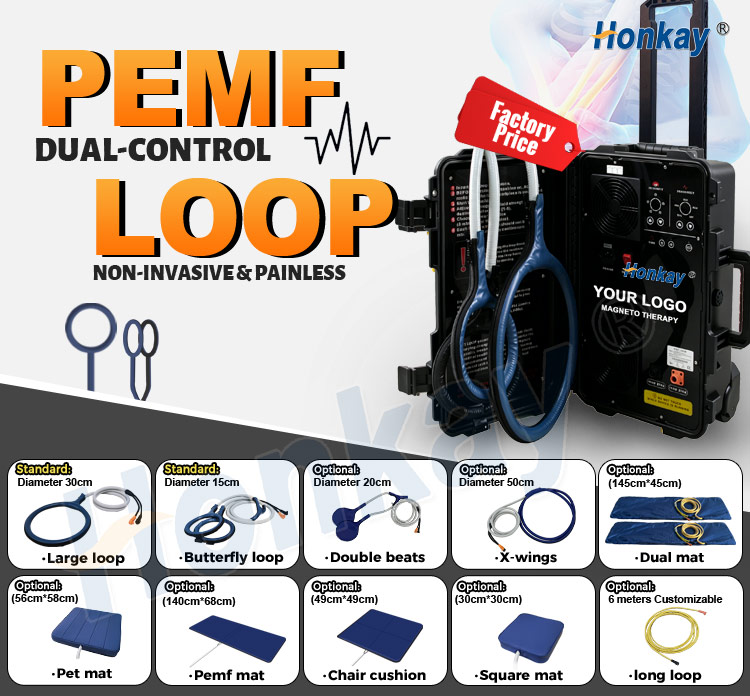
What each applicator is for:
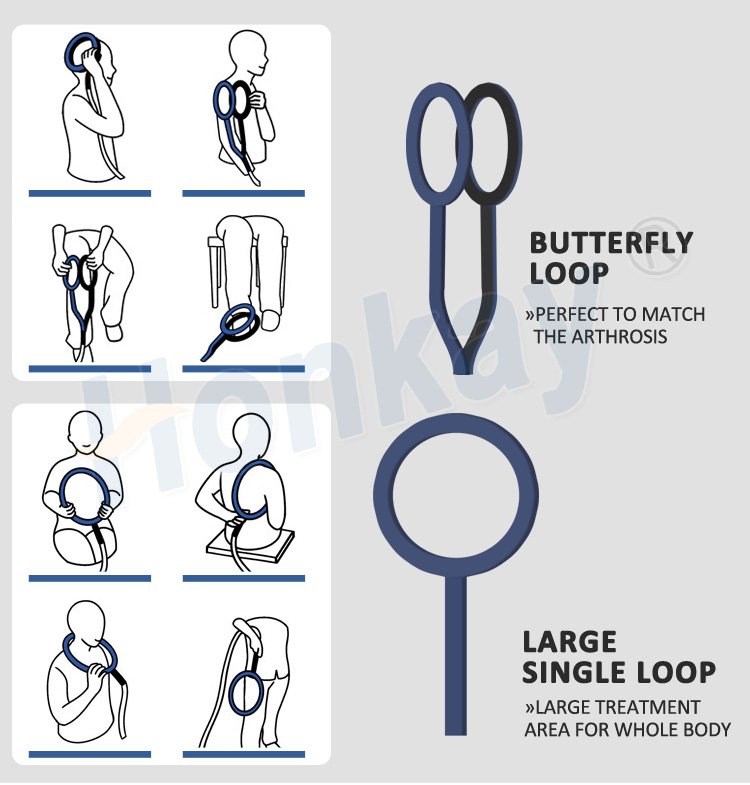
- Large loop (30 cm, standard) — whole-limb and torso work. Large treatment area for whole-body coverage.
- Butterfly loop (15 cm, standard) — the double-ring applicator, matched to arthrosis and joint work. It wraps a joint from both sides, which a flat pad cannot.
- Double beats (20 cm, optional) — bilateral placement, both sides of the spine in one pass.
- X-wings (50 cm, optional) — the widest loop, for large surface areas.
- Dual mat (145 × 45 cm) and PEMF mat (140 × 68 cm) — hands-free whole-body sessions; the patient lies or sits on the mat.
- Square mat (30 × 30 cm), chair cushion (49 × 49 cm) and pet mat (50 × 50 cm) — fixed-point and seated therapy.
- Long loop (6 m, customizable) — treats at distance where the patient cannot be repositioned.
Before you compare two quotations, get the split between standard and optional in writing. It is the single largest driver of price in this category. Note also that accessory dimensions differ between product versions — confirm the current dimensions for the exact configuration you are buying.
3. Why dual-channel changes your clinic economics
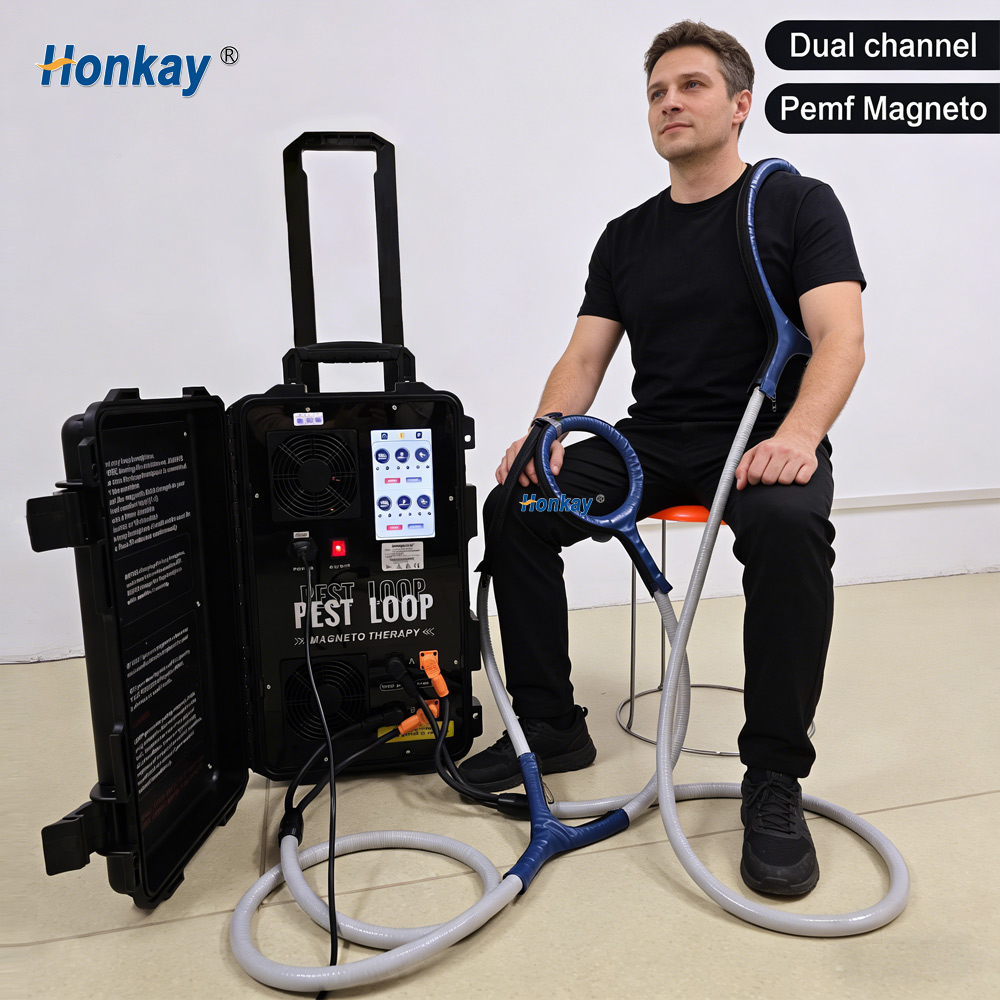
A dual-channel dual-control device runs two applicators on two independent control sets. Intensity, frequency and timer are set separately for each channel, and both run at once.
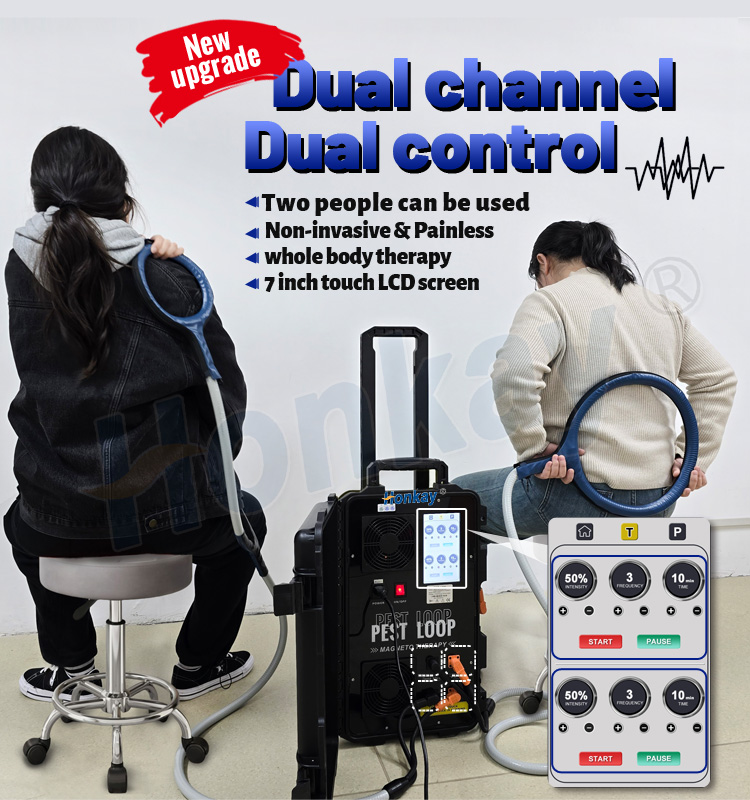
In practice this means either two patients treated in parallel, or one patient treated on two areas simultaneously. For a clinic, the second option is usually the more valuable one: a shoulder and a lumbar session that would otherwise be sequential becomes one appointment slot. For a mobile practitioner, it is a different kind of saving — one setup, one visit, two areas of care.
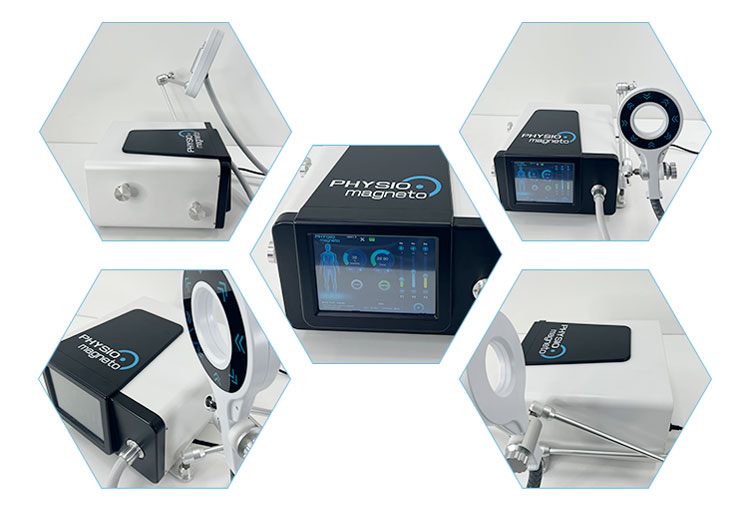
The control panel shows the working parameters directly: a percentage intensity setting, an intensity level from 1 to 5, and a timer in 10-minute steps, with independent start and pause per channel. A 7-inch touch screen runs the same settings from the console. Because the two channels are electrically independent, changing one mid-session does not disturb the other.
4. Session protocol and safety screening
Documented starting parameters for this platform:
- Single area: 15–20 minutes. A loop handpiece should not run continuously for more than 30 minutes.
- Course length: 6–8 sessions, typically twice per week.
- Acute injury or post-operative: 15–20 minutes per session, 3–5 sessions per week, 5–10 sessions per course.
- Chronic pain and rehabilitation: 20–30 minutes per session, 2–3 sessions per week, 10–20 sessions per course.
Screen every patient before the first session. Do not treat over implanted electronic devices such as pacemakers or analgesic pumps, over metal implants where vibration could damage surrounding tissue, or over malignant or benign tumours, local infections or vascular disease in the treatment area. Avoid cartilage surfaces and the small facet joints of the spine. Keep ID cards, access cards and keys away from the loop — a magnetic ring at these intensities will damage them. Confirm the written contraindication list supplied with your specific unit, and note that the treating clinician’s judgement governs the case.
5. What to confirm before you pay a deposit
Ask for six things in the quotation document: the standard versus optional accessory list with dimensions; the intensity and frequency ranges of the specific console; the pulse and oscillation frequencies stated separately; the voltage and plug standard for your market; the warranty terms for the main unit and the accessories, stated separately; and the certification status for your market, remembering that medical device clearances are issued per device and per intended use rather than per brand. Ask for the written warranty terms rather than relying on a product page.
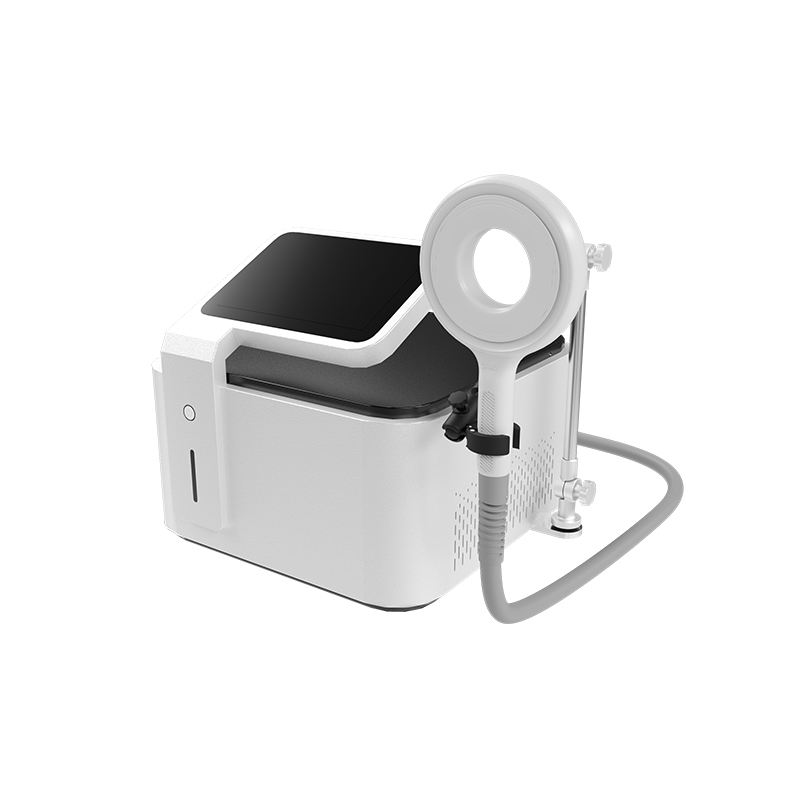
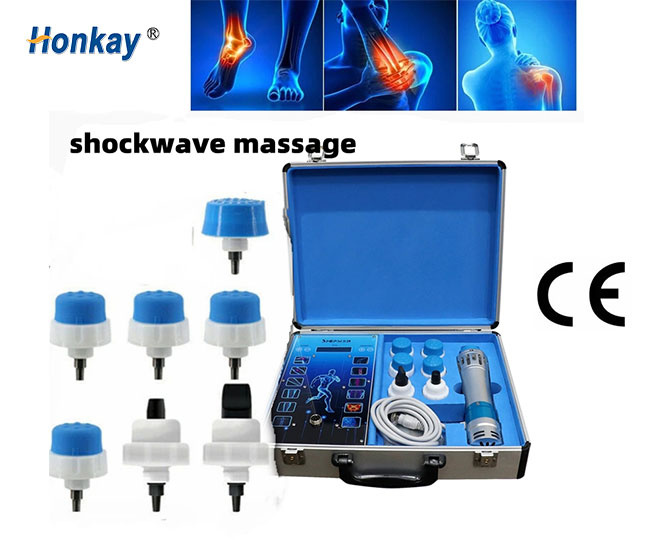
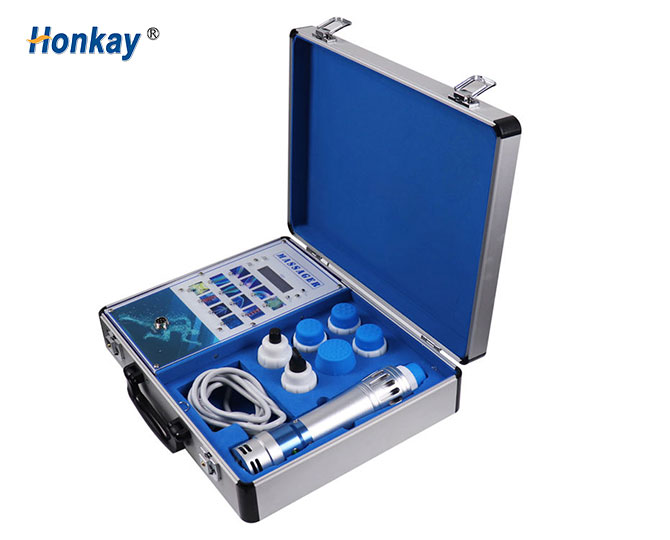
Honkay manufactures the dual-control PEMF platform described here, in portable and tabletop configurations, with the applicator set above and OEM/ODM branding available. See the dual-control PEMF device →
Frequently asked questions
What is a pulsed electromagnetic field device used for?
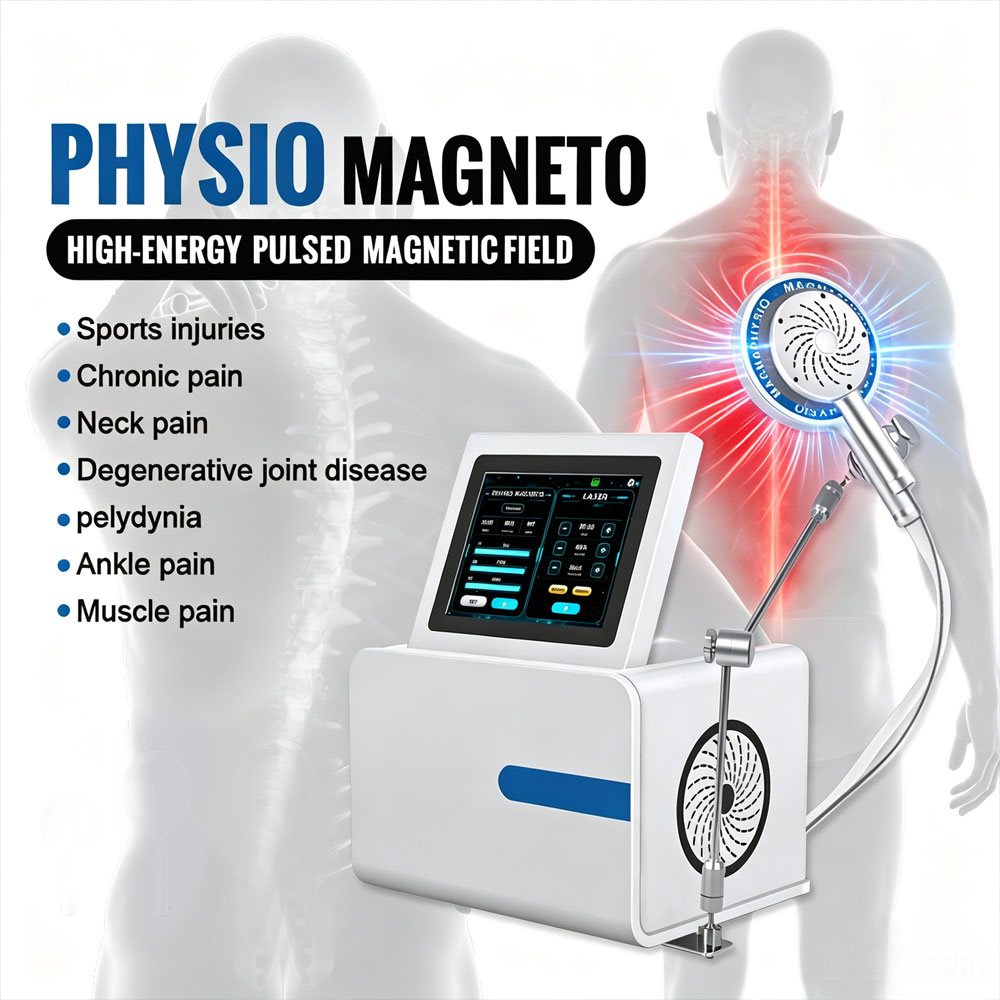
It is used in physiotherapy and rehabilitation for musculoskeletal pain and tissue repair — joint pain, muscular recovery, inflammation after injury or surgery, and chronic pain conditions. Treatment is non-invasive and does not require medication or consumables. What a specific device can treat depends on its applicator set, because the applicators determine which parts of the body the field can be delivered to.
What is the difference between pulse frequency and oscillation frequency?
Pulse frequency is how many times per second the magnetic field pulses, quoted here as 1–10 Hz. Oscillation frequency is the carrier frequency within each pulse, quoted here as 4,500 Hz. They describe different parts of the same signal. A supplier who quotes only the higher number is not giving you a more powerful machine — they are giving you less specification.
Do I need a dual-channel device or a single-channel one?
A dual-channel device runs two applicators on two independent control sets at the same time, so you can treat two patients in parallel or two areas on one patient in a single session. If you run a clinic with overlapping appointments, or if your patients commonly present with more than one area of complaint, dual-channel pays for itself in slot efficiency. For single-area, single-patient use, a single-channel unit does the same job at a lower price.
Which applicator should I buy first?
Start with the two that are standard: the large loop for whole-limb and torso work, and the butterfly loop for joints. Add the X-wings if you treat large surface areas, the mats if you want hands-free whole-body sessions, and the long loop if you treat patients who cannot be repositioned. Confirm which of these are included rather than optional before comparing prices.
How many sessions does a course take?
The documented starting protocol is 6–8 sessions at twice per week for a general course. Acute injury and post-operative cases move faster — 15–20 minutes per session, 3–5 sessions per week, 5–10 sessions — while chronic pain and rehabilitation run longer per session (20–30 minutes) at 2–3 sessions per week over 10–20 sessions. These are starting points; the treating clinician adjusts to the patient.
Is it safe for patients with implants?
Not for patients with implanted electronic devices such as pacemakers, defibrillators or analgesic pumps — strong magnetic fields can cause power failure or damage internal circuitry. Metal implants in the treatment area are also a contraindication where vibration could damage surrounding tissue. Always screen against the manufacturer’s written contraindication list, and remove metal objects, cards and keys from the treatment area before starting.
Does the device need consumables or gel?
No. A pulsed electromagnetic field passes through clothing, skin and soft tissue, so there is no gel, no electrode, no pad and no cartridge to replace. The marginal cost of each session is electricity and staff time, which is what makes the per-treatment margin attractive in a clinic setting. Confirm this explicitly with any supplier whose price seems unusually low — a device with consumables is a recurring cost, not a one-off purchase.
What should I confirm in writing before paying a deposit?
Six items: the standard versus optional accessory list with dimensions; the intensity and frequency ranges of the specific console; pulse and oscillation frequency quoted separately; the voltage and plug standard for your market; the warranty terms for the main unit and for the accessories stated separately; and the certification status applicable to your market and intended use. A supplier who cannot put all six in writing has told you something worth knowing.
Request a quotation
Tell us what you treat and how many patients you see in a week, and we will come back with the applicator set that covers your case list, the starting parameters, the accessory list split into standard and optional, and a quotation with the warranty and delivery terms in writing. Samples for evaluation and OEM/ODM branding are available for distributors.
Manager: Lisa
WhatsApp: +8613751821215
E-mail: hk6@huang-kai.com