Equine Sessions at a Client’s Yard: What to Pack and What to Ask
What to ask a yard before booking, what to pack, how to set up in an aisle, how to quote the visit and what to leave behind after an equine session.
The visit starts before you load the car
A session at your own yard is a handling question. A session at a client’s yard is a logistics question first, because everything you assumed about power, footing, light and help belongs to somebody else. Practitioners who do this regularly lose more sessions to a missing extension lead than to a difficult horse.
This page covers the visit itself: what to ask before you book, what to pack, how to set up in an aisle rather than a yard, and what to leave behind. The routine comes from the clinician handling the case; the visiting practitioner’s job is to arrive with the conditions already solved.
Five questions that change what you pack
Ask these on the phone, not at the gate. Each one moves an item on or off the packing list, and each is cheaper to answer before you drive.
| Question | What it changes |
|---|---|
| Where is the nearest socket, and is it on the same side of the yard as the horse? | Cable length, and whether the session happens where the horse is standing or where the power is |
| Is there a covered aisle, or is the only space open yard? | Weather plan, and whether the ground underfoot will stay level for the whole session |
| Will the owner or a groom be there, or am I handling alone? | Whether the loop routine is a two-person job on the day or needs a different plan |
| How many horses, and are they all in work? | Time on site, and whether the visit is priced per horse or per visit |
| Has the vet already set a routine for this horse? | Whether you are executing a plan or waiting for one, which is the difference between a booking and a wasted trip |
What goes in the car
The list is short on purpose. Every item removes a reason the session stops: no power, no coupling, no clean surface, no way to record.
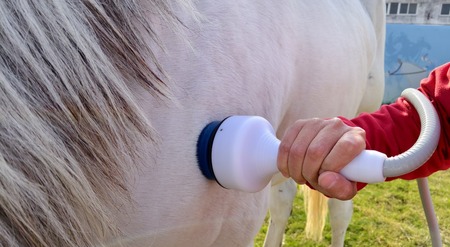
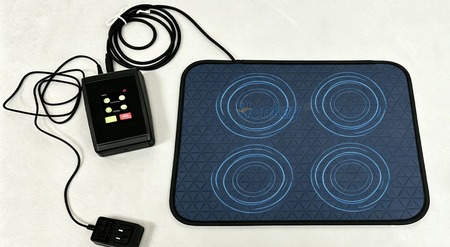
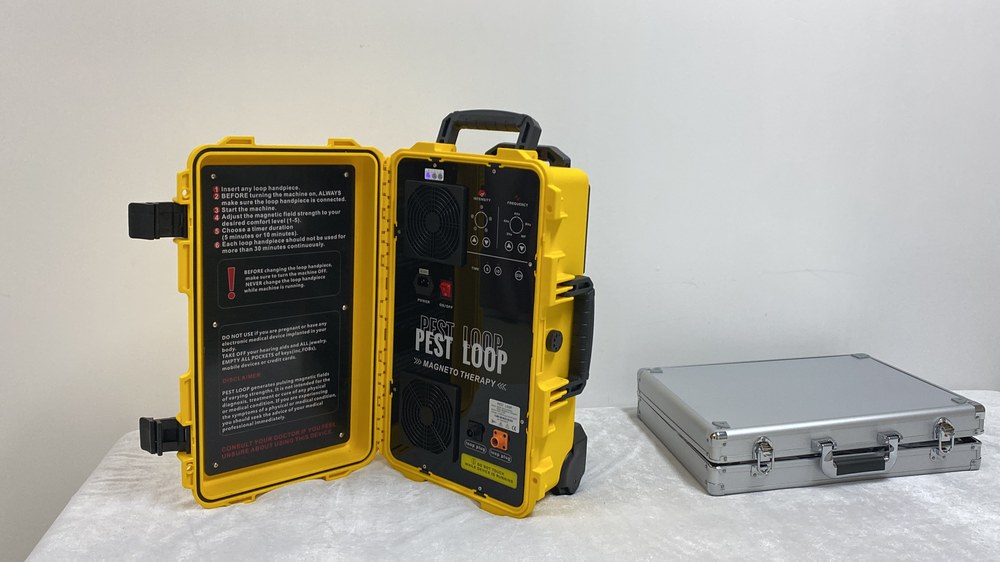
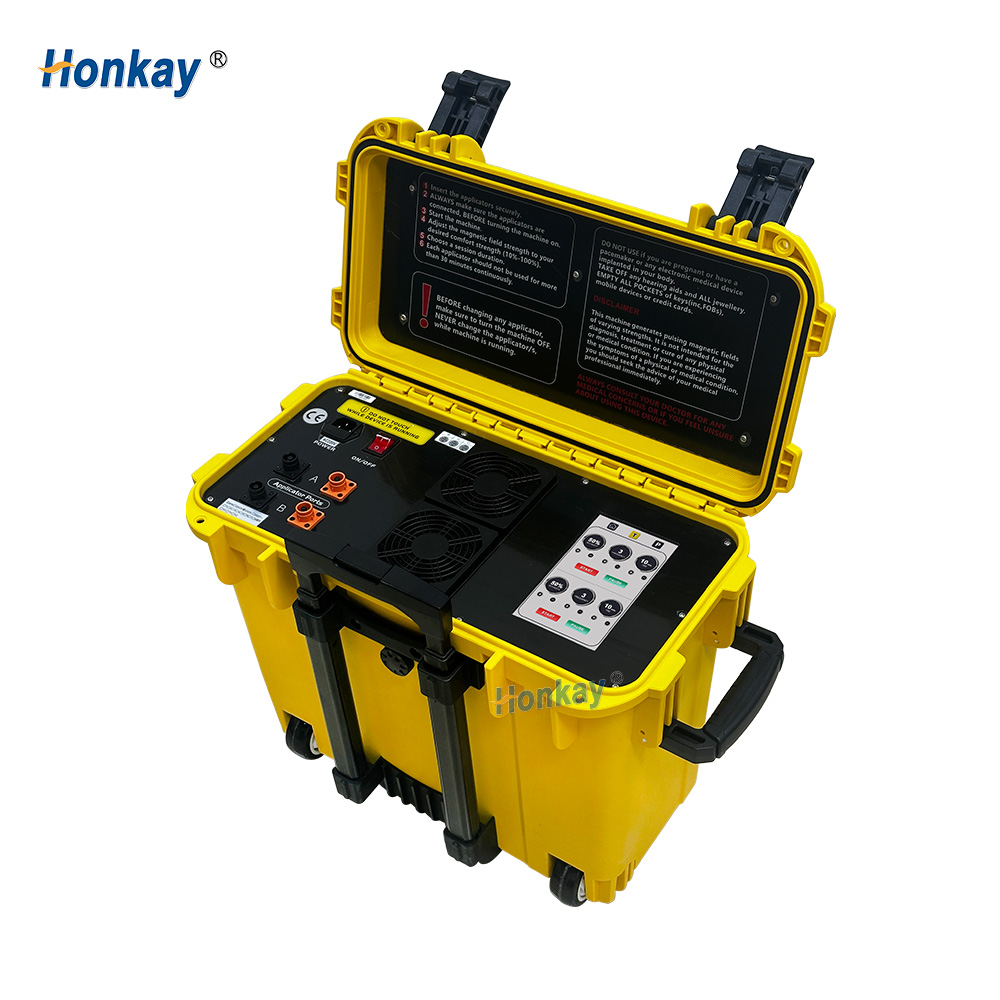
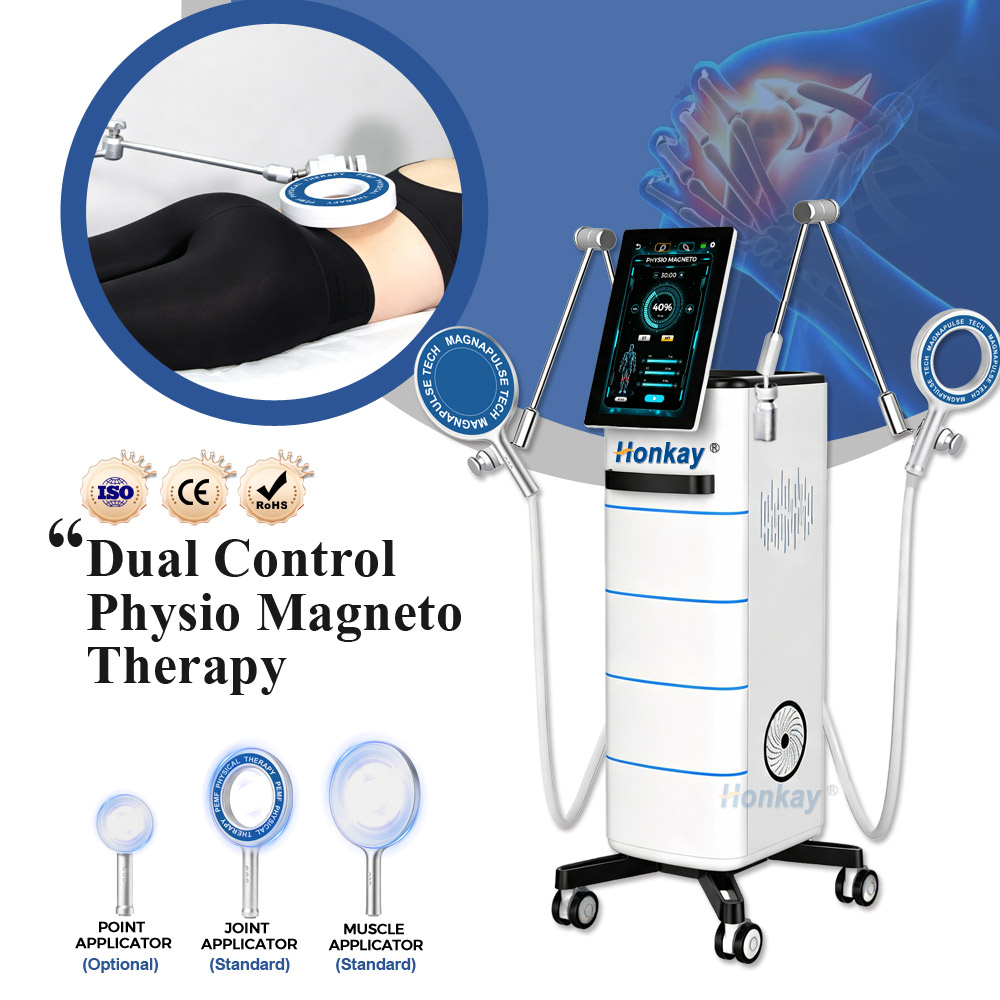
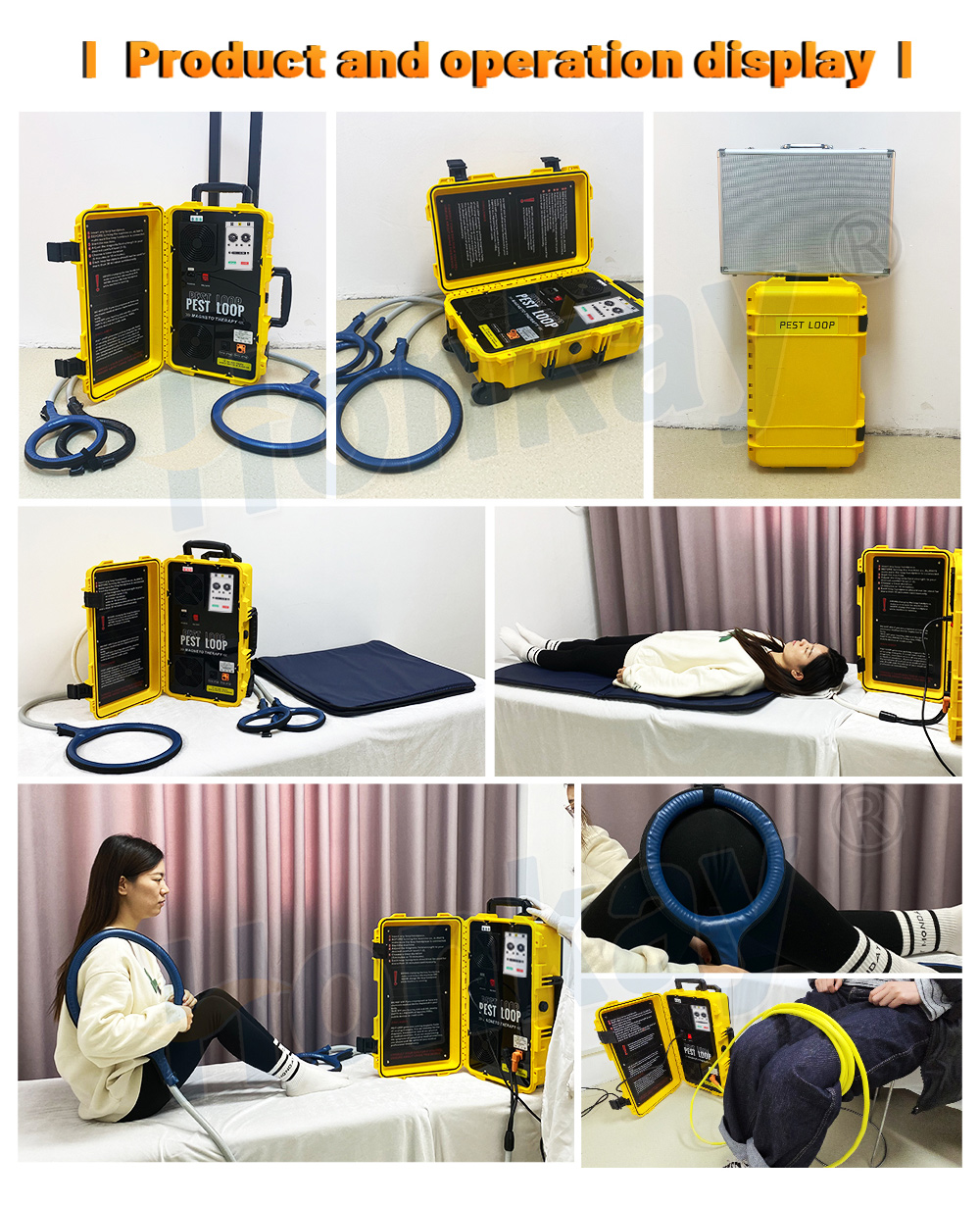
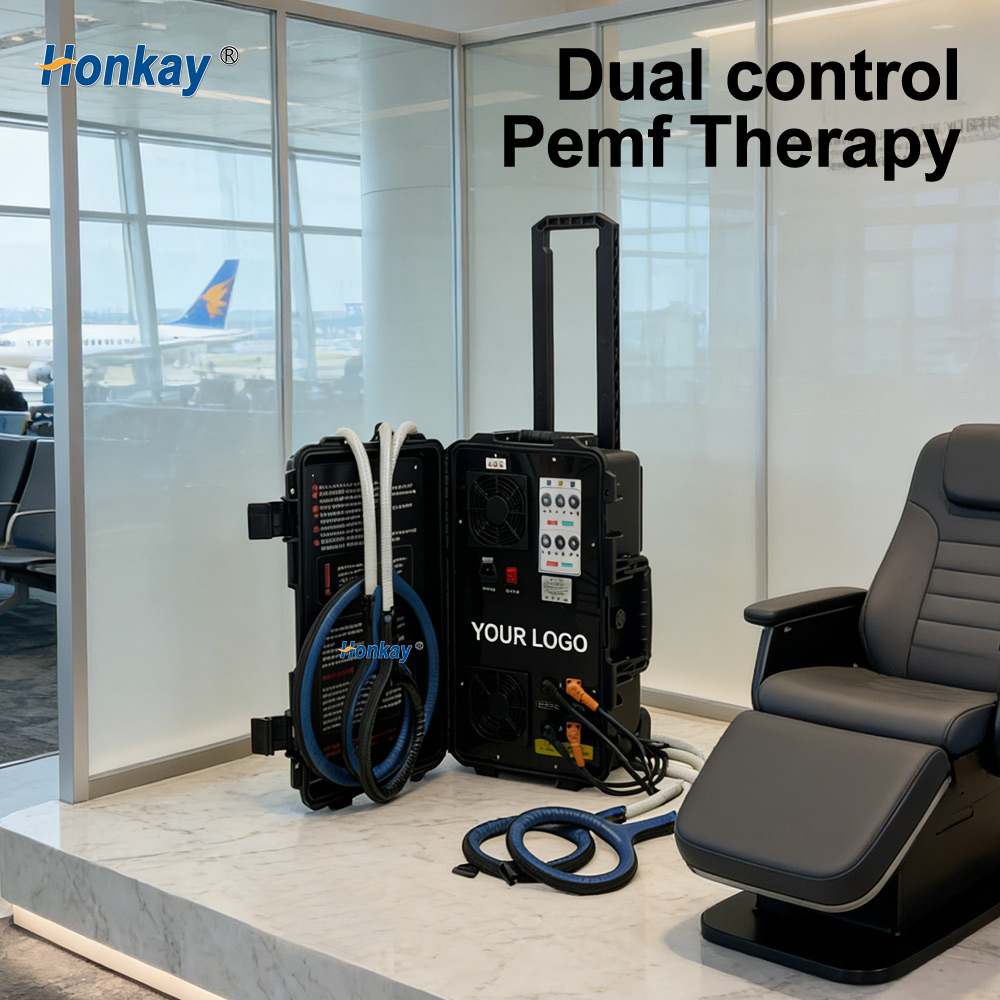
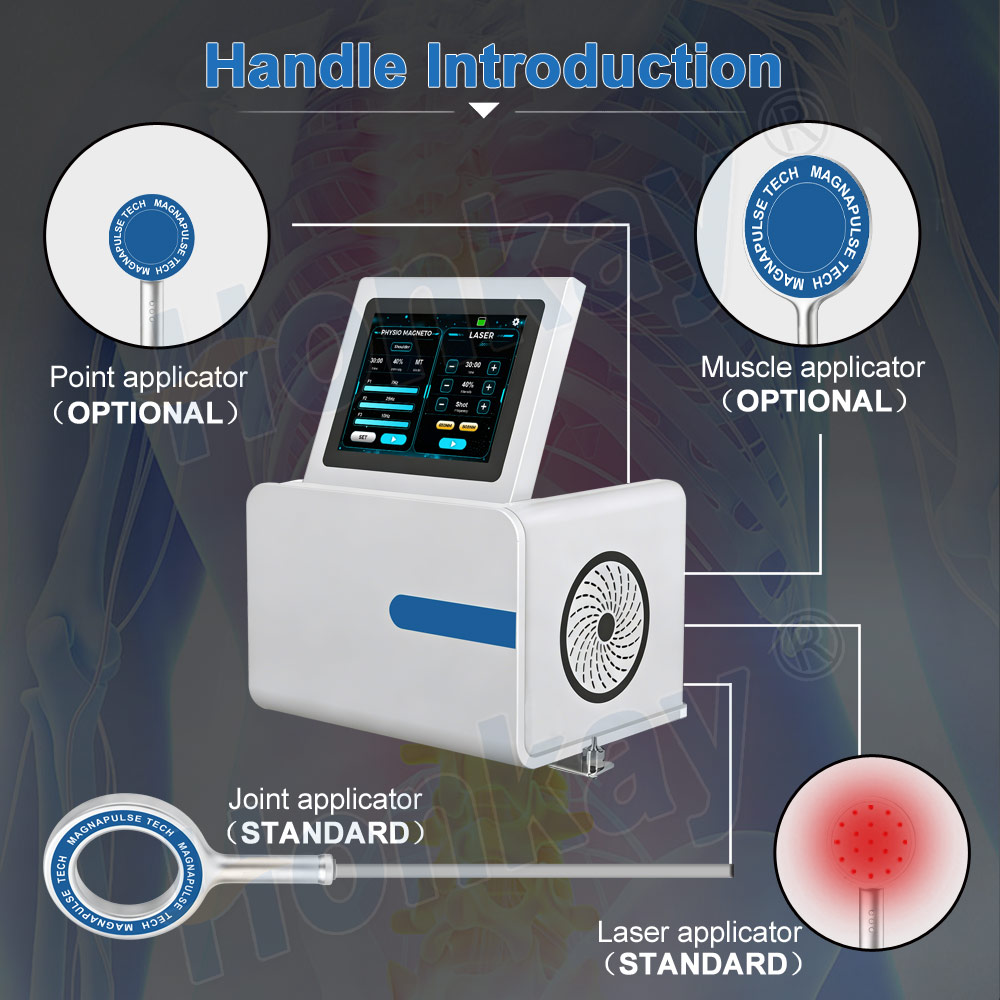
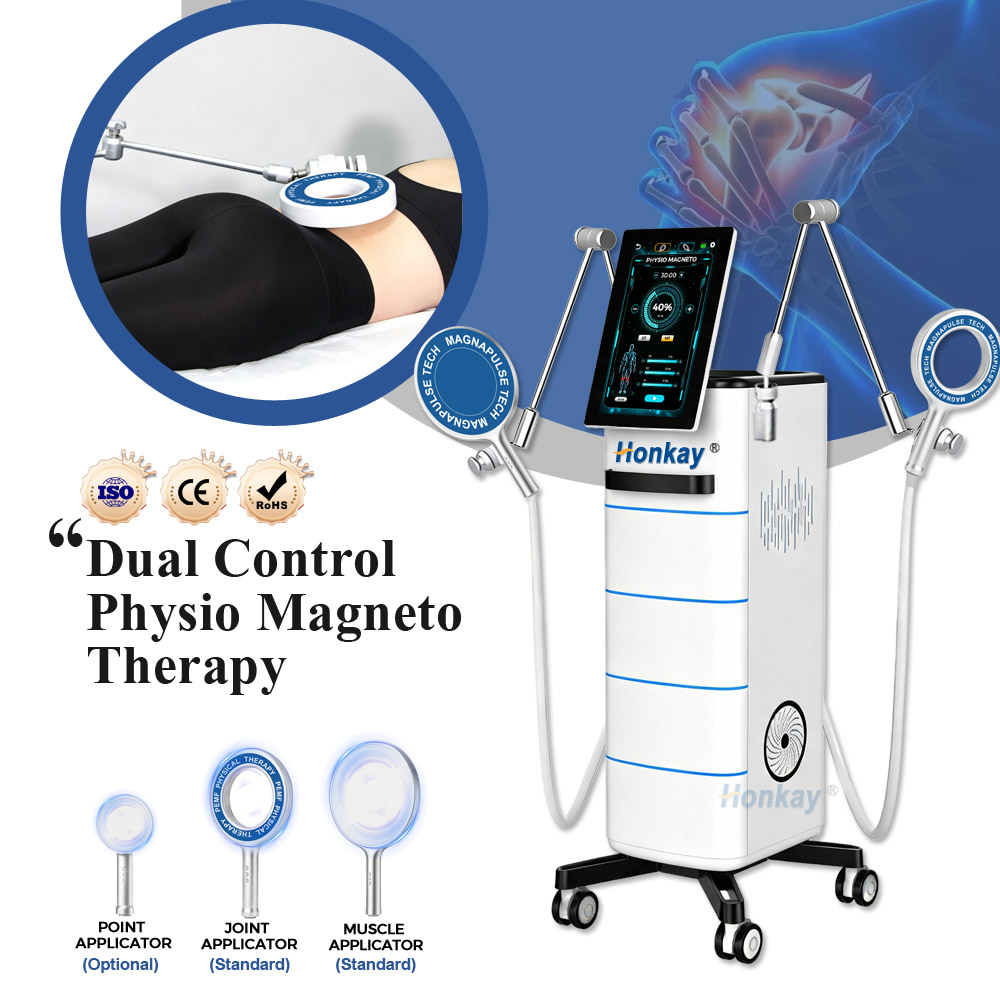
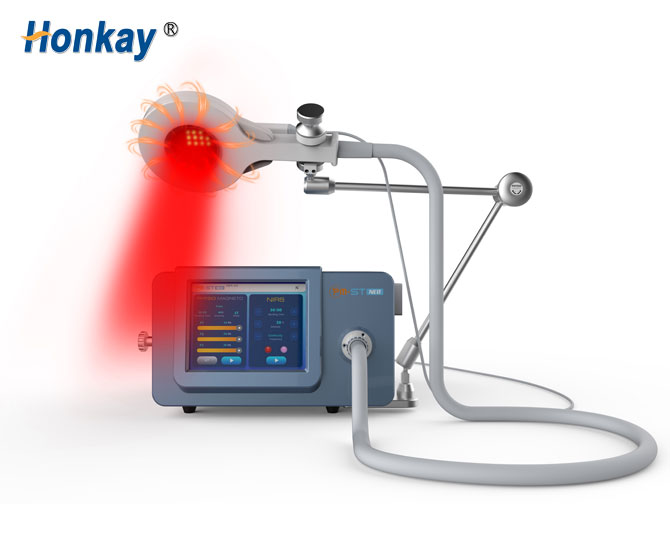
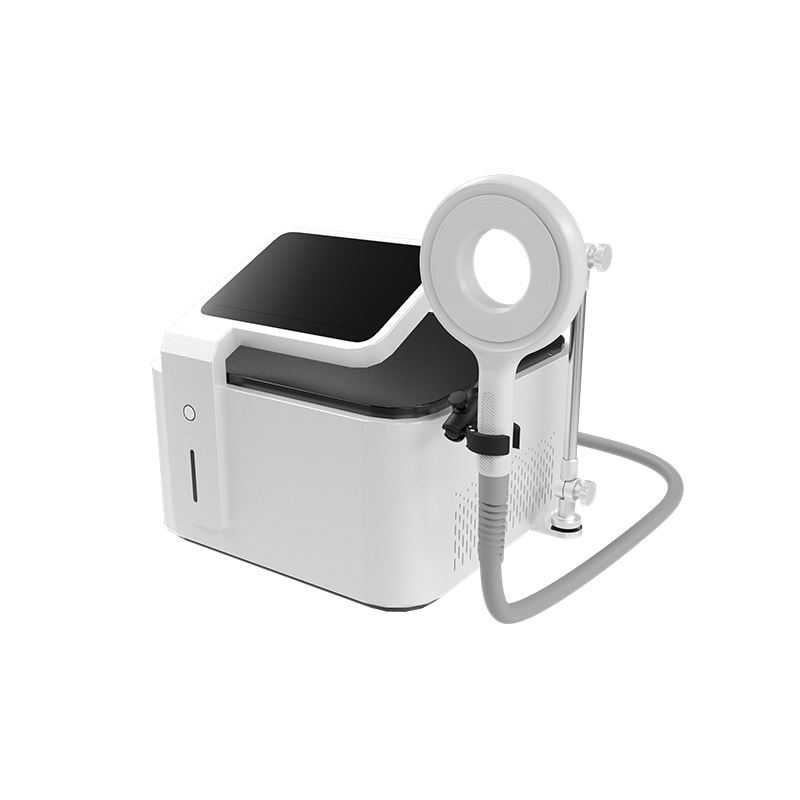
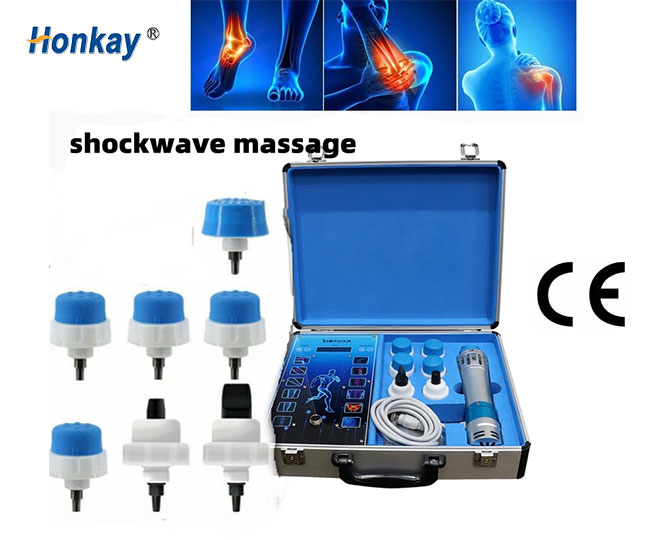
- The device and its handpiece or loop, plus the spare if you carry one.
- A cable long enough for the worst socket position you were told about, on a reel rather than a coil.
- An RCD adaptor. Yards are outdoor electrical environments whatever the socket looks like.
- Coupling medium and something to wipe it off with, plus a bag for the used cloths.
- A hard case or tray to stand the control unit on, off the concrete.
- Printed record sheets and a pen. Phone notes are fine until the yard has no signal.
- Water for the horse, and a cloth for the coat if the session follows work.
Setting up where the horse already stands
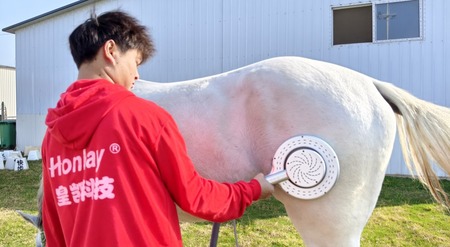
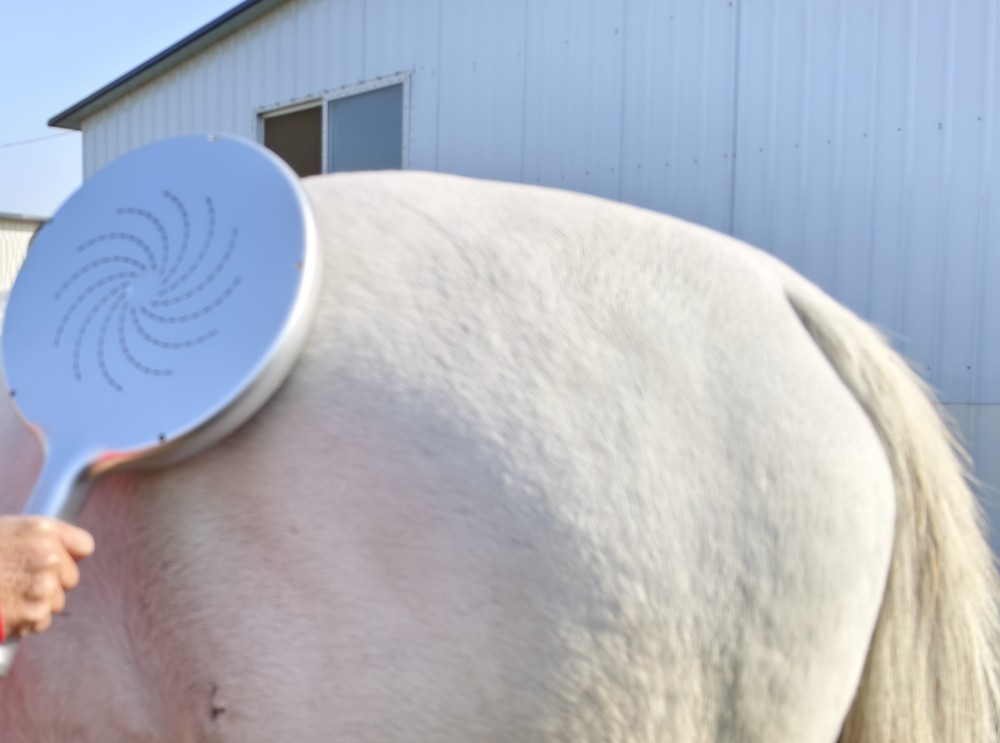
Most yards give you one usable space and it is rarely the one you would design. Bring the equipment to the horse rather than the horse to the equipment: a horse walked somewhere new spends the first ten minutes looking at the place instead of standing still.
The control unit sits on a flat, dry surface within cable reach, never on the floor where it can be stepped on. The cable runs to the horse without crossing where the handler stands or where the horse might step back; if it has to cross, it crosses behind the handler, never between handler and horse.
Check the footing with your own feet. Concrete and grass are fine; wet clay and loose gravel are not, because a horse shifting to keep its balance cannot hold a position. If the only space is marginal, shorten the visit rather than the setup.
Working with a horse you have not handled before
Ask the owner to put the horse where it will be worked and to stay for the first part of the session. A horse calm for its owner and unsettled for a stranger is normal, and the owner’s presence is the cheapest way to shorten that gap.
Stand where the horse can see you, work from the side rather than from behind, and keep one hand free. If the horse moves, stop and restart from where it stopped rather than beginning the route again; the restart rule is the same one that keeps a session’s record meaningful, and it is covered in more detail in the handler preparation guide linked below.
Anything beyond ordinary handling is not yours to decide. Sedation and restraint are clinical decisions belonging to the vet, and improvising them takes on a risk the booking never covered.
Between horses and between yards
The handpiece or loop is the part that travels furthest. Wipe it between horses, bag the cloths instead of dropping them back in the case, and treat the case as contaminated until wiped. If the yard has its own biosecurity routine, follow it.
Keep a separate record per horse and per yard. On a shared yard, two practitioners running different routines in the same week is common, and a written record is what stops the horse from receiving two versions of the same week.
Time on site, and how to quote it
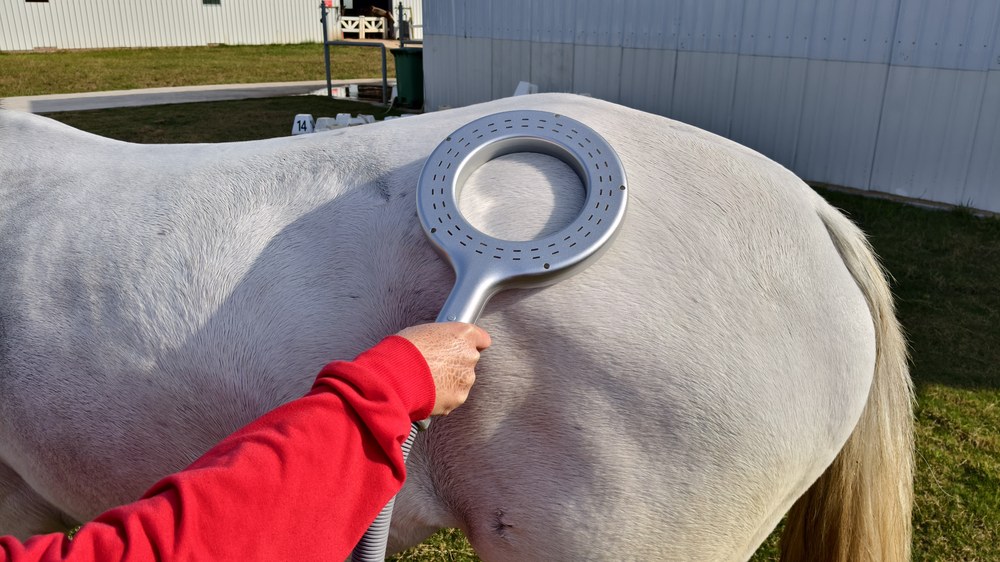
Quote the visit, not the session. The visit includes unloading, setup, settling the horse, cleaning down and reloading; that is the time the client is actually buying.
A single-horse booking twenty minutes away rarely pays on its own, which is why most visiting practitioners quote half-days with two or three horses. Say so at booking rather than discovering it on the invoice.
| Block | What it contains | Where the time goes |
|---|---|---|
| Arrival | Park, unload, find the socket, set up | The first visit at a new yard takes twice as long as the second |
| First horse | Settle, routine, record | Settling, not the routine, is usually the longest part |
| Second horse onward | Routine and record, setup already done | The marginal horse is where the half-day starts to pay |
| Departure | Clean down, notes, reload | Skipping this is what makes the next visit slower |
What you leave behind
Leave three things: a copy of the record, a one-page note for the owner, and a date. The note should say plainly what the routine is, who set it, and what would be a reason to call the vet instead of waiting for the next booking.
The record is also your protection: if somebody else works the horse between visits, it is the only document showing what was done and when.
When the visit should not go ahead
Postpone rather than improvise if the horse is lame in a way that was not described at booking, if the only space is unsafe underfoot, if there is no safe power, or if nobody experienced is available to hold the horse. None of those are equipment problems and none of them are solved by shortening the routine.
An implanted cardiac pacemaker or another implanted electronic device is a reason not to use the equipment at all. Pregnancy, a serious condition, or a young animal is a reason for the vet to decide, before the visit rather than during it.
Frequently asked questions
Do I need to bring my own power cable?
Bring one long enough for the socket position you were told about, plus an RCD adaptor. Yards often have a socket, rarely where you need it.
Can the session be done in an open yard in bad weather?
An aisle is better in rain and wind, and the equipment should not be used in wet conditions. If there is no cover, move the booking rather than work under a loose rug or a tarp.
What if the owner is not there?
Reschedule unless a competent handler has been arranged and named in advance. A stranger’s horse and no second pair of hands is a combination that ends sessions early.
How many horses fit in one visit?
Two or three at one yard is the usual shape of a half-day once setup is done. The first horse always takes longest because the yard is new.
Should I price per horse or per visit?
Per visit, with the number of horses agreed in advance. Per-horse pricing hides the travel and setup, which is most of the cost on a single booking.
What if the routine is not set yet?
Do not invent one on site. Book the visit for after the vet has set it, or attend as an observer; the equipment is not the part that decides the plan.
How should the equipment be cleaned between yards?
Wipe the handpiece or loop and the case, bag the cloths, and follow the yard’s own biosecurity rules where they exist. Ask the supplier which cleaning agents the surfaces tolerate before choosing one.
Related reading and the next step
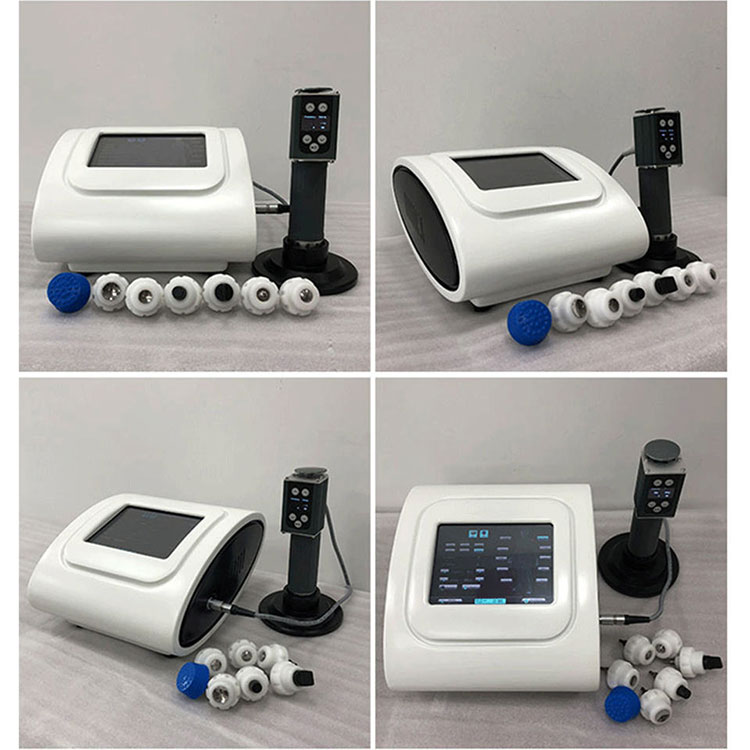
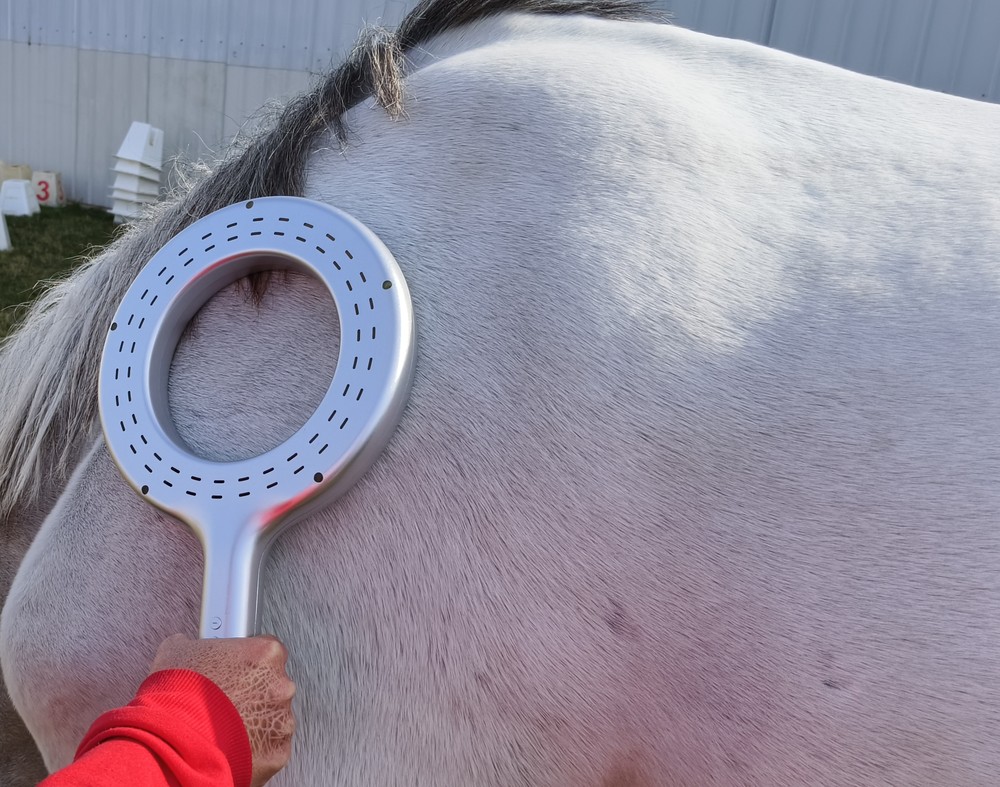
Two companion pieces cover the handling side in more depth: placing a magnetic loop on a horse and what a handler prepares before an equine shockwave session.
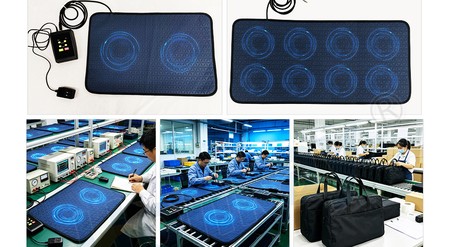
Honkay has been building physiotherapy and wellness equipment since 2005, including the loop, mat and shockwave ranges, and supplies clinics, yards and distributors across South America, South Asia, South-East Asia, Europe, Oceania and North America. The range carries a 24-month warranty from the factory shipment date. If you visit yards and want the kit list and the record sheet checked against your own caseload, send the disciplines and the number of horses you typically see in a day and the Honkay team will go through it with you.
This device is intended for adjunctive use alongside professional care, not as a replacement for diagnosis or treatment. Suitability should be confirmed with a qualified clinician; individual experience varies.