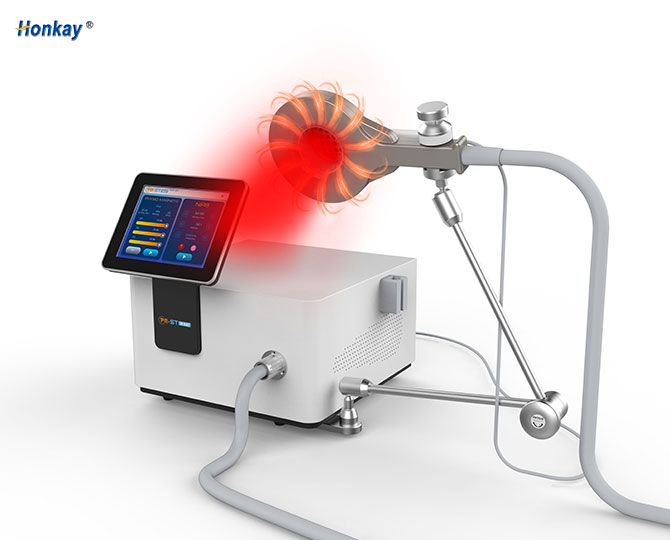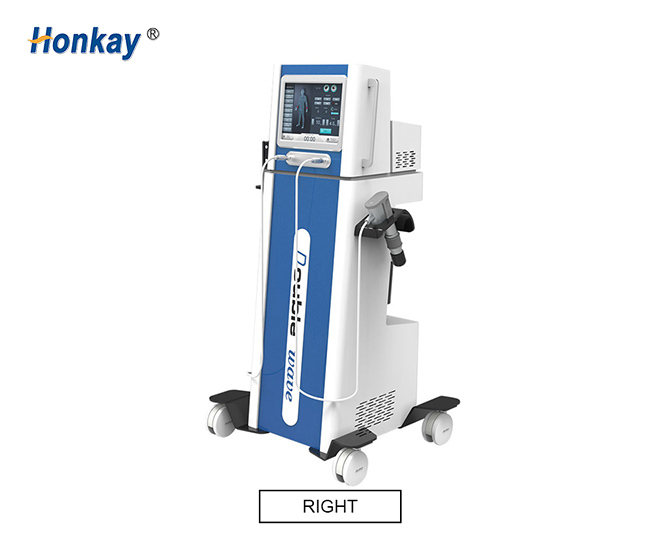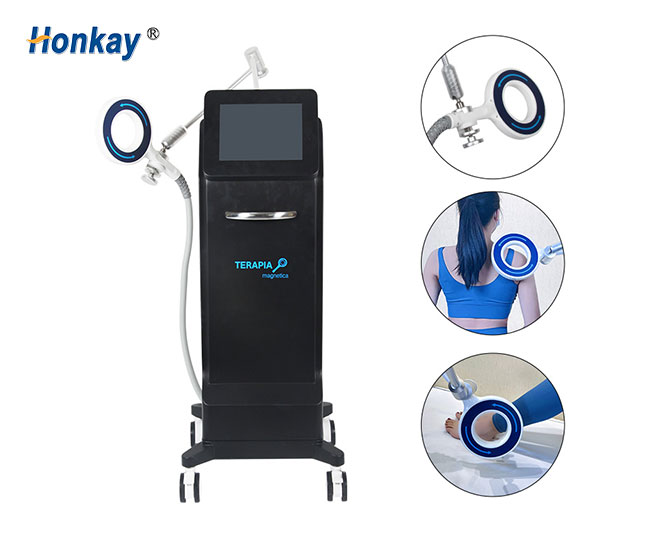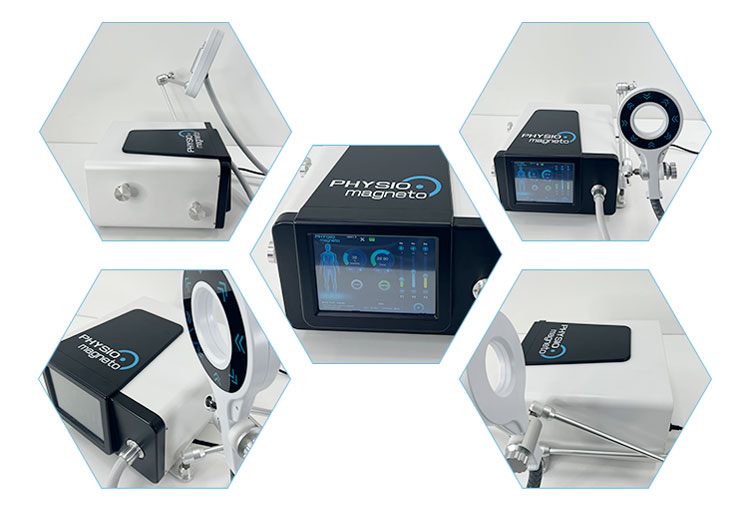
Shockwave Therapy Machine: Matching the Unit to Your Clinic and Protocol
A shockwave therapy machine is not one product with one buyer. The same console is bought by a physiotherapy clinic replacing a discontinued device, a chiropractic practice adding a modality, a sports medicine unit that needs deep tendon work, and a small clinic serving an older, mixed caseload. Those four buyers need different things from the same category, and most comparison tables do not distinguish between them at all.
The specification that matters follows from your treatment list and your operator, not from the maximum output figure on the brochure. Work backwards from who will be treated and by whom, and the shortlist writes itself.
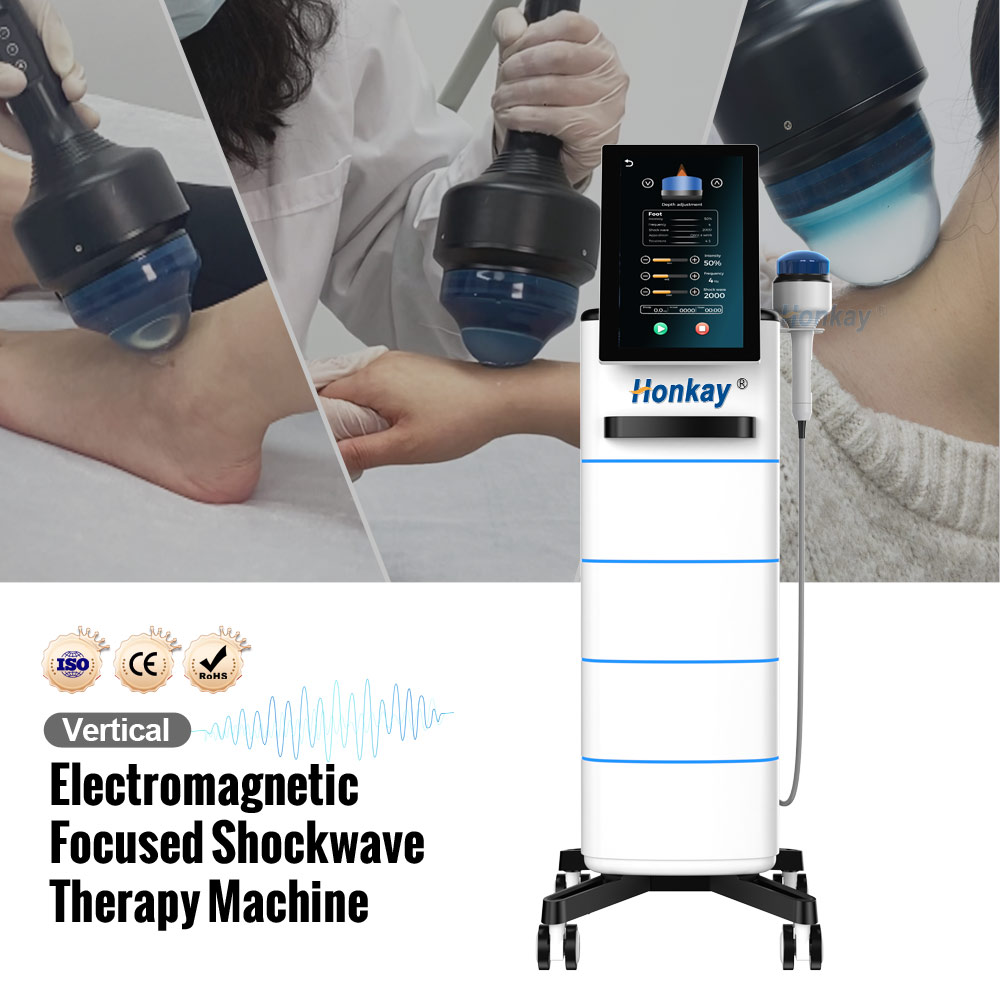
What a shockwave therapy machine is actually asked to do
Start with the setting, because the setting decides the caseload.
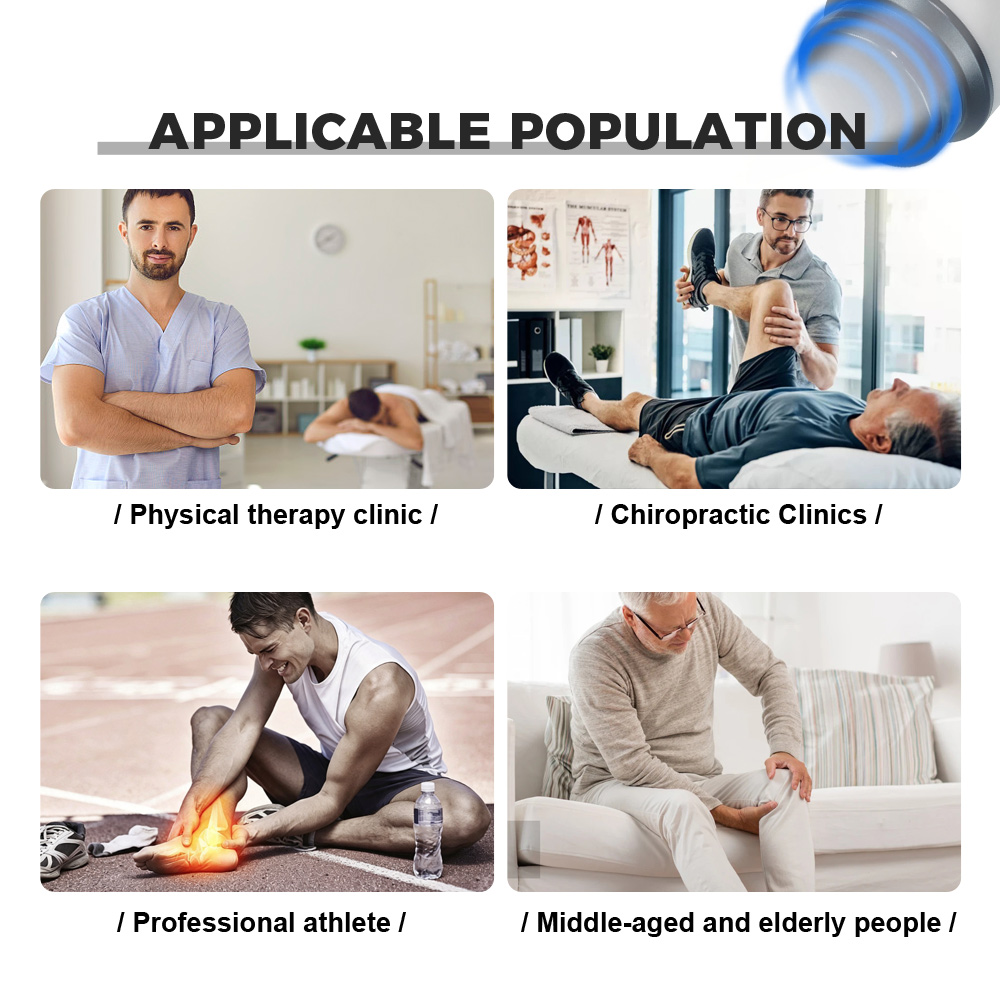
- Physical therapy clinics. A mixed musculoskeletal list: chronic tendon presentations, post-injury rehabilitation, and cases that have not responded to conservative care. This buyer needs a broad protocol menu and settings low enough to work over sensitive or bony areas.
- Chiropractic clinics. Manual therapy plus a device modality, usually inside the same appointment. Session length matters more than maximum depth here, because the shockwave block has to fit an existing schedule rather than replace it.
- Sports medicine and athletic settings. Insertional tendon problems and heavy loading injuries. Deep, localised delivery is the reason the machine is bought, and the treatment log matters for tracking a season.
- Middle-aged and elderly patients. The largest group by volume and the one least addressed in marketing material. Lower energy settings, shorter sessions and a clear screening step are what make the device usable on this caseload rather than intimidating.
Two conclusions follow from that list. First, “more power” is not the answer for three of these four groups. Second, it is the protocol table, not the peak output, that gets used every day.
Reading your treatment list as a machine specification
Most buyers write down the conditions they treat and then look for the machine that lists the same words. That is backwards, because the same condition can sit at different depths and need different applicator handling.
| Your treatment area | What it demands from the machine |
|---|---|
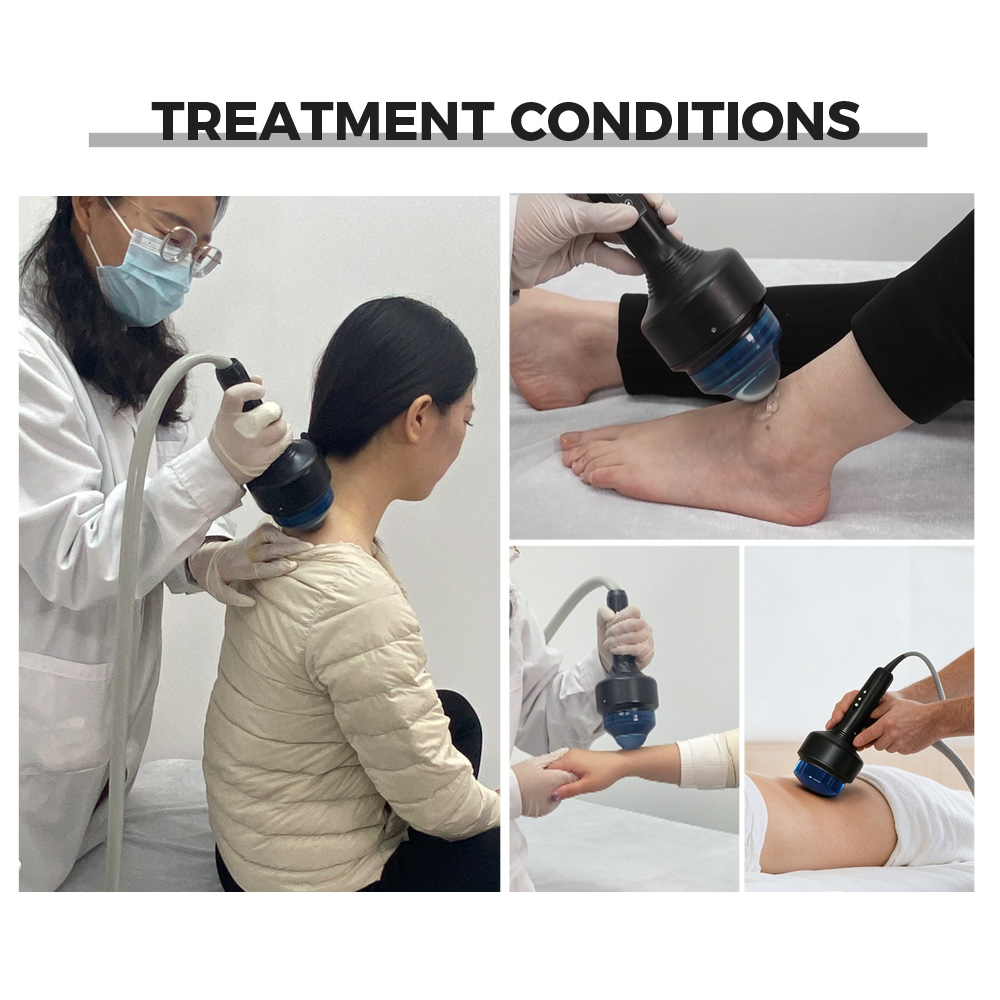
| Heel, plantar fascia, Achilles | Deep, localised delivery with a stable handpiece position; a head that can be held on a small target for the full pulse count |
| Neck and upper back | Low-energy settings and a head small enough to work around bony prominences |
| Elbow, wrist, hand | Precise localisation on a small area; short treatment blocks |
| Knee and thigh | Larger contact area and a protocol that can cover a broader region in one session |
| Shoulder and hip | Depth control, because the target sits under a thick soft-tissue layer |
Read across that table and the requirements collapse into four: adjustable depth, adjustable energy, a pulse counter you can trust, and a protocol you can repeat. Notice that none of them is a maximum power rating.
There is a second reason to write the list down. If your caseload is mostly neck and upper back, the deep-penetration advantage of a focused unit is largely unused, and you are paying for capability your patients never touch. If your caseload includes heels, insertional Achilles problems or chronic shoulder conditions, that same capability is the entire reason to buy the machine. The list tells you which of the two buyers you are.
Shockwave therapy for plantar fasciitis: the case that shapes the spec
Plantar fascia and insertional heel pain is the case that most often decides the purchase, and it is worth walking through because it drives every requirement at once.
The target is a tendon attachment sitting under a pad of fat and fascia, on a small, curved surface. That produces three specific demands:
- Depth, set deliberately. The pulse has to arrive at the attachment rather than in the soft tissue above it, so depth control is used on every session, not occasionally.
- A stable head position. The treatment runs for a defined pulse count, and the head must stay on the target for the whole of it. Support arms or a handpiece that can be set down take the fatigue out of a list of heel cases.
- Low-energy settings that a patient tolerates. Heel treatment on a sensitive area is where an operator discovers whether a machine is usable at intermediate settings or only at output extremes.
That last point is the one buyers miss. A machine that performs only at high output is a machine you cannot use on the caseload that most needed it.
Clinic protocol, presets and what makes a session repeatable
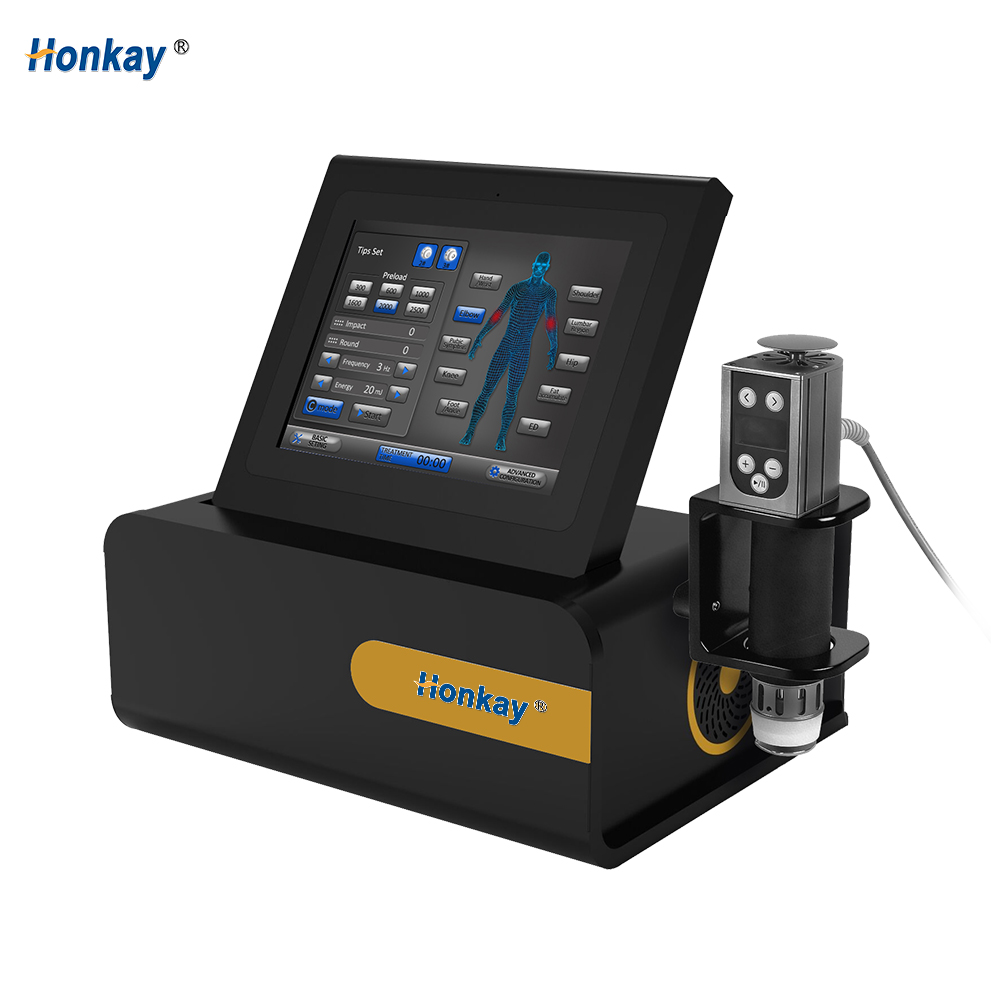
“Clinic protocol” is a phrase that appears on every datasheet and is rarely defined. On the machine it means something specific: stored parameters you can select rather than dial in, and a counter that tells you what was actually delivered.
Those two features are what turn a device into a repeatable service. Without presets, every session depends on the operator’s memory of last week’s settings. Without a counter, you cannot tell whether a course of treatment has been delivered as intended. Together they let two different operators produce the same session, which is what a clinic actually needs.
Three things support that in daily use:
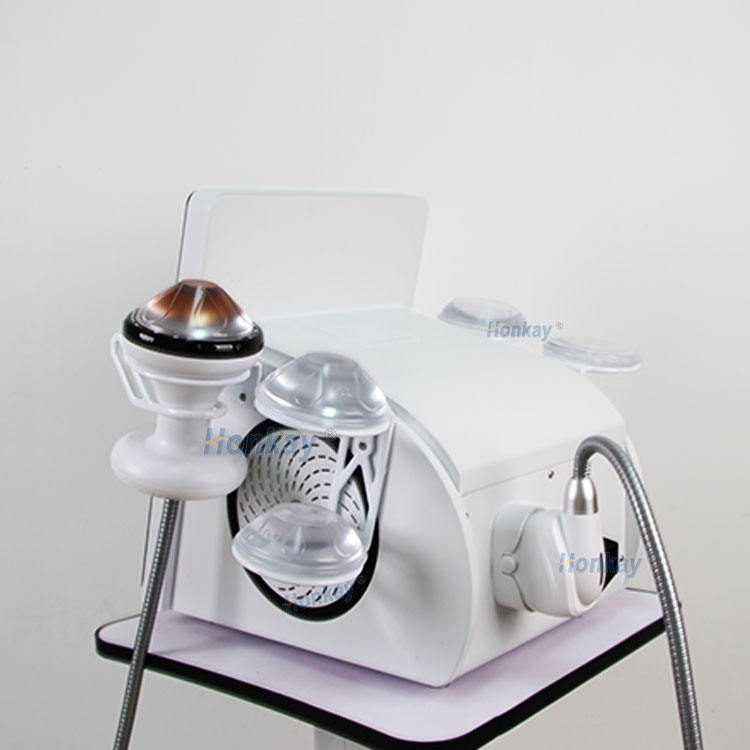
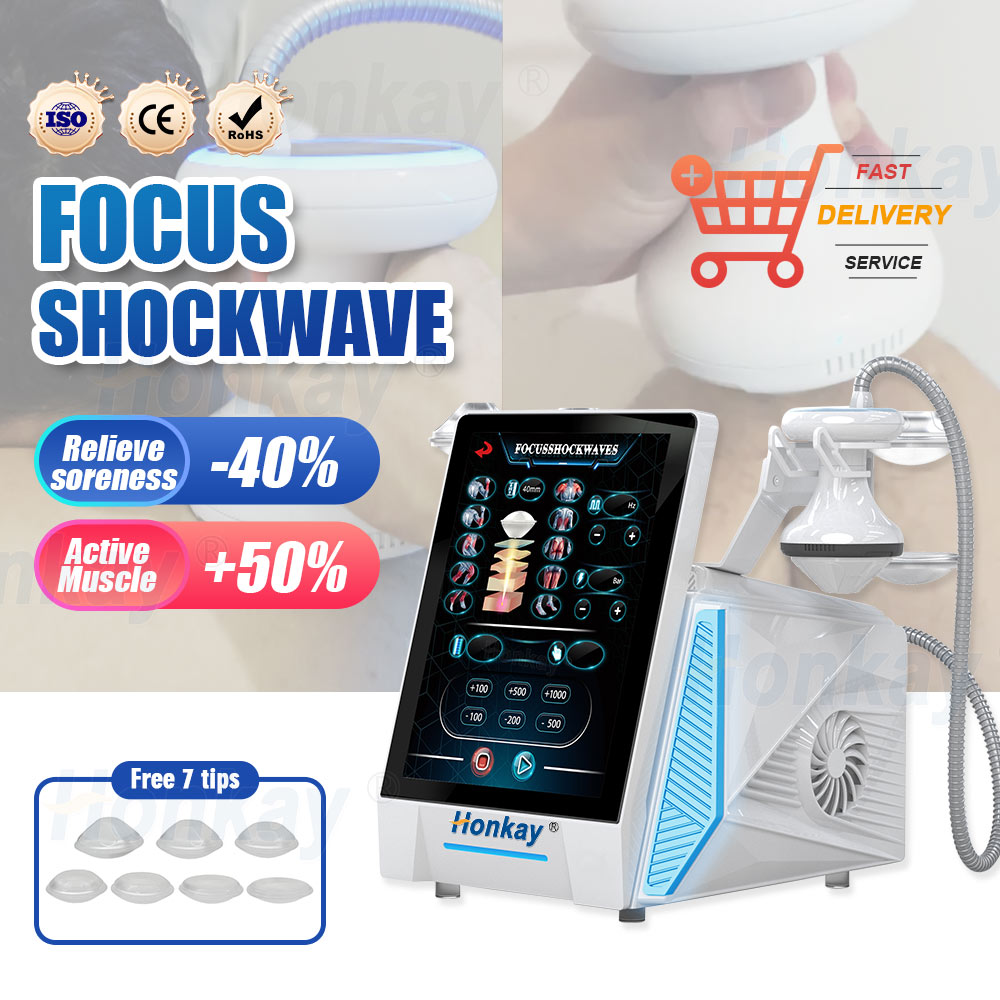
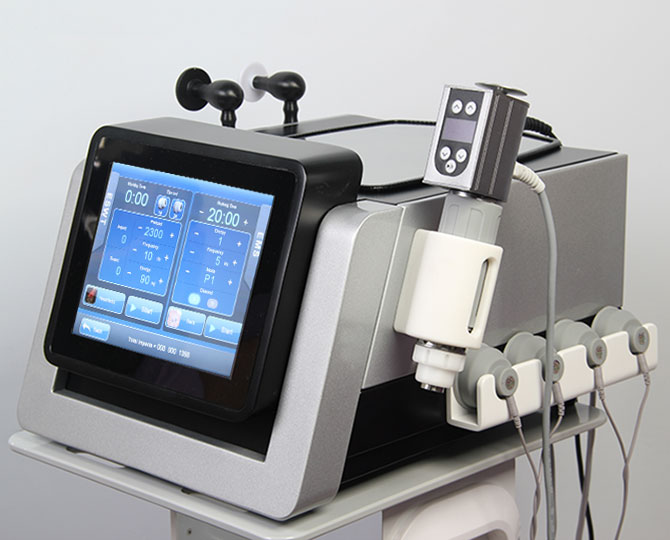
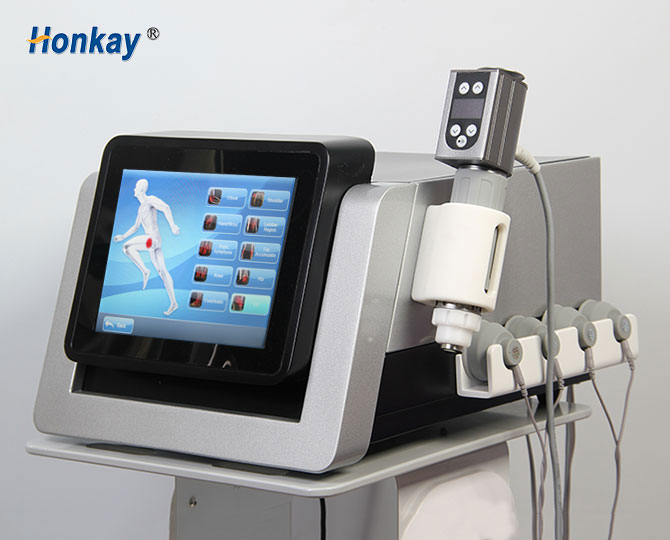
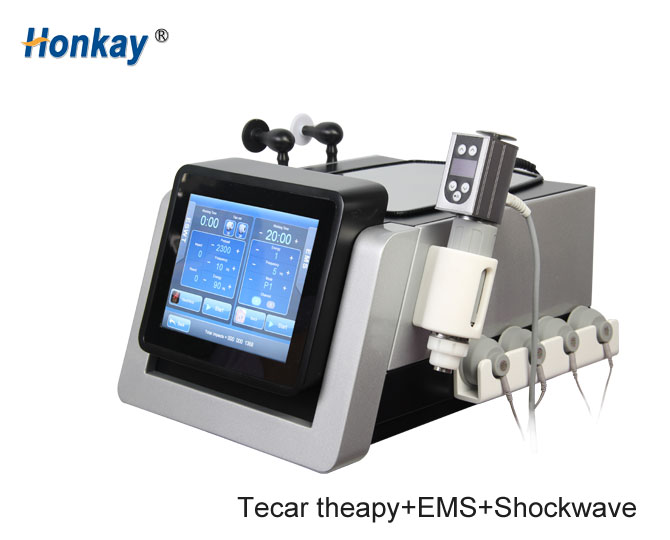
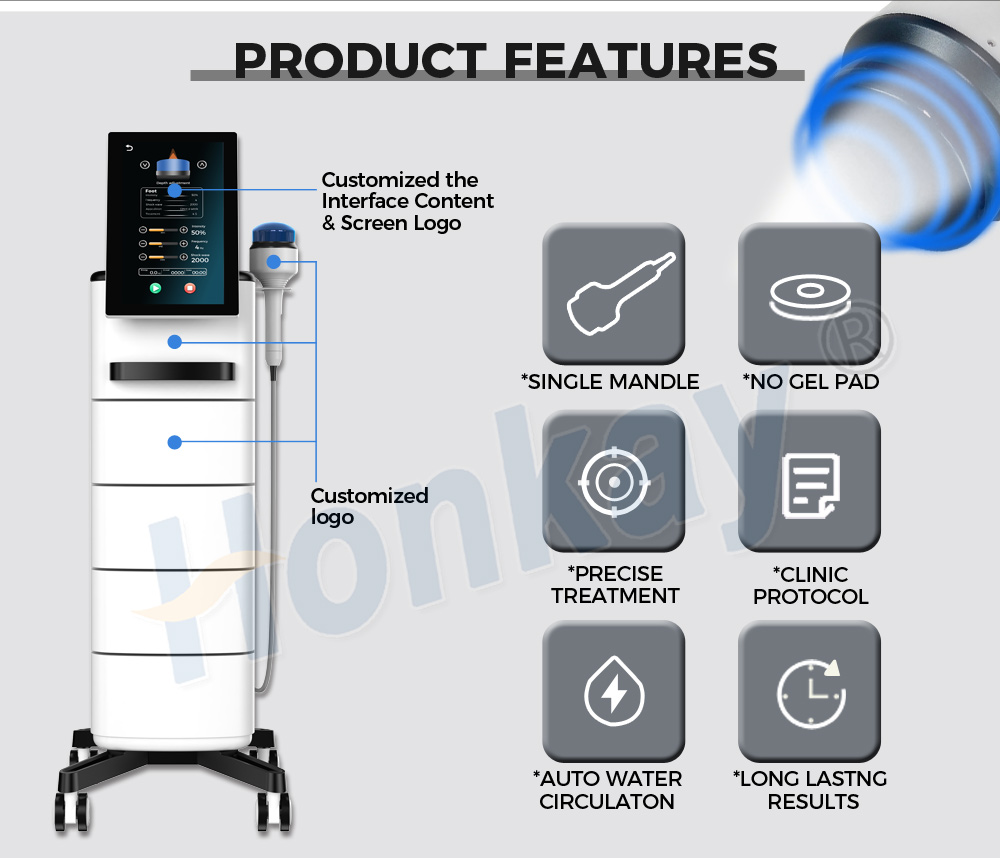
- A single handpiece with internal coupling. Depth and energy are adjusted on the unit rather than by swapping heads, and no gel pad or coupling consumable is needed per session. Fewer consumables means fewer interruptions and one less recurring cost line.
- Automatic water circulation. The coupling medium is conditioned by the machine, so the delivered output does not drift across a long list.
- A control set that only exposes what is used. Intensity, frequency, pulse count and timer on one screen. If a device demands a menu tree to start a standard session, that cost shows up as longer appointments, not as a better treatment.
Ask any supplier to demonstrate a complete standard session — start, run, finish — rather than a feature tour. The session is what your operator repeats forty times a week.
Customization, OEM and the list to confirm before you order
Because so many clinics and distributors buy this category, customization is normal rather than exceptional: the interface content and the screen logo, and the machine’s own branding, are commonly the parts that can be changed, while the treatment-delivery assembly is not.
Treat that distinction as the boundary of negotiation. Cosmetic and interface changes are routine. Anything that changes the delivered energy, the depth behaviour or the applicator geometry is a different machine and should be treated as one.
Specifications to confirm in writing
| Confirm | Why it matters |
|---|---|
| Working depth range, in one unit, with the measuring point | Sources mix millimetres and centimetres; ask for one convention |
| How depth is adjusted (full travel, not two presets) | This is the feature your plantar fascia and shoulder cases depend on |
| Energy range and the unit it is expressed in | Required to reproduce a protocol |
| Pulse frequency range | Must cover the protocols you intend to run |
| Pulse counter and session timer | Needed for repeatability and for logging a course |
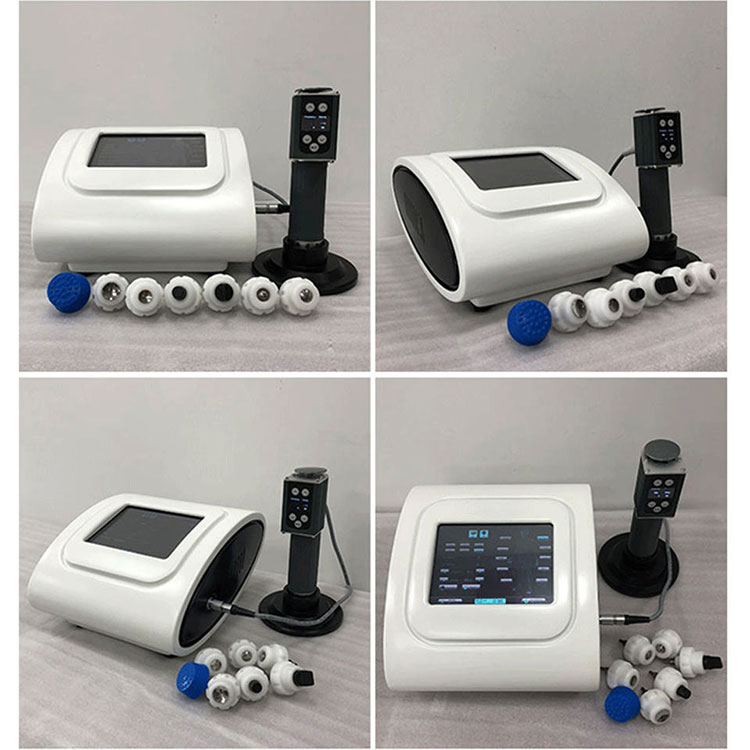
| Number of handpieces, and spare availability | A single-handpiece design depends on spares being stocked |
| Consumables required per session | Ideally none; confirm the coupling method |
| Which parts are customizable (interface, logo, housing) | Sets the boundary between cosmetic and clinical change |
| Written warranty terms | Period and scope |
| Contraindication and screening list | Implanted electronic devices, pregnancy, tumours in the treatment area, local infection, anticoagulant therapy, metal implants where vibration could damage tissue |
| Training and protocol documentation | Named in the purchase, not sold as an extra |
Frequently asked questions
Which kind of clinic gets the most from a shockwave therapy machine?
Broadly four: physical therapy clinics with a mixed musculoskeletal list, chiropractic clinics adding a device modality to manual therapy, sports medicine settings dealing with insertional tendon problems, and clinics treating a largely middle-aged and elderly caseload. The first and third make heavy use of depth control; the second needs short session times; the fourth needs low-energy settings and clear screening.
How do I tell whether my caseload justifies a focused unit?
Write down your actual treatment areas for the last month. If they are mostly neck and upper back, the deep-penetration advantage goes largely unused. If they include heel and plantar fascia, insertional Achilles problems, elbow insertions or chronic shoulder conditions, that capability is the reason to buy the machine. The list of areas tells you which buyer you are.
What must a shockwave therapy machine for plantar fasciitis be able to do?
Three things. It must let you set depth deliberately, because the target sits under a layer of fat and fascia rather than at the surface. It must hold a stable position on a small, curved target for a defined pulse count, which is where support arms or a rest position matter. And it must run usefully at intermediate energy settings, because a painful heel is not treated at the top of the range.
What does “clinic protocol” mean on the machine itself?
Stored parameters you select rather than dial in, plus a counter that records what was actually delivered. Together these let two operators produce the same session and let a course be logged. If the phrase appears only in marketing copy and not as a selectable set of parameters on the controller, it is describing nothing.
Do I need a gel pad or any consumable per session?
Not on a water-coupled focused unit. Coupling happens inside the handpiece, so there is no gel pad and no per-session consumable. That removes a recurring cost line and an interruption from every appointment. Ask any supplier to state plainly which consumables, if any, a session requires.
How much of the machine’s capability will my clinic actually use?
That depends entirely on your list, and it is the most useful question to answer before comparing prices. A clinic treating only superficial muscle tightness uses a fraction of a focused unit’s range. A clinic treating heel, elbow and shoulder insertions uses it on most sessions. Paying for depth you never use is the most common way to overspend in this category.
What can be customized if I order for my own brand?
Cosmetic and interface-level changes are routine: interface content, screen logo and machine branding. Anything that alters delivered energy, depth behaviour or applicator geometry is a different machine rather than a customization and should be evaluated and quoted as one. Confirm the split in writing before ordering.
What should I confirm in writing before ordering?
The working depth range in a single unit and its full adjustment travel; how energy is expressed and over what range; the pulse frequency range; the pulse counter and session timer; the number of handpieces and spare availability; whether any consumable is needed per session; which parts are customizable; the per-area protocol table; the contraindication and screening list; and the written warranty terms.
Request a quotation
Send us your treatment list — the areas you actually see, how many sessions a week, and who operates the machine — and we will tell you whether a focused unit is the right fit for it, and which configuration and protocol set goes with that list. The quotation includes the depth range in a single unit, the energy and frequency ranges, the per-area protocol table, the customization options and the written warranty terms, so two offers can be compared line by line.
Manager: Lisa
WhatsApp: +8613751821215
E-mail: hk6@huang-kai.com