Equine Shockwave: What the Handler Prepares Before the Vet Arrives
How a handler prepares for an equine shockwave session: coupling, standing position, a fixed route around the body, hygiene between horses and the record that makes the next visit comparable.
Shockwave on a horse is a veterinary procedure before it is an equipment question. The device supplies the impulse; the decision about where, how much and how often belongs to the clinician holding the case, and the handler’s job is to make that decision easy to carry out.
This page covers the preparation side: what to have ready before the vet arrives, how the handpiece is handled on a standing horse, what coupling means in practice, and what to record so the next session starts from evidence rather than memory.
What the handler prepares before the vet arrives
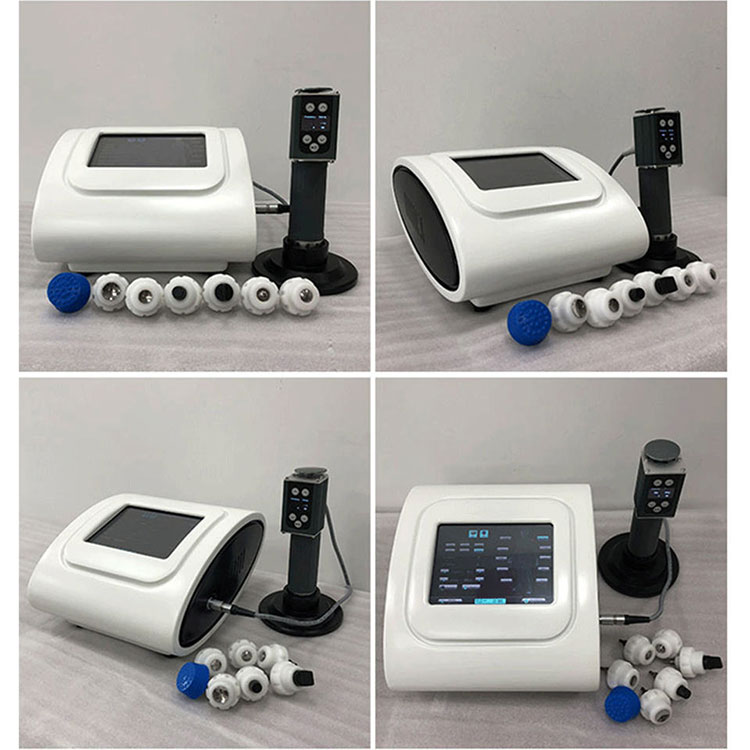
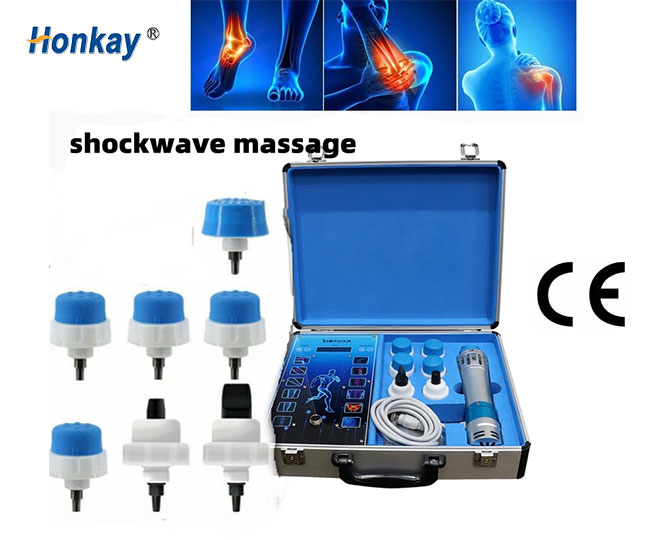
Four things decide whether a session runs smoothly: a clean, dry area of coat; a horse that is standing square on level ground; the device charged or plugged in with the handpiece connected and tested; and a second person available if the horse is young or unpredictable.
Restraint and sedation are clinical decisions and belong to the vet. Preparing for them is not the same as deciding them, and a handler who has the area ready saves the vet the ten minutes that usually get spent looking for a clean cloth.
Coupling: the part that decides the session
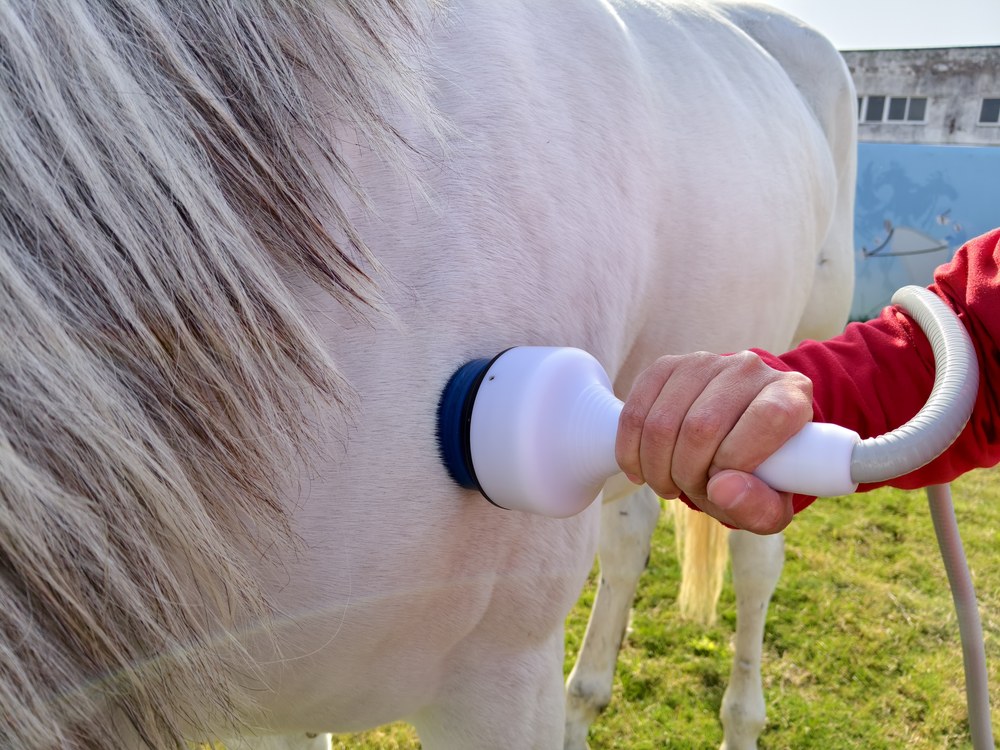
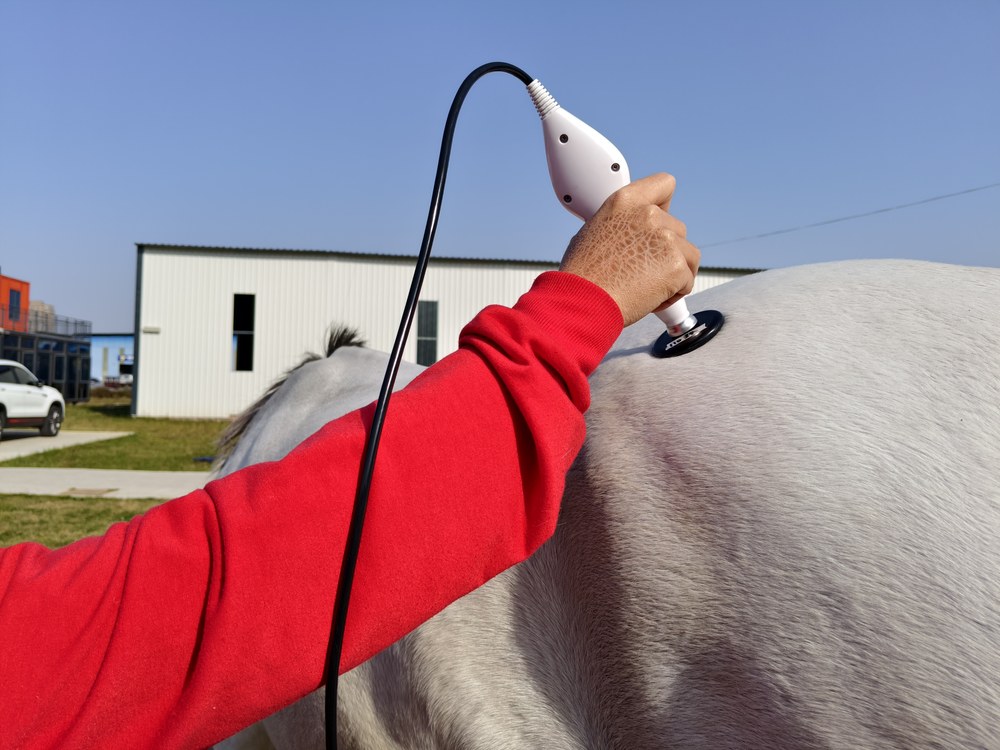
An impulse delivered through an air gap does not reach the tissue the vet intended. Coupling is the practical answer: gel, a coupling pad, or firm even contact depending on the handpiece, plus enough pressure to keep the interface closed without pressing the horse into movement.
| Problem | What it looks like | Fix |
|---|---|---|
| Air gap | A duller sound, less response from the horse | Re-gel and reset the handpiece flat |
| Handpiece sliding | The horse shifts away as the head moves | Less pressure, slower movement, shorter passes |
| Cable in the way | Handler steps over it, or the horse stands on it | Route it along the wall side, never under the horse |
The horse’s response is the most useful signal in the room. A horse that was relaxed and becomes alert is telling you something about pressure, speed or position, and it is worth stopping to fix it before the next pass.
| Before the session | Why it matters |
|---|---|
| Coat clean and dry at the areas | Gel stays where it is placed instead of sliding off |
| Device charged and handpiece tested | A session that stops halfway is hard to restart calmly |
| Second person available | Someone to hold when the horse changes its mind |
| Level, non-slip footing | A horse that is bracing will not stand through the passes |
Standing where the horse can see you
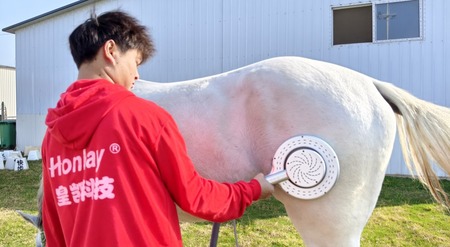
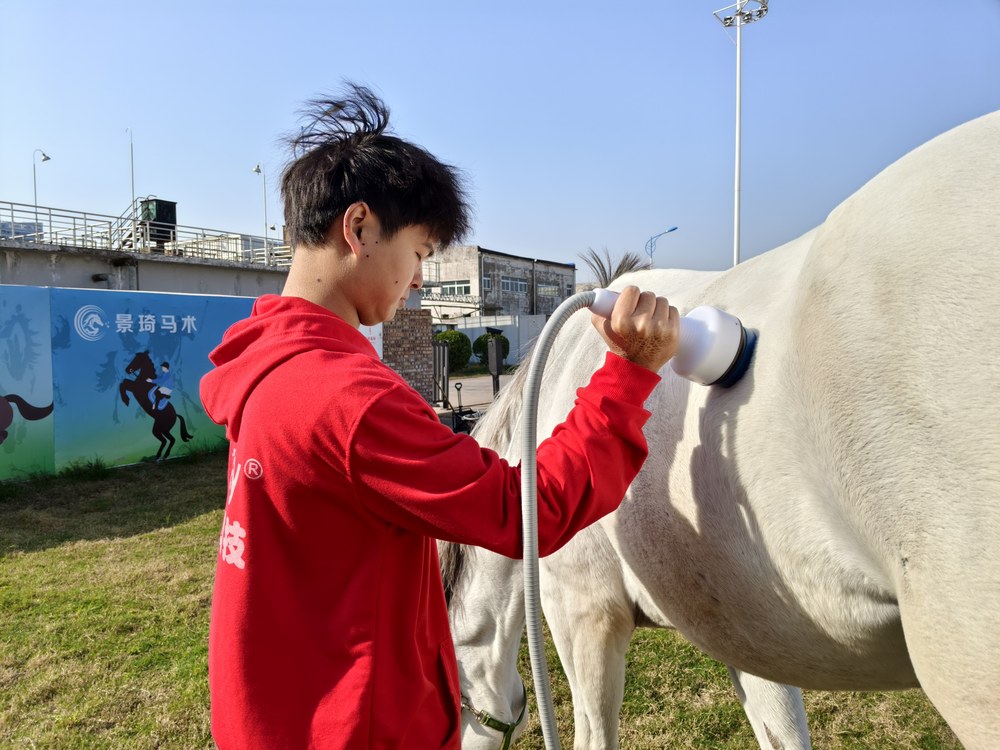
A horse that cannot see the operator will move to find out what is happening. Working at the shoulder and the back is straightforward; working at the hindquarter means standing to the side, within the horse’s field of view, with a hand on the quarters before the handpiece arrives.
The same applies to the lower limb: kneel or crouch beside the leg rather than behind it, and let the horse see the handpiece before it touches the skin. Five extra seconds here prevents most of the kicking incidents people describe afterwards.
Moving through the areas in a fixed order
A fixed order makes the session repeatable and makes the records comparable. The vet sets the areas; the handler keeps the sequence the same from visit to visit, so a change in the horse’s response can be attributed to something real rather than to a different route around the body.
Between areas, wipe the gel and reapply rather than dragging it across the coat. It takes a few seconds, and it keeps the coupling consistent at every site.
A horse that steps away mid-sequence is the normal case, not the exception. Pause, let the horse settle, re-couple the same area and carry on from there rather than starting the route again. Restarting the whole sequence doubles the session, and it also makes the record meaningless, because nobody can say afterwards how many passes the first areas received.
Decide before the vet arrives who is counting. One person holding the horse and one person handling the handpiece is the arrangement that keeps both the pass count and the horse quiet; a single handler trying to do both will lose track of the count first and the horse’s position second.
Hygiene between horses, and between yards
A handpiece travels. It touches coat, gel and occasionally skin, and it moves between animals that may never meet. Wiping the treatment face after each horse is the minimum, and a yard with a skin problem in one box should treat the device as a possible route of spread until the vet says otherwise.
The manual does not prescribe a cleaning agent for this range, so confirm the approved one with the supplier in writing. Keep the connector dry, and never immerse the handpiece.
What the record should contain
Five fields make a session reviewable: the date, the areas treated, the settings used, the number of passes at each area, and the horse’s response in one sentence. The last field is the one that turns a stack of notes into a case history.
Where the vet is managing a rehabilitation programme, send that record rather than a description. It is faster for them and it makes the next decision better informed.
Days off, workload and the week around a session
Whether a horse is rested after a session, and for how long, is a clinical instruction rather than a device setting. What the handler can control is the diary: knowing in advance which days the horse is in work, which days it is on the walker, and when the next session falls.
Putting that on one page beside the device prevents the most common practical failure: a session scheduled the day before a competition because nobody looked at the calendar.
When not to start
An open wound, a hot and swollen area, an undiagnosed lameness or a horse that is clearly in discomfort are not sessions to run through. They are findings to report. The same applies to a horse that has just been treated by the vet and has instructions that have not been passed to the handler.
A device that can be used on a standing horse is easy to use without thinking. The preparation above exists so that it is used deliberately instead.
Frequently asked questions
Does a vet have to operate the device?
The clinical decisions, including the areas, the settings and whether to treat at all, belong with the vet. Carrying out an agreed session is a handling task, and on many yards it is done by a trained handler.
Does the horse need to be sedated?
That is a veterinary judgement and depends on the horse, the area and the temperament. What the handler can do is make the environment quiet and have a second person available.
Why does the handpiece need gel?
Coupling carries the impulse into the tissue instead of losing it at the surface. An air gap produces a duller impulse and a less useful session, which is why gel is reapplied between areas rather than dragged along the coat.
How many sessions does a horse need?
That is set by the clinician managing the case, not by the device. The handler’s contribution is to keep the record accurate so that the decision is made on evidence.
Can the same handpiece be used on different horses?
Yes, with the treatment face wiped between animals using the agent the supplier has approved in writing. Where a yard has a skin problem, treat the device as a possible route of spread until the vet says otherwise.
What if the horse objects during a session?
Stop, check the obvious causes first — pressure, speed, cable, footing — and only continue once the horse is settled. A session that ends early is a better outcome than one that ends with an injury.
Is shockwave safe on a pregnant mare?
Pregnancy is one of the situations the manual lists as needing professional advice before use. It is a question for the vet, not for the handler.
Honkay has been building physiotherapy and wellness equipment since 2005, including the shockwave and loop ranges, and supplies clinics, yards and distributors across South America, South Asia, South-East Asia, Europe, Oceania and North America. The range carries a 24-month warranty from the factory shipment date. If you are setting up equine sessions and want the handpiece options and the record template checked against your caseload, send the disciplines and the typical case mix and the team will go through it with you.
This device is intended for adjunctive use alongside professional care, not as a replacement for diagnosis or treatment. Suitability should be confirmed with a qualified clinician; individual experience varies.