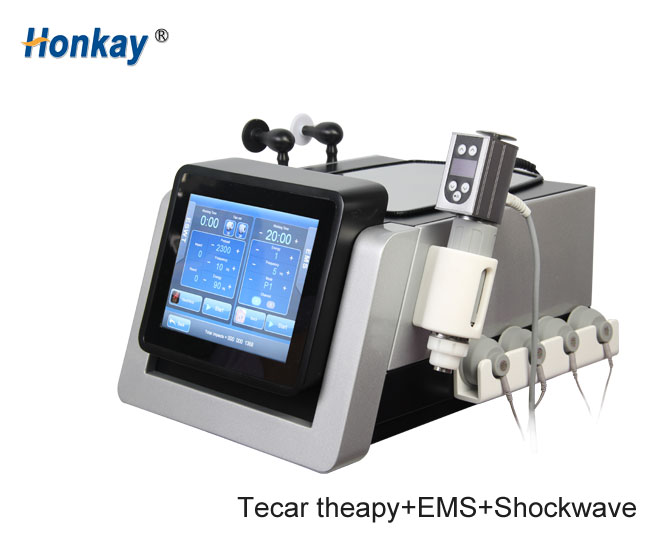
Focused Shockwave Therapy: Buying Probes by Depth, Not by Count
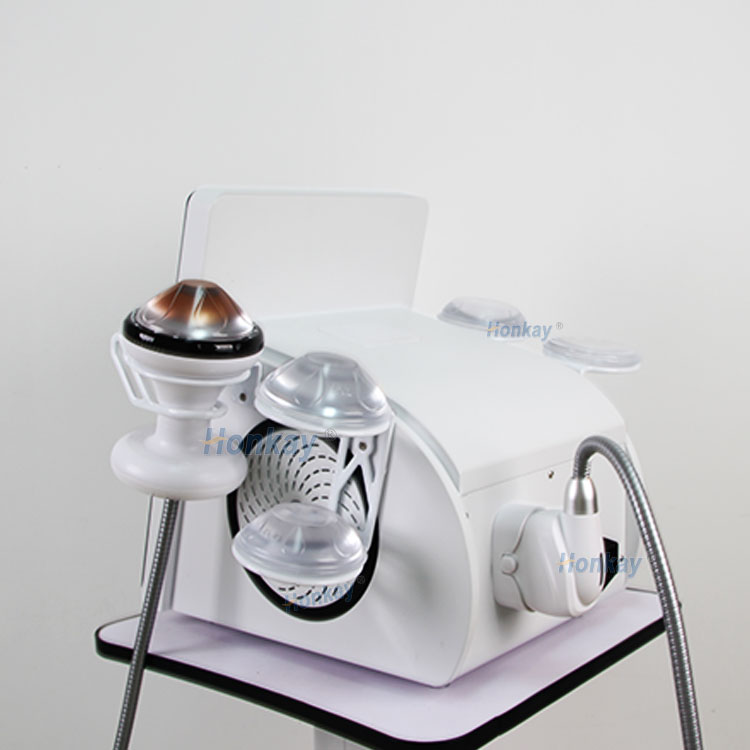
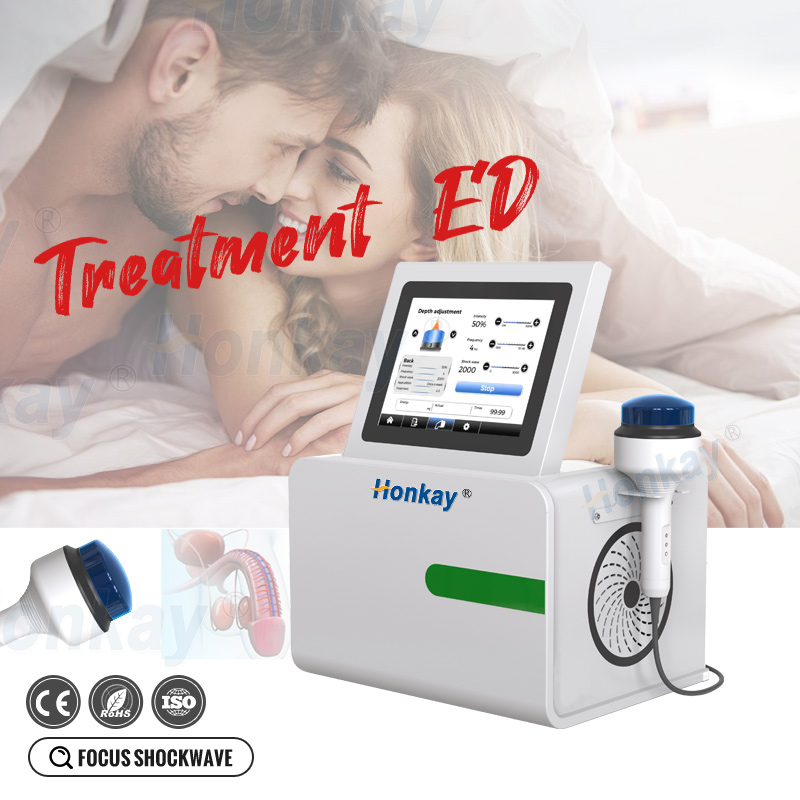
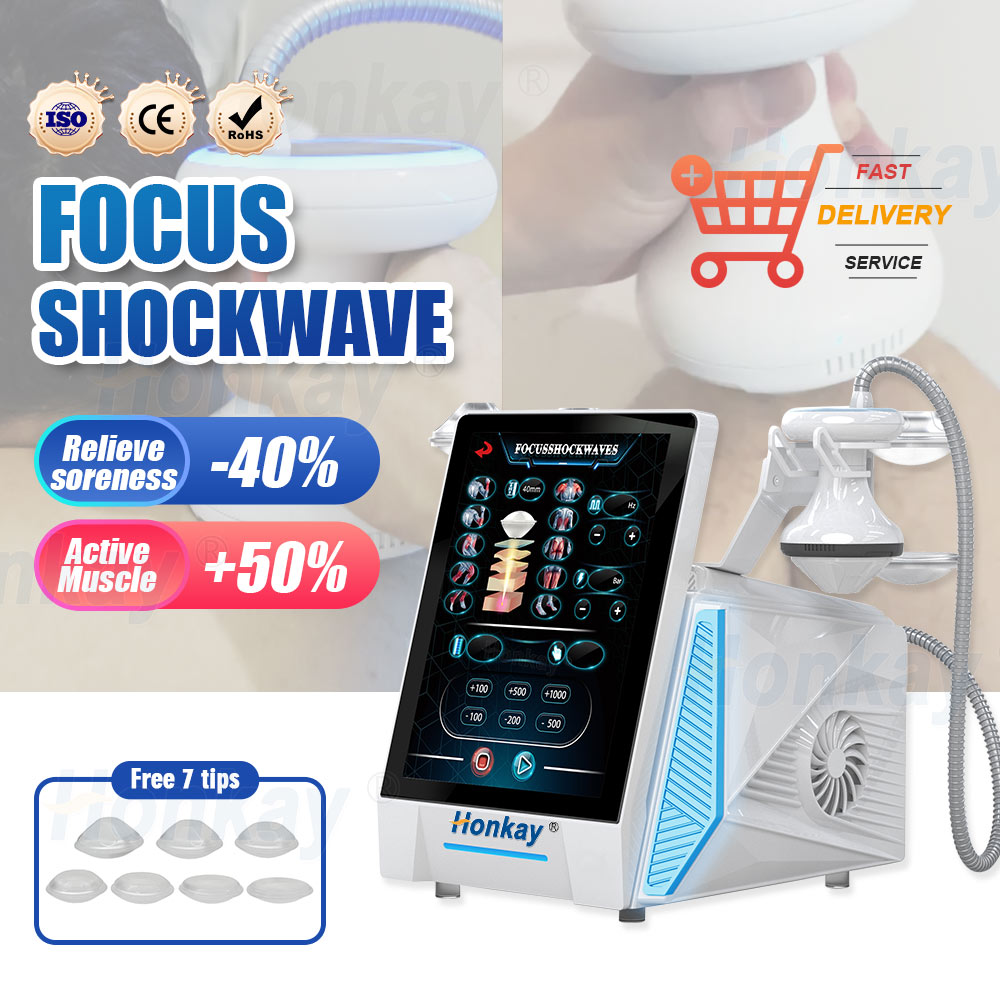
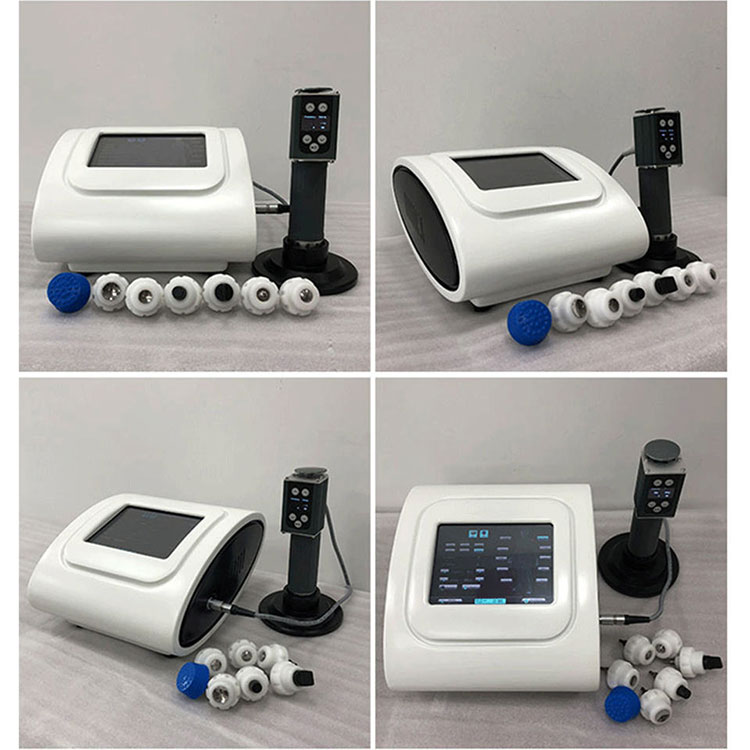
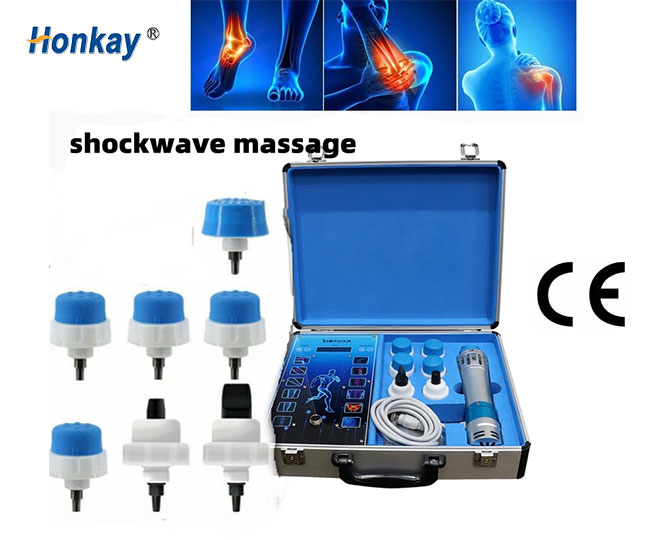
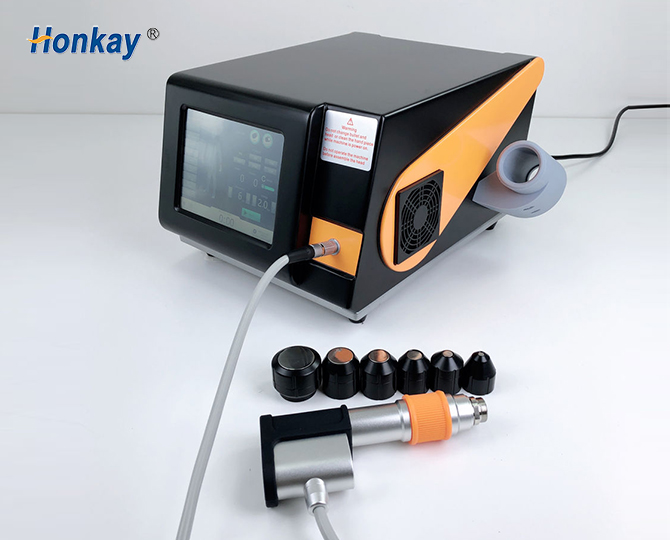
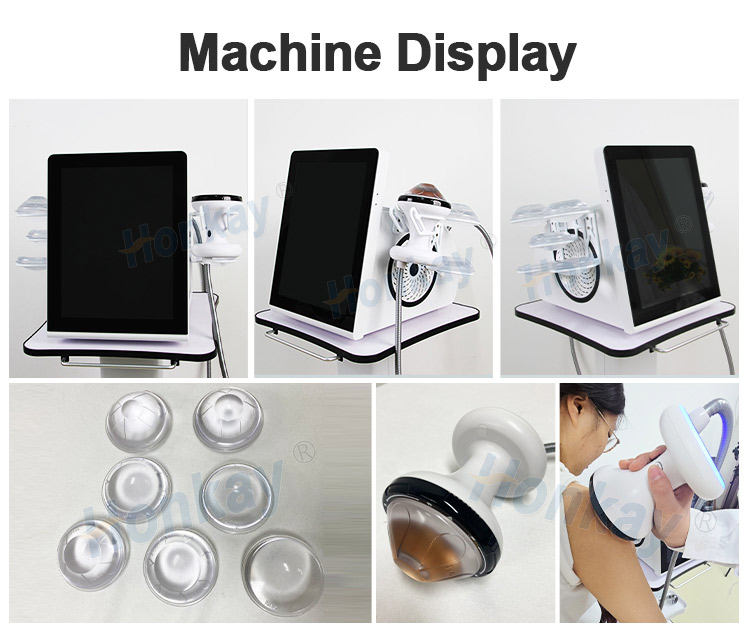
Two clinics can buy the same focused shockwave platform and end up with very different capability, because the machine is only half of the purchase. The other half is the probe set: seven pads, each coupled to a different focal depth, and whichever ones sit in the case decide what the clinic can actually do on a Tuesday afternoon.
This is a buyer’s guide to that half — how the numbered probes map to depth, what a focused shockwave therapy machine needs to ship with for an ED or pain caseload, and which parts wear out and have to be reordered.
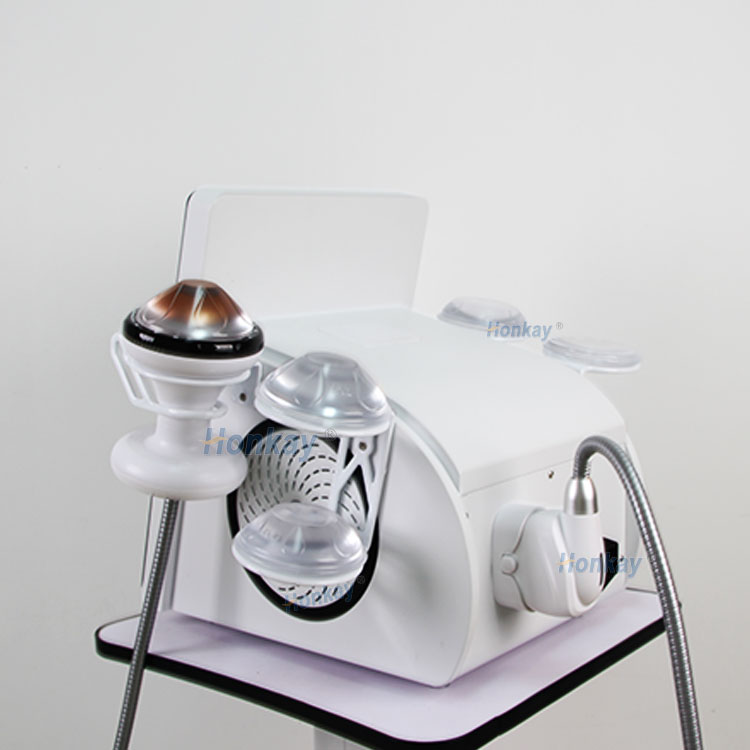
Depth is the specification that matters
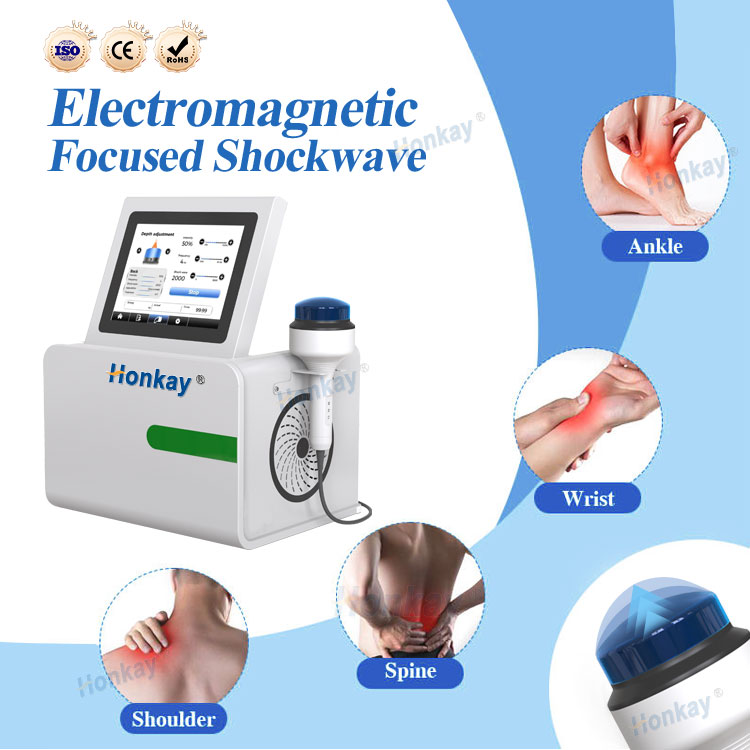
A focused shockwave head delivers energy to a focal zone, and the silicone pad in front of it sets where that zone sits. Change the pad and you change the working depth without touching the console.
On this platform the pads run in seven steps from 4–10 mm at the surface to 55–65 mm at the deepest, which is the range a focused device is expected to cover for musculoskeletal work. Two practical consequences:
- The pad, not the power setting, decides depth. Turning intensity up does not move the focal zone deeper; it only changes how much energy lands there.
- A missing pad is a missing capability. A clinic that buys the head but only three pads has three depths, whatever the brochure says.
| Probe | Focal depth | Typical working layer |
|---|---|---|
| No.1 | 4–10 mm | Superficial insertions and small joints |
| No.2 | 10–15 mm | Tendon mid-substance near the surface |
| No.3 | 15–25 mm | Plantar and heel-region depth |
| No.4 | 25–35 mm | Shoulder capsule and mid-layer tissue |
| No.5 | 35–45 mm | Large muscle bellies and fascia |
| No.6 | 45–55 mm | Deep fascial layers and thick muscle groups |
| No.7 | 55–65 mm | Deepest focal zone in the set |
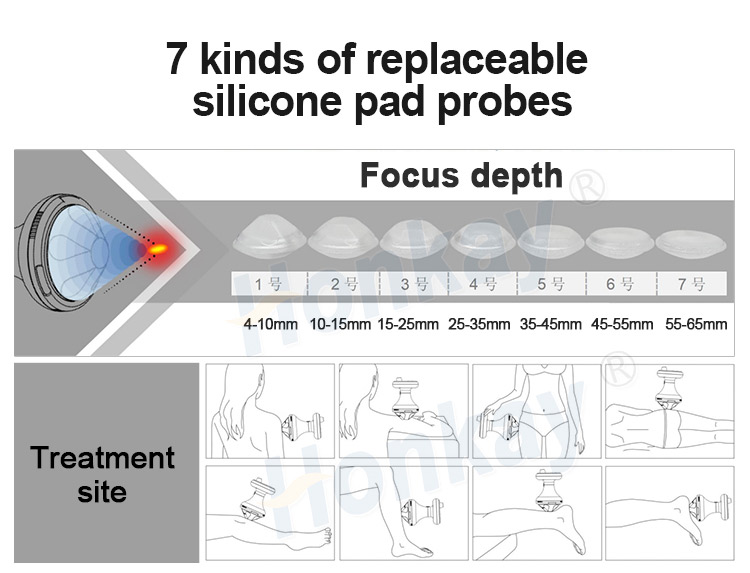
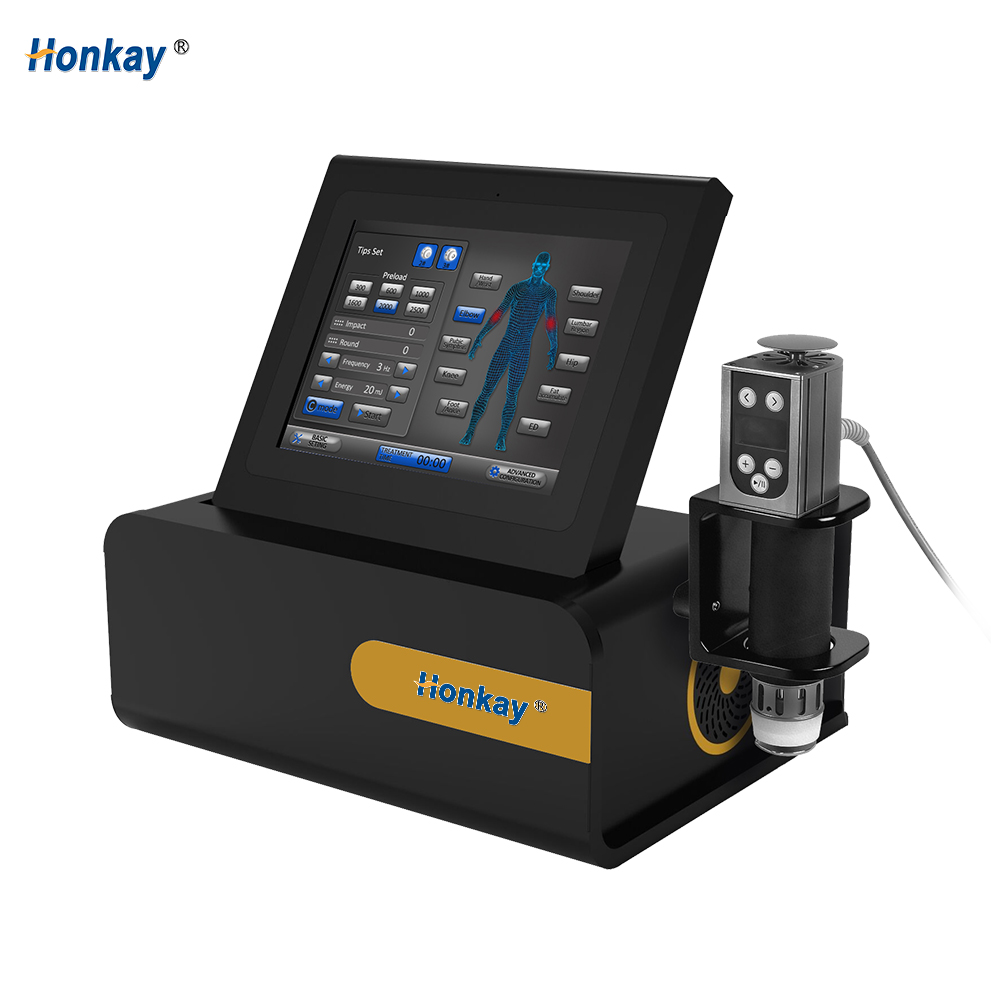
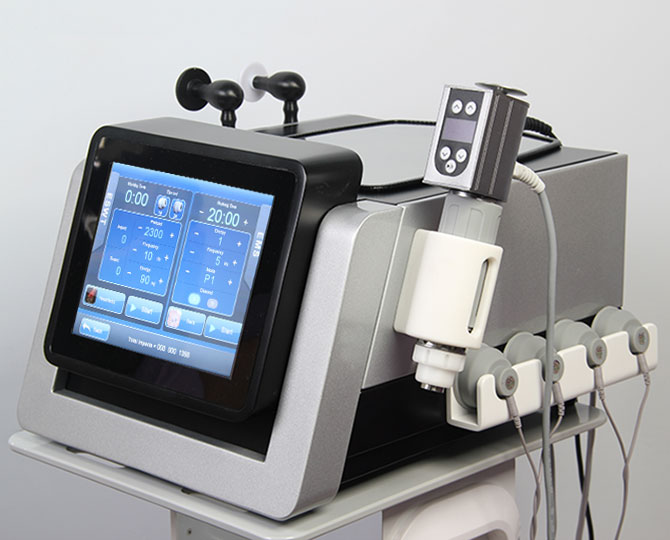
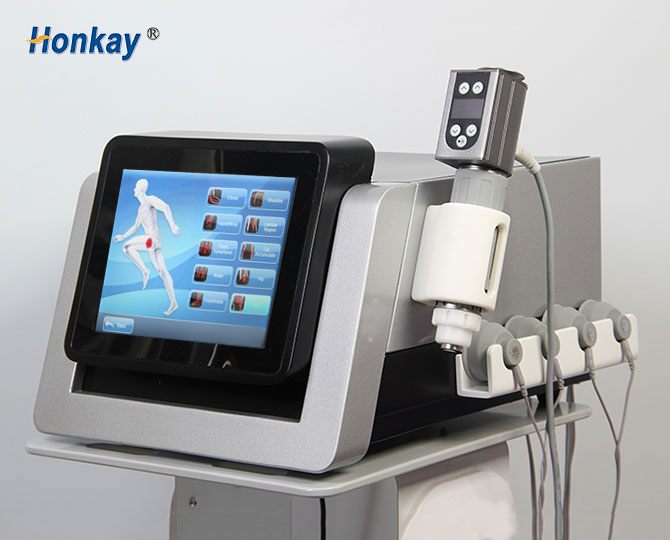
The console shows the selected pad and depth together, which matters for consistency: two operators using the same machine should be able to reproduce each other’s settings from the record, and that is only possible when the pad number is written down alongside the energy.
What an ED or pain caseload changes about the order
Both caseload types use the same console and the same handpiece; they differ in which pads are in constant rotation and how the room is booked.
- Pain caseload spreads across the whole depth range — shoulder, elbow, heel, gluteal and lumbar work all sit at different depths, so the full pad set earns its place.
- ED programmes sit in a narrow band and repeat many times a week, so the pads in that band wear fastest and need duplicates before the others do.
- Mixed clinics should order one spare of the two or three pads used daily, not a spare of all seven.
Ask the supplier which pads are standard in the quotation and which are optional. On most platforms the deep pads are the ones that get left out to hit a price point, and they are also the ones that take the longest to reorder.
Room, bench and storage
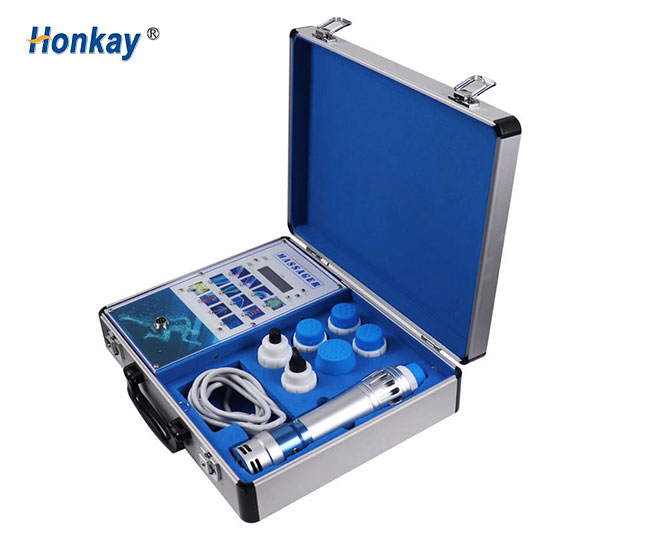
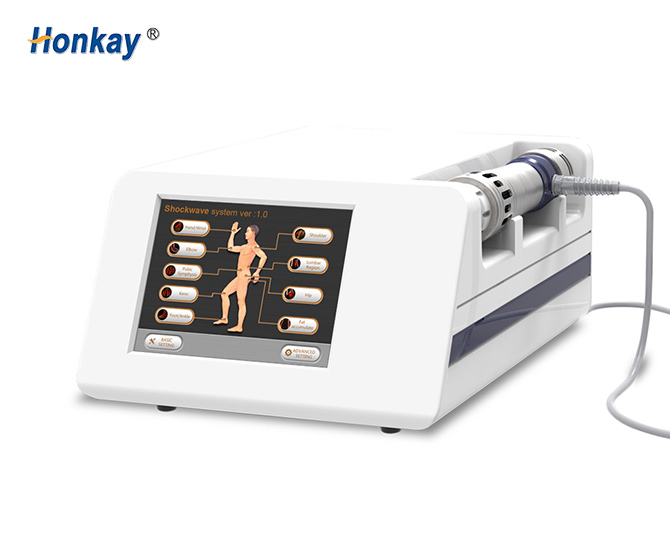
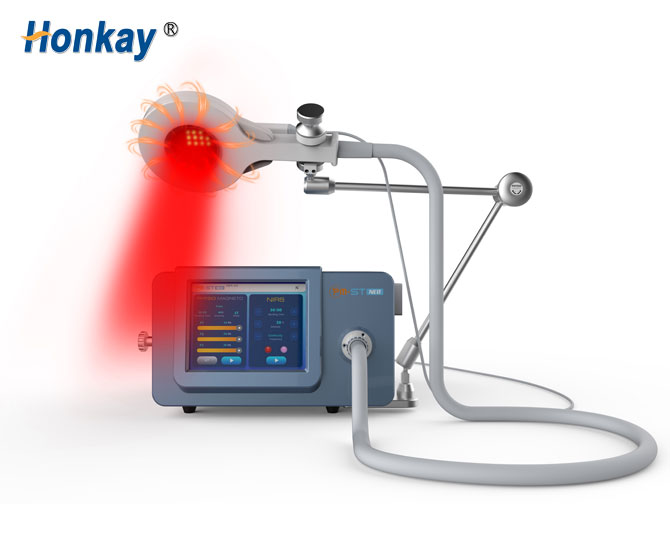
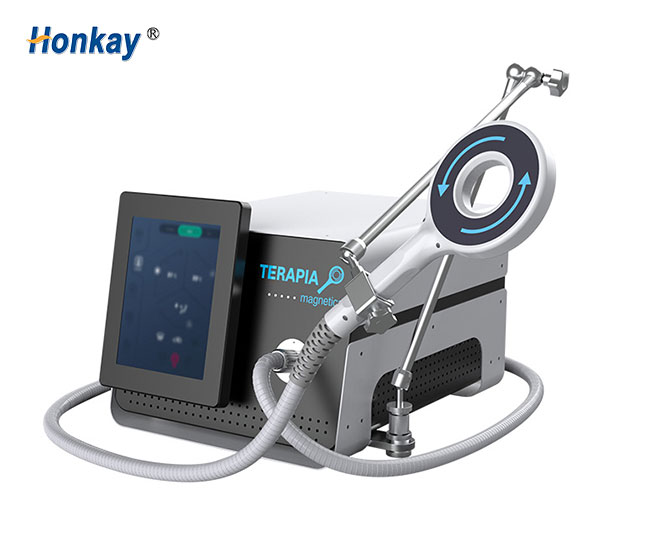
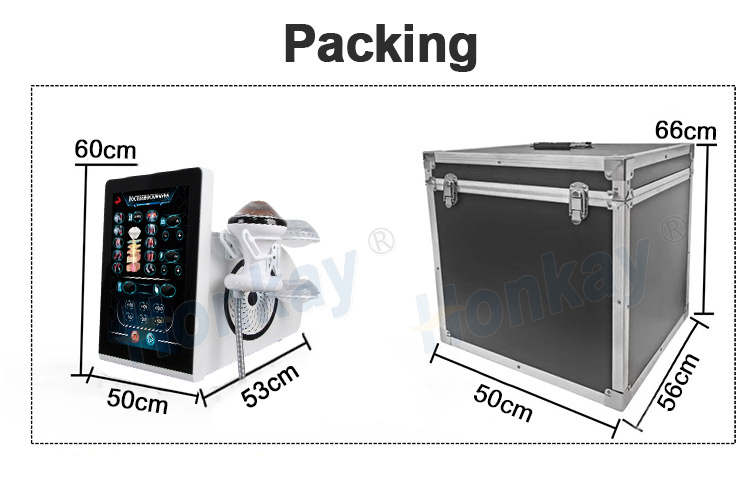
This is a desktop unit, not a floor-standing console: roughly 60 × 50 × 53 cm on the bench, supplied in a flight case of about 66 × 56 × 50 cm. That shape changes the room plan in three ways.
- A treatment couch plus a side bench. The handpiece cable sets the working radius; the console needs to sit within it, not behind the operator.
- Case storage. The flight case is bulky. If the unit stays set up, the case still needs a home that is not the treatment room floor.
- Cable routing. A coiled handpiece cable crosses the couch when the operator works from the head end; plan which side the console sits on before the first session.
Consumables: what actually wears out
The pads are the consumable, and they are the line item that clinics forget when they compare quotations.
- Silicone pads deform and cloud with use. They are replaceable and should be priced as a running cost, not a one-off accessory.
- Coupling matters more than power. A worn pad that no longer sits flat against the skin loses energy at the interface, and the operator compensates by turning the intensity up — which is the wrong correction.
- The handpiece cable takes the handling load. Keep one spare if the unit runs most of the day.
- A written replacement interval from the supplier, based on sessions per week, is more useful than a “long life” claim.
Ask for the unit price of pads No.3 and No.5 in writing. They are the two that tell you whether the running cost is trivial or material.
What to verify on a demo, in order
A demo that only shows the deepest pad is a demo of one seventh of the device. A focus shockwave therapy machine is also judged on how quickly a pad can be swapped between patients, because that time repeats all day. Work through the set instead.
| Check | What good looks like |
|---|---|
| Pad fit and release | Each pad seats and releases without tools, and is clearly numbered |
| Depth change on the console | The selected pad and depth are visible on screen, not guessed |
| Energy steps | The full range is reachable, and the increments are usable at the low end |
| Handpiece weight and balance | Comfortable to hold for a full session, not just for a photo |
| Cable strain relief | No sharp bend where the cable leaves the handpiece |
| Noise and vibration | Steady, without rattle at higher settings |
| Record of settings | The clinic can log pad number, energy and session length per case |
Frequently asked questions
How many probes should be included?
Seven pads covering 4–65 mm is a full set for musculoskeletal work. Fewer pads means fewer depths, and the missing ones are usually the deep bands that are hardest to substitute.
Can one pad cover every area?
No. Each pad is coupled to one focal depth, and using the wrong pad puts the energy at the wrong layer. This is the most common operator error on a focused device.
Is a focused device the same as a radial one?
No. A focused head converges energy to a focal zone and works at depth; a radial head diverges from the applicator surface and works near it. The probe sets are not interchangeable.
How often do the pads need replacing?
It depends on sessions per week and on how the pads are cleaned and stored. Ask the supplier for a replacement interval against your caseload, and price the pads before you buy the machine, not after.
Can the unit run from a standard socket?
This class of desktop unit runs from a normal clinic socket. Confirm the voltage and plug type for the destination country, and give it a socket that is not shared with a sterilizer.
What is the minimum clinic space?
A treatment couch, a side bench for the console, and enough clearance for the operator to work from the head end of the couch. The unit itself is desktop-sized; the couch is what sets the room.
Does the price usually include the full pad set?
Not always. Ask for the itemised pad list in the quotation, mark which are standard and which are optional, and compare totals only after the lists match.
Is this suitable for adjunctive use?
It is intended for adjunctive use alongside professional care, and protocols should be set by the clinician responsible for the case. It is not a replacement for diagnosis or treatment.
About Honkay
Honkay builds physiotherapy equipment for clinics, distributors and OEM buyers — pulsed electromagnetic field systems, focused and radial shockwave platforms, TECAR and pressotherapy — in its own facility, with documentation prepared for the destination market. The same team that builds the standard units handles OEM and ODM projects, which is why probe sets, spare pads and voltage options are answered as configuration questions rather than policies.
Ask for the pad list before the price
Send the caseload mix, the destination country and the voltage you need, and the Honkay team will come back with the pad configuration, the packing and the delivery terms in writing.
- WhatsApp: +8613751821215
- E-mail: hk6@huang-kai.com
- Manager: Lisa
This device is intended for adjunctive use alongside professional care, not as a replacement for diagnosis or treatment. Suitability should be confirmed with a qualified clinician; individual experience varies.