Portable Shockwave Therapy Machine: What Energy, Preload and Frequency Do
A shockwave machine that lives in a case is bought for one reason: it goes where the patient is. That decision is easy. The harder decision is what happens once the case is open — because most buyers are handed three numeric settings and a box of heads with no explanation of how they relate, and end up running every session at whatever numbers the last operator used.
This guide covers the settings panel, what each number changes, and the six steps that make a session reproducible from one operator to the next.
What portability actually changes
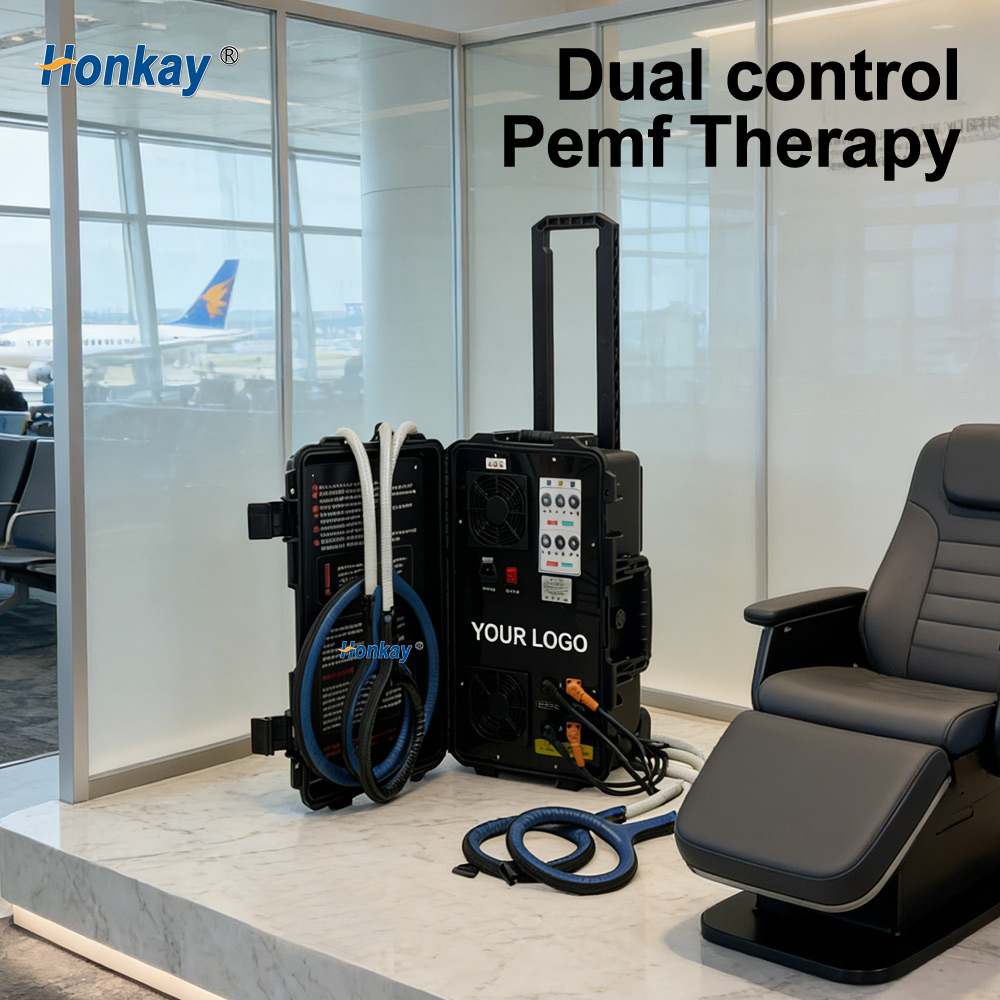
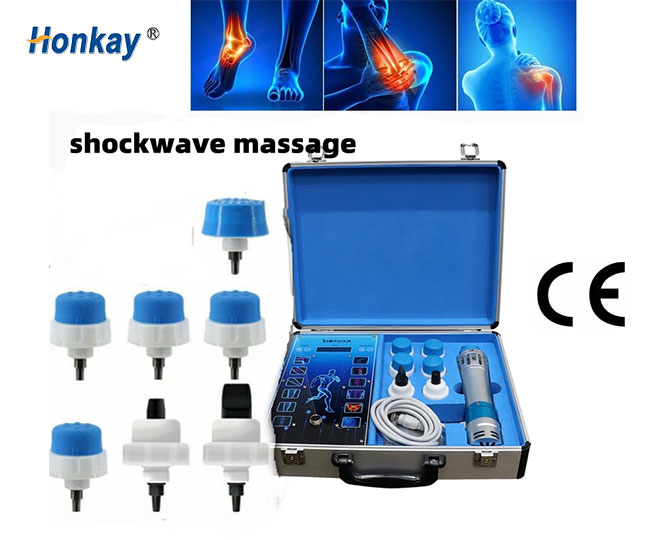
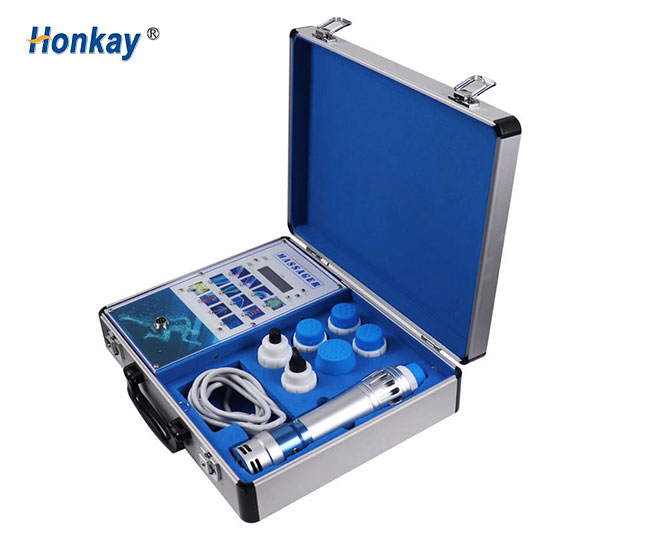
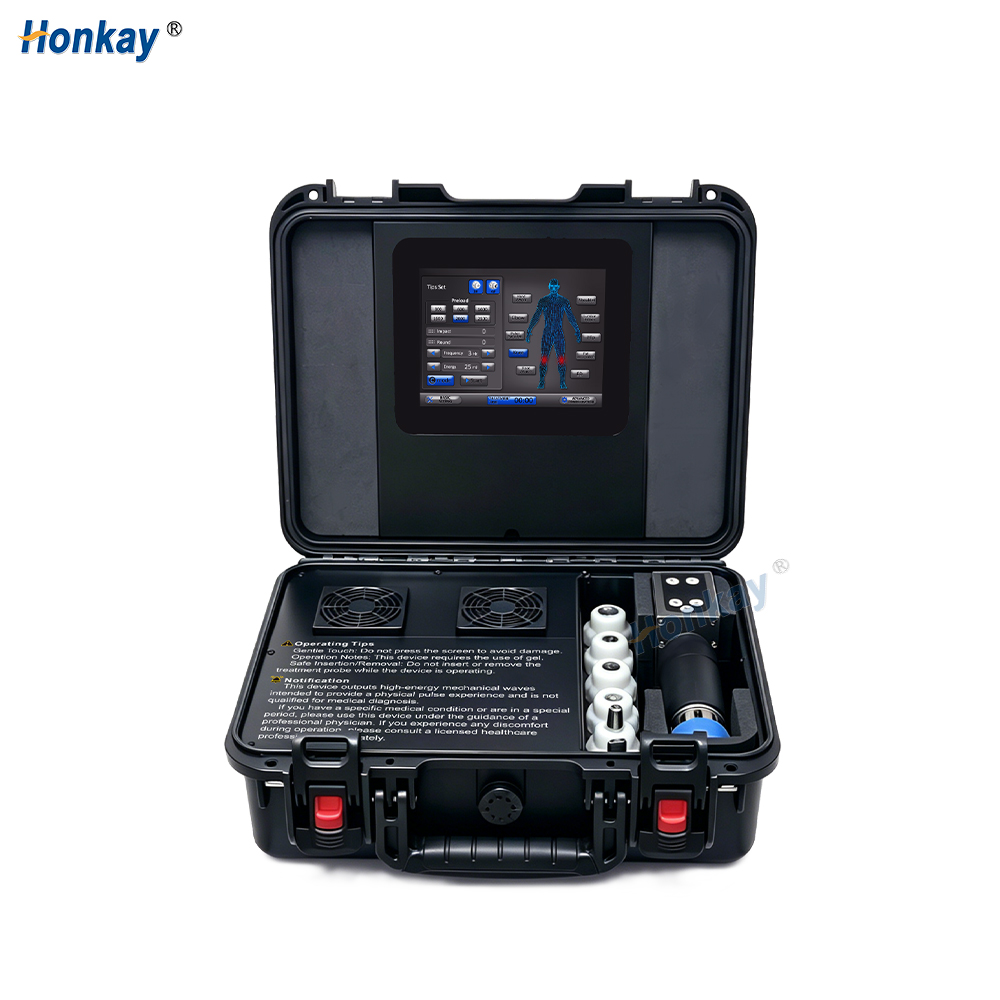
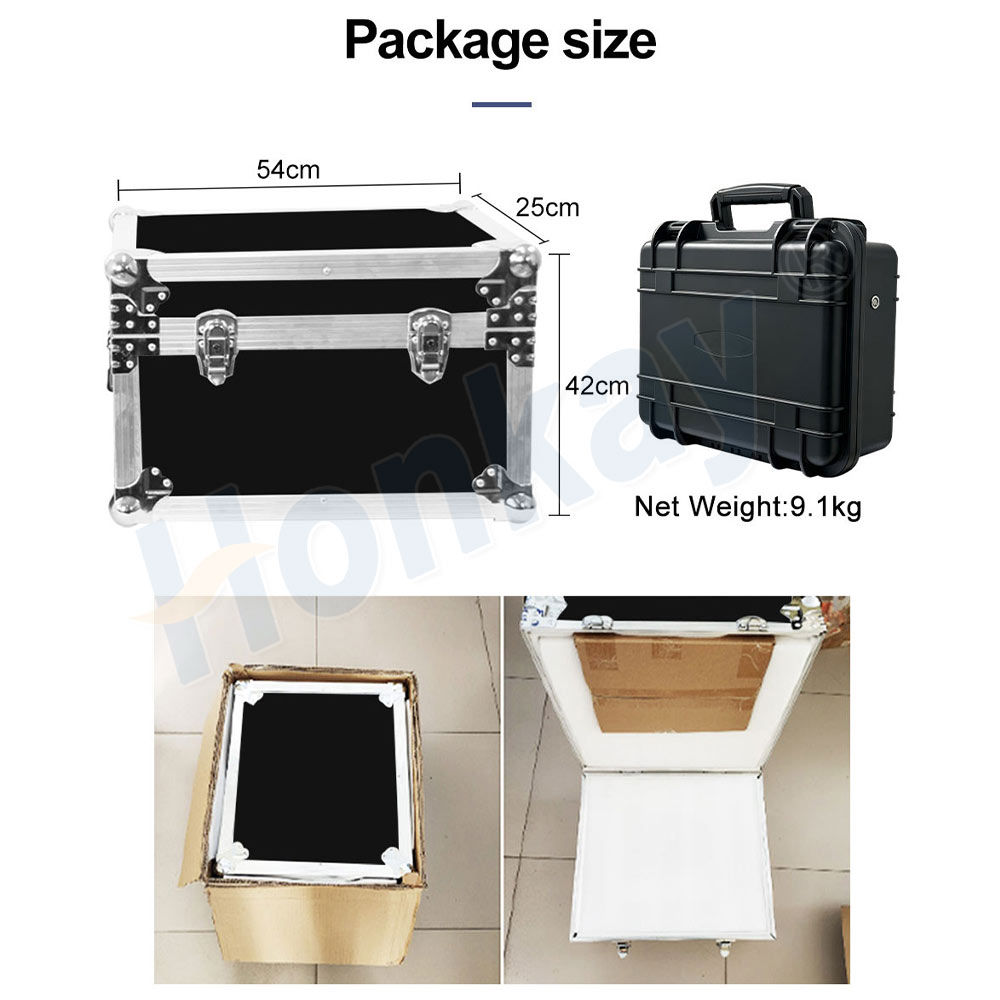
The unit travels as a hard case measuring 54 × 42 × 25 cm and weighing 9.1 kg net. That is light enough for one person to carry and small enough for a car boot, which is the entire point: a mobile practitioner, a sports team, a home visit programme, or a clinic that wants a second treatment point without a second room.
Two consequences follow, and both are practical rather than technical.
- The case is the bench. Everything — console, handpiece, heads, gel — lives in one box, so the setup is the case lid and the surface it sits on. Plan for a stable surface at hand height, not a low table.
- Power has to be confirmed for the destination. Portable units are ordered for a specific mains voltage. Ask before the order ships, not after it lands.
The three numbers on the panel
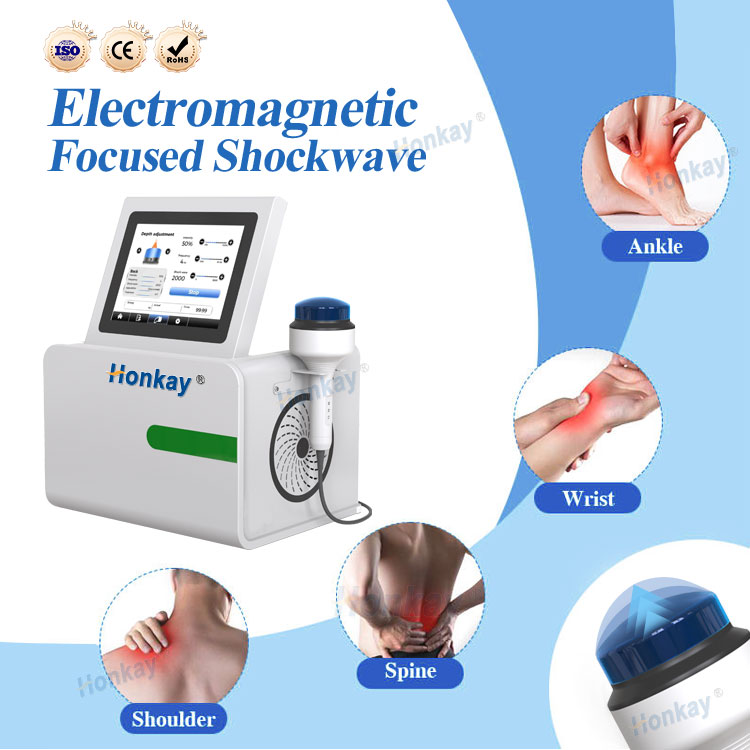
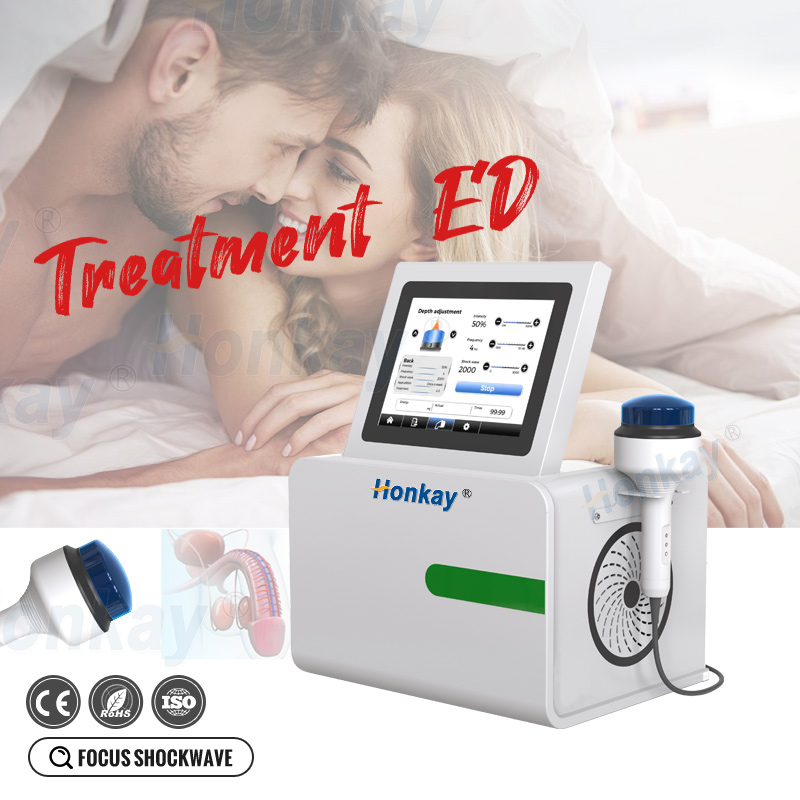
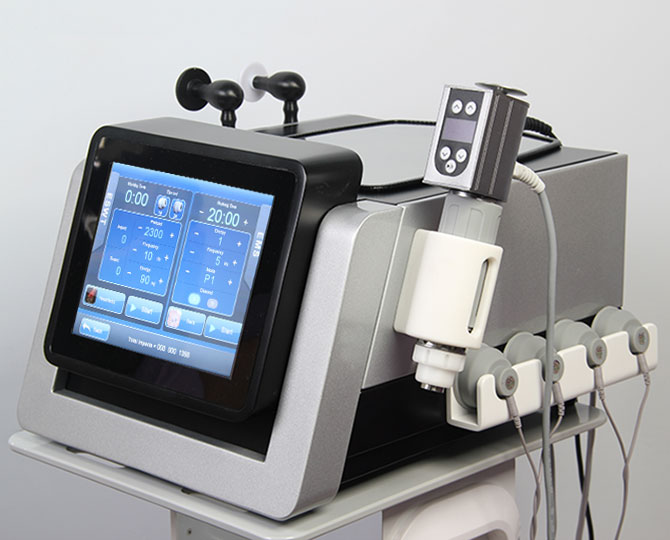
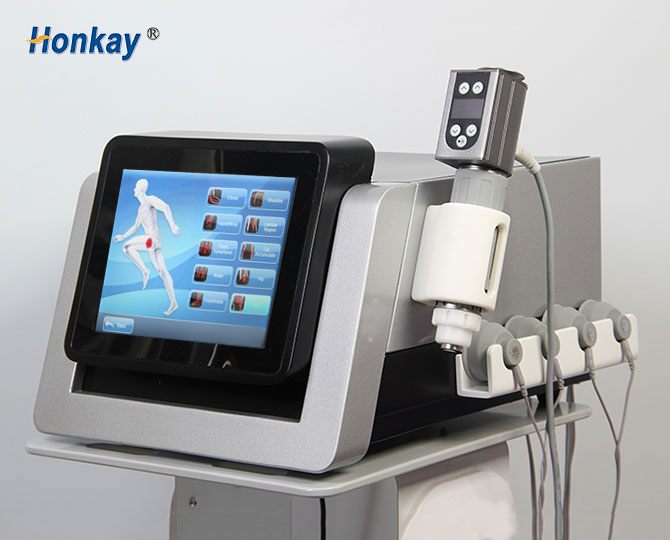
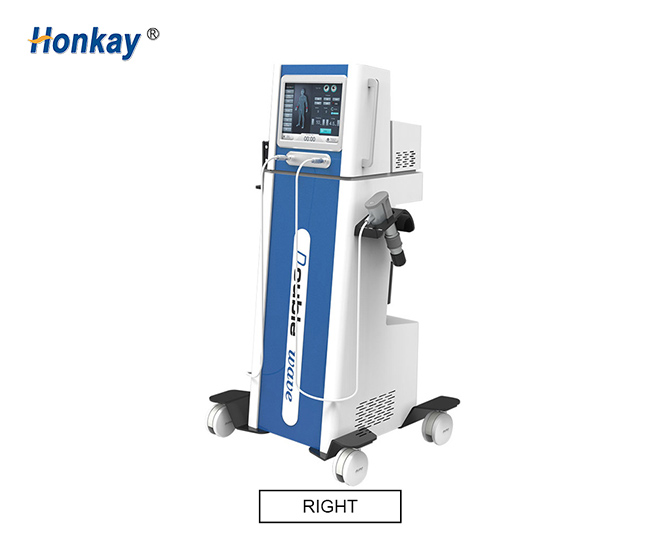
Every electromagnetic shockwave platform exposes at least three settings — the same three you will find on any of the shockwave therapy machines in this class, whatever the housing looks like. They are not interchangeable, and adjusting one does not compensate for another.
| Setting | What it changes | Typical range on this class of unit |
|---|---|---|
| Energy | The intensity of each acoustic pulse | 5–200 mJ |
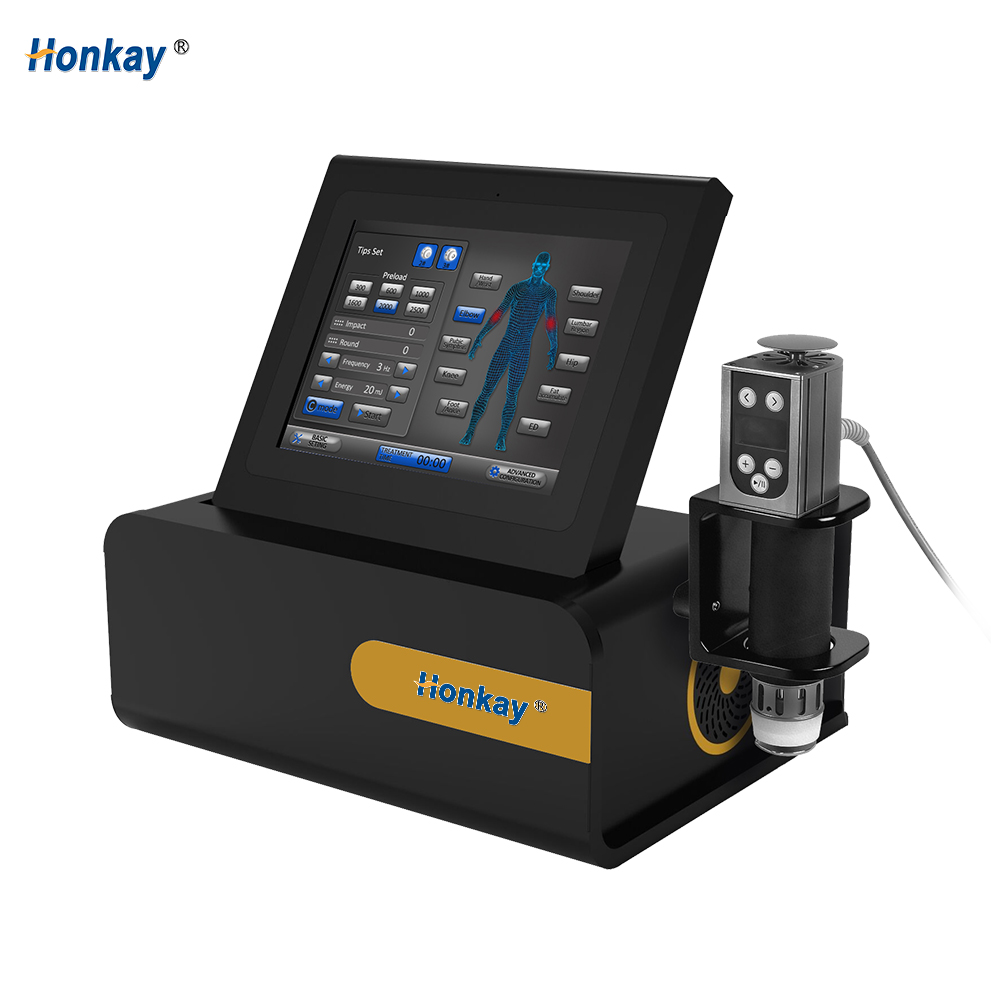
| Preload | A preset stage setting, delivered as fixed steps | 300 / 600 / 1000 / 1600 / 2000 / 2500 |
| Frequency | Pulses delivered per second | Set on the handset, typically single-digit Hz |
The energy range is the figure buyers compare, and it deserves a caveat: a 5–200 mJ span is only useful if the low end is genuinely controllable. Many complaints about shockwave equipment trace back to a unit that feels like an on/off switch — usable at the top of the range, harsh everywhere below it. Ask for a demonstration at the bottom of the range, not the top.
Preload is the setting nobody explains
Preload is listed on the specification sheet as six discrete values — 300, 600, 1000, 1600, 2000 and 2500 — with no units and no explanation. That is not unusual in this category, and it is the first thing a buyer should pin down.
The term is used differently across manufacturers. On some platforms it sets a compression or pre-tension stage before the pulse is delivered. On others it governs the charge level of the pulse circuit. The values above do not resolve the question on their own.
Ask the supplier one question: what does changing the preload step alter in the delivered pulse, and which step corresponds to the starting point in the clinical protocol you intend to follow? A supplier who cannot answer that has not been trained on the platform they are selling.
Seven heads, and why the count is not decoration
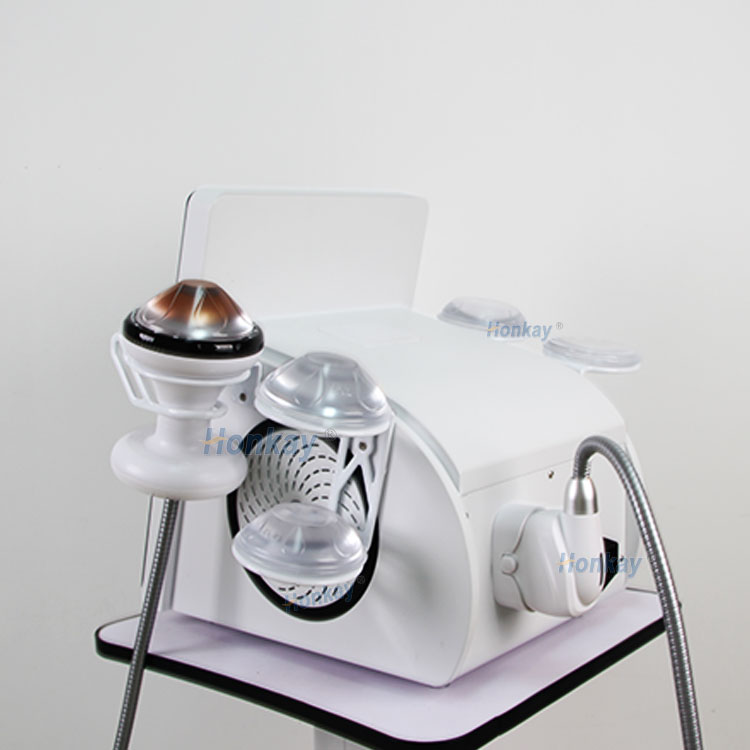
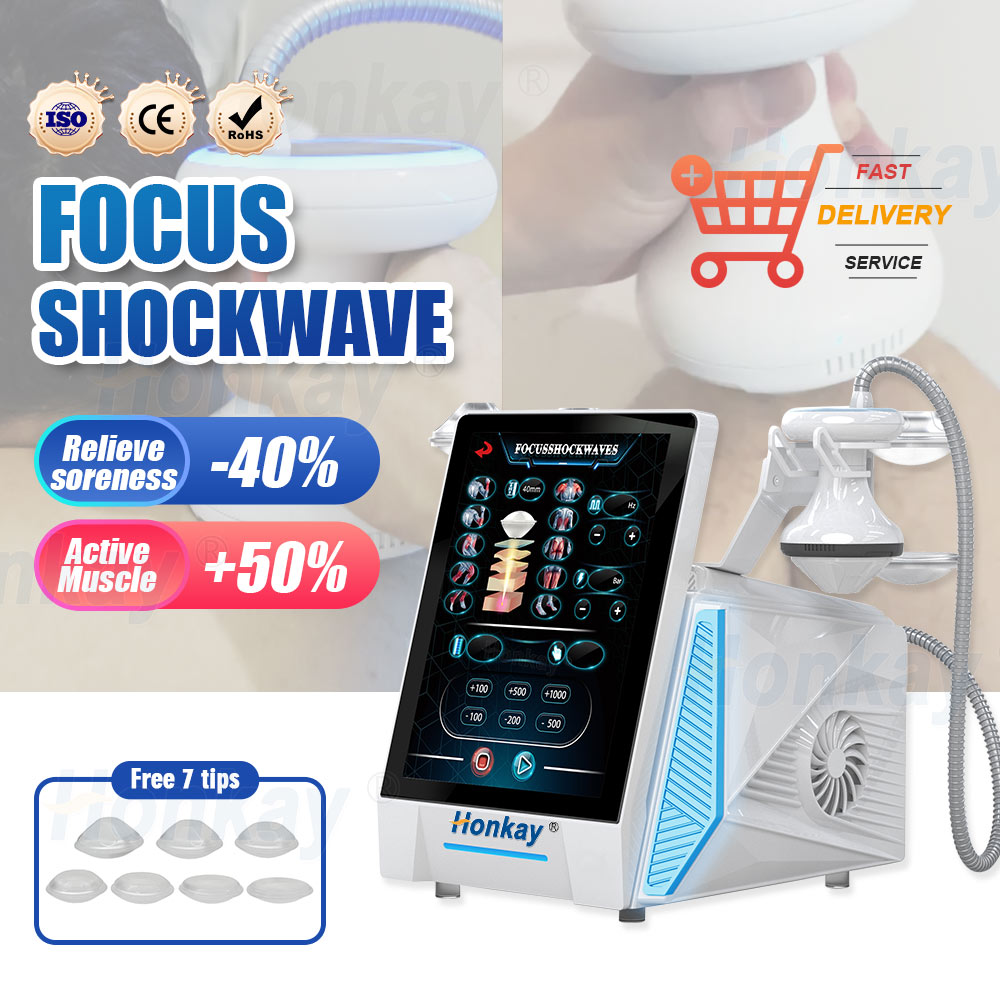
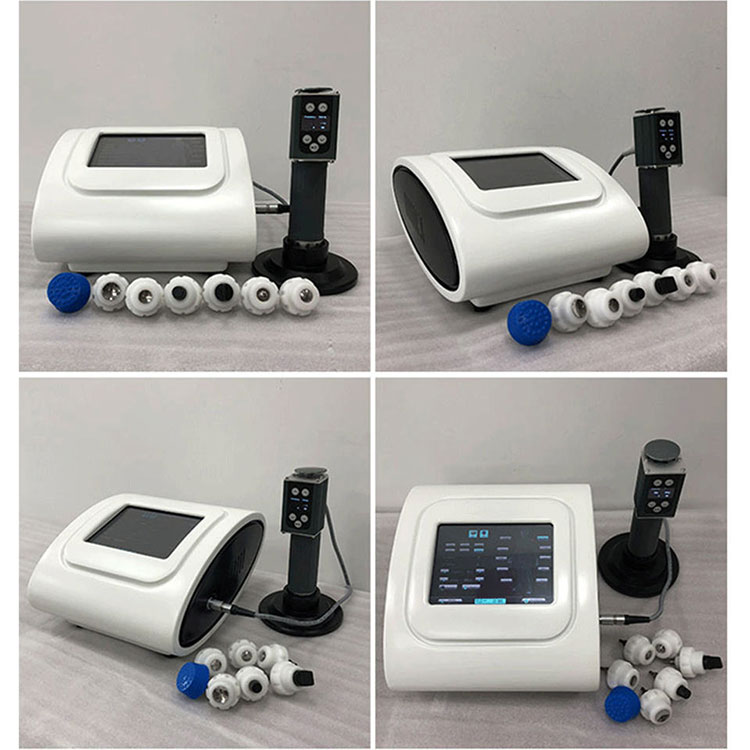
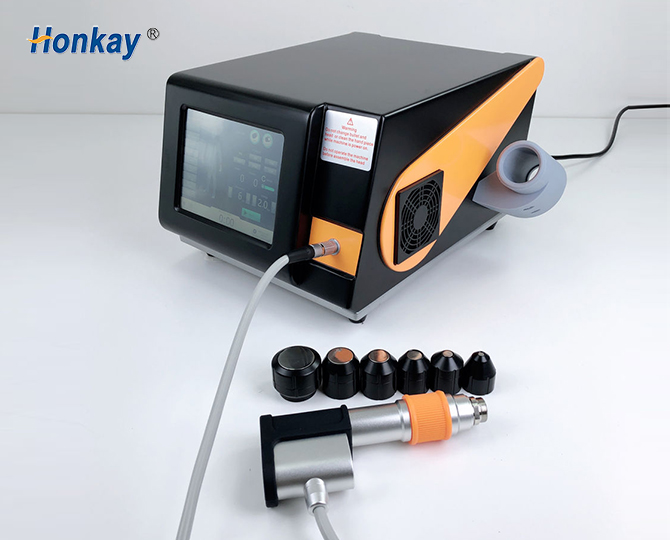
The unit ships with seven treatment heads. Head geometry sets the contact area, and contact area sets how the energy is distributed at the surface — the same energy setting feels different through a broad tip than through a narrow one.
Two practical rules follow.
- Record the head in the session log. “Shockwave, 2000 pulses” is not a reproducible record. “Shockwave, head 3, 120 mJ, 4 Hz, 2000 pulses” is.
- Check head availability as a consumable. Heads wear, and they are ordered separately. Ask for the replacement price and the lead time in writing before the purchase order, not after the third month.
Six steps, one session
The workflow on this platform is deliberately short, and the value of writing it down is that a new operator can be walked through it in an afternoon.
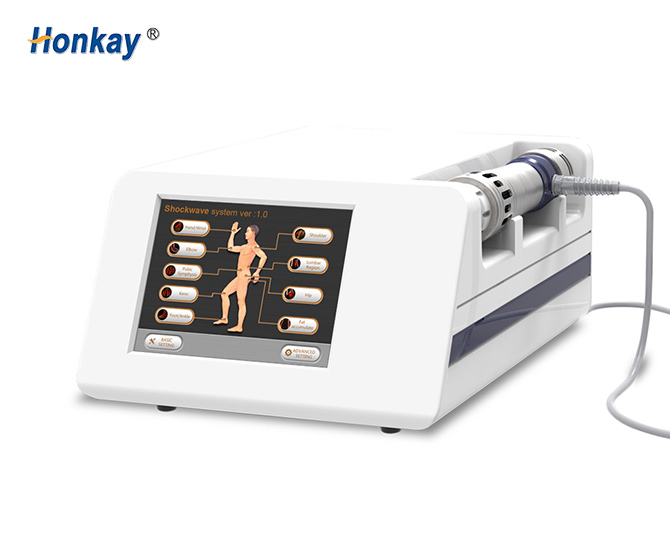
- Select the body area on the screen.
- Fit the working head to the handpiece according to the area.
- Install the head and confirm it is seated.
- Apply coupling gel to the treatment area.
- Press start and set energy, preload and frequency.
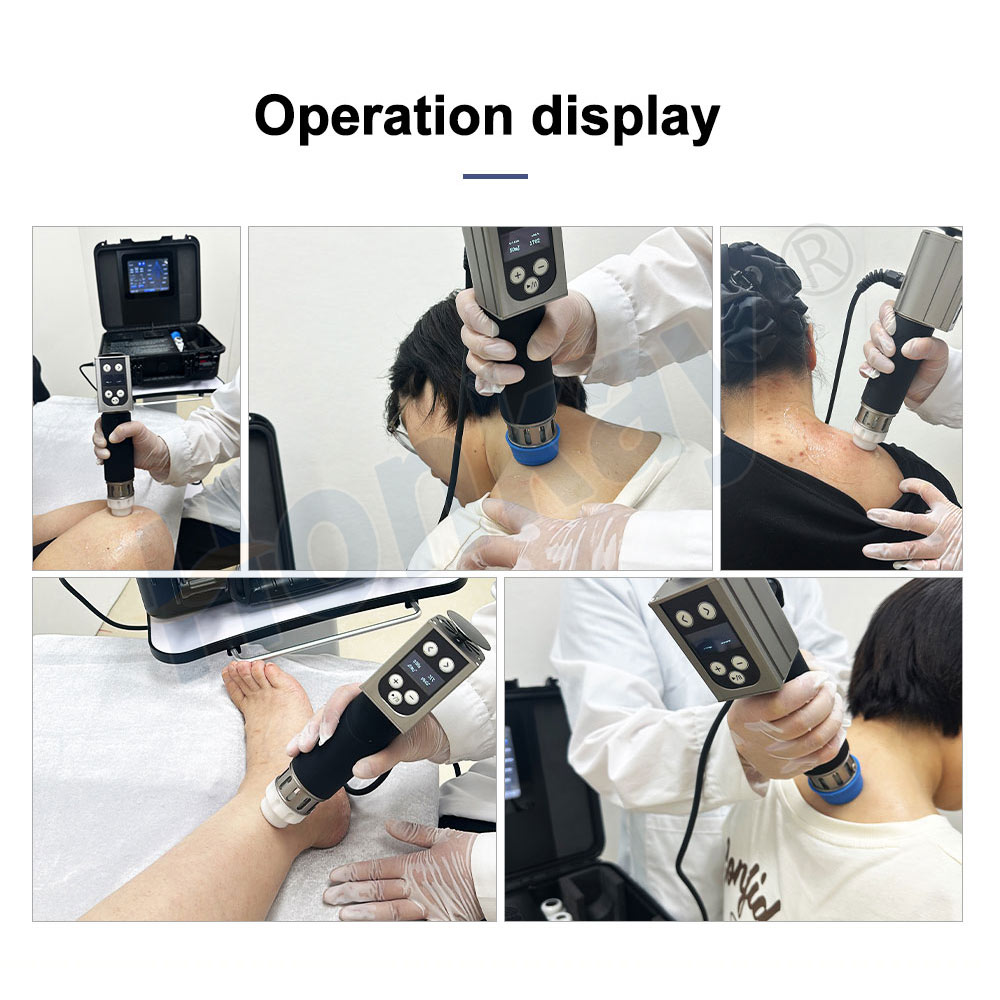
- Deliver the pulses, moving the handpiece across the area.
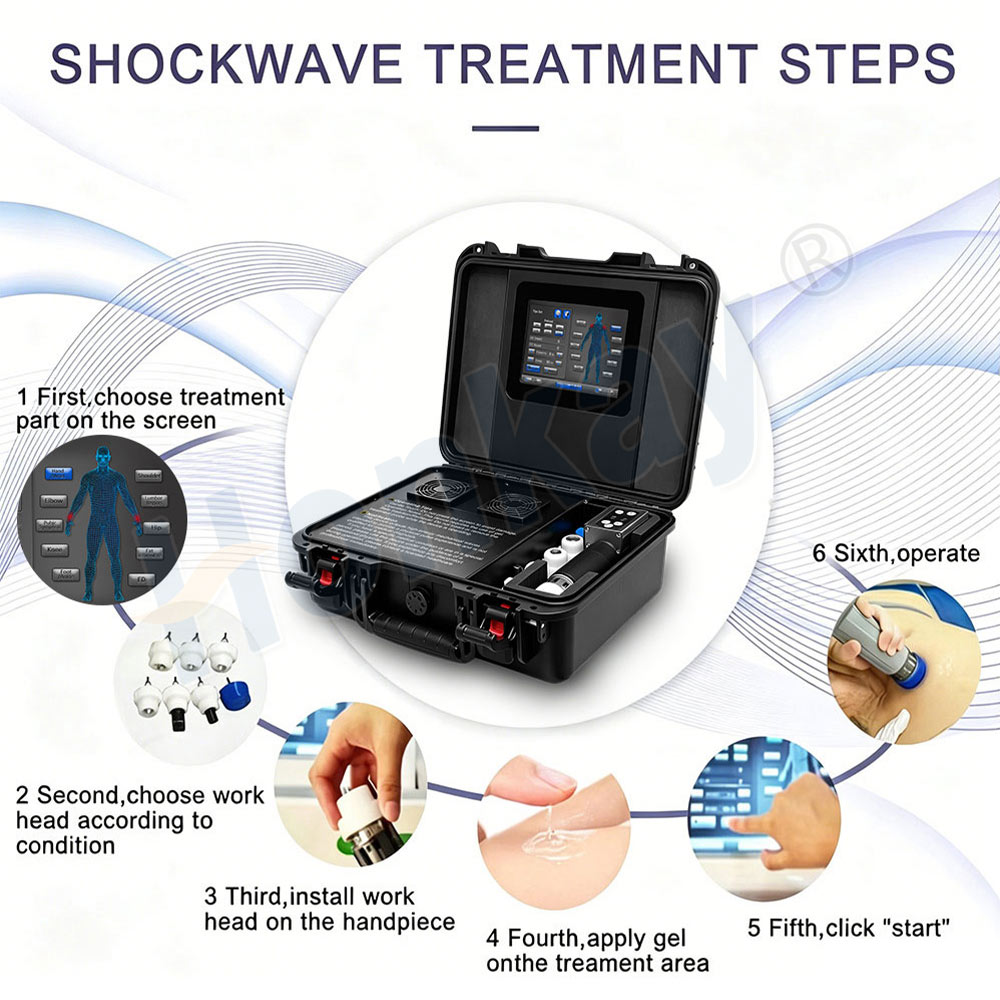
The order matters more than it looks. Selecting the area after fitting the head encourages operators to fit whatever is already in the handpiece, which is how inconsistent sessions start.
What a session log should contain
A log is only useful if a second operator can reproduce the session from it. Six fields cover it:
- Area treated, in plain anatomical terms
- Head number
- Energy in mJ
- Preload step
- Frequency in Hz
- Total pulses delivered
Add the date and the operator’s initials. That is the whole record. Clinics that keep this log can compare sessions over time; clinics that do not are guessing.
Buying checklist for a portable unit
Almost all of the difference between two quotations for the same class of machine sits in these seven questions, and none of them appear on a price sheet.
| Ask this | Why it decides the purchase |
|---|---|
| Does 5 mJ feel controllable, or does the unit only work at the top of its range? | A wide range that is unusable below 100 mJ is a narrow machine with a wide label |
| What do the preload steps change in the delivered pulse? | Six values with no units is a specification gap, and it is the operator who absorbs it |
| How many heads, and what does head replacement cost? | Heads are consumables; a cheap console with expensive heads is not a cheap machine |
| Is 9.1 kg the net weight, and what is the shipping weight? | Packing adds to it, and freight is often quoted per chargeable kilo |
| Which mains voltage is this unit configured for? | Portable shockwave therapy machines are ordered for a destination, not converted on arrival |
| Does the warranty start at shipment or at delivery? | Two dates, two very different amounts of cover on a slow sea freight |
| What training and documentation ship with the unit? | The settings panel is only usable with the sheet that explains it |
Frequently asked questions
What is the difference between energy and preload?
Energy sets the intensity of each pulse in millijoules. Preload is a separate preset stage setting delivered in six fixed steps. They are adjusted independently, and increasing one does not substitute for the other.
Is 5–200 mJ enough for clinic use?
It is the working range on this class of electromagnetic unit. What matters is whether the low end is controllable, which is a question about the driver rather than the number on the sheet.
How many heads come with the unit?
Seven. Confirm the count and the geometries on the invoice, and ask for the replacement price per head in writing.
How heavy is it, and can one person carry it?
9.1 kg net in a 54 × 42 × 25 cm case. One person can carry it; the shipping carton adds weight and should be checked separately.
Can it run on 110 V?
The unit is ordered for a specific mains voltage. Confirm the configuration for the destination before the order ships.
How long does a session take?
That depends on the protocol and the area, not on the machine. The settings that matter for repeatability are the six log fields above.
What warranty applies?
24 months from the factory shipment date on this range. Ask for the start date in writing.
Can the case and screen be branded?
Yes — case branding, startup logo and interface artwork are configuration items on OEM and ODM orders. Ask for an artwork proof before the production run.
About Honkay
Honkay builds physiotherapy equipment for clinics, distributors and OEM buyers in its own facility — pulsed electromagnetic field systems, electromagnetic and focused shockwave platforms and pressotherapy. Documentation is prepared for the destination market rather than assuming a domestic one, and the engineering team that builds the standard range handles OEM and ODM projects directly, which is why voltage configuration, head options and branding are answered as configuration questions rather than policies. A 24-month warranty from factory shipment applies across the range.
Ask for the settings sheet, not just the price
Send the Honkay team your caseload, the destination country and the voltage you need, and the reply will include the head list, the preload explanation, the packing dimensions and the delivery terms — before any price discussion.
- WhatsApp: +8613751821215
- E-mail: hk6@huang-kai.com
- Manager: Lisa
This device is intended for adjunctive use alongside professional care, not as a replacement for diagnosis or treatment. Suitability should be confirmed with a qualified clinician; individual experience varies.