PEMF Systems: How Dual-Channel Control Changes a Clinic Day
Two consoles can produce the same field strength, carry the same certifications and cost roughly the same — and still deliver very different daily capacity. The difference is usually not in the output stage at all. It is in how many independently controlled channels the PEMF systems give you, and therefore how many people can be under treatment at once.
That single design decision decides whether a patient waits or a slot is filled, and over a year it decides whether the machine pays for itself in twelve months or in thirty.

What “dual channel” actually means in daily use
A single-channel console runs one applicator on one setting. If your protocol calls for twenty minutes on a lower back and twenty minutes on a shoulder, you run them one after the other: forty minutes of machine time for one patient.
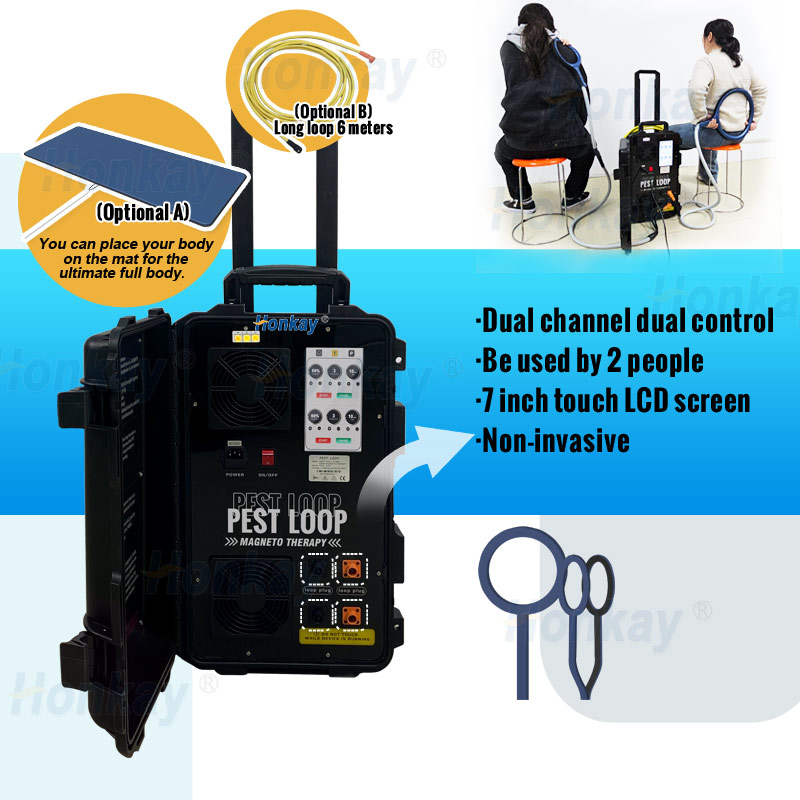
Dual-channel means two applicators, each with its own intensity, frequency and timer, running at the same time. On the same patient that turns forty minutes into twenty. On two patients it means two treatment slots running in parallel with one therapist supervising.
| Single channel | Dual channel | |
|---|---|---|
| One patient, two areas | 40 minutes, sequentially | ~20 minutes, simultaneously |
| Two patients | Two separate slots | One slot, two people |
| Independent settings | One setting at a time | Different intensity, frequency and time per channel |
| Applicator handling | Position, treat, reposition | Two positions set up front, both run |
| Effect on the day | Machine time is the bottleneck | Therapist time is the bottleneck |
The commercial consequence is worth stating plainly: on a dual-channel system the constraint moves from the machine to the therapist. That is the direction you want it to move, because a therapist can be added later and a console cannot be upgraded into something it is not.
The applicator pair is what makes a channel useful
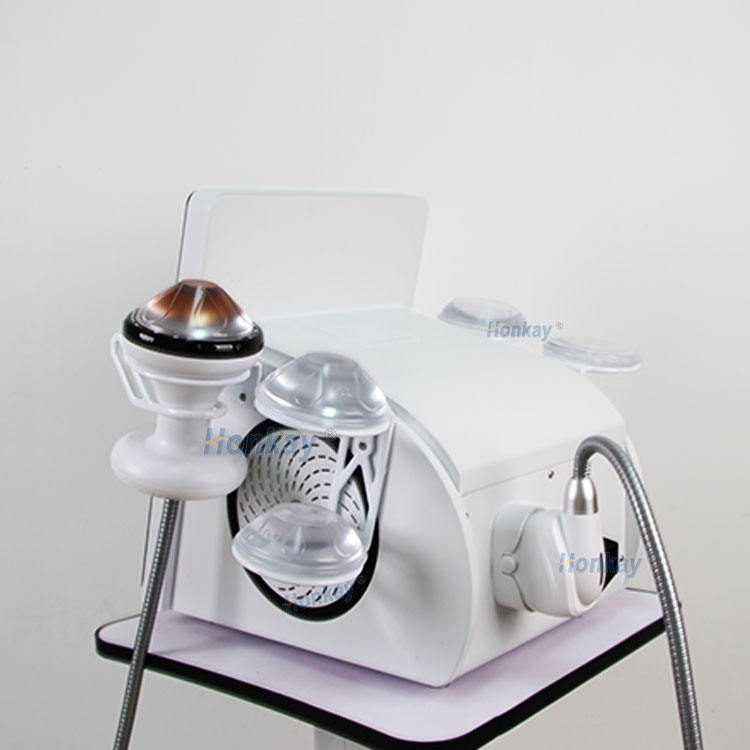
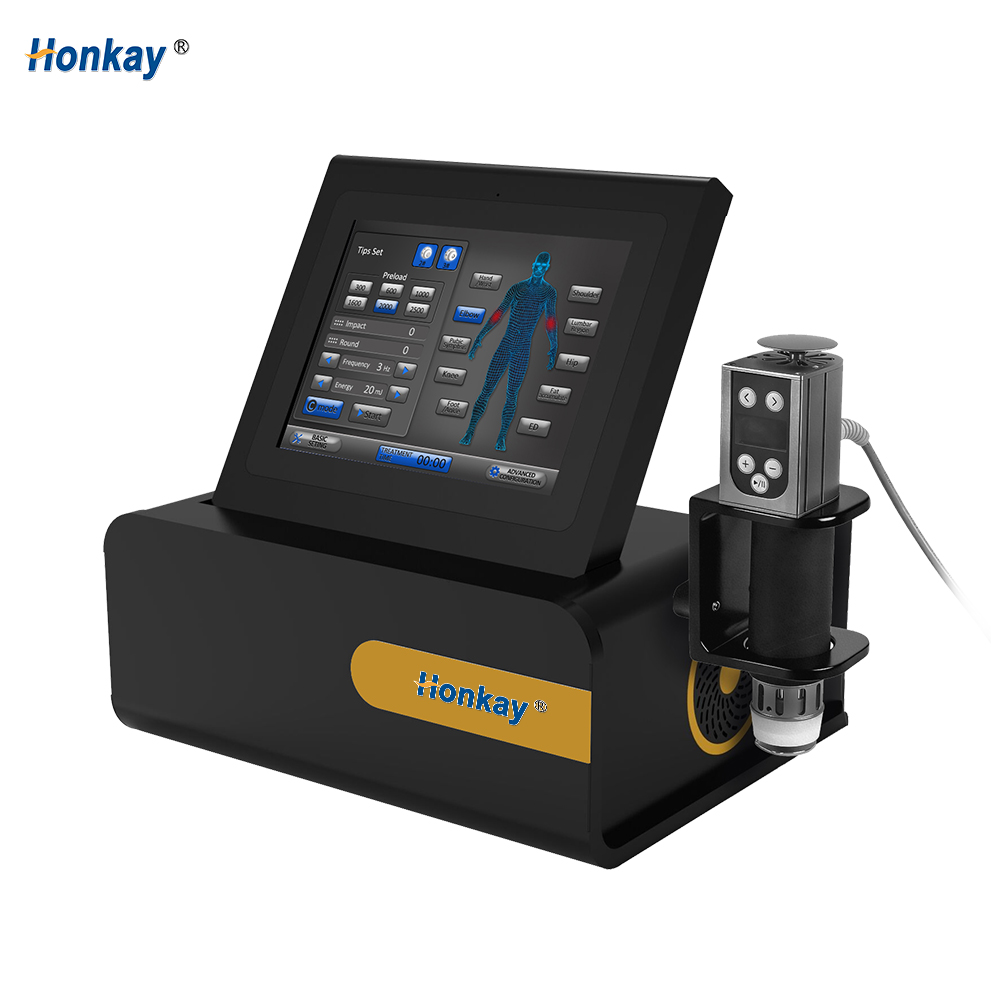
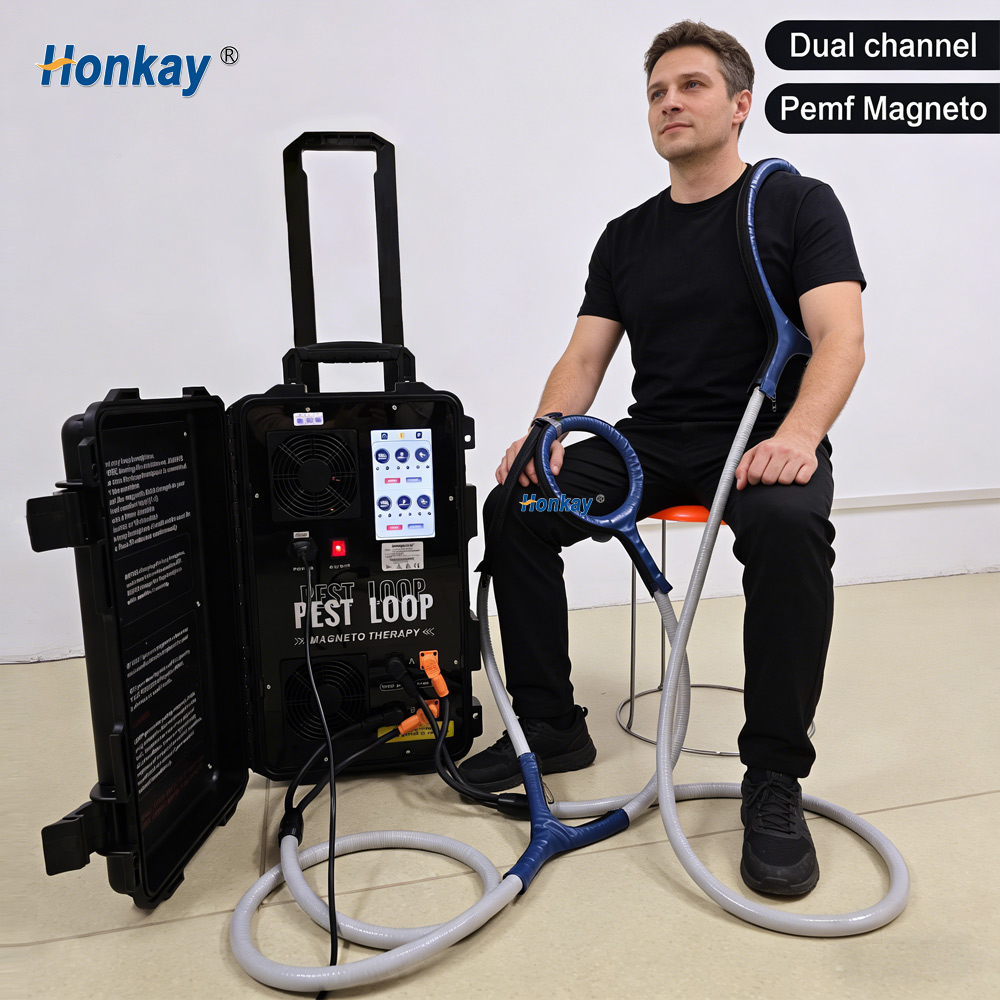
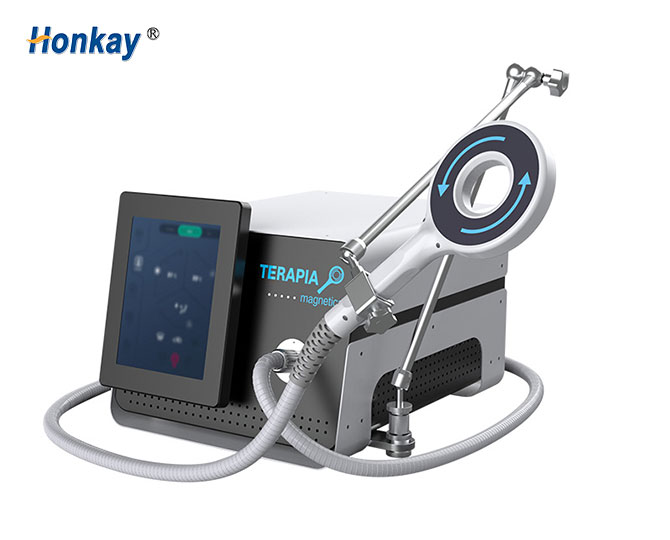
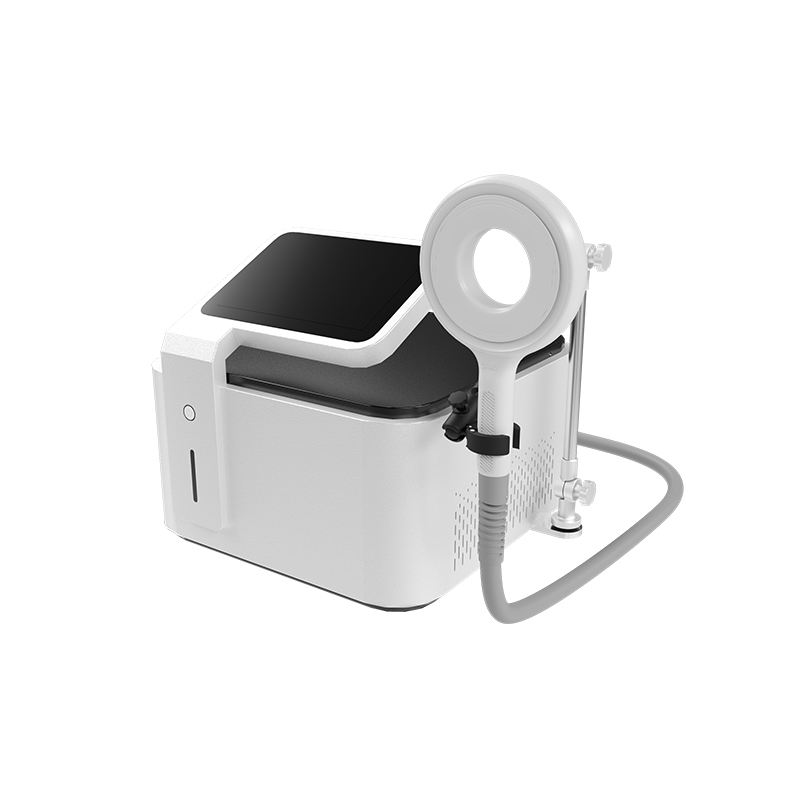
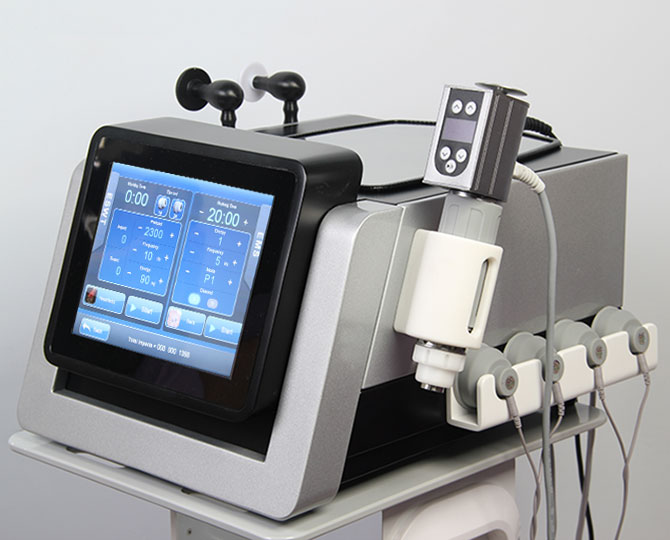
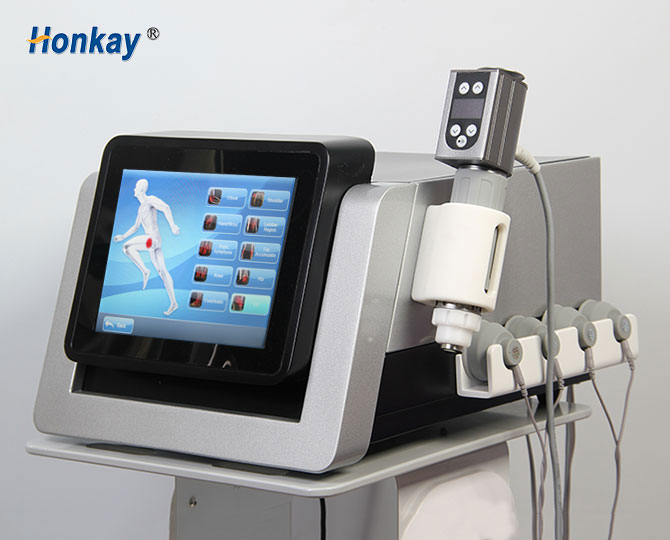
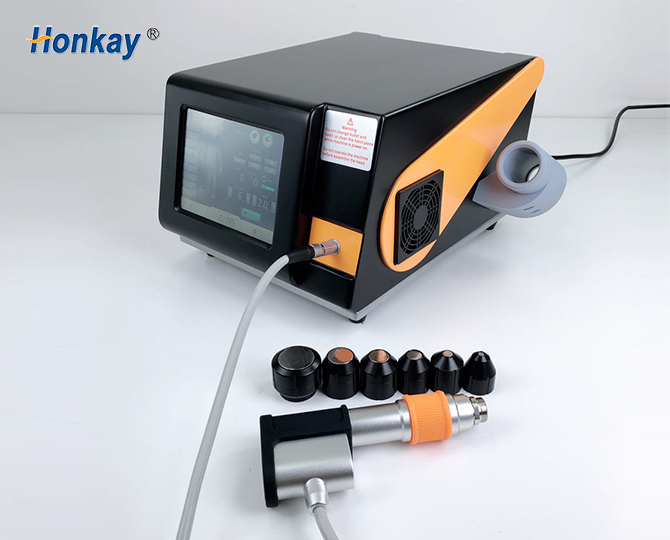
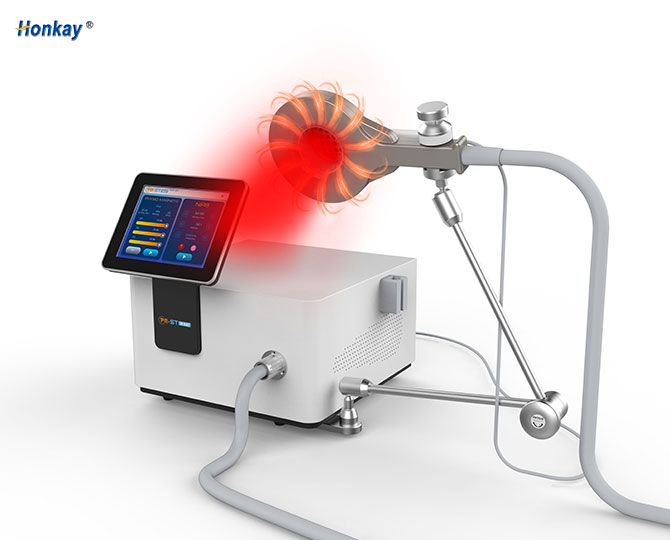
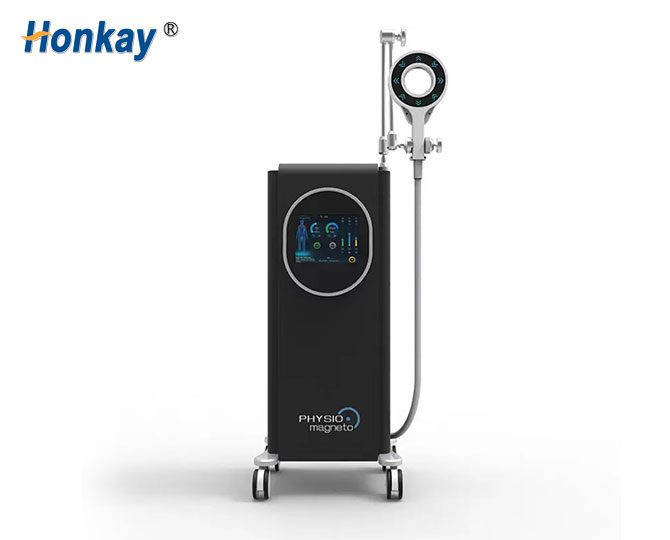
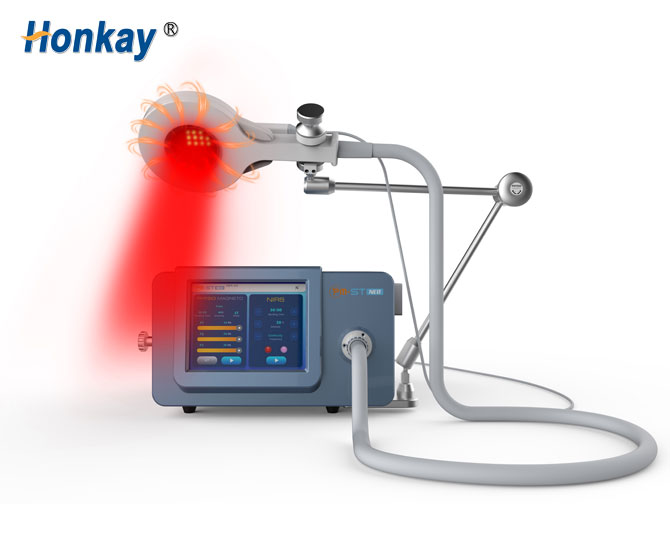
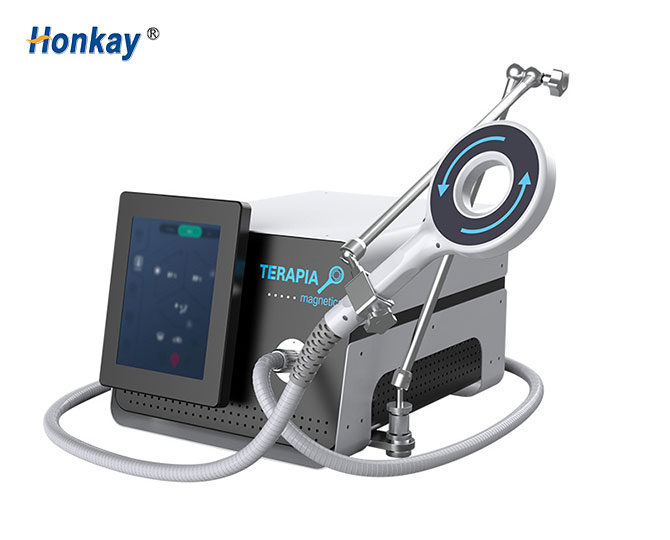
A second channel is only worth having if you have something to connect to it. The console pictured carries two mechanical support arms, so both applicators can be positioned and left in place rather than held — which is what makes simultaneous treatment of two areas practical rather than theoretical.
In practice a two-applicator setup is built around one of two pairings:
- Joint plus muscle. A ring or joint applicator for a defined joint — knee, shoulder, ankle, elbow — working alongside a broader applicator for the surrounding muscle group. This is the common pairing in sports rehabilitation, where the painful joint and the compensating muscle group are treated in the same session.
- Two matched areas. Left and right, or two patients with the same presentation. This is the pairing that actually doubles throughput, because setup is identical and only the settings differ.
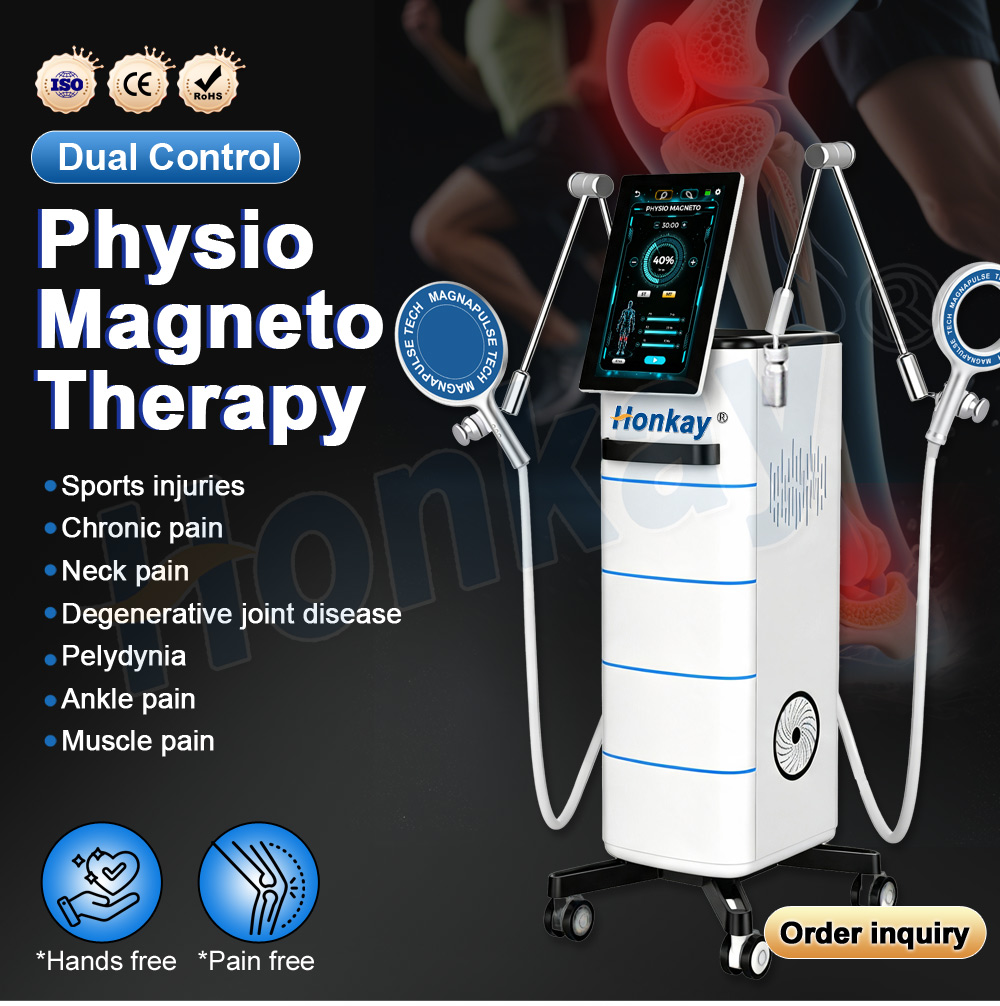
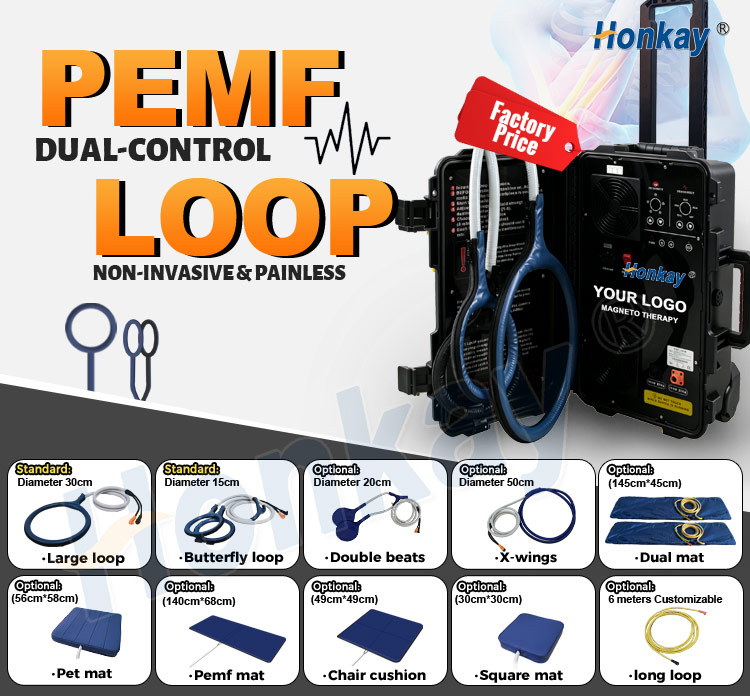
Applicator selection, not console selection, is what determines which of these pairings you can run. Before ordering, confirm in writing what is standard and what is optional: on many dual-channel builds the joint applicator ships as standard while a point applicator for trigger-point work is optional, and a muscle applicator may be either depending on the supplier. The quotation should list every applicator by type and diameter, because a channel with nothing to connect to is not capacity.
Building a PEMF systems schedule around two channels
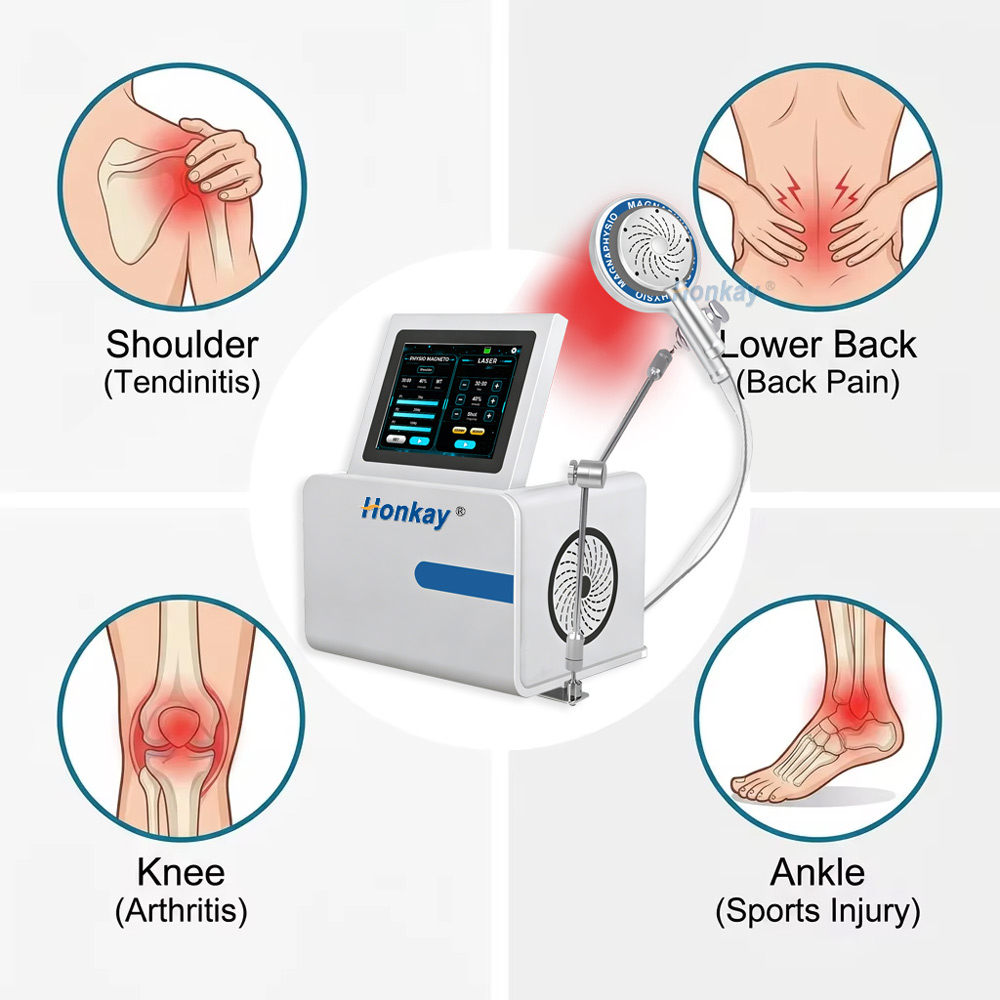
The list of presentations this class of device is used for is broad and mostly musculoskeletal: degenerative joint disease, chronic and sports-related pain, tendon inflammation, neck and lower back complaints, and post-injury recovery. What matters for scheduling is not the list but the duration.

Manufacturer guidance for this class of console is 15 to 20 minutes per single area, a maximum of about 30 minutes on one applicator, and roughly six to eight sessions as a course at twice a week. Two things follow from those numbers:
- A 20-minute block is the unit of scheduling, not a 60-minute appointment. With two channels you can fit two patients into the same twenty minutes, or one patient with two treated areas.
- Applicators need to rest between uses. The continuous-use limit is roughly 30 minutes per applicator, so a session that would otherwise run longer should be split across applicators or channels rather than run hot.
That is also why the parameters belong in writing. Ask for the per-area table that ships with the unit — intensity level, frequency, session duration and interval for each region — and treat it as the starting point for your own protocols rather than something to be improvised in the room.
What to confirm before you compare two quotations
| Confirm in writing | Why it matters |
|---|---|
| Number of independently controlled channels | Two outputs sharing one control set is not dual channel |
| Whether intensity, frequency and timer are separate per channel | This is what allows two different patients in one slot |
| Applicator list by type and diameter, marking standard vs optional | Where the real price difference sits |
| Whether support arms are included | Arms are what make simultaneous treatment practical |
| Magnetic intensity range in Gauss, with the measuring point | Ask for one consistent unit; be sceptical of Tesla figures on the same document |
| Pulse frequency range, and oscillation frequency stated separately | Professional consoles in this class run 1 to 10 Hz pulse frequency; the two numbers are routinely conflated |
| Maximum continuous use per applicator | Commonly about 30 minutes |
| Per-area session parameters | A manufacturer table, not clinical improvisation |
| Written warranty terms | Period and scope; a verbal period is not a warranty |
| Contraindication and screening list | Implanted electronic devices, pregnancy, tumours, local infection, metal implants where vibration could damage tissue |
| Training and documentation | Named in the purchase, not sold as an extra |
Frequently asked questions
Is a dual-channel console the same as a standard electromagnetic therapy machine?
No. A standard single-channel electromagnetic therapy machine delivers one output on one setting at a time. A dual-channel console runs two applicators with independent intensity, frequency and timer, so two areas or two patients can be treated in the same twenty-minute block.
What separates the best PEMF therapy devices from the rest?
Not the headline field strength. In daily use the deciding factors are how many independently controlled channels the system has, whether applicators can be positioned and left on support arms, what is standard versus optional in the applicator list, and whether the per-area session parameters ship as a written table. Two devices with identical numbers can differ substantially on all four.
Can two patients really be treated at once?
Yes, provided the console has two independently controlled channels and two applicators positioned on support arms. Setup is identical to a single-patient session; only the settings differ per channel. It is the reason a dual-channel machine can change a day’s capacity without changing the therapist’s hours.
How long is a session with two channels?
Manufacturer guidance for this class of console is 15 to 20 minutes per single area, with a maximum of about 30 minutes on one applicator. With two channels, a patient needing two areas treated can usually be completed in a single 20-minute block instead of two sequential blocks.
What does the applicator list usually include?
Typically a joint applicator (standard on many builds) and a muscle applicator, with a point applicator for trigger-point work often optional. Confirm every applicator by type and diameter in writing, and mark which are standard, because a channel with nothing to connect to is not extra capacity.
What fields should be adjustable per channel?
Intensity, frequency and timer at minimum. If those three are shared across both outputs, the second channel cannot serve a different patient and the throughput advantage disappears.
What has to be screened before the first session?
Implanted electronic devices such as pacemakers and analgesic pumps, pregnancy, tumours in the treatment area, local infections, and metal implants where vibration could damage tissue. Also clear magnetically sensitive items — cards with magnetic strips, keys, access cards and precision electronics — from the immediate area.
What should I ask for in writing before ordering?
The number of independently controlled channels and which parameters are per channel; the applicator list by type and diameter with the standard/optional split; whether support arms are included; magnetic intensity in Gauss with a stated measuring point; pulse frequency and oscillation frequency stated separately; the maximum continuous use per applicator; the per-area session parameter table; and the written warranty terms.
Request a quotation for a dual-channel system
Tell us how your list is actually shaped — two areas per patient, two patients per slot, or a mix — and we will put the channel configuration and the applicator list together around it instead of sending the full catalogue. The quotation includes the applicator diameters, the standard versus optional split, the per-area parameter table and the written warranty terms, so two offers can be compared line by line.
Manager: Lisa
WhatsApp: +8613751821215
E-mail: hk6@huang-kai.com