Pulsed Electromagnetic Field Therapy Machine: Buying for Home Visits and Multi-Room Clinics
Most buyers compare a pulsed electromagnetic field therapy machine on the treatment numbers and never ask the question that decides whether it earns its keep: can one person move it, set it up and treat with it in a room that is not a clinic? A therapy room tolerates a console that lives on a trolley between two treatment couches. A stable, a sports hall, a patient’s living room and a hotel room do not.
If your work happens outside a single fixed room, portability is not a convenience feature. It is the specification that decides which patients you can accept.

What a portable configuration actually has to survive
A portable unit is judged in the first thirty seconds of every appointment —the walk from the car, the doorway, the stairs. Four things decide whether that goes smoothly, and none of them appear in a treatment specification.
| What to check | What good looks like | Why it matters on a visit |
|---|---|---|
| Case integrity | Rigid shell, not a fabric bag | A soft bag protects the console from rain but not from a boot lid or a feed-room shelf |
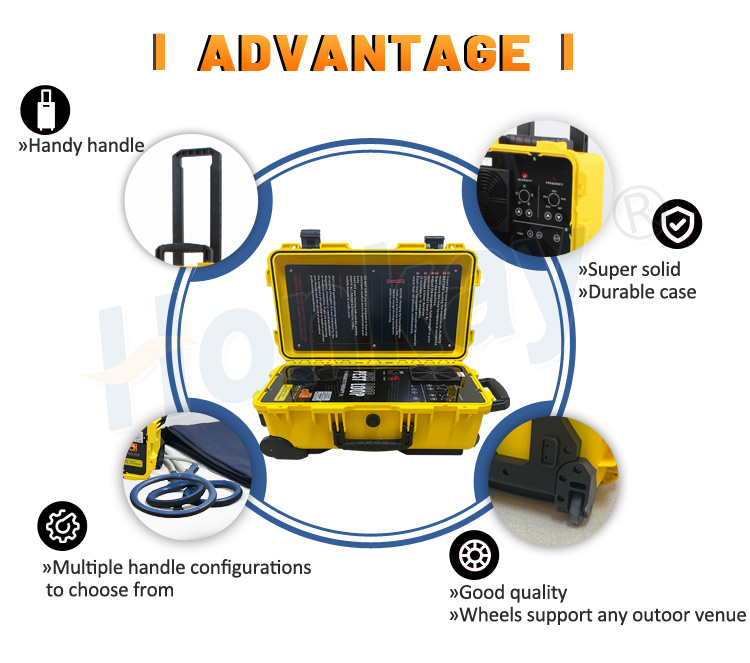
| Handling | Telescopic handle plus wheels, or a carry handle | One person should be able to move it with a free hand for the patient |
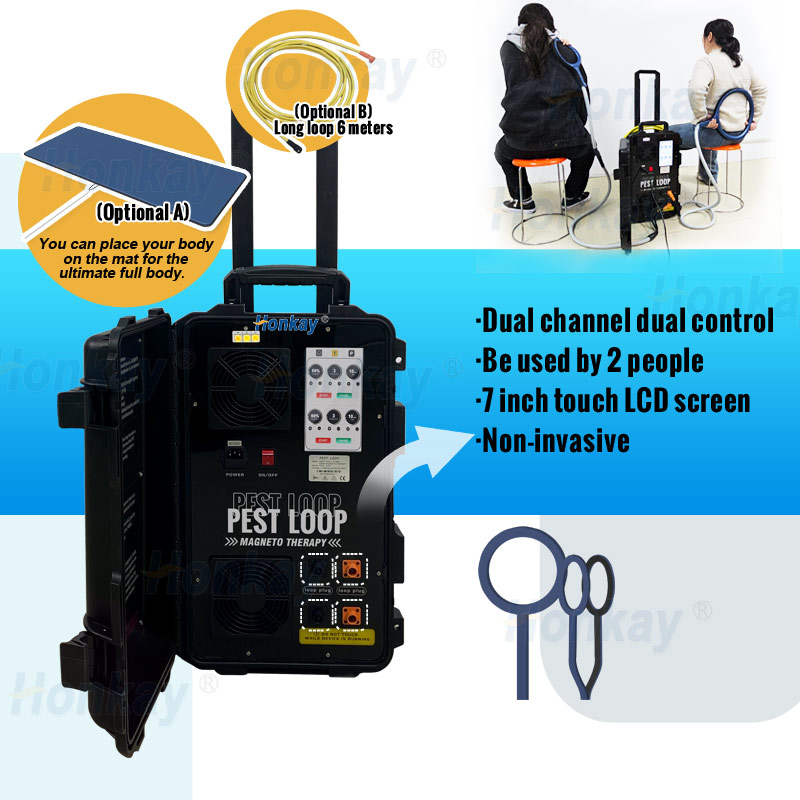
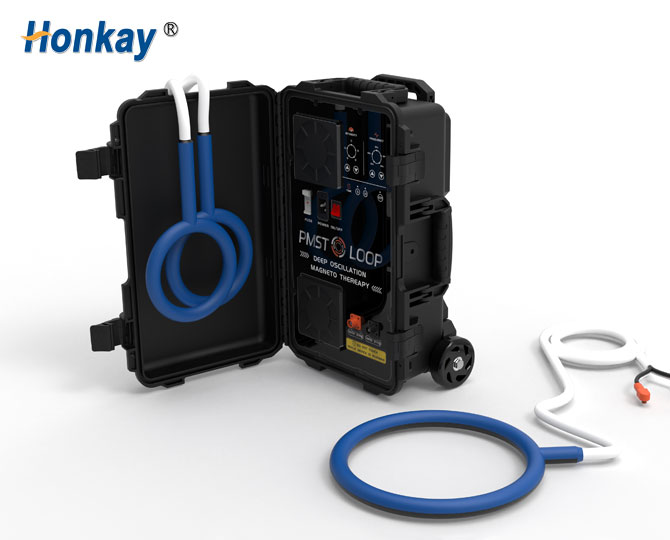
| Applicator storage | Loops stored inside the lid, not in a separate bag | Loose coils in a bag are how connectors get damaged |
| Power | Wide-voltage input with interchangeable plug formats | Working across two or three countries without a transformer |
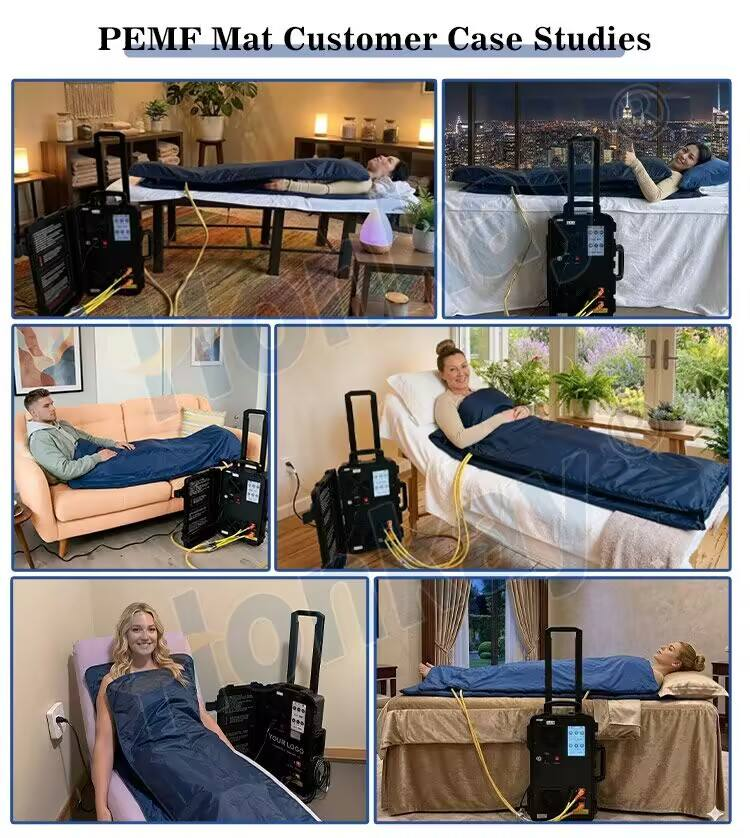
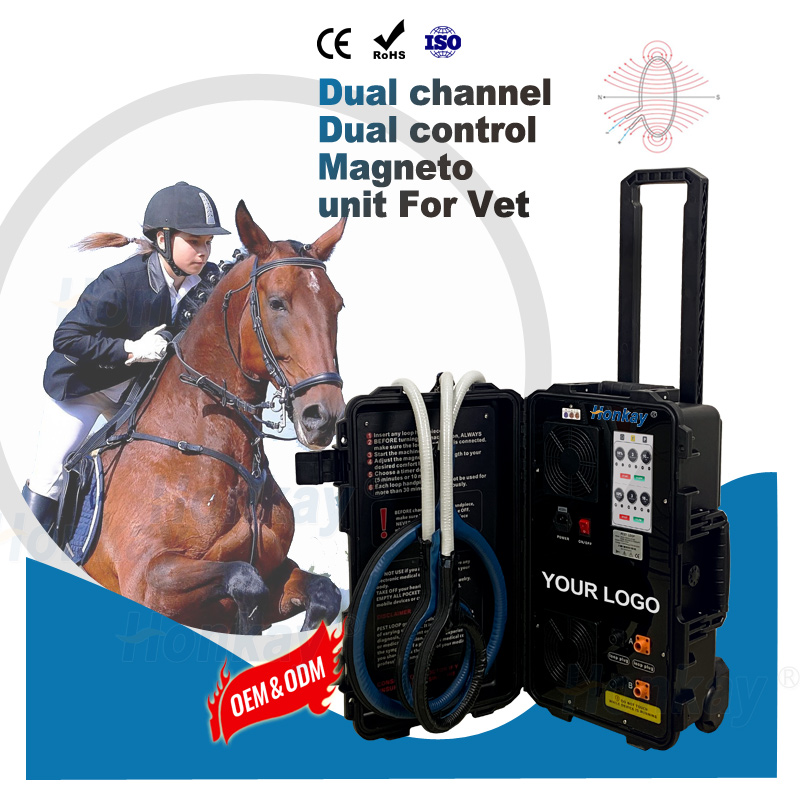
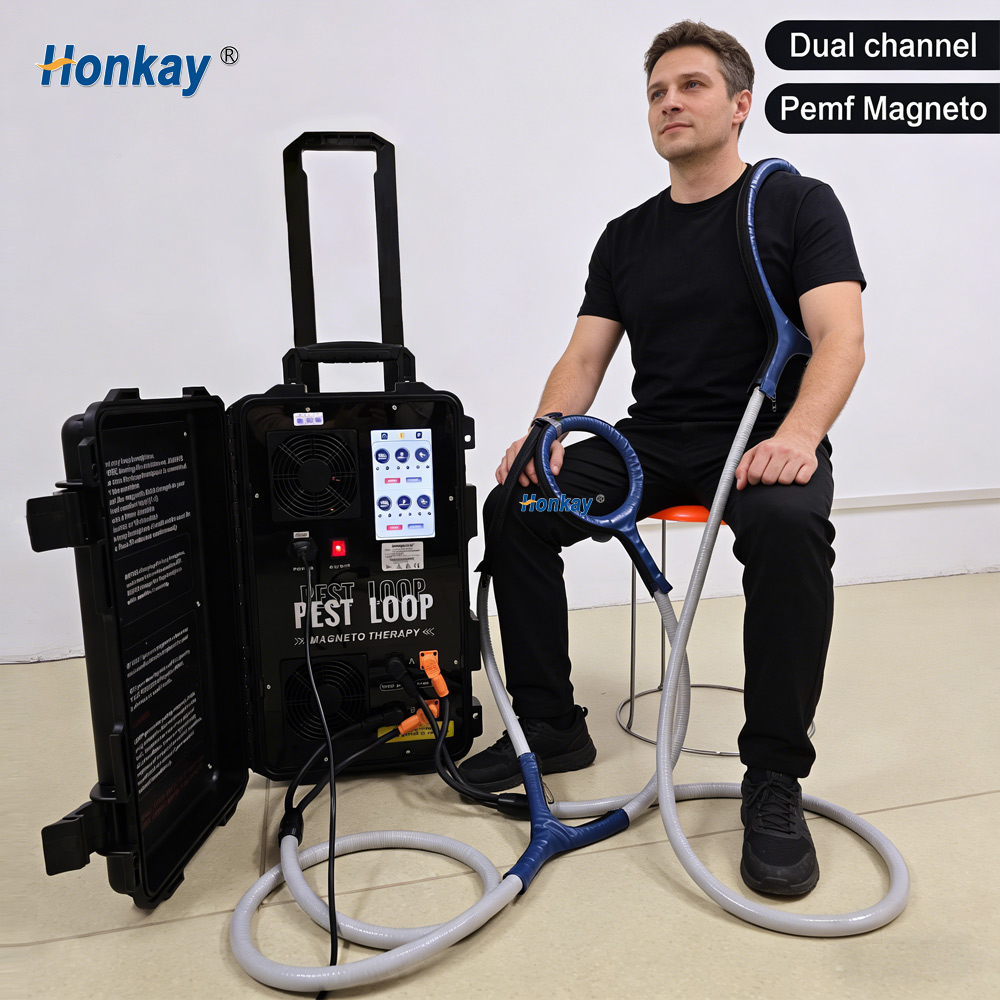
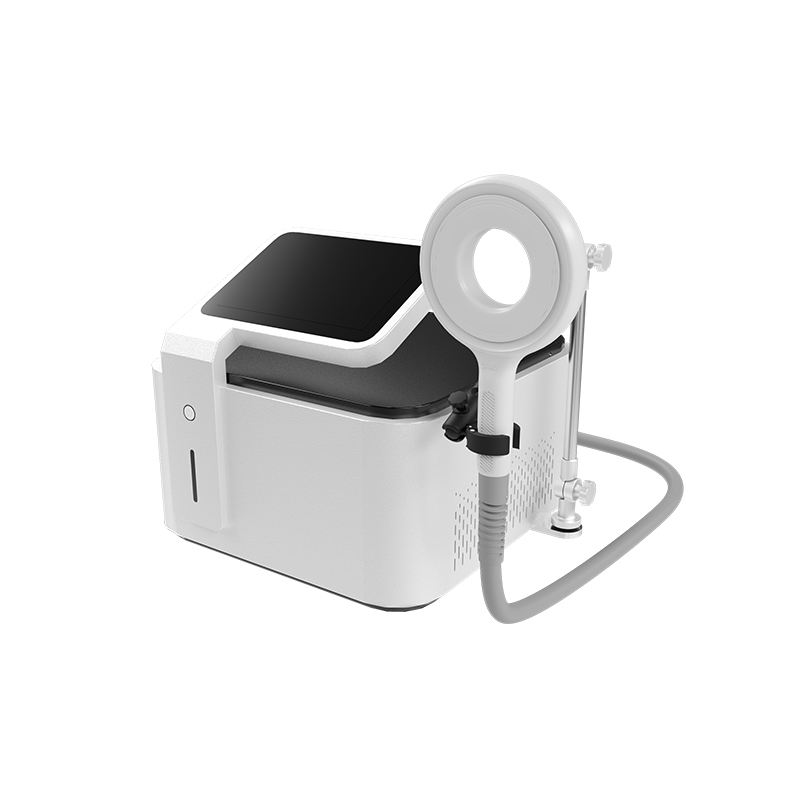
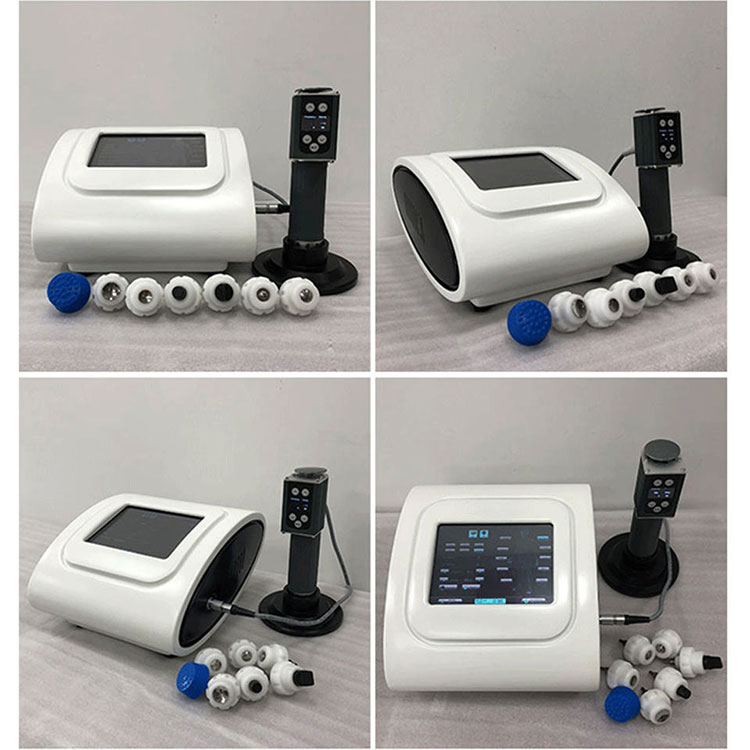
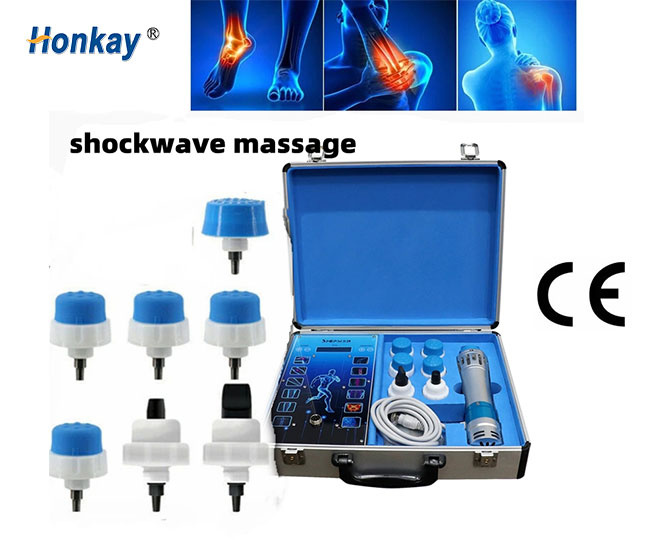
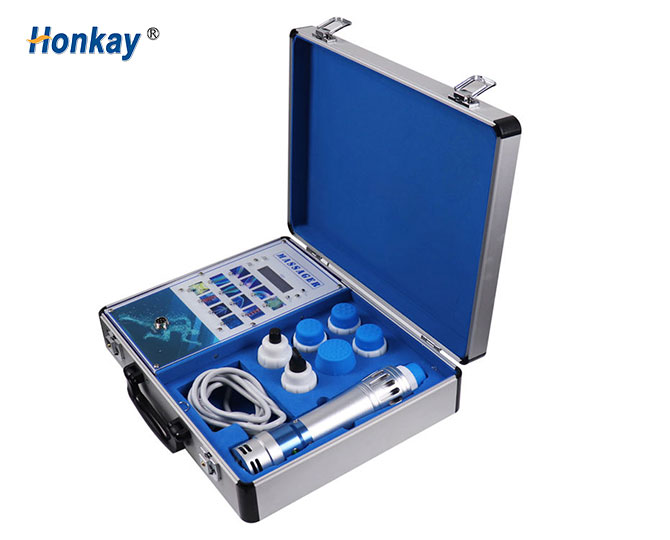
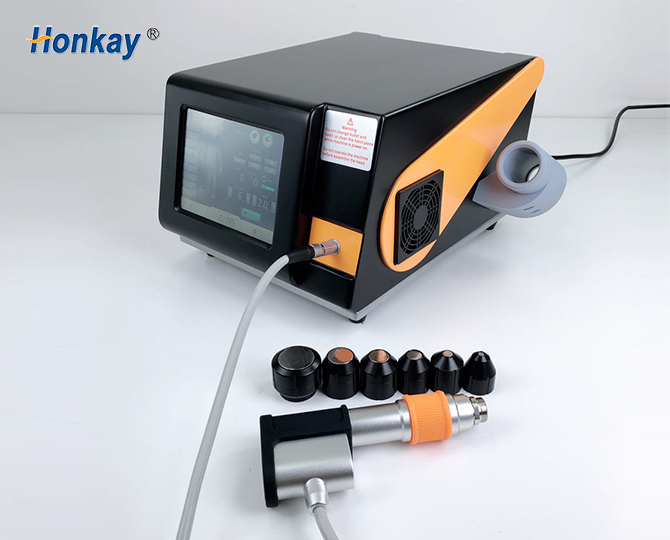
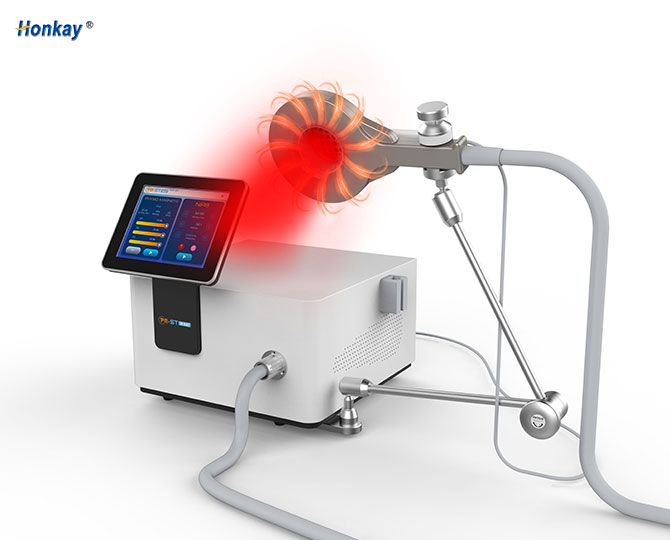
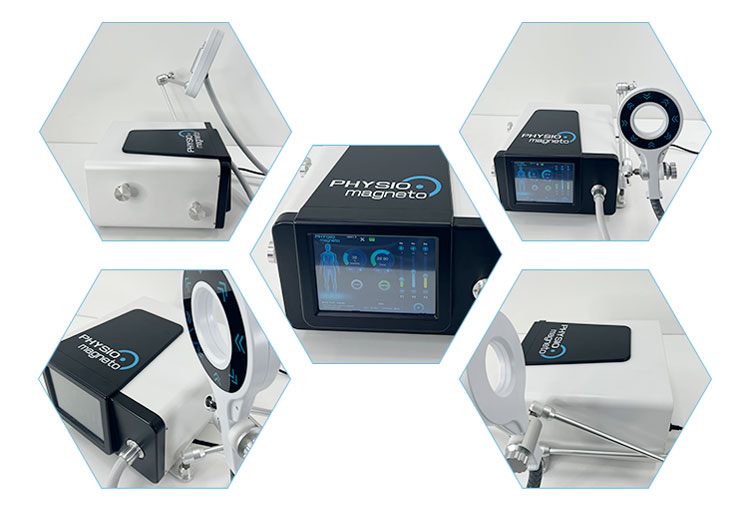
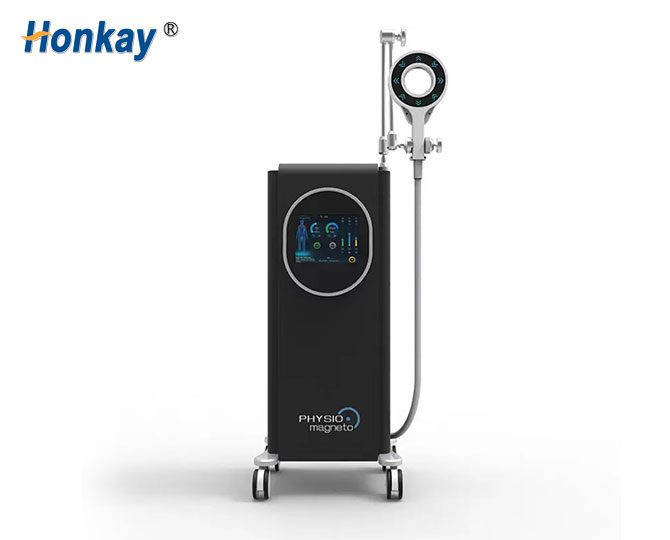
The unit pictured here is built that way: a rigid wheeled case with the applicators stored in the lid, designed to be moved and set up by one person. That is the difference between accepting an out-of-clinic appointment and turning it down.
The applicator set travels with the machine
Portability argues for carrying fewer things, which makes the applicator set more important, not less. One console plus three well-chosen applicators covers more caseload than one console plus a single large loop.
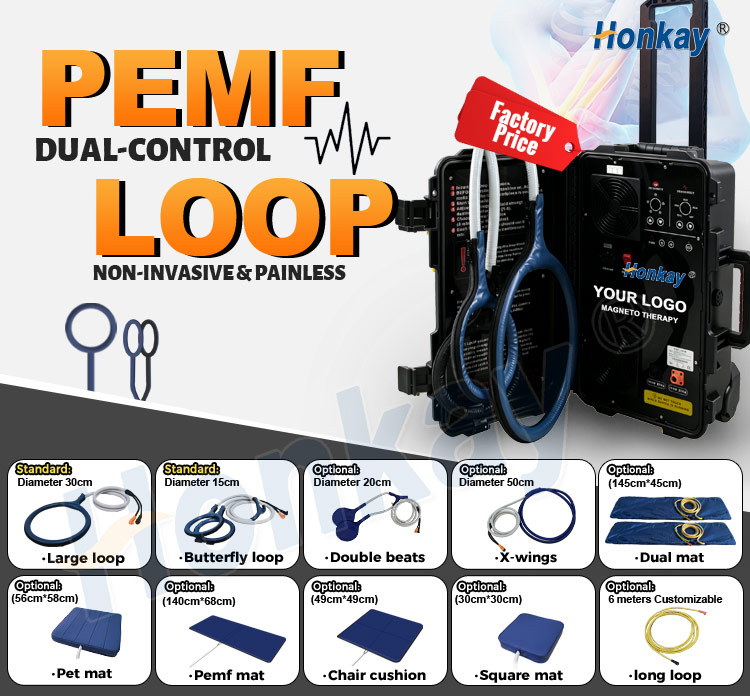
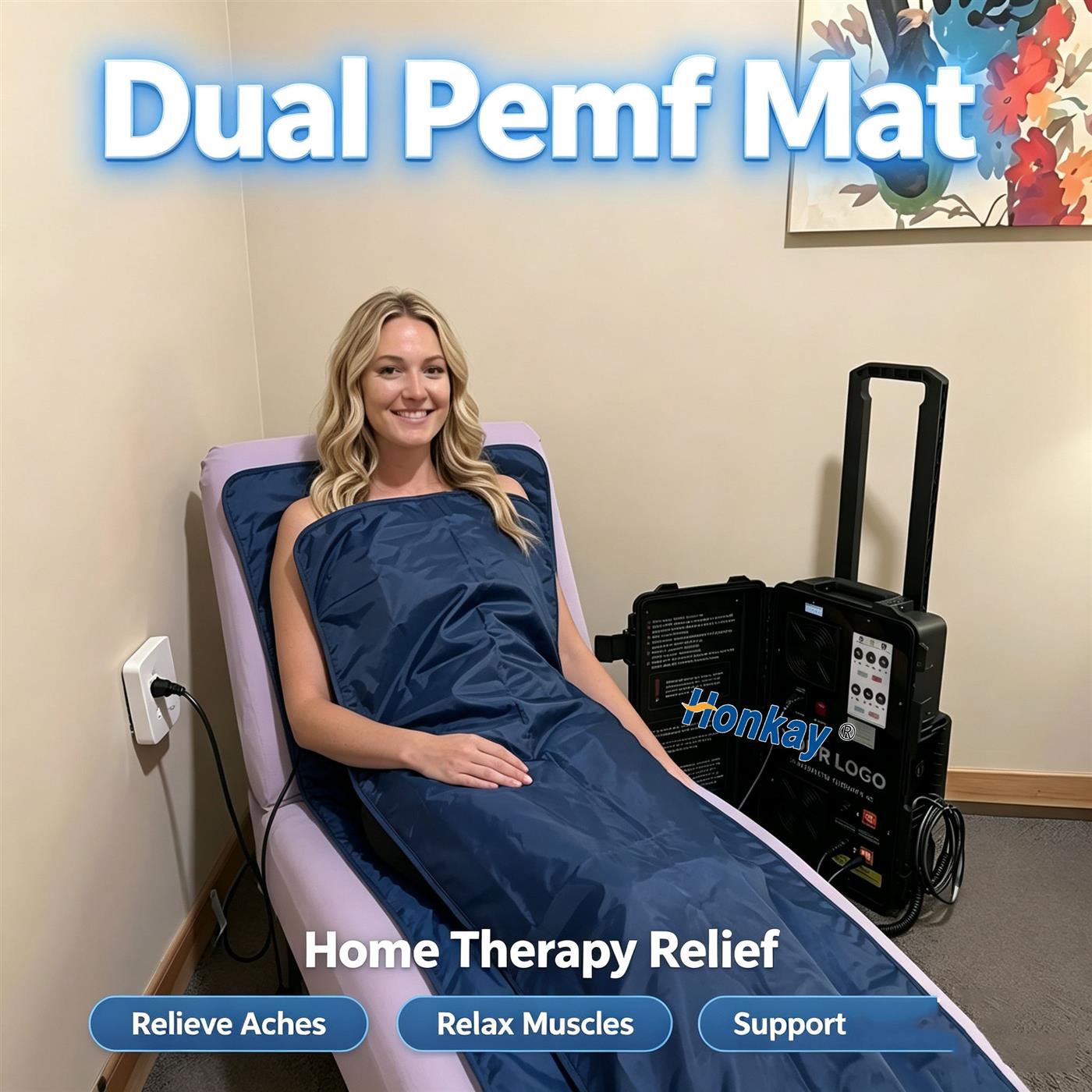
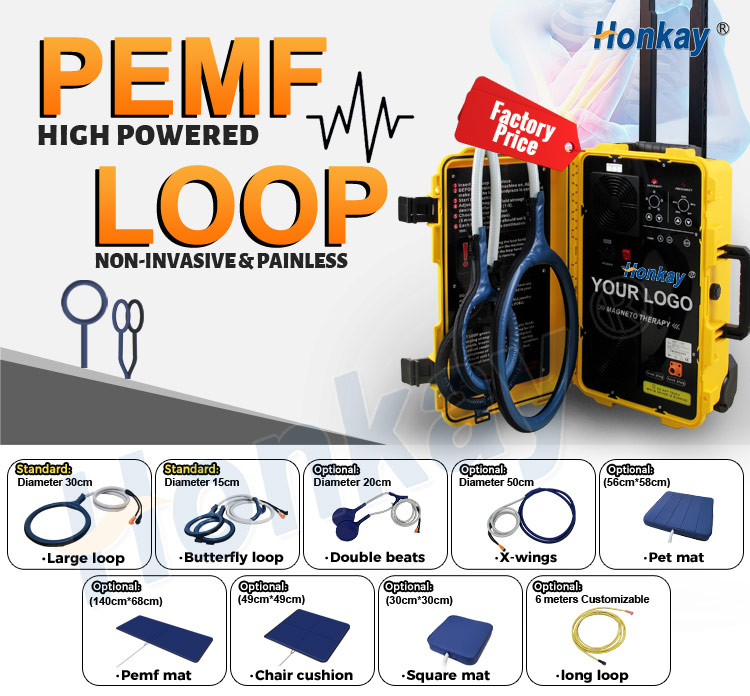
The accessory line for this configuration is split into standard and optional items, and the split varies between suppliers. On the current build the large loop (30 cm) and the butterfly loop (15 cm) are standard, while the wider Double beats (20 cm), X-wings (50 cm), the PEMF mat (140 x 68 cm), chair cushion (49 x 49 cm), square mat (30 x 30 cm), pet mat (56 x 58 cm) and the 6-metre long loop are listed as optional.
That split is where quotations diverge, so read it carefully. The long loop is the sleeper item: six metres of cable means you can treat a patient who cannot be moved, or an animal that will not stand still, without moving the console. For home visits and stable work it is often the single most useful optional item on the list. The mat-type accessories cover a different job again —a patient who lies or sits on the mat needs no handling at all, which is what makes a session possible on someone who cannot tolerate a held applicator.
For a portable setup, the practical target is three applicators: the standard large loop for torso and large muscle groups, the standard butterfly loop for joints and limbs, and the long loop for everything that cannot come to the machine.
Setting up in a room that is not a clinic
The clinical protocol does not change when the room does. Manufacturer guidance for this class of device runs 15 to 20 minutes per single area, a maximum of about 30 minutes on one applicator, and roughly six to eight sessions as a full course, twice a week. Output is adjustable across 1,000 to 8,000 Gauss with a pulse frequency of 1 to 10 Hz, and the session is painless and non-invasive —the field passes through clothing and soft tissue, so no gel and no undressing are involved.
What changes is everything around the treatment:
- Positioning. Without a treatment couch you work with whatever the room offers. A mat-type applicator solves this; a held loop does not.
- Screening. The contraindication check must happen before you leave the clinic, not in the patient’s hallway. Implanted electronic devices such as pacemakers and analgesic pumps, pregnancy, tumours in the treatment area, local infections and metal implants where vibration could damage tissue all need clearing in advance.
- Magnetically sensitive items. Cards with magnetic strips, car keys, access cards and precision electronics should be moved aside before the session. Manufacturers of this class of device warn explicitly that items left near the applicator can be damaged —in a domestic setting that list is longer than in a clinic.

Multi-room and home-visit routing: what changes in your day
The arithmetic of a visiting practice is unforgiving. Every appointment carries movement and setup that a fixed clinic does not pay for, so the only way to protect throughput is to make both fast.
A wheeled case with the applicators stored inside removes unpacking from the sequence: you open the lid, position the loop, set intensity, frequency and time, and start. There is no gel, no disposable, and nothing to restock between patients, so the marginal cost of the next visit is essentially travel time. That is the reason this configuration suits practitioners who work across several rooms, two buildings, or a client’s own premises.
The finishing details matter more than they look on a quotation. A telescopic handle and wheels mean one trip from the car. A rigid shell survives being stored in a boot or a feed room. Interchangeable plug formats mean the same unit works in more than one country. Each of these is the difference between a machine you take with you and a machine that stays in the one room where it is safe.
Specifications to confirm in writing before you order
Ask for these in writing. Several of them are routinely quoted verbally and never appear in the documents.
| Confirm | Why |
|---|---|
| Magnetic intensity range in Gauss, with the measuring point | Some suppliers quote in Tesla on one document and Gauss on another. Ask for one consistent unit |
| Pulse frequency range | This class of console runs 1 to 10 Hz. Be sceptical of a table that lists pulse frequencies well outside that band |
| Oscillation frequency, stated separately from pulse frequency | The two are different numbers and are frequently conflated in marketing copy |
| Which applicators are standard, with diameters | The standard/optional split varies by supplier and changes the real price |
| Maximum continuous use time per applicator | Usually around 30 minutes; beyond that the applicator needs to rest |
| Per-area session parameters | A table shipped with the unit, not “clinical judgement” |
| Written warranty terms | Period and scope. Verbal periods are not warranty terms |
| Power input and plug formats | Wide-voltage input with interchangeable plugs is what makes travel workable |
| Training included | Named training in the purchase, not a separate line item |
| Contraindication list | The manufacturer’s own screening list, in writing |
Frequently asked questions
What is the difference between a pulsed electromagnetic field therapy machine and a PEMF mat?
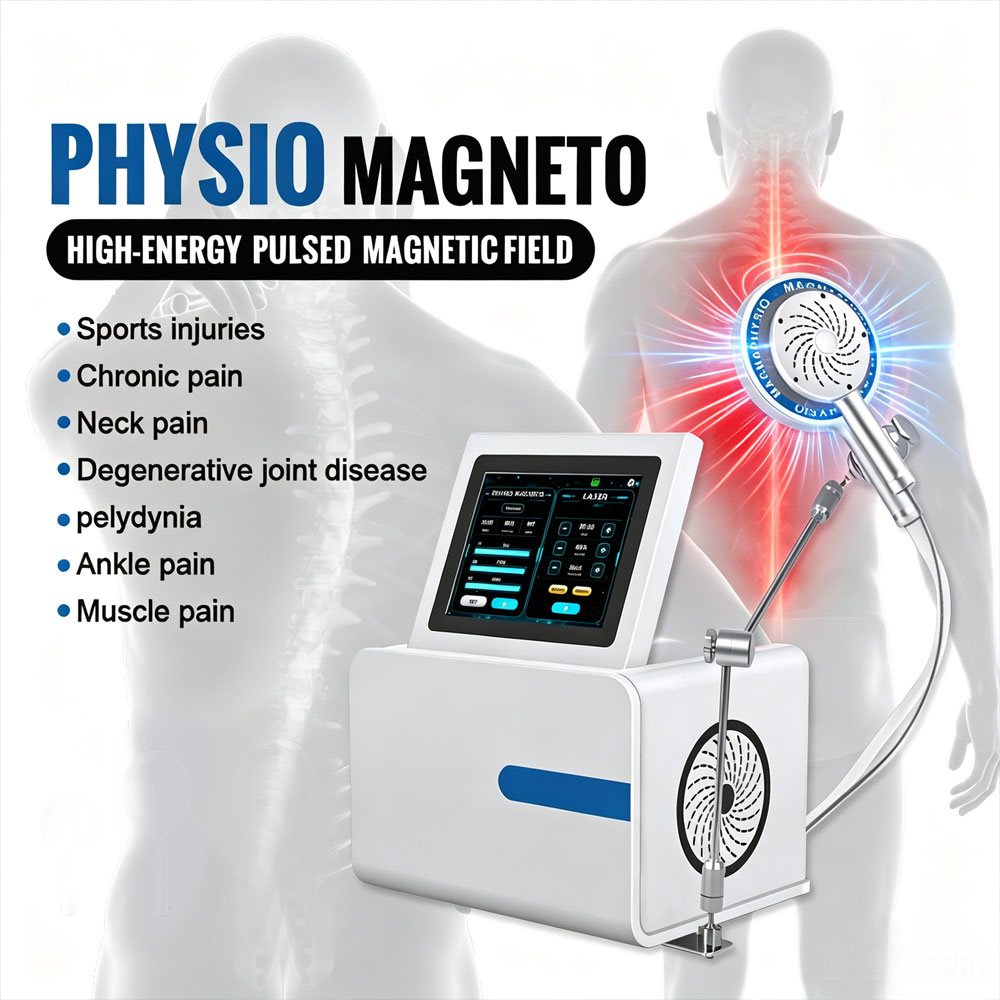
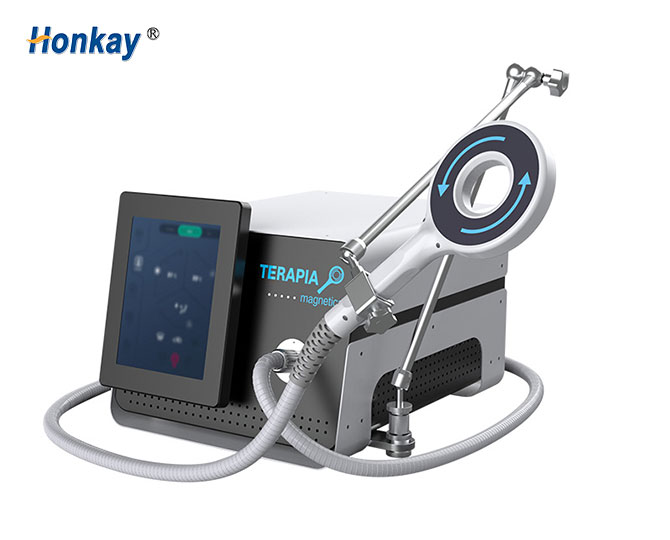
A console with loop applicators concentrates the field into a chosen area and lets you adjust intensity and frequency per session. Suppliers describe the same class of product as electromagnetic field therapy machines or pulsed magnetic field therapy machines; the label varies but the deciding specification does not. A mat spreads a lower-intensity field across a broad area and needs no handling at all, which makes it usable on a patient who cannot tolerate a held applicator. Many setups carry both: loops for targeted work, a mat for patients who cannot be positioned.
How much does the unit weigh, and can one person carry it?
Ask the supplier for the net weight and the case rating rather than assuming. A portable configuration in this class is designed to be moved by one person using the telescopic handle and wheels, with the applicators stored inside the lid so nothing has to be carried separately.
Do I need to remove the patient’s clothing?
No. The field passes through clothing and soft tissue, so no undressing and no coupling gel are required. Metal objects in the treatment area should be removed first.
What has to be cleared before treating at a patient’s home?
Implanted electronic devices such as pacemakers and analgesic pumps, pregnancy, tumours in the treatment area, local infections, and metal implants where vibration could damage tissue. Do the screening before the visit. In a domestic setting also clear cards with magnetic strips, car keys, access cards and precision electronics out of the immediate area.
How long is a session and how many sessions make a course?
Manufacturer guidance for this class of device runs 15 to 20 minutes per single area, with a maximum of about 30 minutes on one applicator, and roughly six to eight sessions as a course at twice a week. Acute and post-operative cases follow a shorter, more frequent schedule.
Can one machine cover more than one treatment room?
That is the configuration’s main advantage. Because the case is wheeled and self-contained —console, applicators and cable in one shell —the same unit can be moved between rooms or buildings without repacking. A wide-voltage input with interchangeable plug formats extends that to working in more than one country.
Which applicator should I order first if I am buying the minimum?
The standard large loop and the standard butterfly loop cover most of a general caseload —torso and large muscle groups, and joints and limbs respectively. If your work includes patients or animals that cannot be moved or will not stand still, add the long loop before any other optional item.
How do I compare two quotations that look identical on paper?
Ask for the magnetic intensity range in Gauss with a stated measuring point, the pulse frequency range, the oscillation frequency, the standard-versus-optional applicator list with diameters, the maximum continuous use per applicator, the per-area session parameters, and the written warranty terms. The differences that decide value in daily use are almost always in the applicator list and the accessories, not the headline numbers.
Request a quotation for a portable PEMF therapy setup
Tell us where you work —single room, several rooms, home visits, stable or sports venue —and we will put the applicator set together around that, rather than sending the full catalogue. The quotation includes the applicator list with diameters, the recommended session parameters and the written warranty terms, so two offers can be compared line by line.
Manager: Lisa
WhatsApp: +8613751821215
E-mail: hk6@huang-kai.com