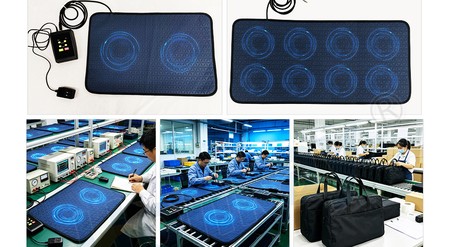
Custom PEMF Mats: What Can Be Changed and What Cannot
What a custom PEMF mat order can and cannot change
A private-label PEMF mat is rarely a single decision. Buyers usually arrive with one thing in mind — a logo on the pad — and leave having specified six. Most of the friction in a mat project comes from asking for the wrong half, so this guide follows the order a purchase actually happens: the electrical platform, the pad, the print, the packaging, then the sample check.
The electrical platform is the part to leave alone
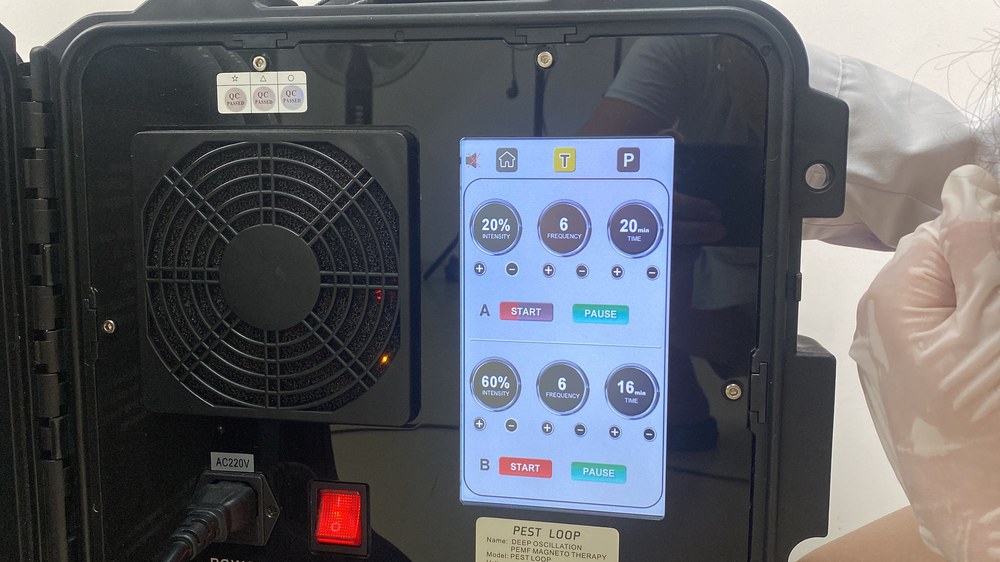
The control unit runs from 110–240 V at 50/60 Hz and outputs DC 24 V at 100 W. Frequency is adjustable from 1 to 100 Hz and intensity from 0 to 25 Gs, with ten intensity steps on the screen. That is the platform every pad size shares, and it is worth treating as fixed rather than as a starting point for negotiation.
The frequency range, the intensity ceiling and the session timing are tied to the coil winding and the firmware behind it. A higher Gauss ceiling on the same control board is a different product, not a tweak. Requests that stay inside the platform — pad size, coil count within the published options, colour, pattern, logo, packaging — move quickly because nothing in the electronics has to be re-validated.
The pad is where most of the customisation lives
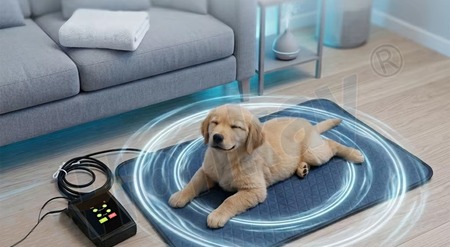
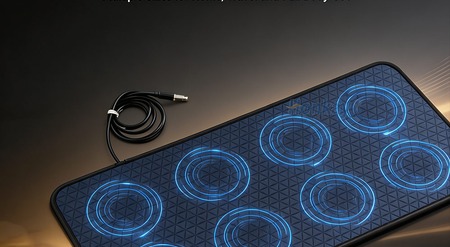
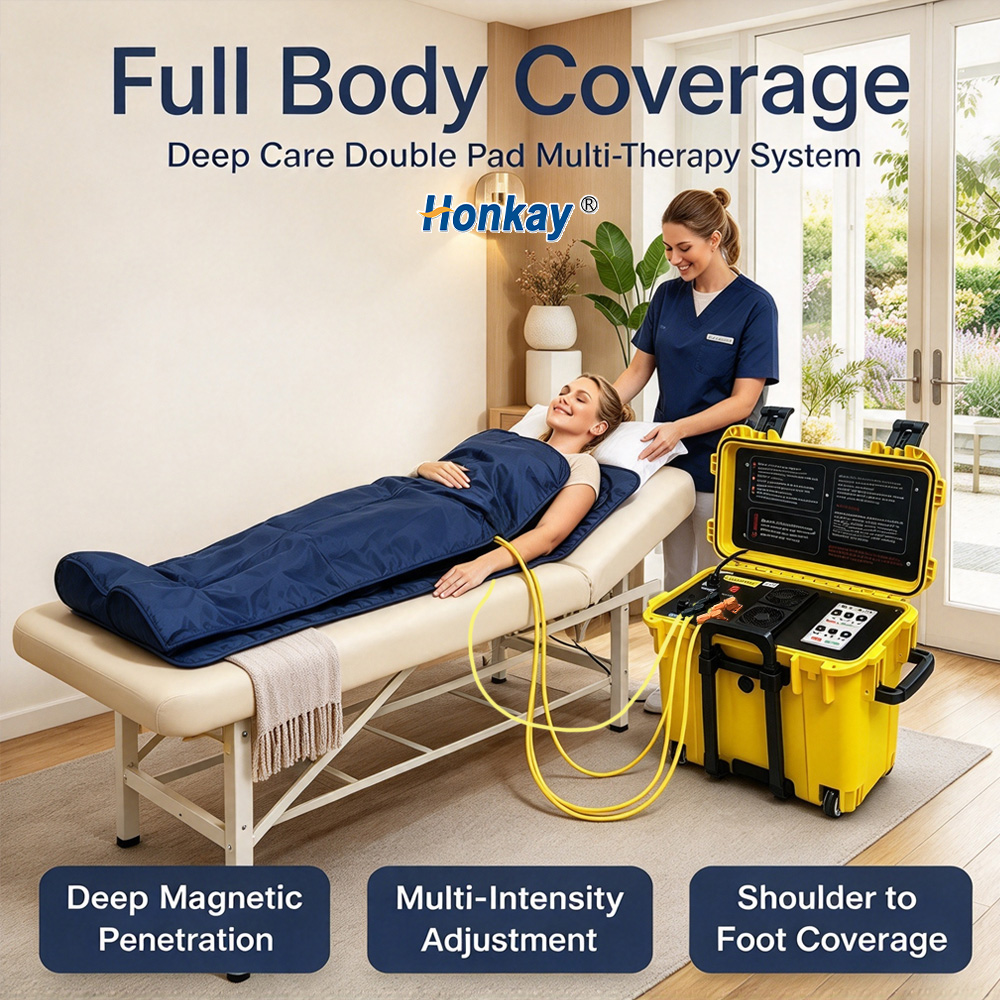
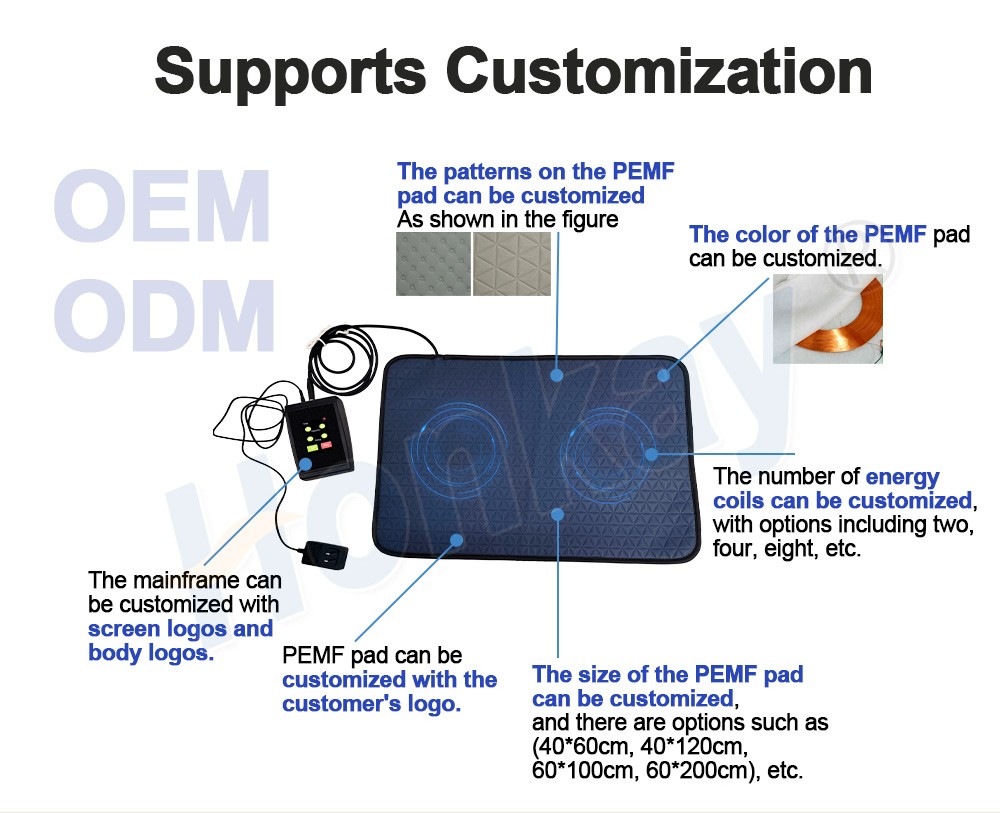
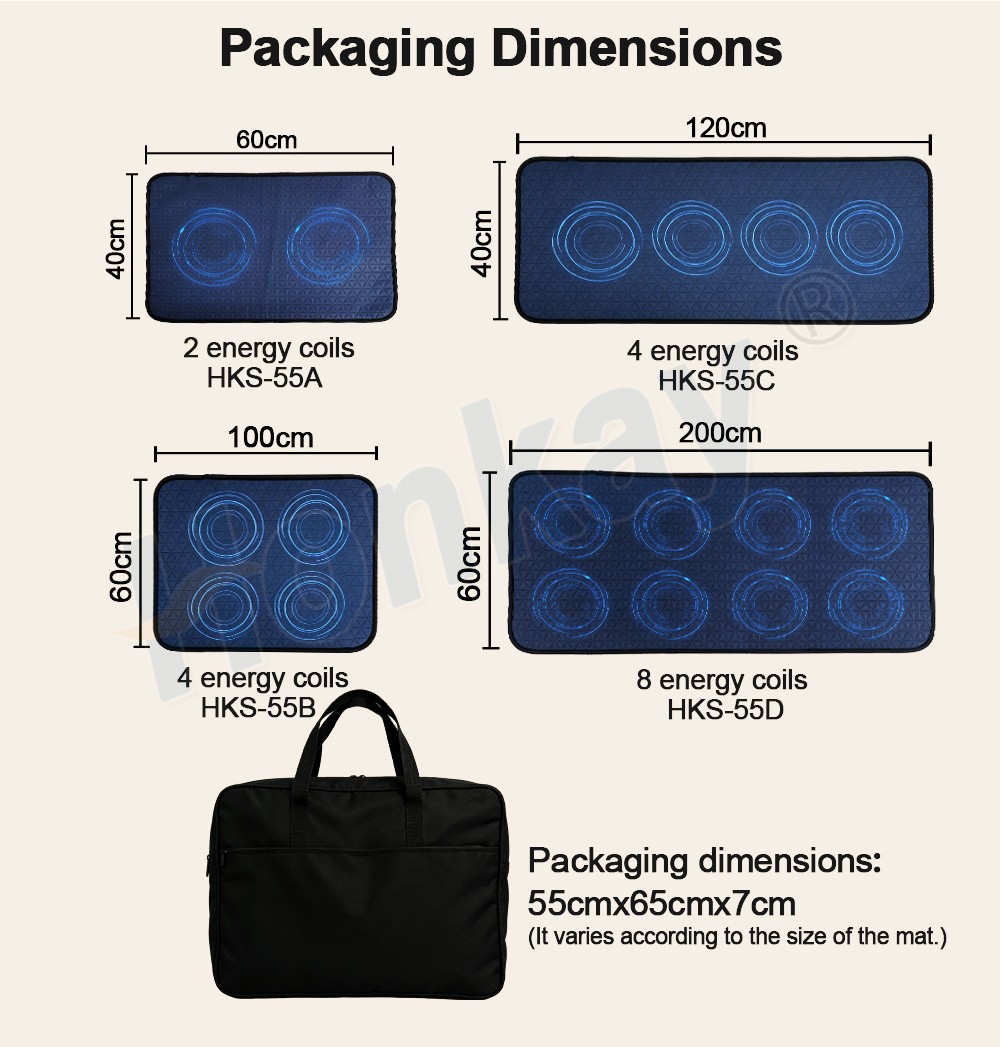
Four pad sizes are produced: 40×60 cm with 2 coils, 60×100 cm with 4 coils, 40×120 cm with 4 coils and 60×200 cm with 8 coils. The pairing of size and coil count is not arbitrary, and it is the first thing to settle. A 40×120 cm pad carries the same four coils as a 60×100 cm pad, so the coils sit further apart along the length. If the intended use is one seated user, the tighter layout usually serves better than the longer one.
On top of the pad itself, three surfaces can be changed. The quilted pattern can be re-embossed or printed, the pad colour can be specified, and the buyer’s logo can be applied to the pad face. Each of those is a separate artwork file, and each has its own minimum quantity, so they are usually quoted together rather than one at a time.
Logo placement and the artwork you need to send
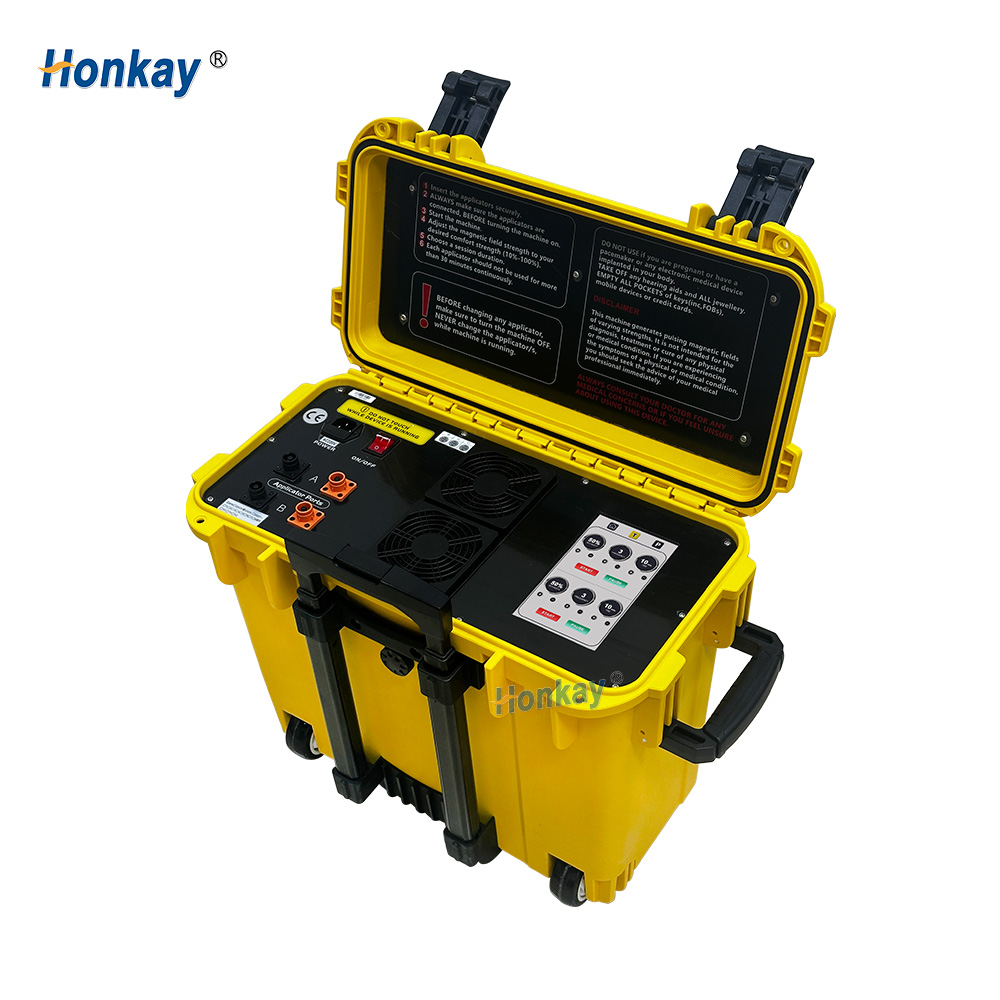
There are two natural logo positions: the pad face and the control unit. The pad face carries the largest area but is a soft, quilted surface, so fine detail and small type will not survive the embossing. The control unit has a small screen surround and a body panel; both take a tighter, cleaner mark, but the space is limited and the print sits close to the buttons the user touches every session.
Send vector artwork rather than a screenshot, state the print width in millimetres, and ask for a photographic proof on the actual material before the run starts — a mark that reads at 30 mm on paper does not automatically read on a quilted pad.
What can be changed, and what to write in the request
| Item | Can it be changed | What to state in the enquiry |
|---|---|---|
| Frequency range and intensity ceiling | No — fixed platform | 1–100 Hz, 0–25 Gs, ten levels; confirm any destination-market requirement before ordering |
| Pad size | Yes — four sizes | The size in cm and the position it will be used in, not just the size alone |
| Coil count | Yes — 2, 4 or 8 | Which size it pairs with, and whether coverage or intensity per coil matters more |
| Pad pattern | Yes | Reference photo of the pattern you want, and whether it is embossed or printed |
| Pad colour | Yes | Pantone reference, and how the colour should behave under indoor light |
| Logo | Yes — pad face and control unit | Vector file, print width in mm, colour system, and the position you want |
| Carrying bag | Yes | Bag printing, and whether the bag is sold with the mat or packed separately |
| Manual and labels | Yes — language and wording | Target language, and who signs off the safety wording |
Packaging, plug type and the details that delay a shipment
The bag for a single mat measures roughly 55×65×7 cm and varies with the pad size, so a 60×200 cm mat does not travel in the same bag as a 40×60 cm mat. If your channel expects a retail-ready carton, say so at quotation stage: carton, inner protection and barcode all sit outside the pad specification.
Plug type is the other routine delay. The input range covers 110–240 V, which means the same machine travels almost anywhere, but the adapter end must match the destination. Name the destination country and, if you sell across several, ask for the plug options and how they are packed so a warehouse can pick the right one.
What to check on the sample before the run
A sample session tells you more than a specification sheet. Connect the pad before switching on, confirm the frequency value moves across the full 1–100 Hz range, and run one short session at a low level. Then check the pad: coil positions evenly spaced and symmetric, stitching flat with no puckering over a coil, cable entry anchored rather than loose.
Fold it the way it will be stored. The manual warns against folding the pad excessively or at random because the internal coils can be damaged, so a pad that resists a careless fold is behaving as intended.
| Sample check | What good looks like | Why it matters |
|---|---|---|
| Frequency sweep | Value moves smoothly from the low end to the top of the range | A narrow or sticky range is a firmware problem, not a setting preference |
| Coil layout | Even spacing, no cluster at one end | Uneven spacing shows up as a cold patch in use |
| Stitching over coils | Flat, no puckering or hard ridges | Ridges become pressure points for a user lying on the pad |
| Cable entry | Anchored, with strain relief at the pad edge | The cable is the first thing to fail on a mat that travels |
| Bag and contents | Pad, control unit, cable, adapter, bag, manual | A missing adapter is a returned order, not a spare part |
Claims on the artwork: the mistake that outlives the order
Printed artwork follows the goods into every market, so it deserves the same care as the technical file. Two patterns cause most of the trouble: a frequency figure that does not match the platform — a pad printed 2–72 Hz beside a manual that says 1–100 Hz creates a discrepancy the buyer has to explain — and a treatment claim on the pad face, which turns a wellness product into something read quite differently in some markets.
The practical rule is to keep the pad to brand identity and let the documentation carry the numbers. A pad that shows a logo and a pattern stays valid across every size and every future firmware revision.
Frequently asked questions
Can the Gauss output be increased for our market?
The published platform runs 0–25 Gs in ten steps. A higher ceiling is a different coil and board combination, so treat it as a new development project rather than an option on this mat.
Can we mix pad sizes in one order?
Yes, and mixed orders are common for buyers testing two positions at once. Ask for the quantity to be quoted per size, because the pad, the bag and the carton all change with the size.
Is the control unit shared across all four sizes?
It is. The manual states that all models use the same control unit and the same operating method; only the pad and its coil count change.
Can the pad carry our logo on the quilted face?
Yes, with a caveat: a quilted surface compresses fine detail. Keep the mark simple, specify the print width, and ask for a proof on the actual material before the production run.
Can you print different specifications on different pads?
Technically yes, but it is worth avoiding. Frequency and intensity are identical across sizes, so duplicating them on the pad creates a maintenance problem the moment the platform is updated.
What plug types are available?
The adapter accepts 110–240 V input, and the plug end is matched to the destination market. Tell us the countries you ship to and how the adapters should be packed.
How long is the warranty, and from when?
24 months, counted from the factory shipment date. Claims need the device serial number and photographic or video evidence of the fault.
Can we buy the bag separately?
The bag is part of the standard set and can also be ordered as an accessory. If you plan to sell it separately, specify the printing and the barcode at quotation stage.
Working with the Honkay team
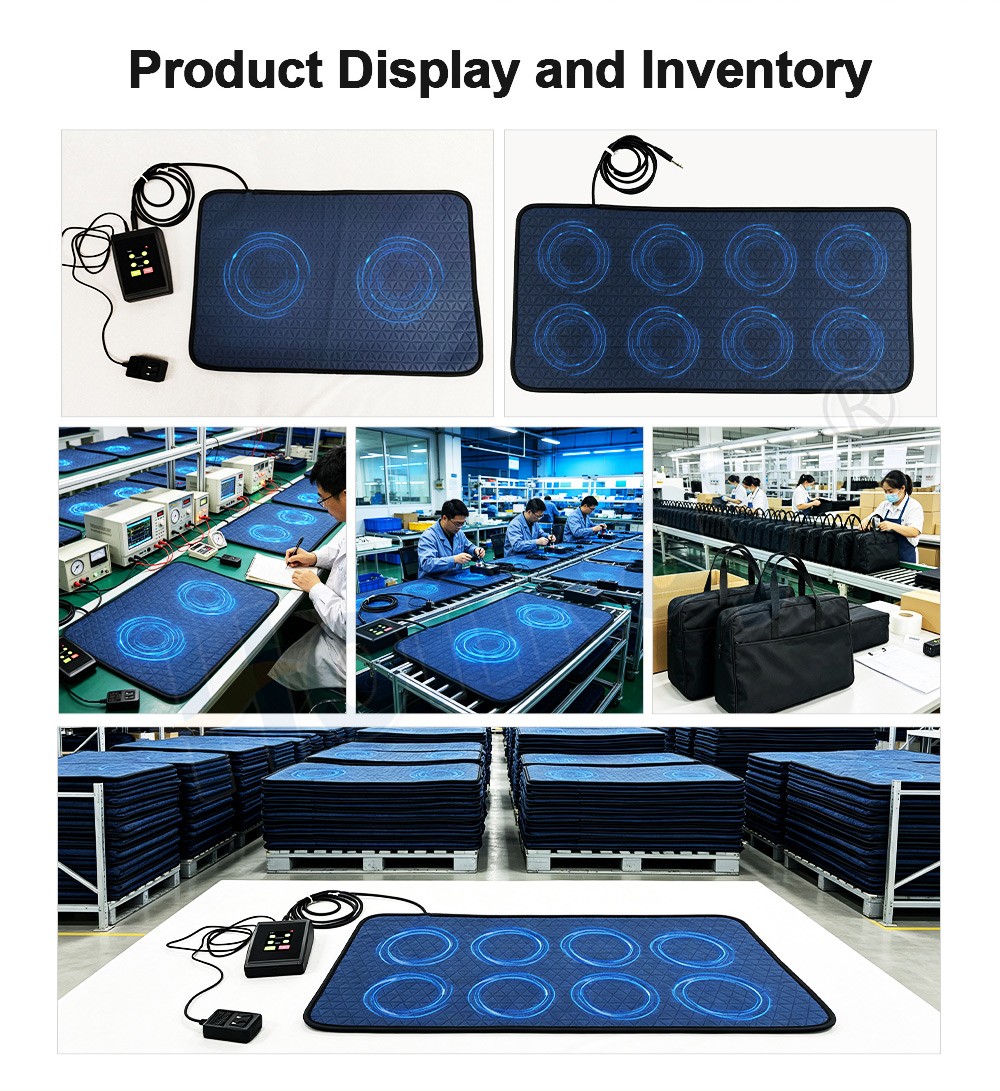
Honkay has built physiotherapy and aesthetic equipment since 2005, with 20 years of OEM and ODM work behind the range. The mat line is produced in house, from coil winding and pad assembly through to the control unit and the bag, which is why size, coil count, pattern, colour and logo can change on one order.
Send the pad size, the position it will be used in, the logo file and the destination markets, and you will get a quotation that separates the pad, the bag and the carton rather than one blended figure. Warranty runs 24 months from the factory shipment date; ask for that wording, and the claim route, to be written into the order confirmation.
Reach the team on WhatsApp at +8613751821215 or by email at hk6@huang-kai.com. Samples can be arranged before a production run, and a proof of the printed pad is worth more than a PDF of the artwork.
This device is intended for adjunctive use alongside professional care, not as a replacement for diagnosis or treatment. Suitability should be confirmed with a qualified clinician; individual experience varies.
Chat with the Honkay team on WhatsApp | Email hk6@huang-kai.com