Dual Control Magneto Therapy Device: Duty Cycle, Cooling and the 1–2 cm Gap
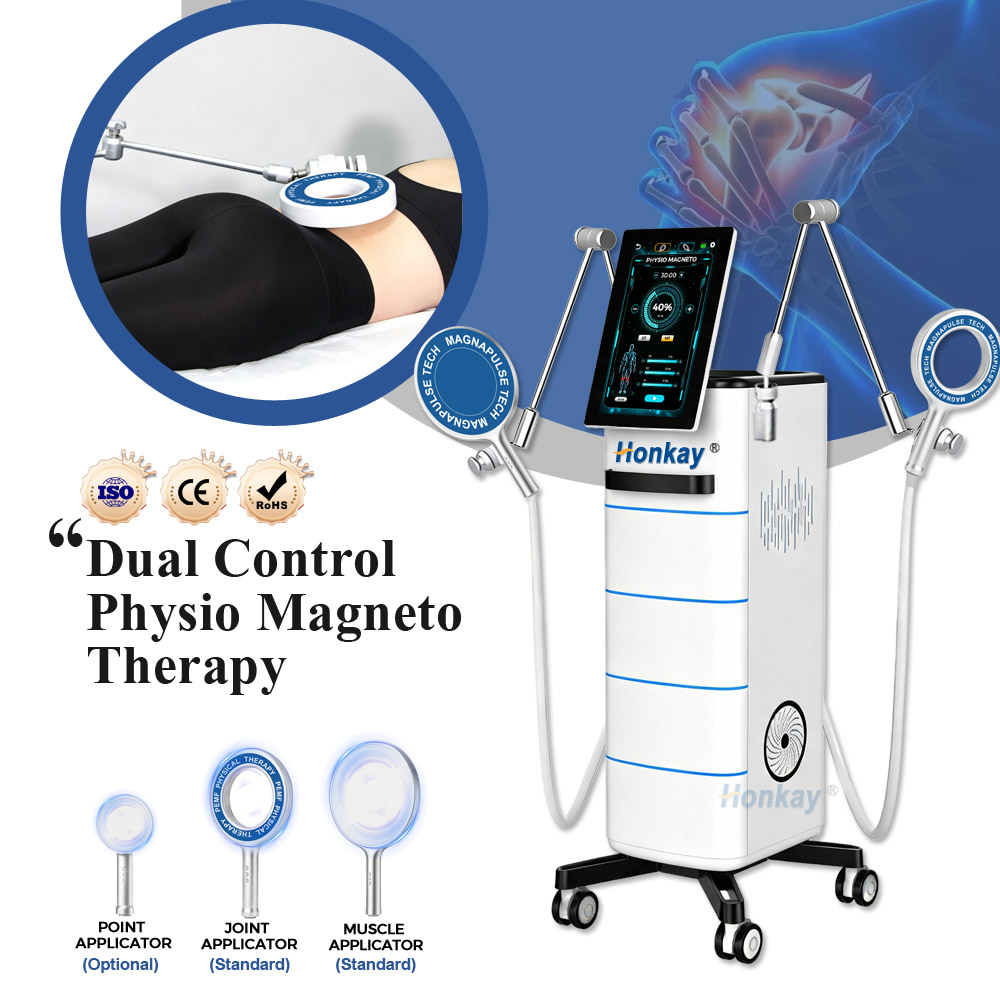
Three details decide whether a standing magneto therapy device earns its floor space, and none of them appear in the headline specification. The applicator is water-cooled so the unit can run continuously; it is held one to two centimetres off the skin rather than pressed against it; and the console offers two pulse ranges that aim at different tissue. Miss any of the three and the machine works — it just works at half its capacity.
This guide covers those three, the throughput they produce, and the maintenance items a water-cooled applicator brings with it.
What continuous operation actually means
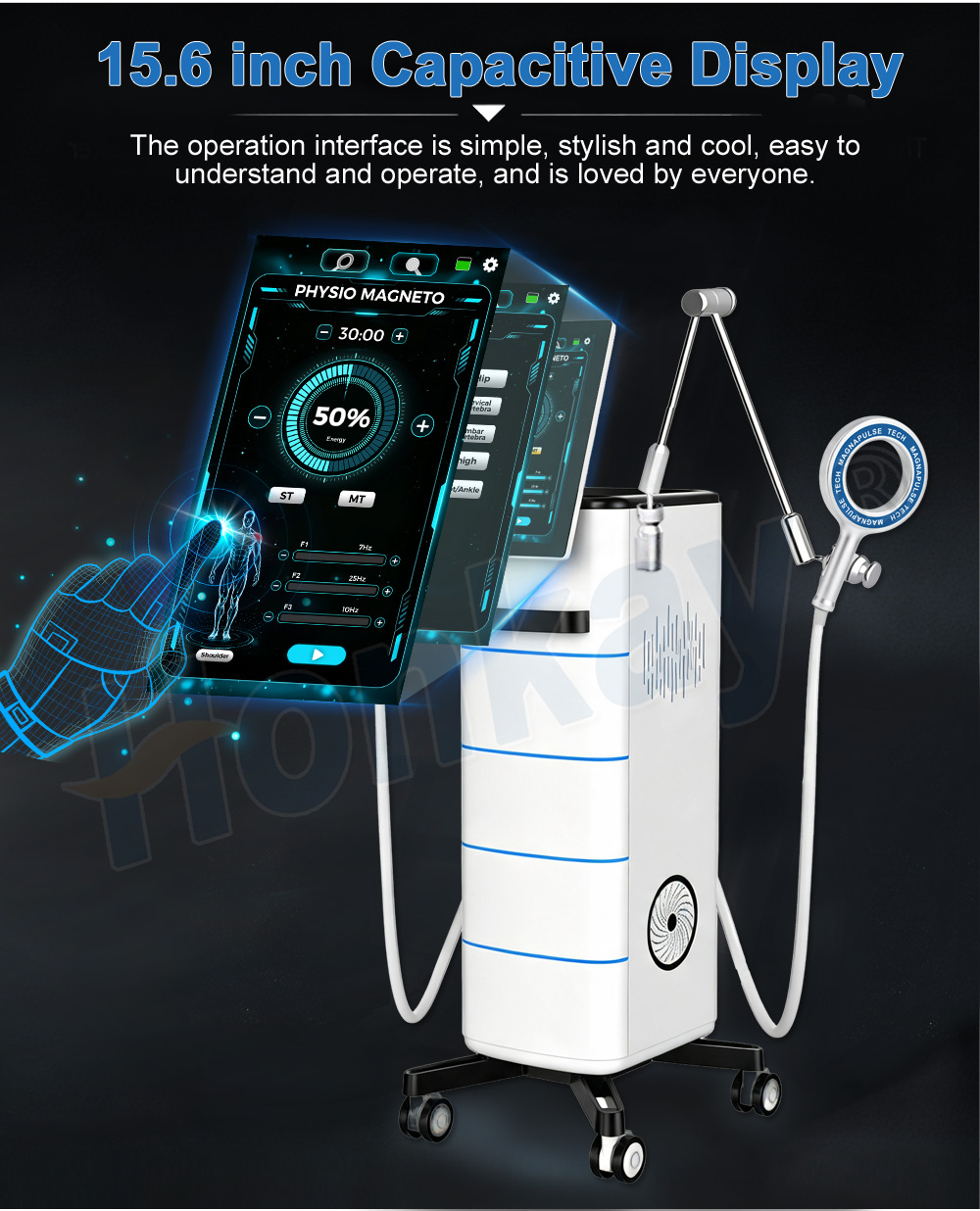
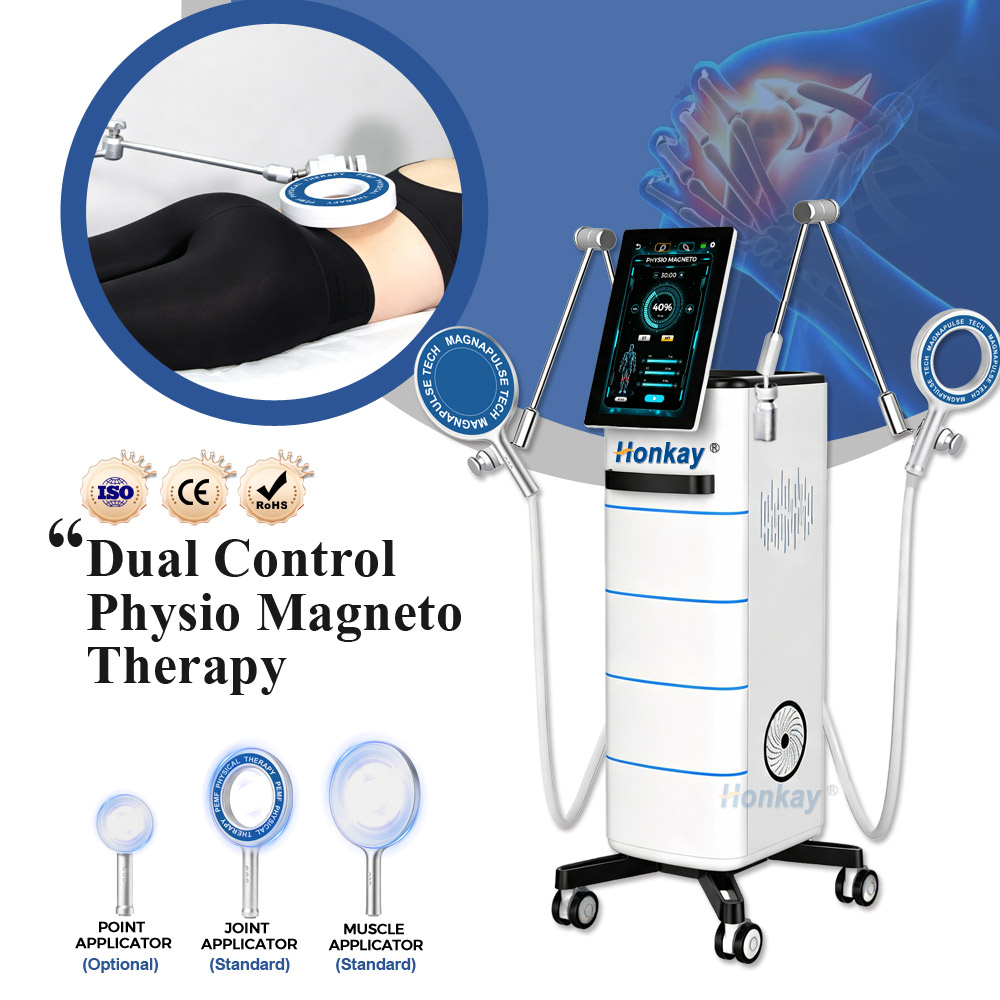
A water-cooled applicator is not a marketing term. It means heat is carried away from the coil rather than accumulating in the handpiece, which is what allows back-to-back sessions instead of a duty cycle with cooling pauses.
For a clinic this changes scheduling. A unit that must rest between patients forces gaps that no one plans for; a continuously rated unit does not. The practical figure to ask about is not “how long is a session” but “how many sessions in a row can it run” — and on this platform the answer is that the applicator is water-cooled specifically to support continuous operation.
Two consequences follow. First, the cooling system becomes a maintenance item, covered further down. Second, the applicator stays a comfortable temperature in the operator’s hand, which matters when a therapist holds position for twenty minutes.
The 1–2 cm gap: contact is not the goal
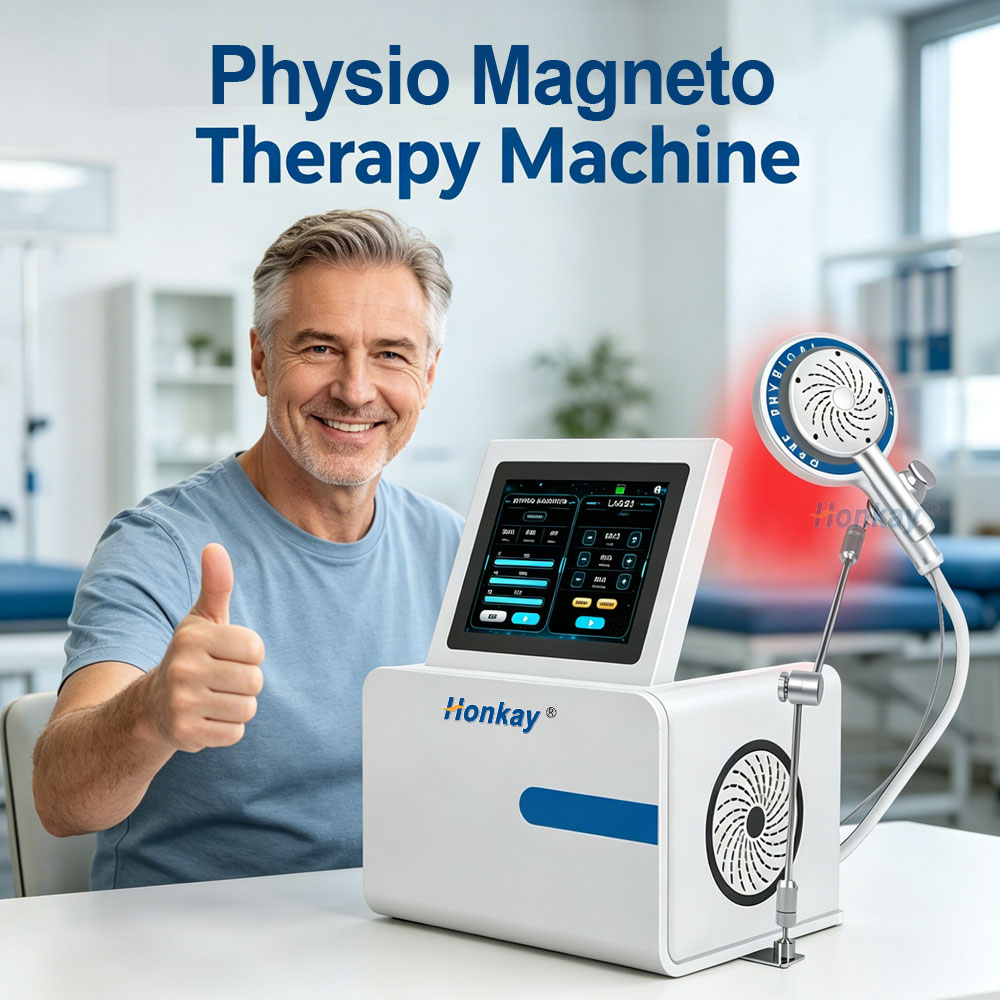
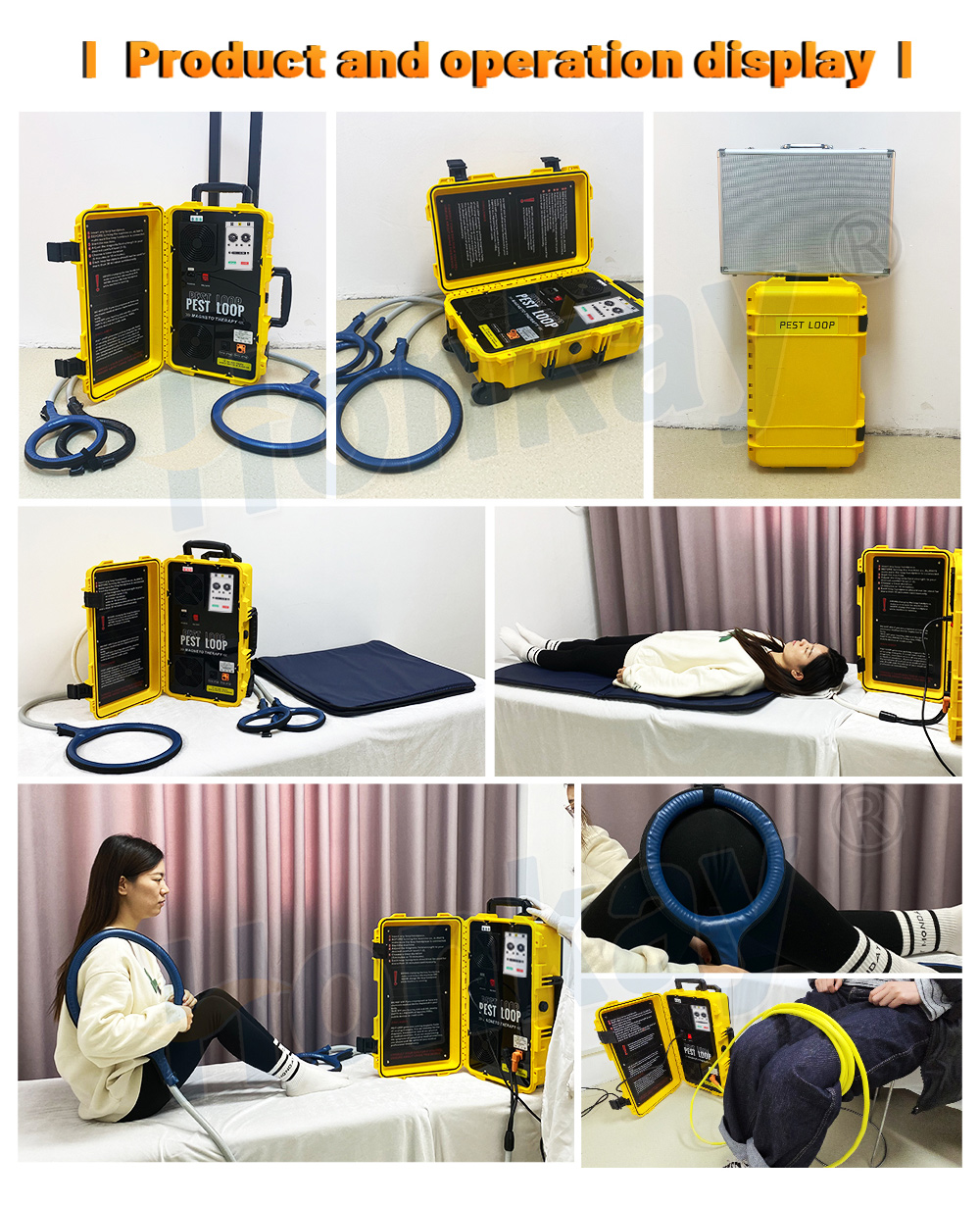
With most modalities the rule is “good contact”. Magneto is the exception. The applicator is positioned one to two centimetres away from the skin, and the field does not need a conductive path to reach tissue.
That single fact changes three things:
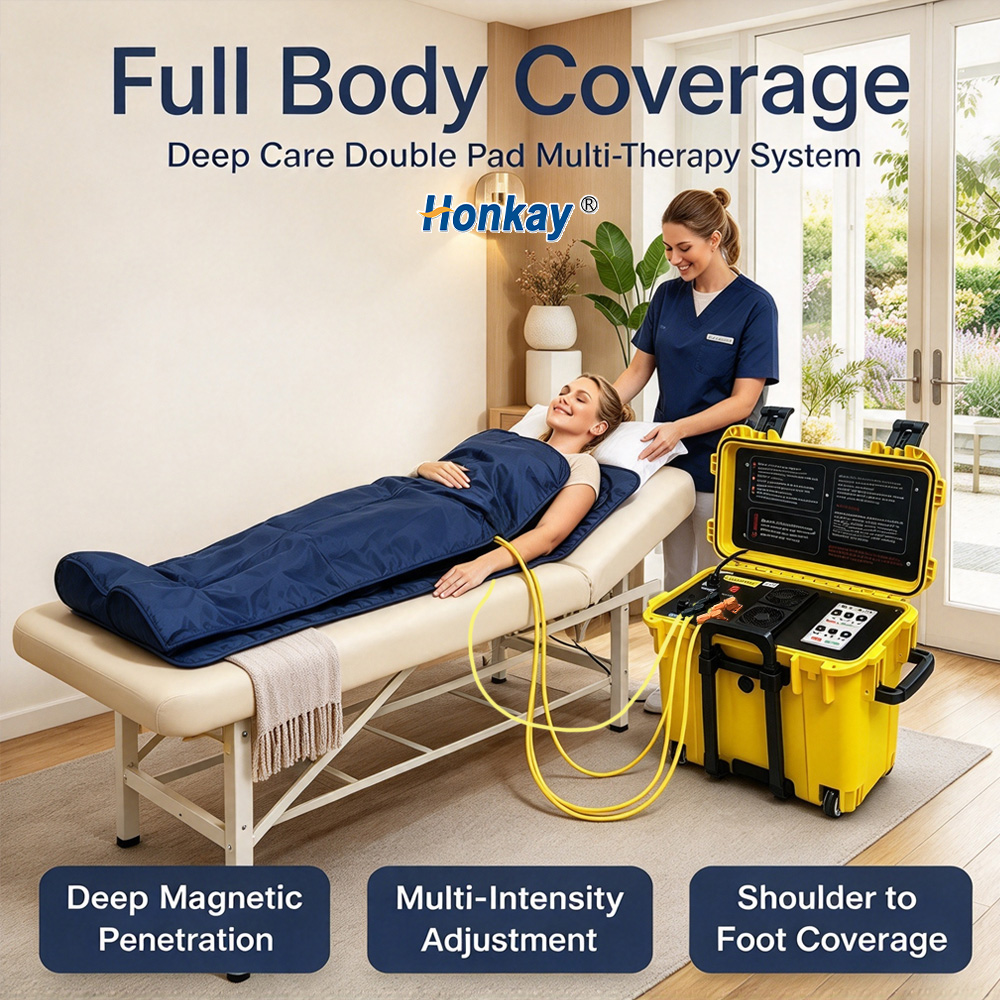
- No undressing. Treatment can run through clothing, which removes the most awkward part of a first appointment.
- No coupling medium. There is no gel to apply, buy or clean up — the recurring consumable is electricity, not supplies.
- Positioning matters more than pressure. The operator’s job is to hold the gap steady, which is why a holding arm is worth having.
The common error is pressing the applicator against the body “to make it work better”. It does not, and on a hard-shell unit it also puts load on the arm.
ST and MT: two ranges, two targets
The console carries two pulse modes, and they are not intensity levels:
| Mode | Pulse range | Aimed at |
|---|---|---|
| MT | 1–50 Hz | Muscle-oriented work |
| ST | 1000–3000 Hz | Tendons, bone surfaces and ligaments |
Operators who leave the unit in one mode for everything are using half a device. The distinction is about which tissue the pulse sequence suits, not about how strong the session feels.
The preset library, and what it is really for
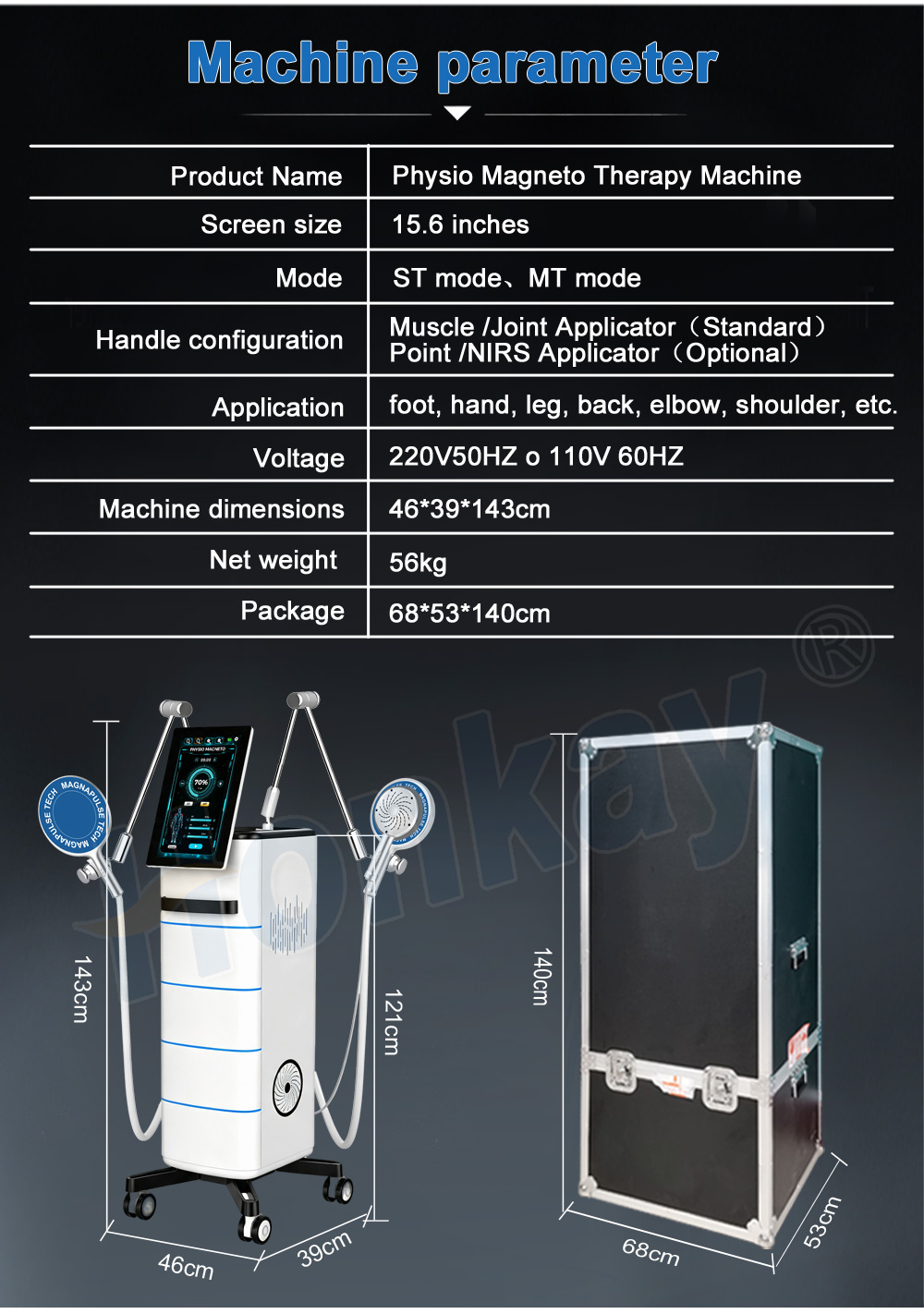
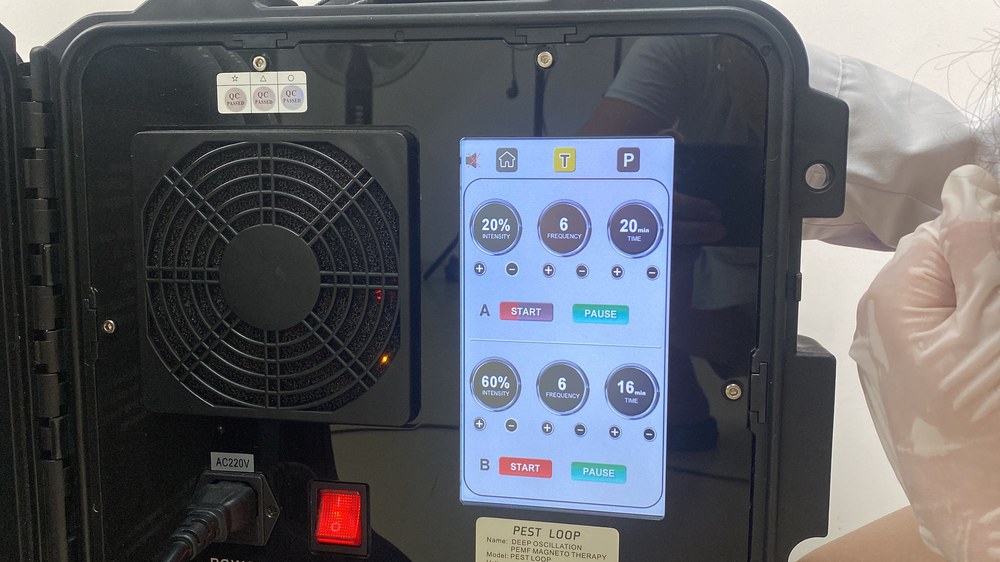
The display carries three editable frequency slots and seven stored programs — knee, shoulder, lower back, neck, joint, muscle, ankle. The temptation is to treat presets as shortcuts. They are better understood as consistency tools: they let two operators start from the same place, which is the precondition for any protocol being repeatable.
The setting worth changing per patient is energy percentage, with the timer set per area. Everything else should stay put unless there is a reason.
What the display tells you, and what it does not
The console is honest about the three things an operator sets — energy percentage, mode, and time — and about which preset is loading. It does not report field strength at the applicator face, and no display on this class of device does. That gap matters when a buyer asks a supplier to prove an output figure: the number on a data sheet and the number at the business end are separated by the applicator, the gap and the tissue being treated.
The practical response is to stop treating energy percentage as a physical unit. It is a setting scale that runs from zero to full output on that unit, and it only means something in combination with the applicator in use. Two machines set to 50% are not delivering the same field unless applicator and geometry match — which is exactly why the comparison should be made on applicator set and duty cycle, not on the percentage.
Throughput: the arithmetic a buyer should do
Sessions on this platform run ten to twenty minutes depending on the area. Add positioning, setting the arm and clearing the room, and a realistic block is twenty-five to thirty-five minutes.
In a six-hour clinical day that is roughly ten to twelve blocks — a number worth comparing against the alternative of treating two areas in one appointment. On a continuously rated unit the limit is the therapist, not the machine, which is the useful thing to know before choosing between one unit and two.
Human or animal: a build decision, not a software toggle
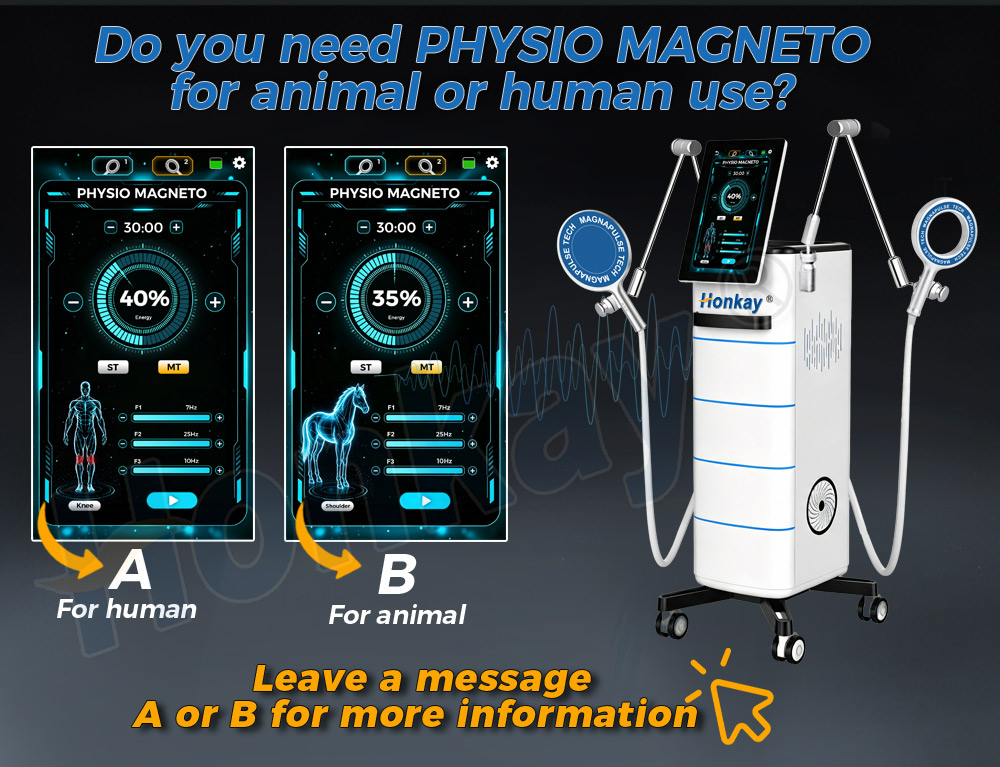
The same hardware is supplied in two configurations — one with a human body map and one with an animal map on screen. That is a build decision made at order, not something to switch later, so it belongs in the specification conversation rather than in the manual.
Clinics that treat both should say so before ordering rather than assuming a menu option.
What a water-cooled applicator adds to maintenance
| Item | Interval | What to check |
|---|---|---|
| Cooling system | Per schedule in the manual | Level and condition as specified; no leaks at the handpiece coupling |
| Fan intake and filter | Monthly in a clinical room | Dust build-up, which is the usual cause of overheating |
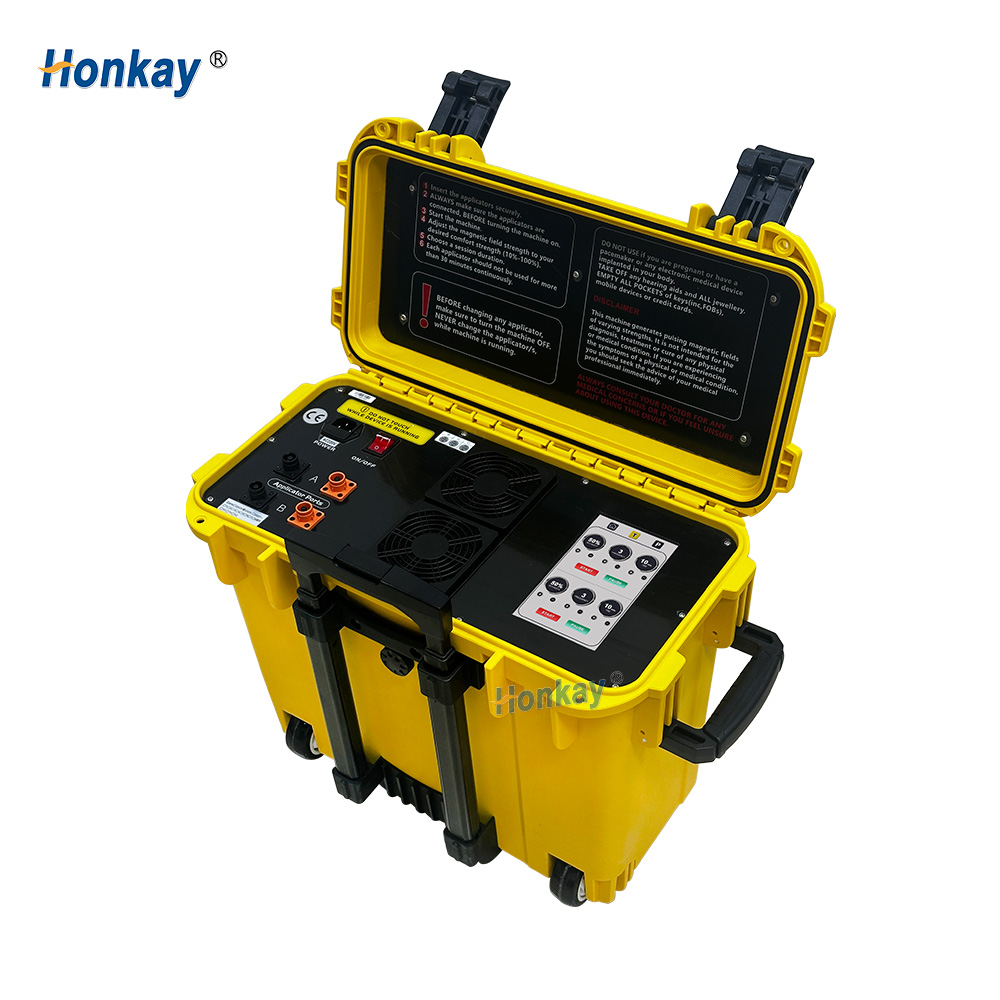
| Holding arm knobs and joints | Monthly | Arm holds position without drifting under its own weight |
| Castors and brakes | Quarterly | All four lock; no flat spots from standing loaded |
| Cable and connector | Quarterly | No cracking at the strain relief, which is where flexing concentrates |
| Applicator faces | Between patients | Clean per supplier instruction; inspect for surface damage |
| Water/fluid replacement | As specified | Ask at handover — this is the item clinics forget |
Two of these are worth naming to a supplier in writing: the cooling fluid change interval and the price of a replacement applicator, because a water-cooled handpiece is the most expensive consumable-adjacent part on the machine.
Frequently asked questions
What does water cooling change in daily use?
It removes the cooling pauses a non-liquid-cooled applicator needs, which is what allows back-to-back sessions. It also makes the cooling loop a scheduled maintenance item.
Should the applicator touch the skin?
No. It is held one to two centimetres away. The field does not require contact, and pressing it against the body does not improve the session.
What is the difference between ST and MT mode?
MT covers 1–50 Hz and suits muscle-oriented work; ST covers 1000–3000 Hz and targets tendons, bone surfaces and ligaments.
Do I need gel or consumables?
No coupling gel. Treatment can run through clothing, so the recurring cost is electricity and operator time rather than supplies.
How many sessions fit in a day?
Sessions run ten to twenty minutes; with positioning and changeover a realistic block is twenty-five to thirty-five minutes, giving roughly ten to twelve per six-hour day.
Can the same unit treat people and horses?
The hardware is offered in human and animal configurations with different on-screen body maps. It is fixed at order, so state the requirement before production.
What are the dimensions and weight?
46 × 39 × 143 cm and 56 kg net, in a package of 68 × 53 × 140 cm.
Which applicators are standard?
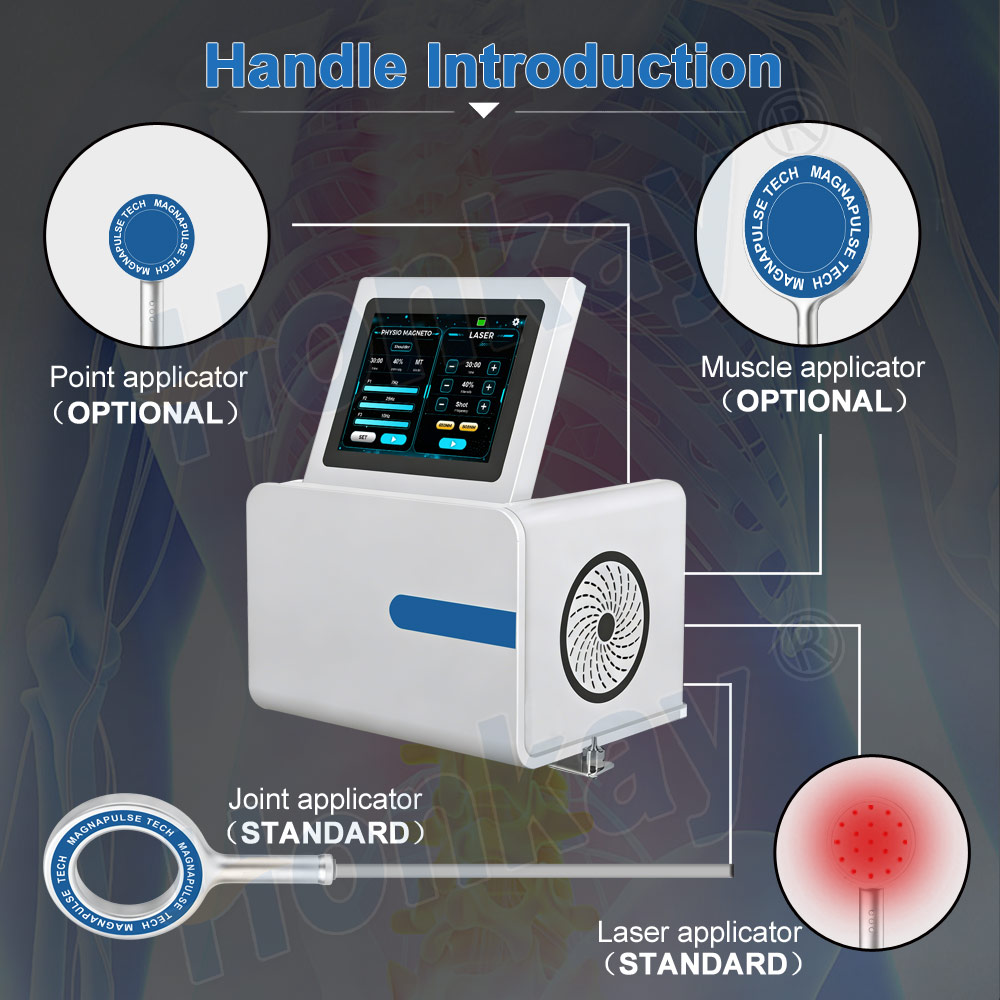
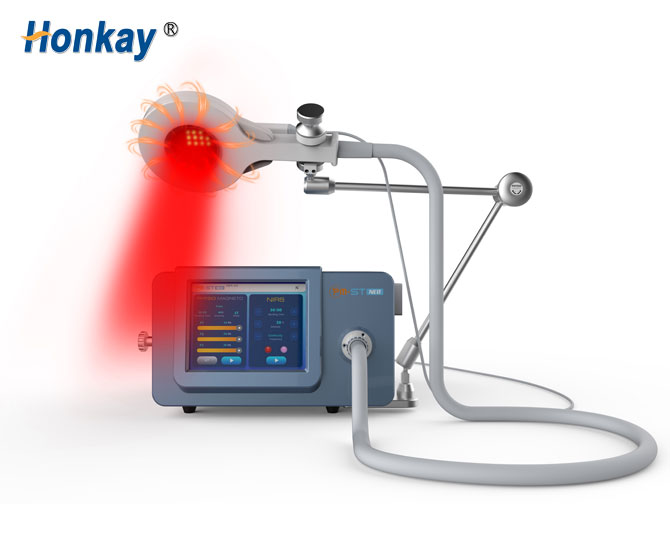
Muscle and joint applicators are standard; point and NIRS applicators are optional and should be specified explicitly.
About Honkay
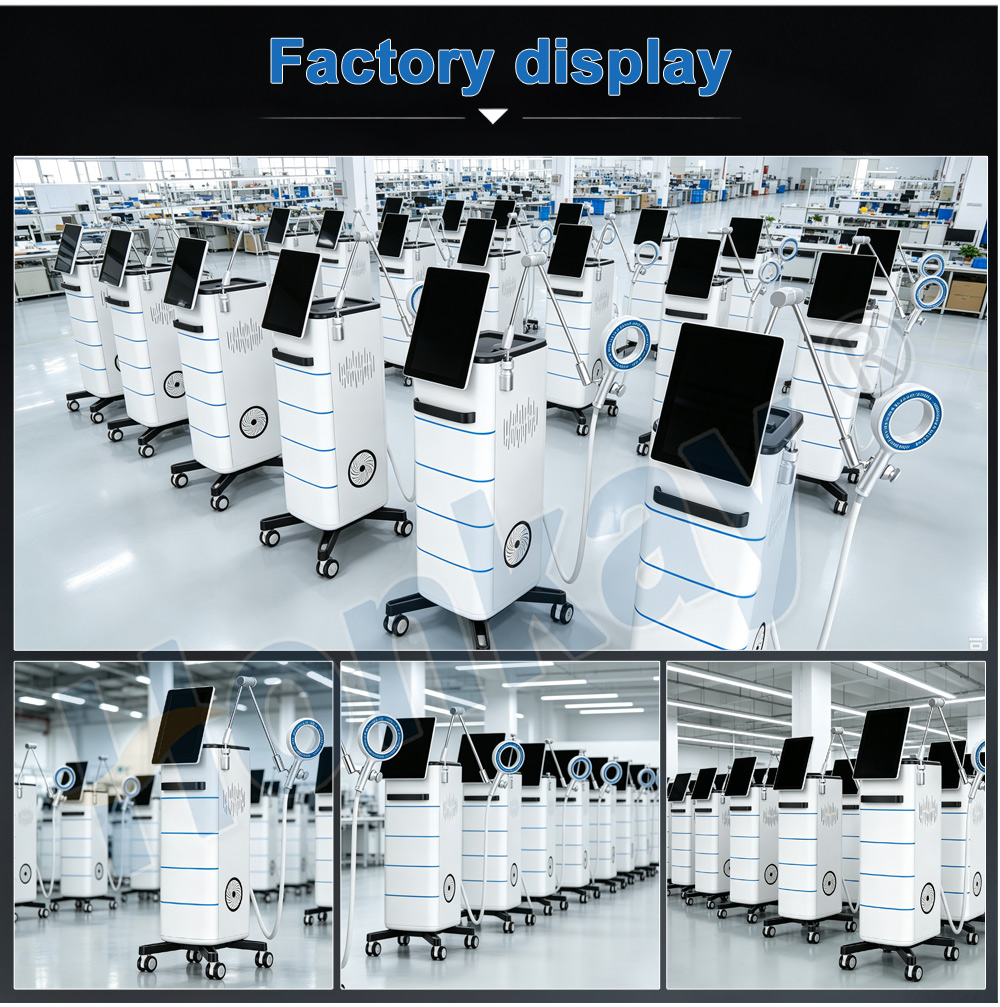
Honkay has manufactured physiotherapy and aesthetic equipment since 2005 — magneto and pulsed electromagnetic field platforms, shockwave systems, TECAR and radiofrequency units — assembling and testing in-house before packing. The range carries a 24-month warranty from factory shipment.
Ask about the duty cycle before the price
Tell the Honkay team how many sessions you plan to run back to back and whether the unit is for human or animal use. The reply will confirm the configuration, the applicator set and the cooling maintenance schedule before you compare quotes.
- WhatsApp: +8613751821215
- E-mail: hk6@huang-kai.com
- Manager: Lisa
This device is intended for adjunctive use alongside professional care, not as a replacement for diagnosis or treatment. Suitability should be confirmed with a qualified clinician; individual experience varies.