One PEMF Mat, Several Users: Limits, Settings and Hygiene
One mat, several people: what actually changes
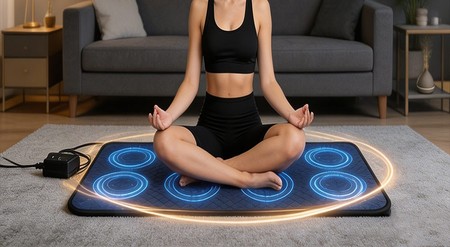
A PEMF mat bought for one person tends to become a household device within a month. A partner tries it, a son uses it after training, a neighbour asks to borrow it. None of that is a problem, but three things need deciding before the mat is shared rather than after: who must not use it at all, what happens to the settings between users, and how the surface is handled between bodies.
The first of those is not a preference. It is written into the manual as a contraindication, and it is the one item in this article that has no workaround.
Who must not use it, and who should ask first
The manual separates these into two groups, and the difference matters. The first group must not use the mat; the second should consult a professional before deciding.
| User | What the manual states |
|---|---|
| Cardiac pacemaker, implanted neurostimulator, other electronic implant | Must not use the device. The changing magnetic field can interfere with implanted electronics. |
| Pregnant, or planning pregnancy | Consult a qualified healthcare professional before use. |
| Serious medical conditions, including malignant tumours, severe cardiovascular disease, severe infection or acute inflammatory conditions, serious neurological disorders | Advised not to use, or to consult a physician first. |
| Children | Consult a qualified professional before use. |
In a shared household this list does real work. A neighbour with a pacemaker is not a hypothetical: it is the most common reason a borrowed mat should stay borrowed and not be used. Asking once, before the mat circulates, is easier than explaining afterwards.
Settings do not survive a change of user
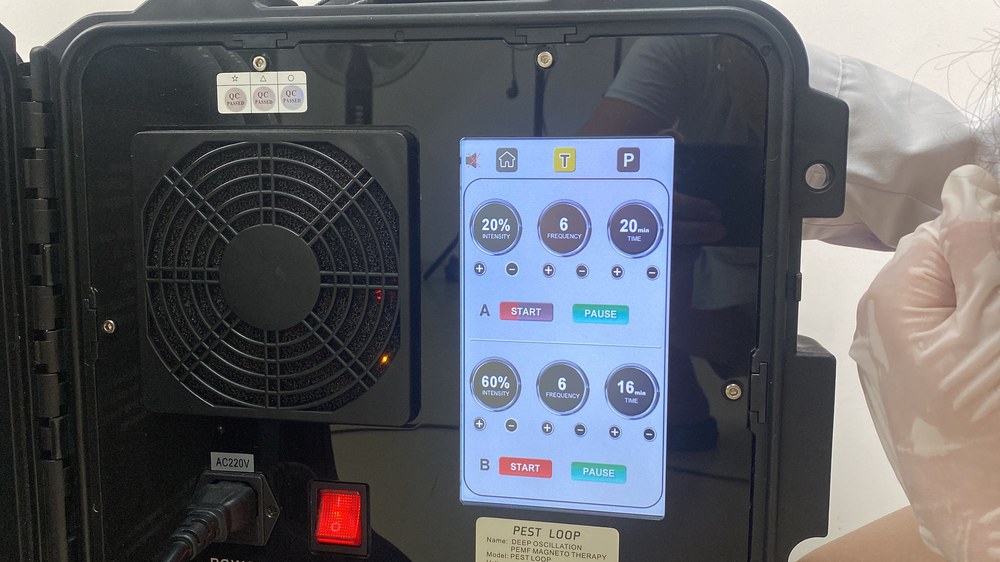
The mat remembers nothing about who used it last. Every session starts from whatever the panel is set to, which means the second user inherits the first user’s frequency, level and remaining time. That is the mechanics of the problem, and it has a low-tech fix: one card per person, kept with the mat.
Writing it down also makes the differences visible. Two people in the same house rarely want the same preset, and the person who needs the lower frequency is usually the one who will not remember to change it.
The daily limits are not shared out
The manual gives two numbers that apply to use: at least five hours between sessions, and no more than 120 minutes in a day. It does not divide those numbers between users, and it does not say whether they are counted per person or per device.
The conservative reading is one allowance per person, tracked separately, which is why a log helps more in a shared household than in a single-user one. If two people both plan a session on the same evening, five hours apart is the spacing to plan around, not an hour.
There is a second reason to write the settings down: frequency is not the only thing that differs between people. The head rule applies to whoever is lying with the neck on the pad, and an evening session above 15 Hz is not advised after 20:00 for anyone. In practice a household with two users ends up with two time slots as well as two presets, because the later slot is the one that has to stay in the lower bands.
The surface question the manual does not answer
Here is an honest gap. The manual covers storage — temperature 5–40 °C, humidity at or below 80% RH, and avoiding long-term exposure to direct sunlight, high temperature, humid environments and strong magnetic fields — but it does not name a cleaning agent or a wiping procedure for the pad surface.
That matters when several people share one mat. The correct move is to ask the supplier what the pad surface will tolerate before reaching for a household spray, not after. An unlisted solvent on a coated surface is an expensive mistake, and “we always use this” is not a specification.
What the manual does support is keeping the pad out of long-term dust and dirt, and storing it in the carry bag rather than leaving it on a floor between sessions. Both reduce how often the surface question comes up at all.
Pockets, jewellery and the things people forget
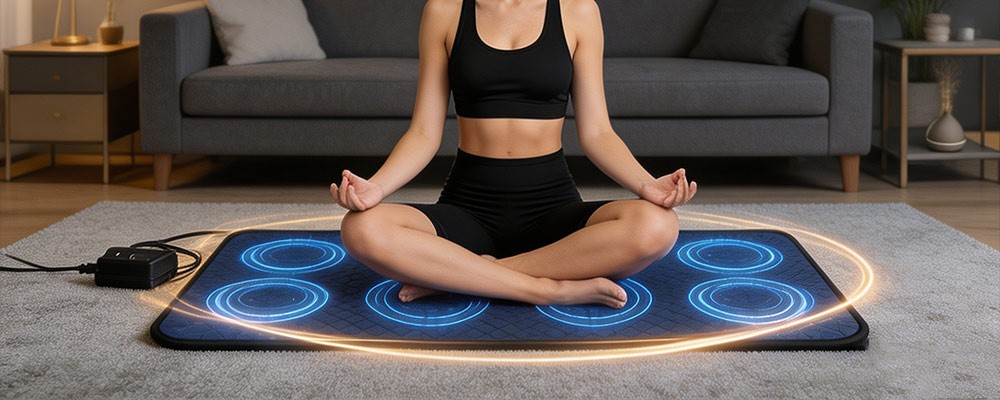
The manual asks users to remove metal accessories and to keep large metal objects away from the pad while it is running. In a household setting the realistic list is longer than jewellery: keys, coins, a belt buckle, a watch, and the phone that gets put down on the mat because a hand was needed for something else.
A simple habit covers most of it: the mat is only switched on after the pockets are emptied, and the phone goes on the side table rather than on the pad. That is one instruction, and it is easier to keep than a list of prohibited objects.
Cards are worth a separate mention because they are small and easy to miss — a bank card or a hotel key in a back pocket is exactly the kind of item that sits against the pad unnoticed.
Storage when the mat has several owners
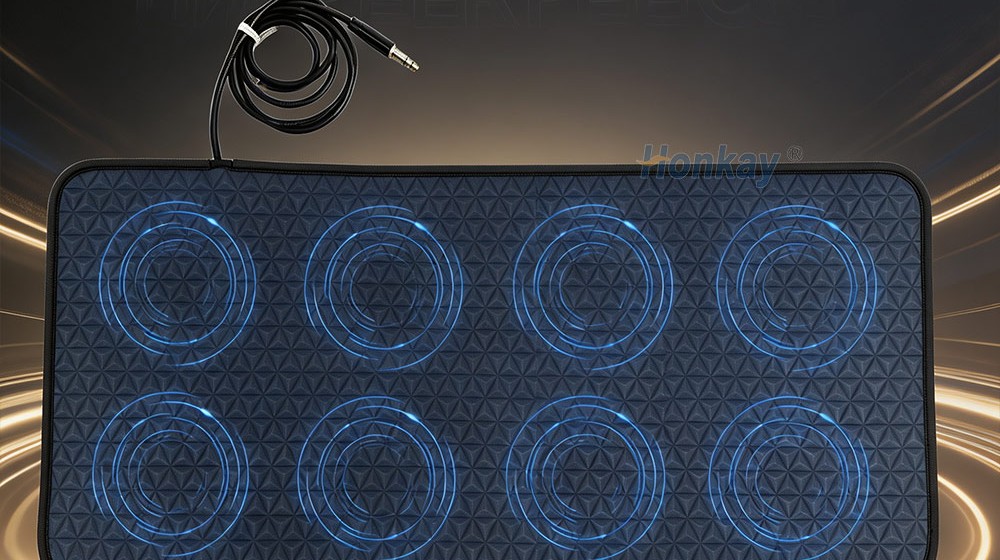
The manual is specific on one point that shared use makes worse: do not fold the therapy pad excessively or randomly, because the coils sit inside it. A pad that is rolled up carefully once a week survives longer than one that is stuffed into a cupboard twice a day.
The carry bag that ships with the mat is the obvious answer, and it also settles the domestic question of where the device lives. A mat with a home gets used; a mat left on the floor gets walked around.
One more item belongs on the wall beside the log: the contact details for whoever sold the mat, and the fault-report route. Shared devices fail differently from single-user ones — a connector gets pulled, a cable is tripped over, a pad is folded the wrong way — and knowing where to send a video of the fault saves a week of guessing.
A household log that takes ten seconds
Five columns are enough. A sheet of paper on the wall beside the mat works better than an app, because it is visible at the moment of use and requires no unlocking.
| Date | User | Preset | Level | Minutes |
|---|---|---|---|---|
| Mon | A | Daily Relaxation | 2 | 20 |
| Mon | B | Muscle Recovery | 4 | 30 |
Frequently asked questions
Can a whole family share one mat?
Yes, provided each person is checked against the contraindication list first and the daily limits are tracked per person.
Should each user have a different preset?
Often, yes. The five presets differ in frequency band, level and duration, and a card per person avoids inheriting someone else’s settings.
How do I clean the pad between users?
The manual does not specify a cleaning agent. Ask the supplier what the surface tolerates rather than using an unlisted spray.
Is it safe for a neighbour with a pacemaker to try?
No. Pacemakers and other implanted electronic devices are listed as contraindications, not cautions.
Can two people use it in the same evening?
The five-hour spacing between sessions is the number to plan around, so a shared evening usually means two different times rather than two consecutive sessions.
Does the mat store different user profiles?
No. The panel keeps the last settings used, which is why a written card per person is the practical workaround.
What should be removed before a session?
Metal accessories, keys, coins, belt buckles, watches and cards. Large metal objects should stay away from the pad while it runs.
How long is the warranty?
24 months from the factory shipment date. Claims need the device serial number and video evidence of the fault.
About Honkay and the next step
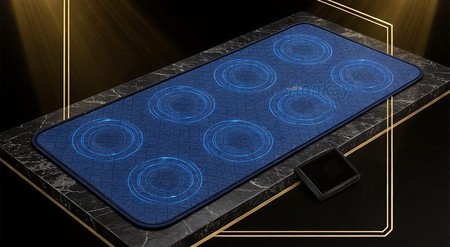
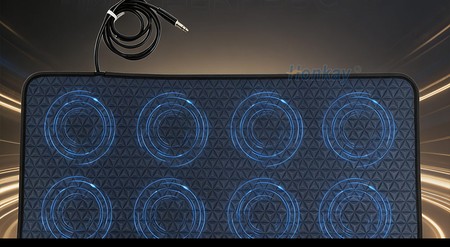
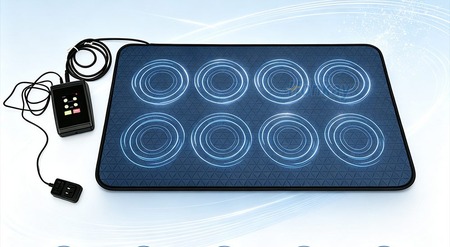
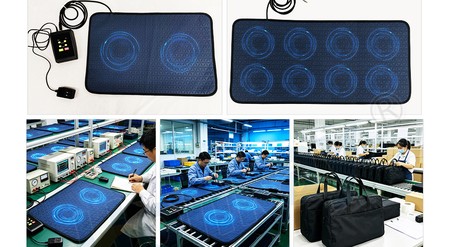
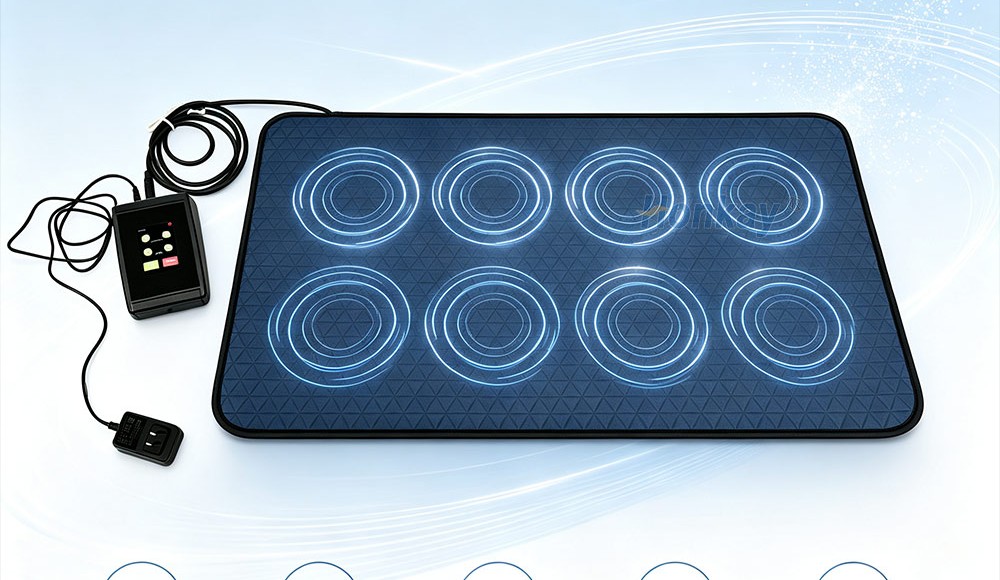
Honkay has manufactured physiotherapy and aesthetic equipment since 2005, with 20 years of OEM and ODM work behind the range. The PEMF mat line runs from a 40×60 cm two-coil pad to a 60×200 cm eight-coil mat, each shipped with a control unit, connection cable, power adapter, carry bag and manual.
If the mat will be shared, tell the Honkay team how many people will use it and whether anyone in the household has an implanted device. Both answers change what gets recommended. Warranty runs 24 months from the factory shipment date.
Reach the Honkay team on WhatsApp at +8613751821215, or by email at hk6@huang-kai.com.
This device is intended for adjunctive use alongside professional care, not as a replacement for diagnosis or treatment. Suitability should be confirmed with a qualified clinician; individual experience varies.
Chat with the Honkay team on WhatsApp | Email hk6@huang-kai.com