Pulsed Electromagnetic Field Therapy Mat: Safety Screening Before You Buy
A pulsed electromagnetic field therapy mat is one of the few devices in a physiotherapy or home-care setting that a patient can use without an operator standing next to them. That is its main advantage and also the reason screening matters more here than on a handheld device: if the session runs unattended, the checks have to happen before the mat is switched on.
This is the screening side of buying one — who should not use it, what the room has to be clear of, which documents you should refuse to buy without, and the questions to run through before a first session.
Who should not use a pulsed electromagnetic field therapy mat
Screening starts with a written exclusion list, and the list should come from the supplier rather than from a sales page. For this class of device the standard exclusions cover:
- Implanted electronic devices. Pacemakers and similar active implants are the first line on any exclusion list for this modality.
- Pregnancy. Excluded as a matter of course.
- Tumours in the treatment area.
- Local infection or open wounds at the treatment site.
- Anticoagulant therapy, where the clinical decision belongs to the treating physician.
- Metal implants where vibration or field exposure could affect surrounding tissue.
- Anyone who cannot communicate during a session — which matters more on a mat than on a handheld unit, because the patient is lying on the device and cannot simply move away from it.
Two practical consequences follow. First, the exclusion list has to exist in writing before you can run a screening step at all; if the supplier cannot produce one, that is the answer to the purchase question. Second, the service boundary should be written down: cases that fall outside the list get referred, not treated.
Screening the room, not just the patient
The second half of screening is environmental, and it is the part buyers skip.
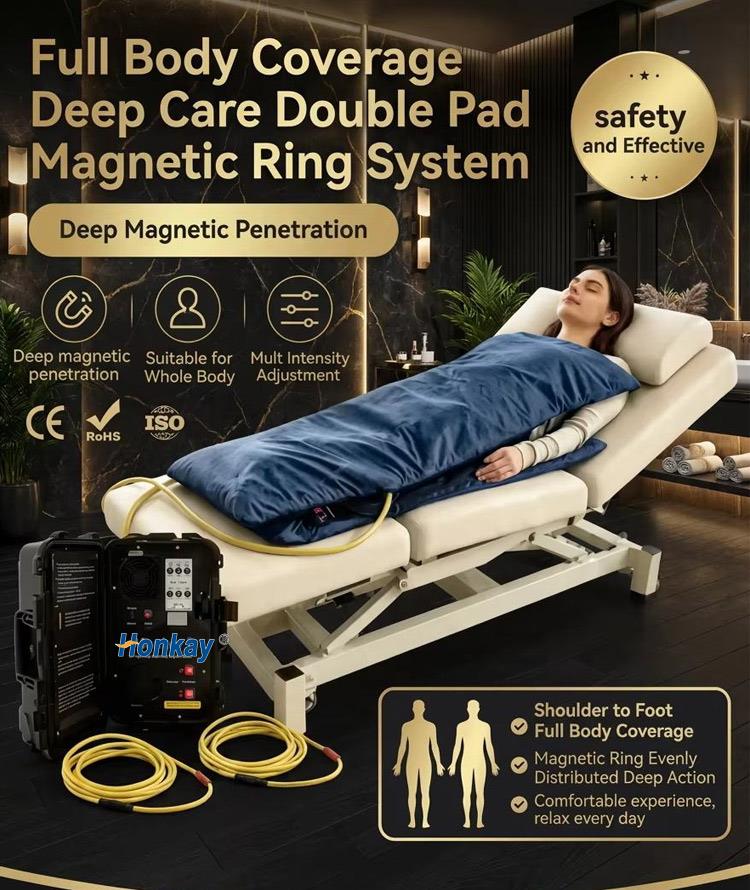
A full-body mat produces a field over a large volume, so what is near the mat matters as much as what is on it:
- Other electronics. Devices left close to a large applicator can be affected. The manual should name what to keep clear; in a domestic setting that list is longer than in a clinic, because homes are full of small electronics.
- Metal furniture and frames. A bed frame or a chair with a metal frame changes the geometry around the mat. Position matters.
- Where the cable runs. Cables across a walkway are the most common practical hazard in home use. Plan the route before the first session, not after.
- Who else is in the room. Children and pets should be excluded from a session area, and the mat should be stored out of reach rather than left set up.
- Whether the room can be left unsupervised. If it cannot, the mat is being used as a clinic device and the clinic’s screening rules apply, not the home ones.
None of that is complicated. It is simply a checklist that has to exist, and a mat with no written environmental guidance leaves the buyer to invent one.
The safety documentation to demand before you order
The device itself is only half of what you are buying. The other half is the paperwork that lets your staff run it safely and reproducibly.

Four documents should be part of the offer, not an add-on:
- An operating manual with a parts list. An operation guide alone tells you which button to press. A parts list tells you what to order when something wears, which is what keeps a mat serviceable in year three.
- A written contraindication list. The screening step depends on it. If it is missing, the screening step does not exist.
- A per-setting protocol table. Mat sessions run by duration and intensity; the table is what makes two operators reproduce the same session.
- A named after-sales route. A contact, a response expectation, and confirmation that spares remain orderable — the console, the cable and the pad are the parts that matter.
Ask for all four before comparing prices. A quote that omits them is not cheaper; it is less complete, and the difference lands on your staff.
The screening questions to run before the first session
Once the list and the room checks exist, the routine is a short conversation rather than a form. Five questions cover most of it:
- Do you have any implanted electronic device? If yes, the session does not proceed without a physician’s decision.
- Are you pregnant, or is that possible? Excluded.
- Do you have metal implants at or near the area to be treated? This shifts the decision to the treating clinician.
- Is there any infection, wound or undiagnosed swelling at the treatment area? Treat another area or refer.
- Will you be alone during the session? On a mat, this changes how the session is set up and how long it runs.
Write the answers down. A screening record is what turns “we ask about this” into something you can show.
| Confirm in writing | Why it matters on a mat specifically |
|---|---|
| Written contraindication list | The screening step depends on it |
| Operating manual with a parts list | Keeps the device serviceable after year one |
| Per-setting protocol table | Makes a session reproducible between operators |
| Environmental guidance | What to keep clear of a large applicator, at home as well as in clinic |
| Cable routing and storage guidance | The main practical hazard in home use |
| Who may operate it | A home-used mat and a clinic-used mat have different supervision questions |
| Session duration and intensity range | Determines what a session looks like for a given case |
| Consumables | What recurs, and what it costs per year |
| Warranty | 24-month warranty from the factory shipment date, with scope and freight terms |
| Spare parts availability | Confirmed for at least two years after purchase |
| Training and after-sales contact | A named person and a response expectation |
Frequently asked questions
Is a pulsed electromagnetic field therapy mat safe to use at home?
It is used at home in practice, but “at home” changes the screening rather than removing it. The exclusion list still applies, the room still has to be checked for other electronics and metal frames, the cable route still has to be planned, and someone should know the session is running. A mat with no written guidance for that is not a home device, it is an unsupervised one.
Who should not use a PEMF mat?
The standard exclusions are implanted electronic devices such as pacemakers, pregnancy, tumours in the treatment area, local infection or open wounds, anticoagulant therapy, and metal implants where the field or vibration could affect surrounding tissue. Anyone who cannot communicate during a session is also a poor fit for an unattended mat session.
Can I use the mat while lying on a bed or a sofa?
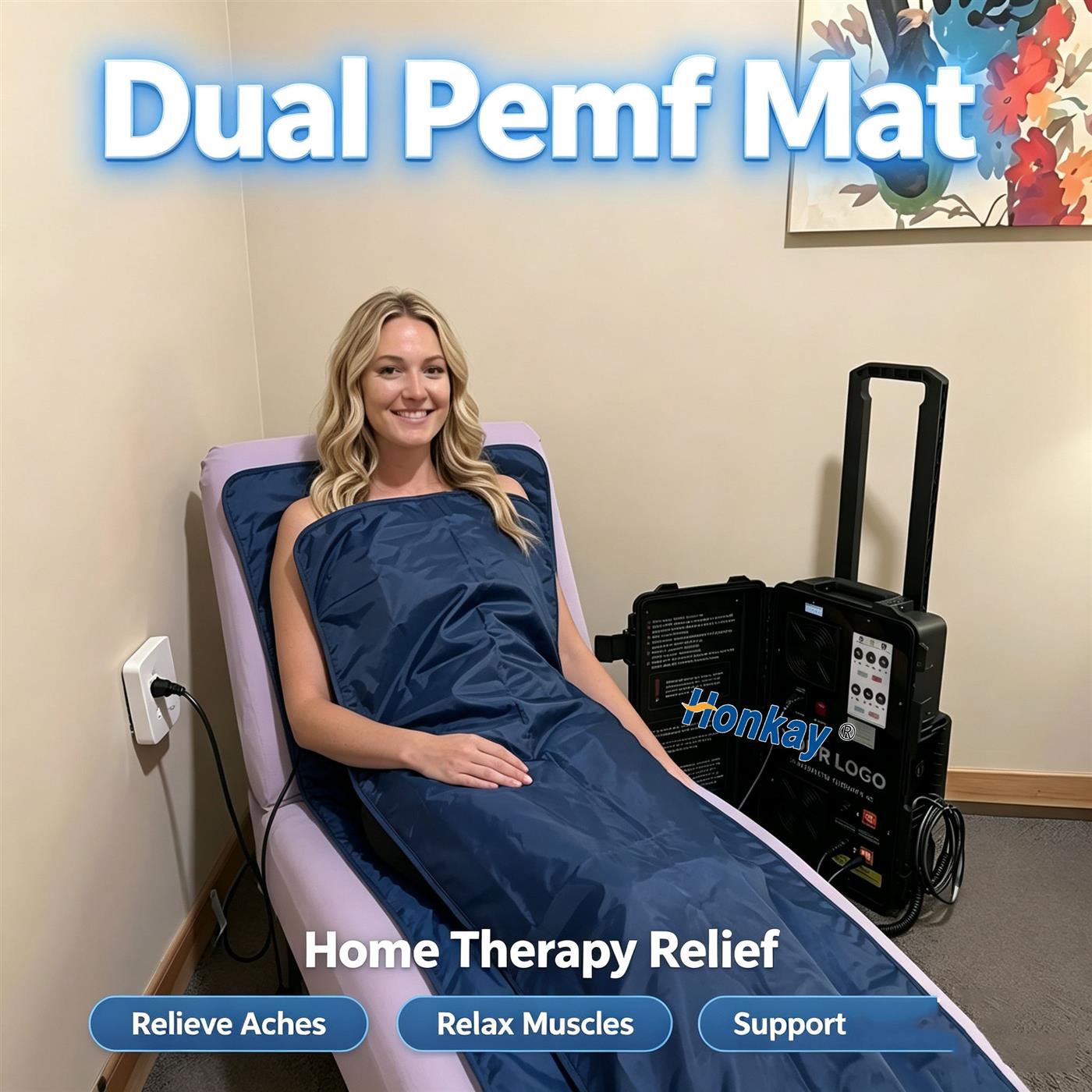
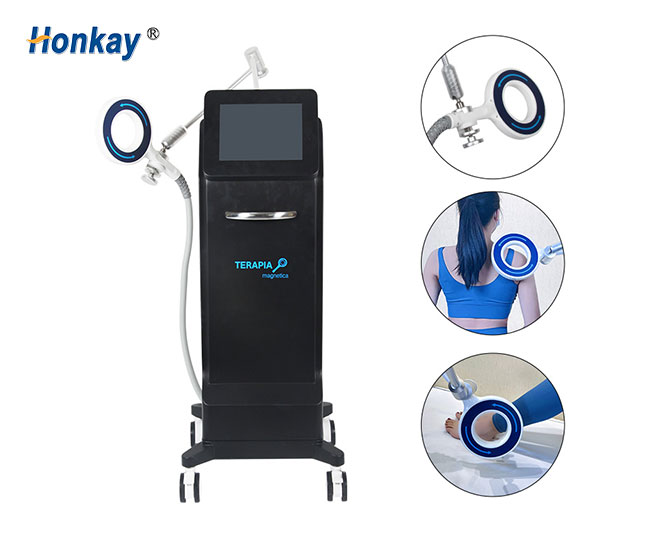
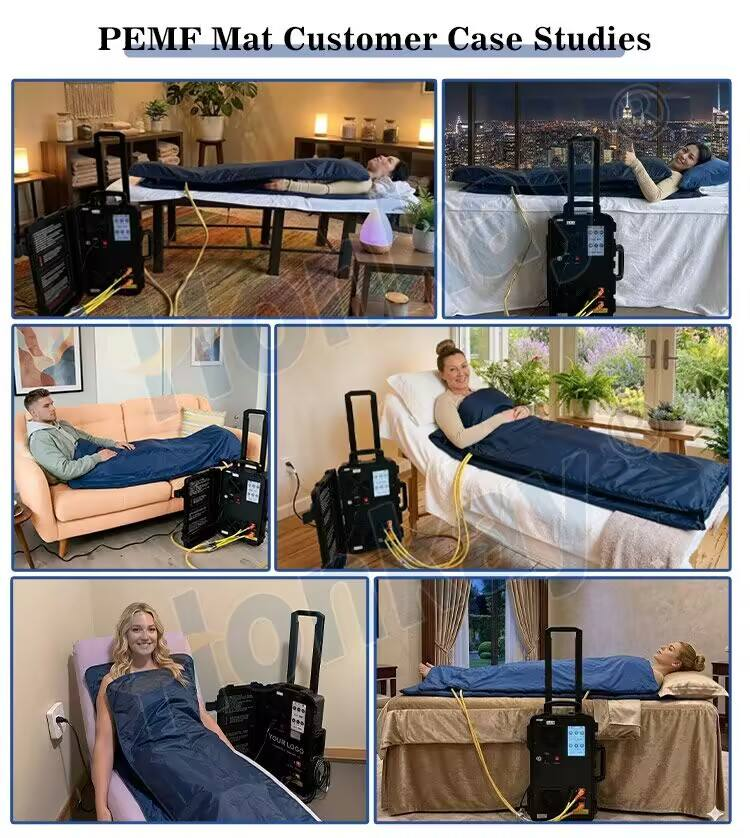
Yes, and the images on this page show exactly that. What matters is what is immediately around it: metal bed frames and frames with metal components change the geometry, and small electronics left beside the mat should be moved clear. Ask the supplier for the clearance guidance rather than guessing.
What documents should come with the machine?
An operating manual that includes a parts list, a written contraindication list, a per-setting protocol table, and a named after-sales contact with a stated response expectation. If a quotation does not include all four, ask for them before comparing prices with another supplier.
How long is a session on a mat?
Longer than a localised handpiece session, because a mat covers a broad region rather than one target. The machine should state its duration range, and the per-setting protocol table should say what is used for which presentation. Confirm both rather than assuming a figure.
Do I need training to use it?
You need a screening routine and a protocol reference, and the supplier should include both. The machine side is straightforward; the part that has to be taught is who gets treated, who does not, and what the session settings are for each case.
Can children or pets be in the room during a session?
They should be out of the session area and the mat should be stored out of reach rather than left set up. This is standard practice for any device that produces a field over a large volume, and it belongs in the written guidance that ships with the machine.
What warranty and spares policy should the quotation state?
The period and the scope, in writing. For this class of system the position is a 24-month warranty from the factory shipment date. Ask which components are covered, whether freight on a replacement part is included, and how long spares such as the pad and the cable will remain orderable.
Request a quotation
Tell us whether the mat is for a clinic, a rehabilitation setting or home use, and we will quote it with the screening package rather than around it. The quotation includes the operating manual with a parts list, the written contraindication list, the per-setting protocol table, environmental and cable-routing guidance, the consumables that recur, training and a named after-sales contact, and the warranty period, scope and freight terms in writing.
Manager: Lisa
WhatsApp: +8613751821215
E-mail: hk6@huang-kai.com