PEMF Portable Units: What the Case Keeps, and What It Gives Up
A portable unit is usually sold as “the same machine in a case”. It is not, and the difference is not a matter of quality — it is a matter of which parts of the job the machine was built to do. Buying well means knowing what the case preserves, what it trades away, and whether those trades matter in the rooms you actually work in.
This is the buyer’s version of that comparison for PEMF portable units with two output channels: what stays, what changes, and the checks to run before you order.
What the case keeps
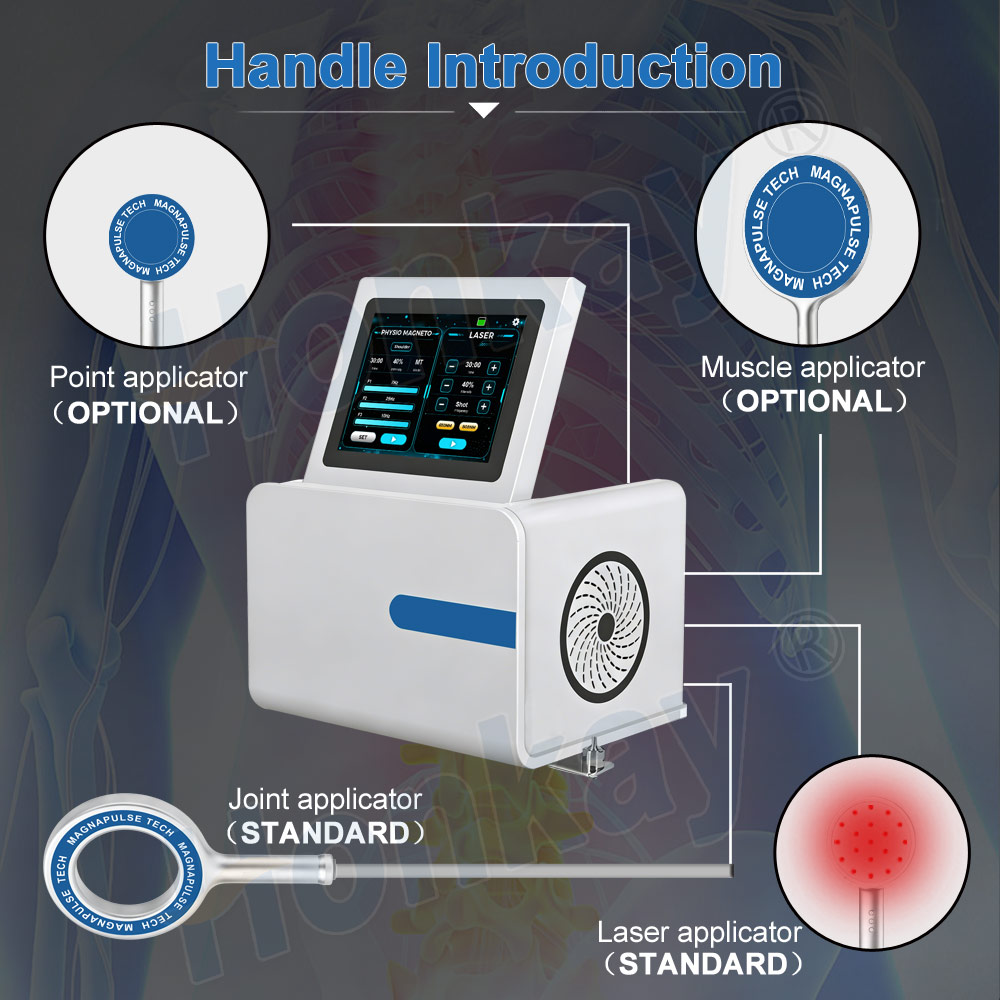
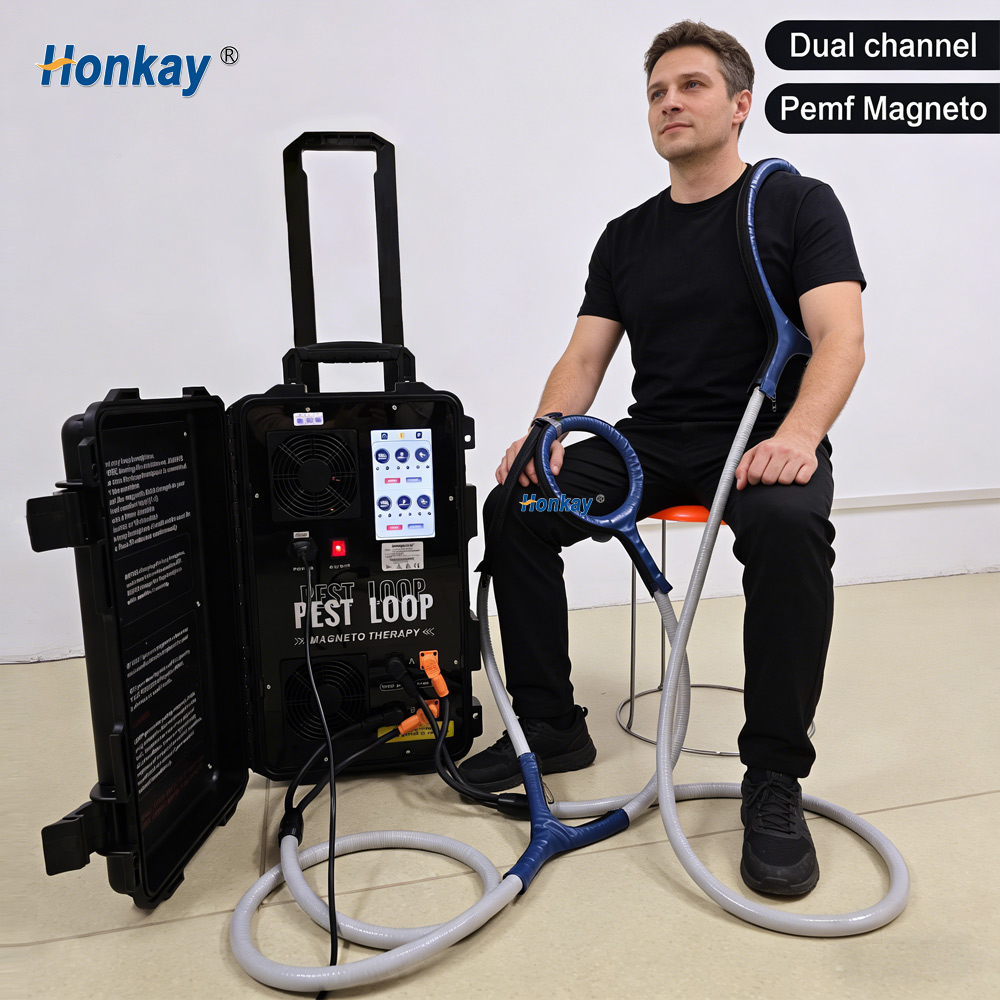
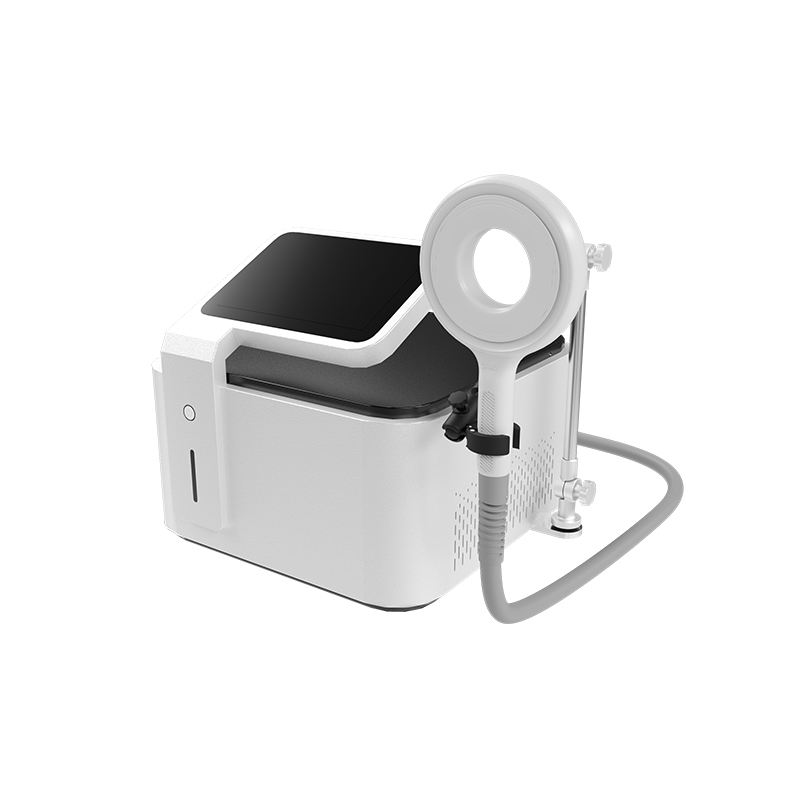
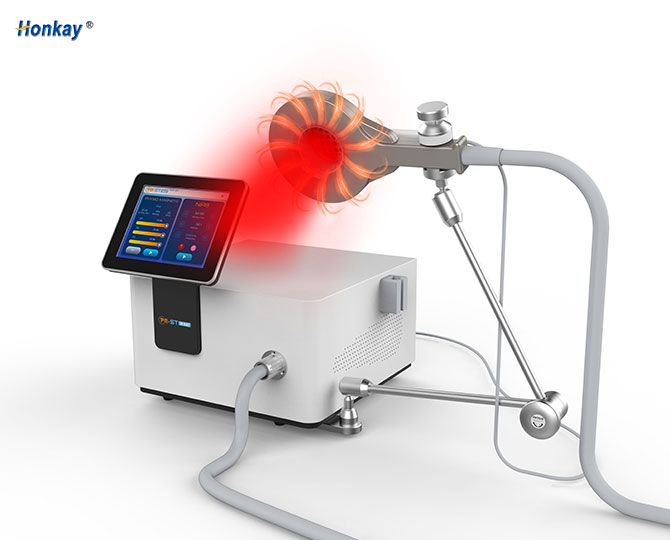
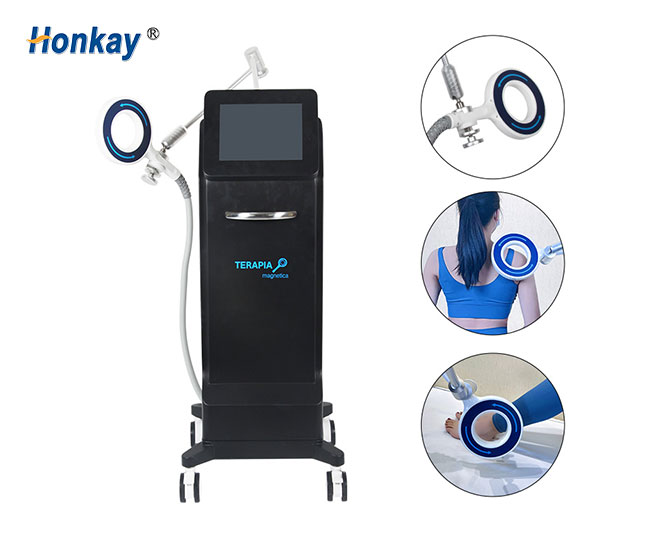
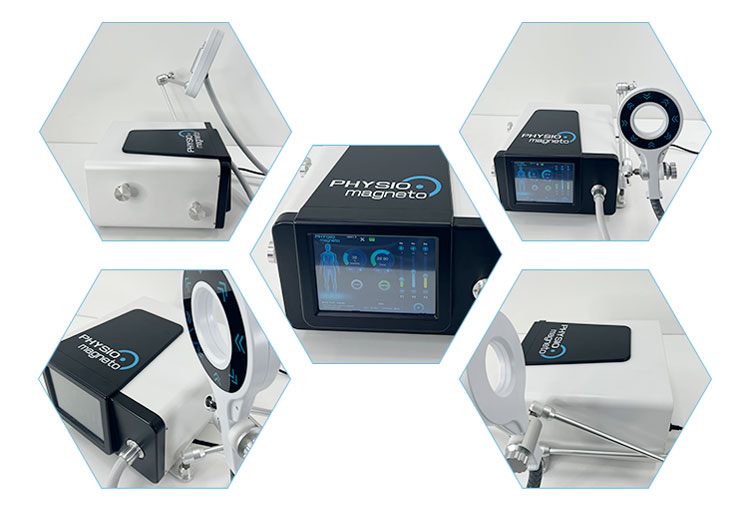
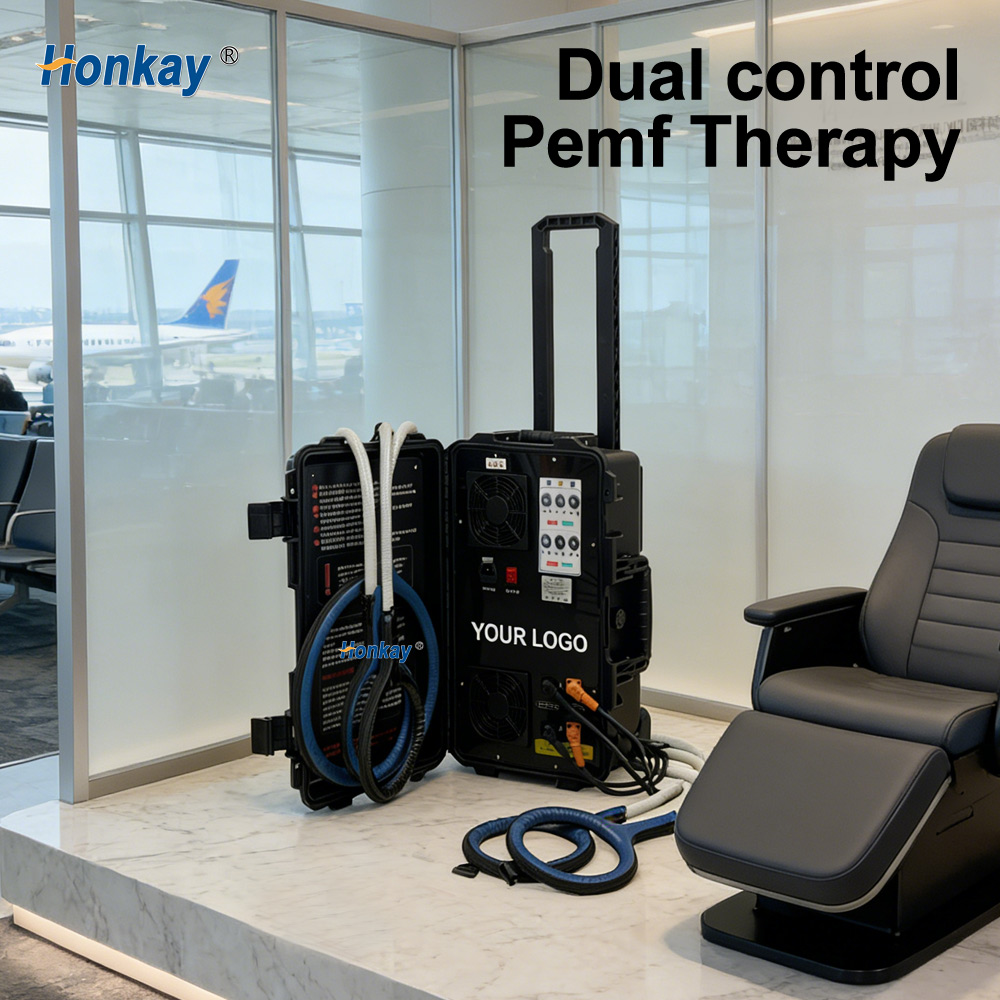
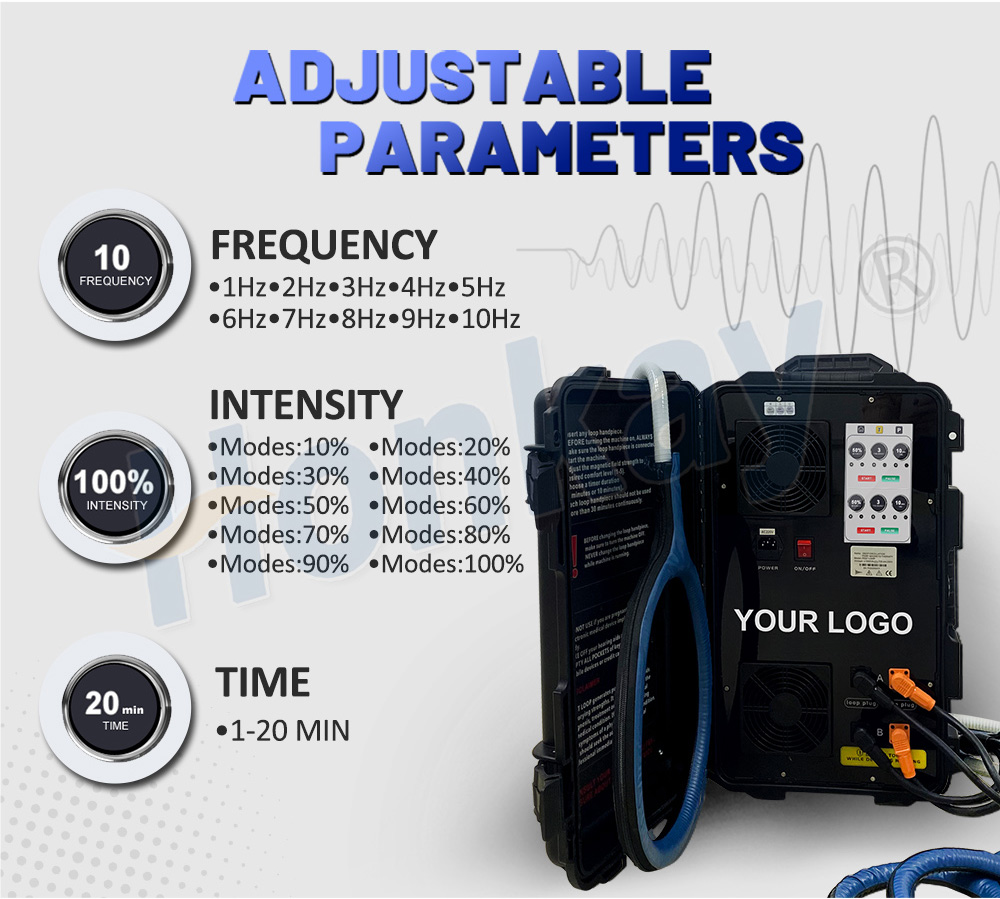
The working principle does not change. A portable unit still drives a pulsed magnetic field through a loop applicator, still offers selectable frequency, intensity and time, and still delivers through the same applicator families — a large loop for a limb or the torso, a smaller one for a joint or a defined area.
Four things genuinely survive the move into a case:
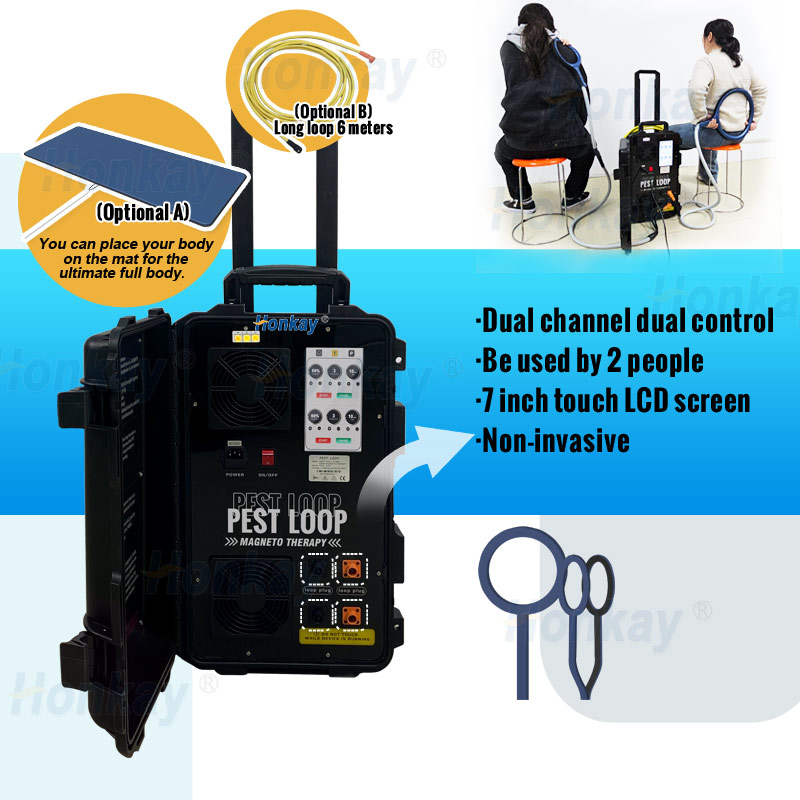
- Two independent output channels. Both loops connect at once and each keeps its own settings, which is what makes a two-loop workflow possible in the first place.
- The applicator logic. The loop diameters are the same idea in a smaller format, so the placement rules your staff already use still apply.
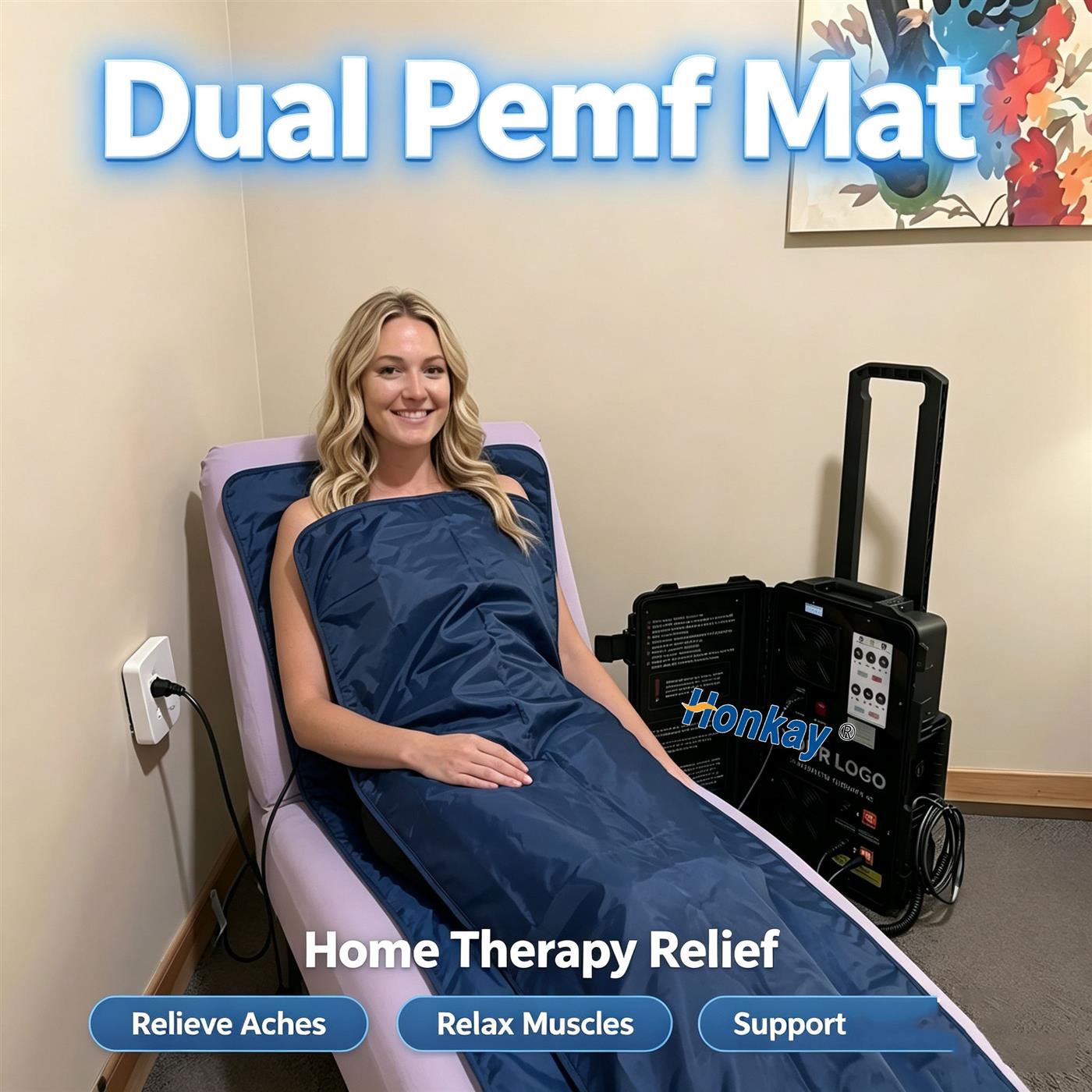
- No installation. A socket, a flat surface and the case open is the entire setup. Nothing is bolted down and no room is given over to it.
- One control philosophy. The panel works the way the larger units in the same range work, which matters when the same person operates both.
What it gives up — and the questions that settle it
A portable trades scope for mobility, and the trade shows up in four specific places. Each one has a question attached, and the answers belong in the quotation rather than in a demonstration.
Hands-free positioning. A console can carry an articulated bracket that holds the applicator while the operator does something else. On a portable the loop is usually held, rested or supported. Ask whether a positioning bracket is part of the delivered set — the answer changes how a session is staffed.
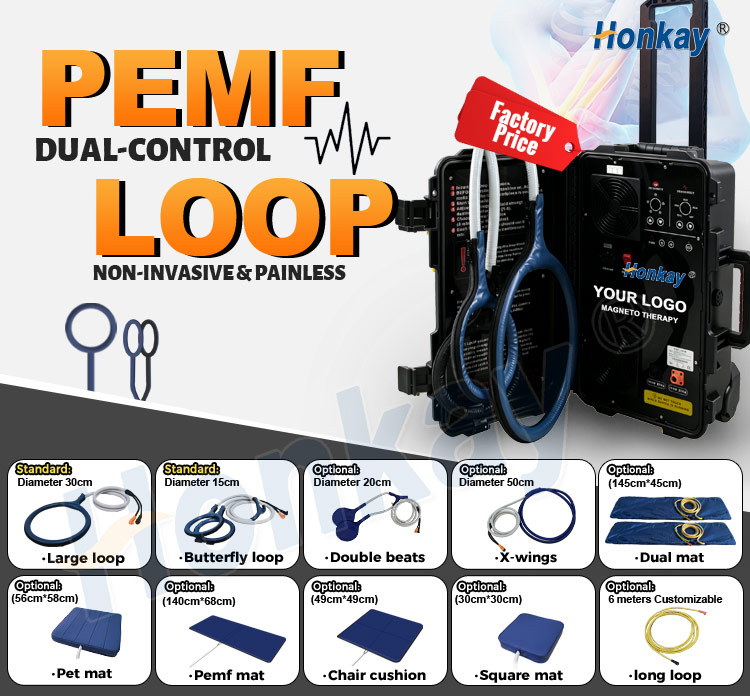
Accessory breadth. A portable is normally ordered with fewer loops, because the case has to stay carryable. Ask for the loop list with diameters, marked standard or optional.
Back-to-back sessions. Ask for the duty cycle and whether the applicator is cooled, then compare that with the number of sessions you run in a row.
A fixed treatment position. On the move there is no dedicated plinth, so the position has to work wherever you are. This is the trade that decides most purchases.
What two channels mean on a PEMF portable unit
Two channels are not a power feature. They are a scheduling feature: two setups are held at once, and each channel keeps its own frequency, intensity and time while the other is running. The loops do not share a single timer.
That changes three things in a working day:
- Two areas on one person can be set up together instead of sequentially, which shortens the appointment rather than the treatment.
- Two people can be positioned on either side of the case, which is the pattern most home-visit operators end up using.
- The panel has to show both channels at once. If it does not, the operator is guessing at the second setup, and the second channel stops being independent in practice.
Confirm two details before you order: which second loop is included with the second channel, and whether either channel can be stopped without disturbing the other.
Travelling with a portable unit
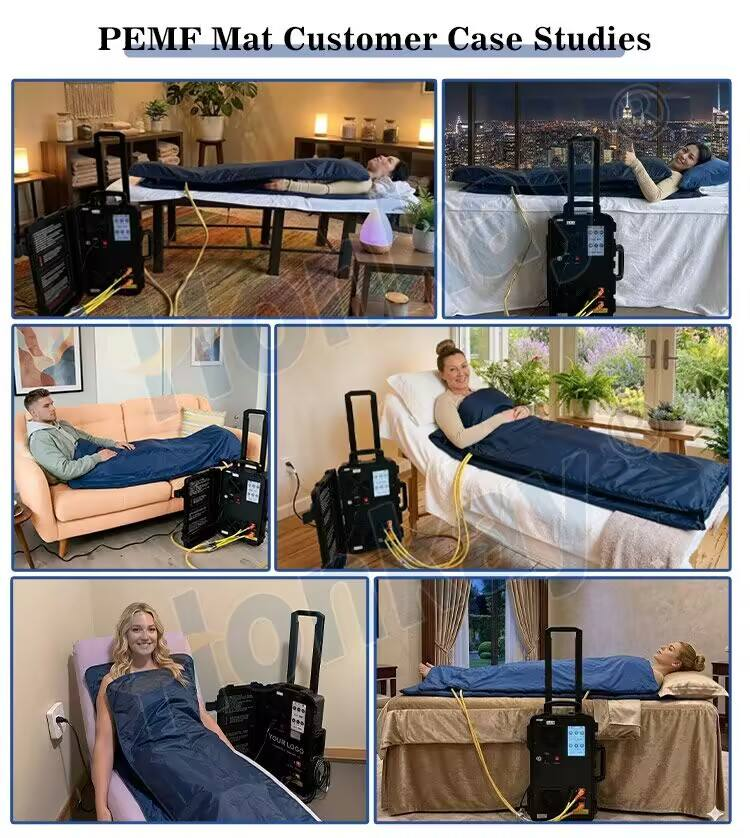
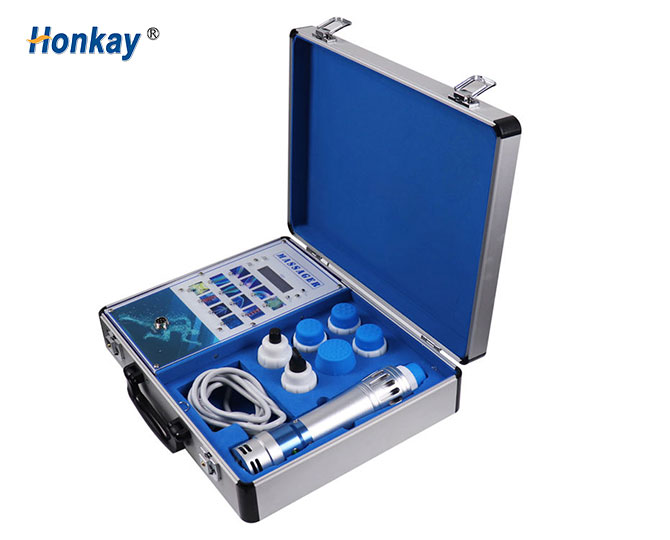
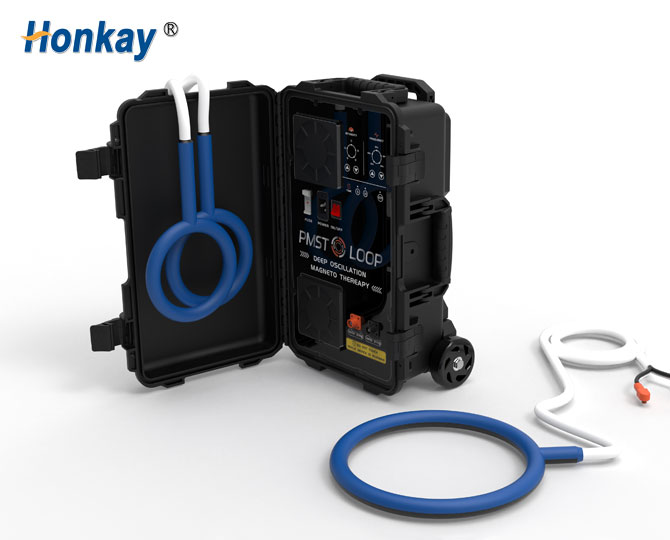
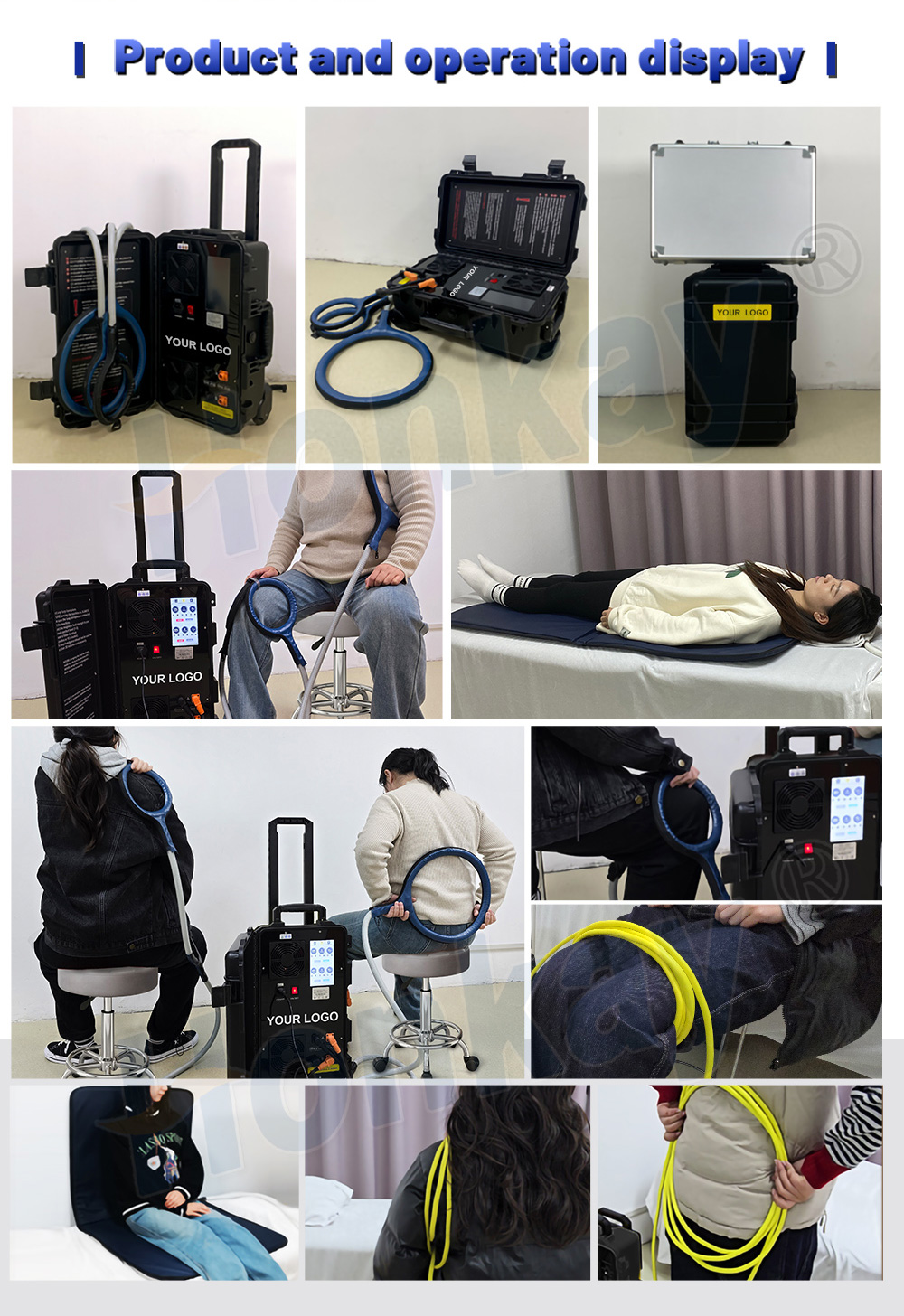
The case is the transport system, and in this format the case is part of the product. Four things decide whether it survives a year of movement:
| What to check | What it decides |
|---|---|
| Latches and hinges | They take the load every time the unit is lifted by its handle |
| Loop storage | Loops should be coiled at their natural diameter, never folded into a gap |
| Mains connector for the destination country | Ask for the input voltage and plug type in writing, and whether a converter is needed |
| Packed weight and dimensions | Whether it travels as luggage or by courier, and whether one person can lift it |
If the unit is going to carry your own branding, order it that way. The case face is the largest printable surface on the product, and a logo panel is a normal factory option rather than a special request.

Comparing portable PEMF devices for sale
Most of the difference between two quotations sits outside the headline specification. This is the list worth putting side by side, and the reason each line matters:
| Line to compare | Why it decides the purchase |
|---|---|
| Number of channels that hold independent settings | Two outlets sharing one setting is not a dual-channel machine |
| Full loop list with diameters, and which are standard | Loop diameter decides the area one application covers |
| Frequency range and the step size between levels | The step size decides how closely a protocol can be repeated |
| How intensity is expressed | A percentage of a mode cannot be compared between two machines; a field value can |
| Timer range, and whether it can be paused | Loops are repositioned mid-session on this format |
| Duty cycle and any stated cooling | Decides whether sessions can run back to back |
| Case hardware: wheels, telescopic handle, latches | In this format the case is used on every session |
| Spares list and lead time | Loop connectors and cables are the parts that wear |
| Warranty terms | Ask for it written as 24-month warranty from the factory shipment date, with the claim process set out |
Frequently asked questions
What changes when a portable PEMF unit is built into a case?
The working principle, the applicator families and the control logic stay the same. What changes is that the unit is no longer installed: it is carried, set up on any flat surface, and stored in the case it travels in. The trade is scope, not quality.
Do both channels run at the same time on this format?
Yes, and that is the point of the format. Each channel holds its own settings while the other runs. What you should confirm is that the panel displays both channels at once and that either can be paused without disturbing the other.
How many loop applicators should come with it?
Enough to cover the areas you work on, and no more. A working starting set is a large loop for the torso or a limb plus a smaller loop for a joint or a defined area. Ask for each loop’s diameter and mark which are standard and which are optional, because that is where two quotations usually differ.
Can I order the case with my own logo?
Yes. The case face is the largest printable surface on the product and branding it is a normal factory option. Ask what the artwork requirements are and whether the logo option changes the lead time.
What should I check when the unit arrives?
Open the case and check three things before signing anything off: that every loop on the packing list is present and undamaged, that the mains connector matches the destination country, and that both channels power up and hold separate settings. Record the serial number on the same day, because the warranty runs from the factory shipment date.
Is the case suitable for regular transport?
That depends on the hardware, so ask about it directly: wheels and a telescopic handle for moving it, and metal latches and hinges rather than plastic. In this format the case opens and closes on every session, so it is the part that gets the most wear.
Which spares are worth keeping in stock?
The parts that wear: loop connectors and cables first, then the loops themselves if you run two channels continuously. Ask for the spare parts list and the lead time before you order, not after a fault.
What should the quotation include?
When you line up pulsed electromagnetic field therapy devices for sale side by side, the quotation is what separates them. Ask for the loop list with diameters and standard/optional marking, the frequency range with its step size, how intensity is expressed, the timer range, the duty cycle, the case hardware, the spares list with lead time, and the warranty terms written as 24-month warranty from the factory shipment date.
About Honkay
Honkay is a manufacturer of beauty and physiotherapy equipment, working with clinics, distributors and training schools on both standard and OEM/ODM orders. Machines are supplied with operating manuals, a spare parts channel and after-sales support, and branding options are available for partners who sell under their own label.
Request a quotation
Tell us the areas you work on, how many sessions you run back to back, and whether the unit will travel — the Honkay team will put a configuration together around that rather than sending the full catalogue.
Manager: Lisa WhatsApp: +8613751821215 E-mail: hk6@huang-kai.com