PEMF Therapy Devices: What Actually Changes Between Two Consoles
Two PEMF therapy devices can sit side by side with almost identical numbers on the page and behave completely differently in a clinic. The brochure emphasises the console — the screen, the housing, the logo. The clinic feels the applicators. When you compare quotations for a tabletop magneto console, the thing that decides whether the machine earns its space is not the headline field strength; it is how many treatment areas you can reach, whether a second patient can be treated in the same slot, and whether the applicator has to be held for the whole session.
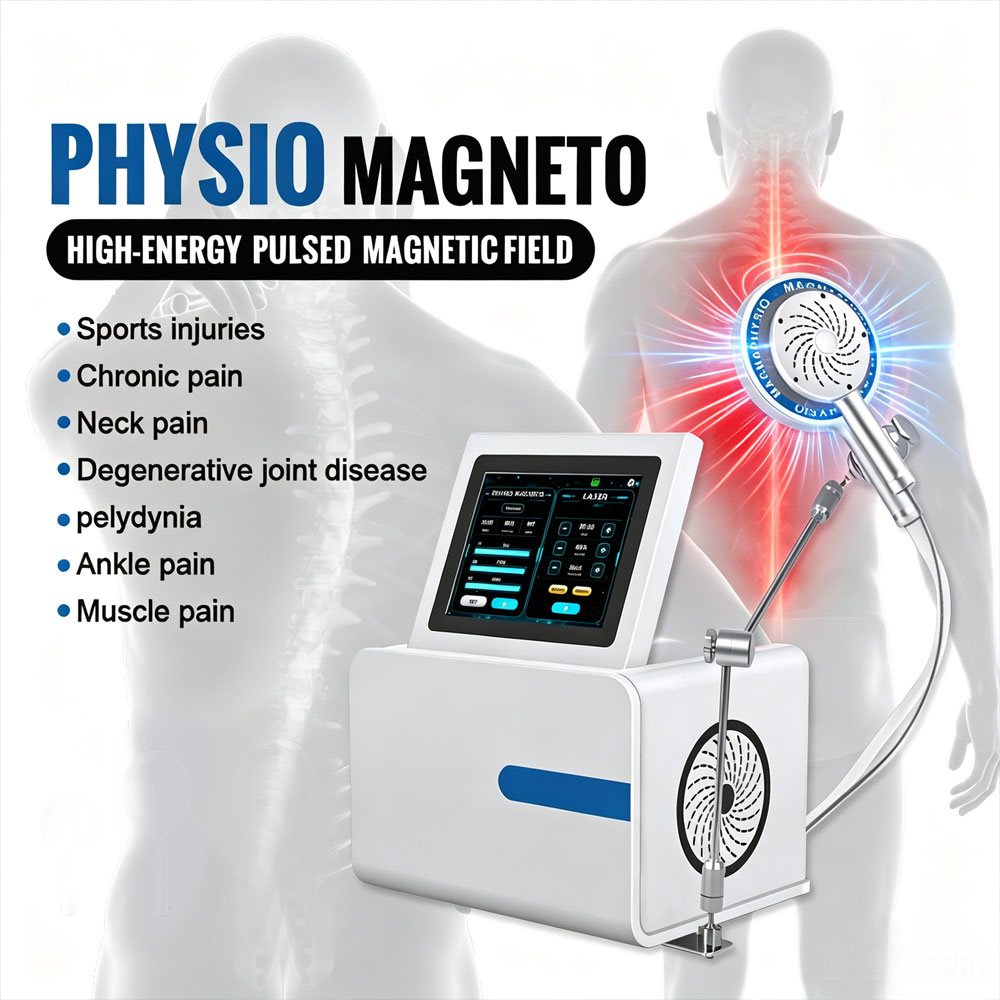
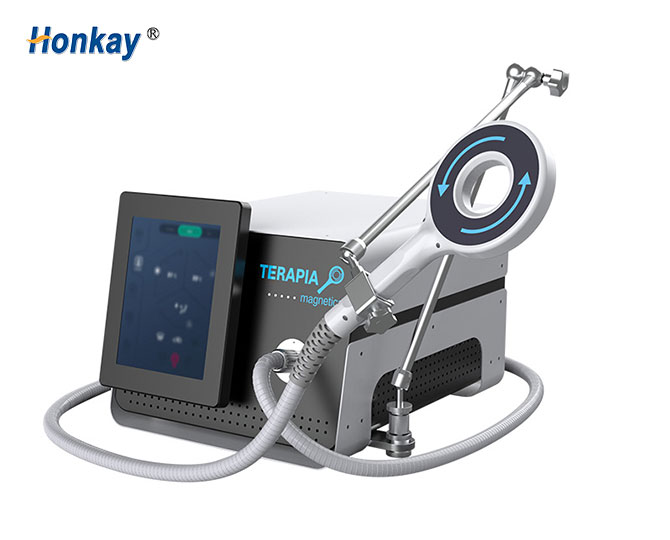
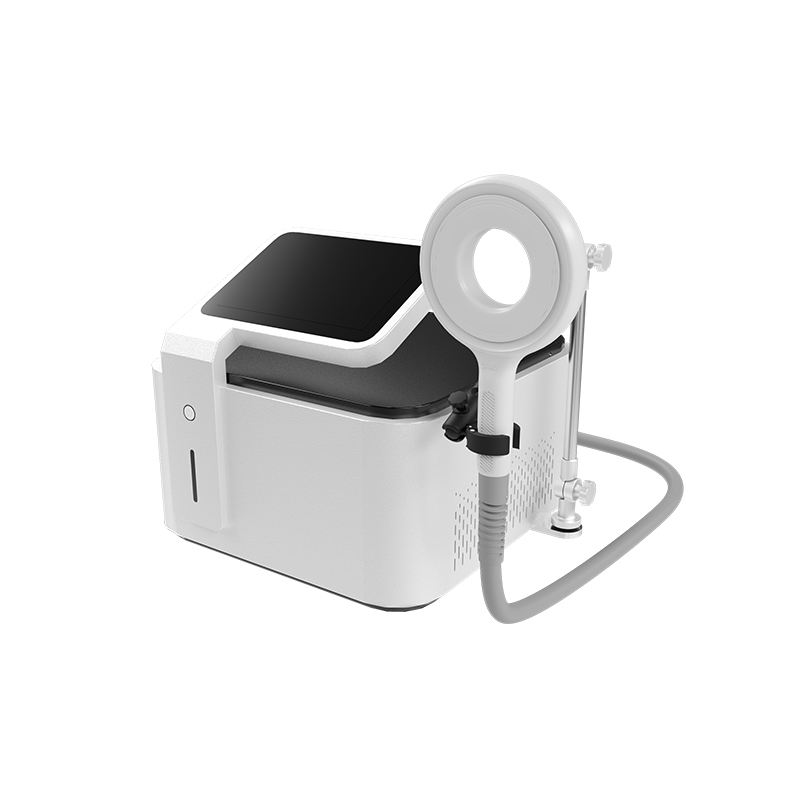
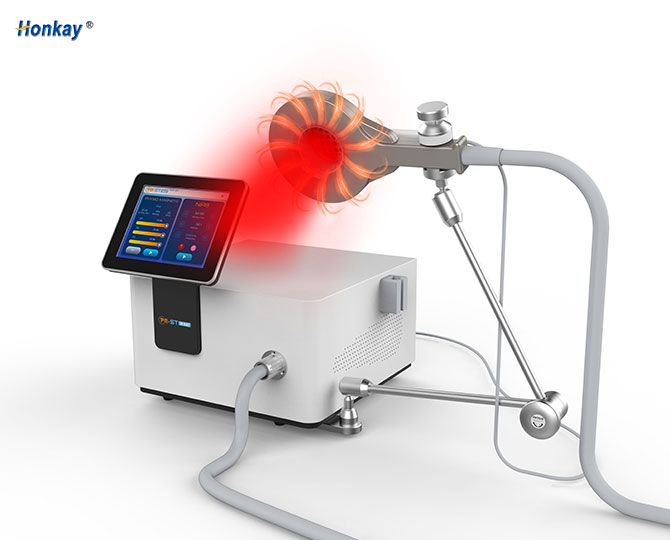
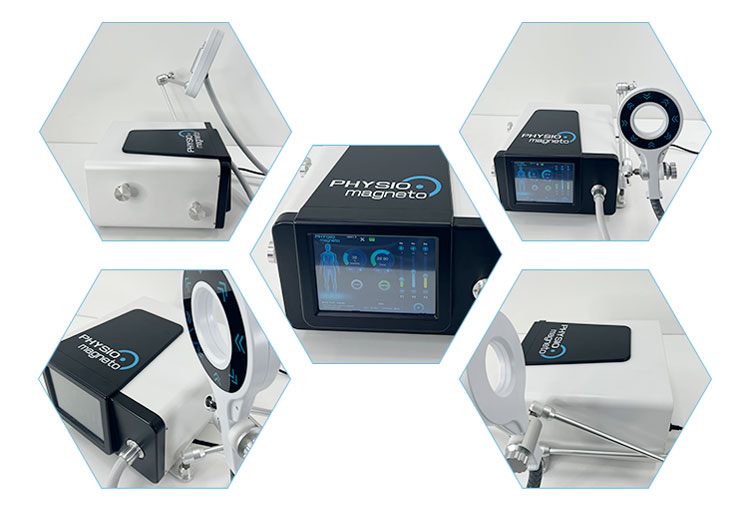
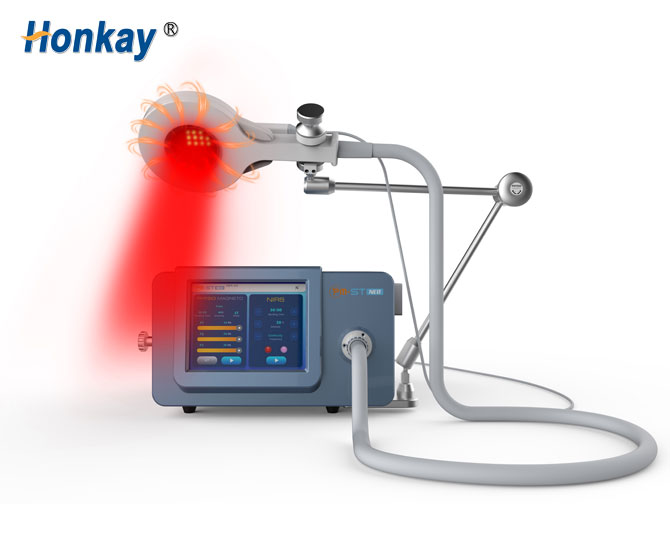
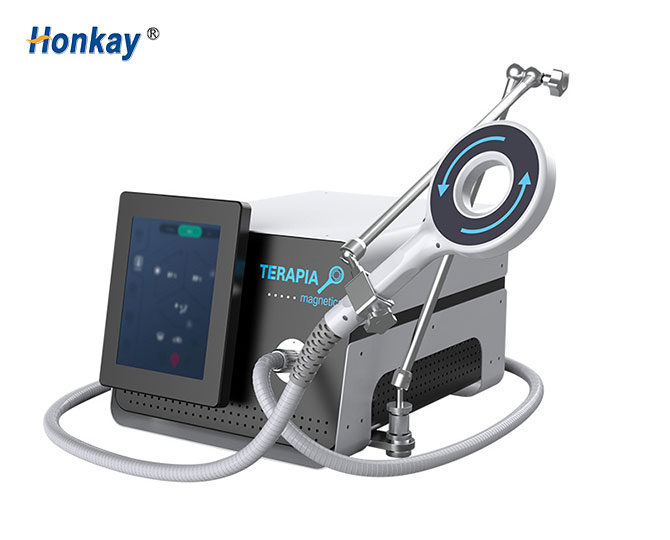
Here is a working comparison method for PEMF therapy devices, using one concrete example: a dual-control tabletop console — a pulsed electromagnetic field therapy device with a standard joint applicator and a second, independently controlled channel.
Four numbers separate two similar-looking consoles
The physical output of the machine is defined by four values, and only one of them appears in most marketing copy.
| Parameter | What it defines | Typical professional console | Why it matters clinically |
|---|---|---|---|
| Magnetic intensity (Gauss) | Peak field strength delivered at the applicator | 1,000–8,000 Gauss, adjustable | The lower end of the range matters as much as the top: paediatric, small-animal and acute cases need to step down |
| Pulse frequency (Hz) | How often the field switches polarity per second | 1–10 Hz | Sets the treatment category. Acute and post-operative work sits low; chronic and degenerative work sits higher |
| Oscillation frequency | The carrier frequency inside each pulse | 4,500 Hz | A separate number from the pulse frequency. Vendors frequently quote one and imply the other |
| Applicator set | Which anatomy the field can actually reach | Standard joint applicator plus optional point and muscle applicators | Determines your treatment menu and your session length |
A console quoting 8,000 Gauss with a single small applicator is not the same product as one quoting 8,000 Gauss with a joint applicator, a broad muscle applicator and a point applicator. The first will treat a knee. The second will treat a knee, a lumbar spine and a shoulder in the same afternoon.
One caution about cross-vendor comparisons. Gauss figures are quoted at different measuring points by different suppliers — some at the coil surface, some at a stated distance, some as a marketing tier rather than a measurement. If a supplier gives you a figure in Tesla on one page and Gauss on another, treat that as a documentation problem, not as a bigger machine, and ask for the figure in one consistent unit at a stated measuring point before you compare anything.
The applicator set is the real specification
This is where two quotations diverge most, and it is the line item buyers read least carefully.
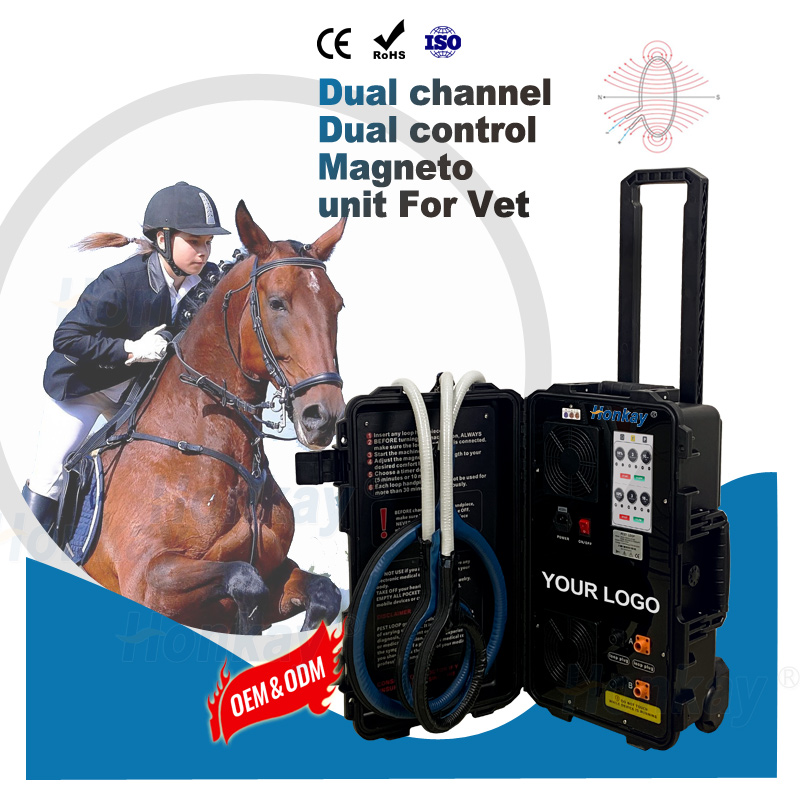
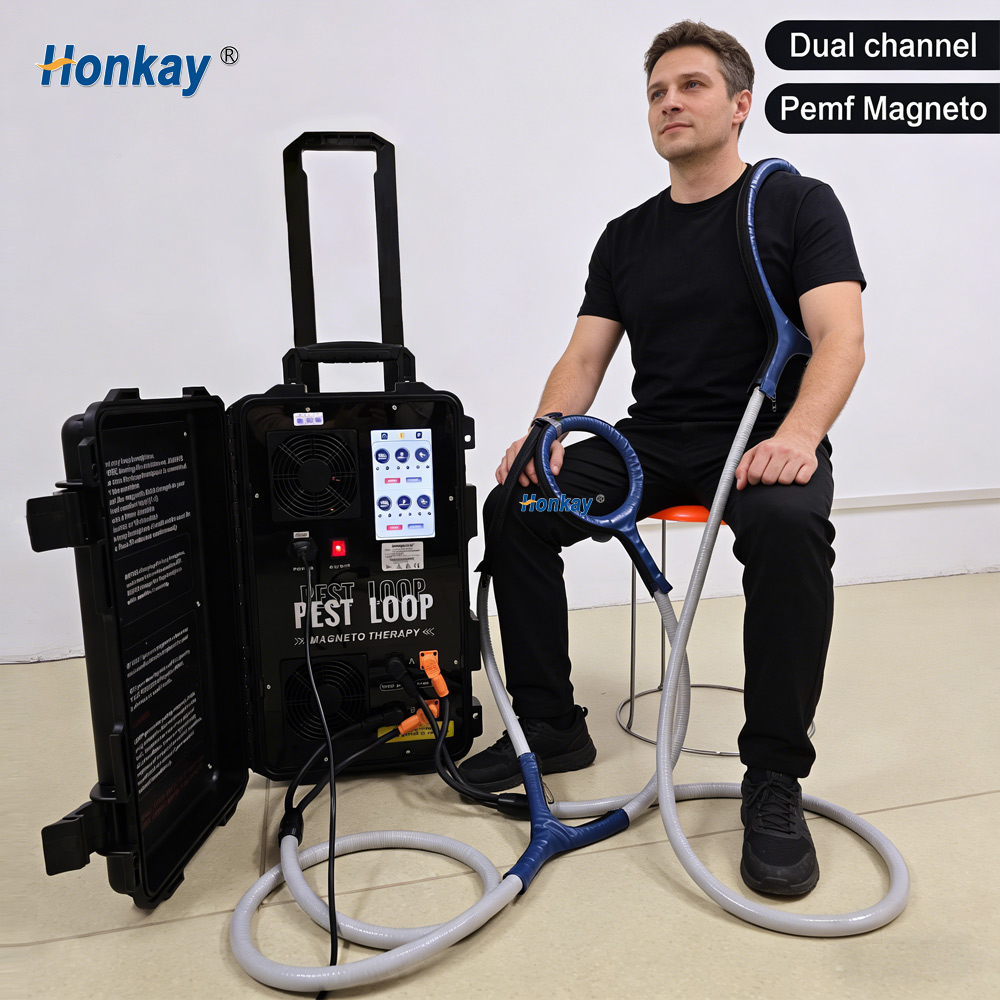
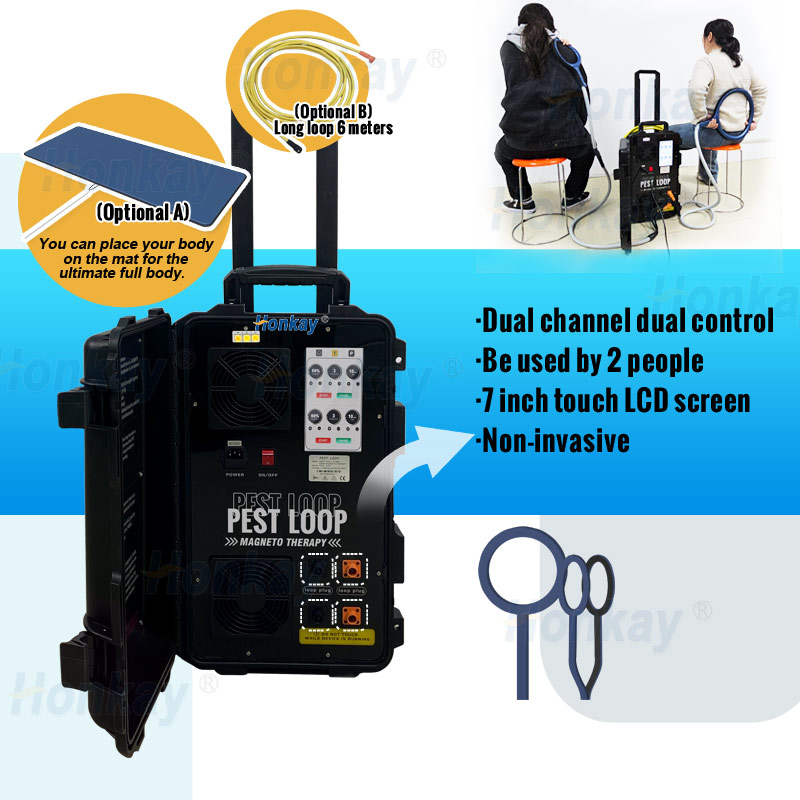
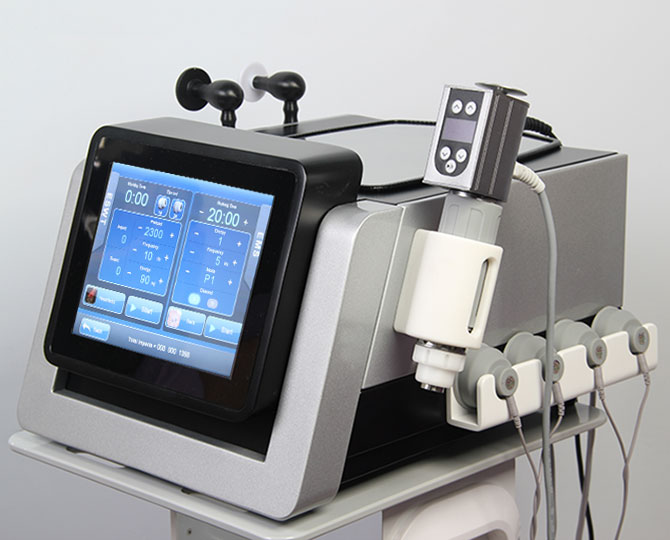
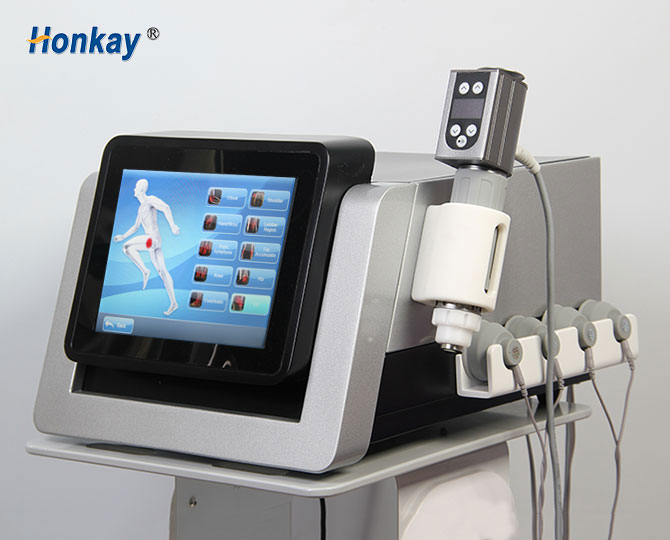
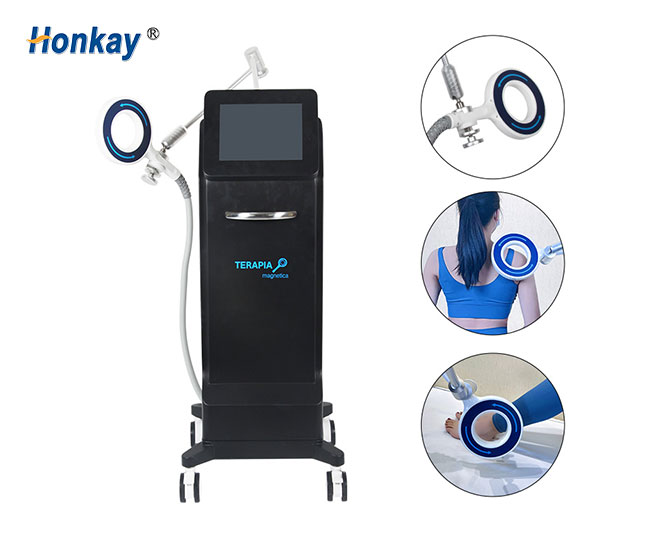
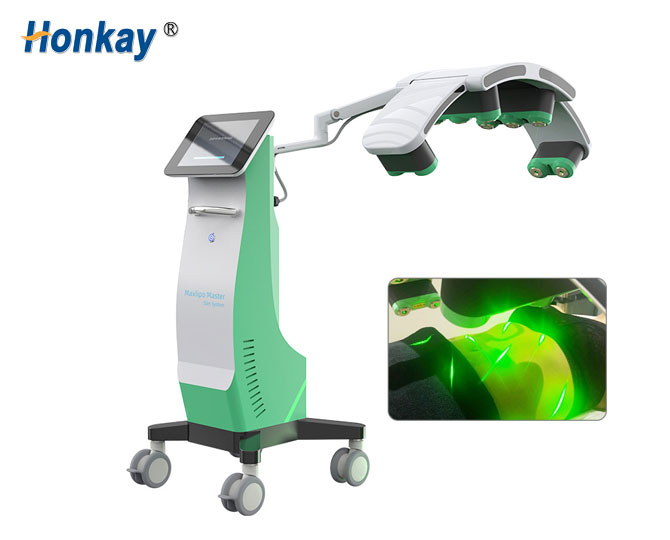
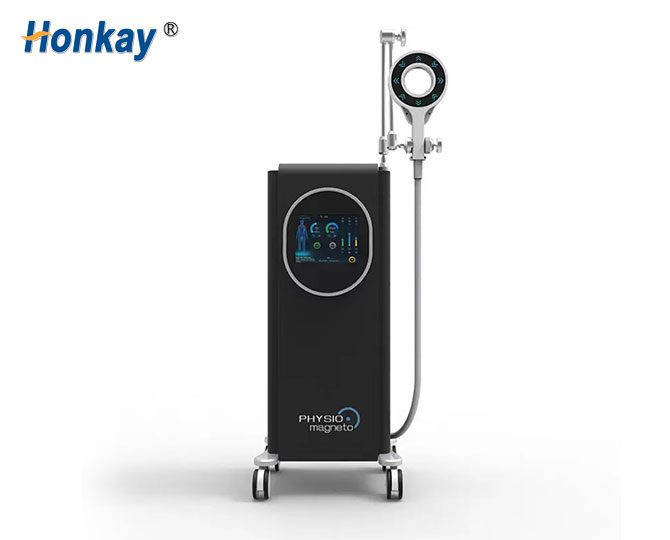
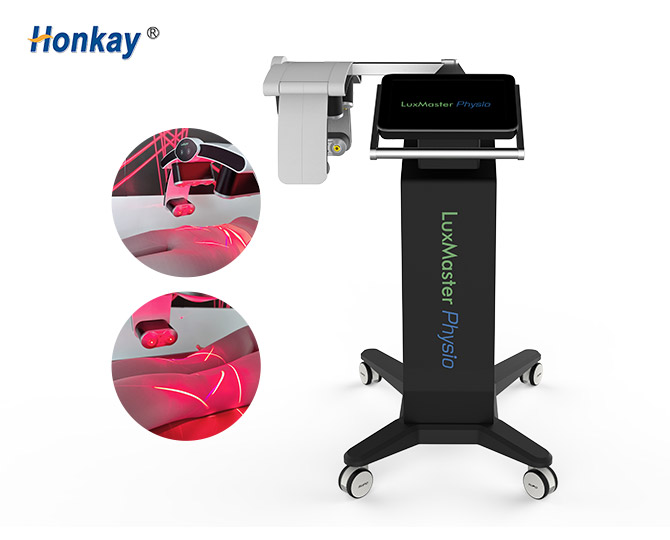
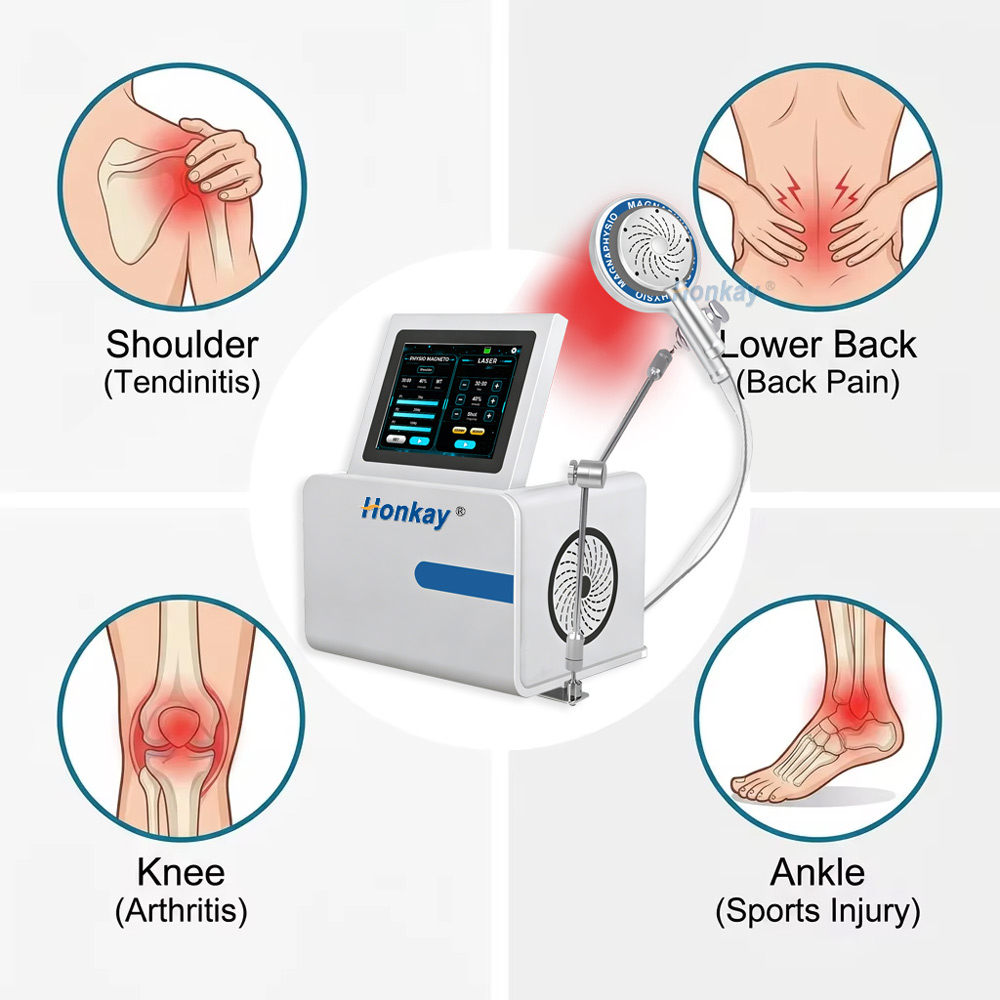
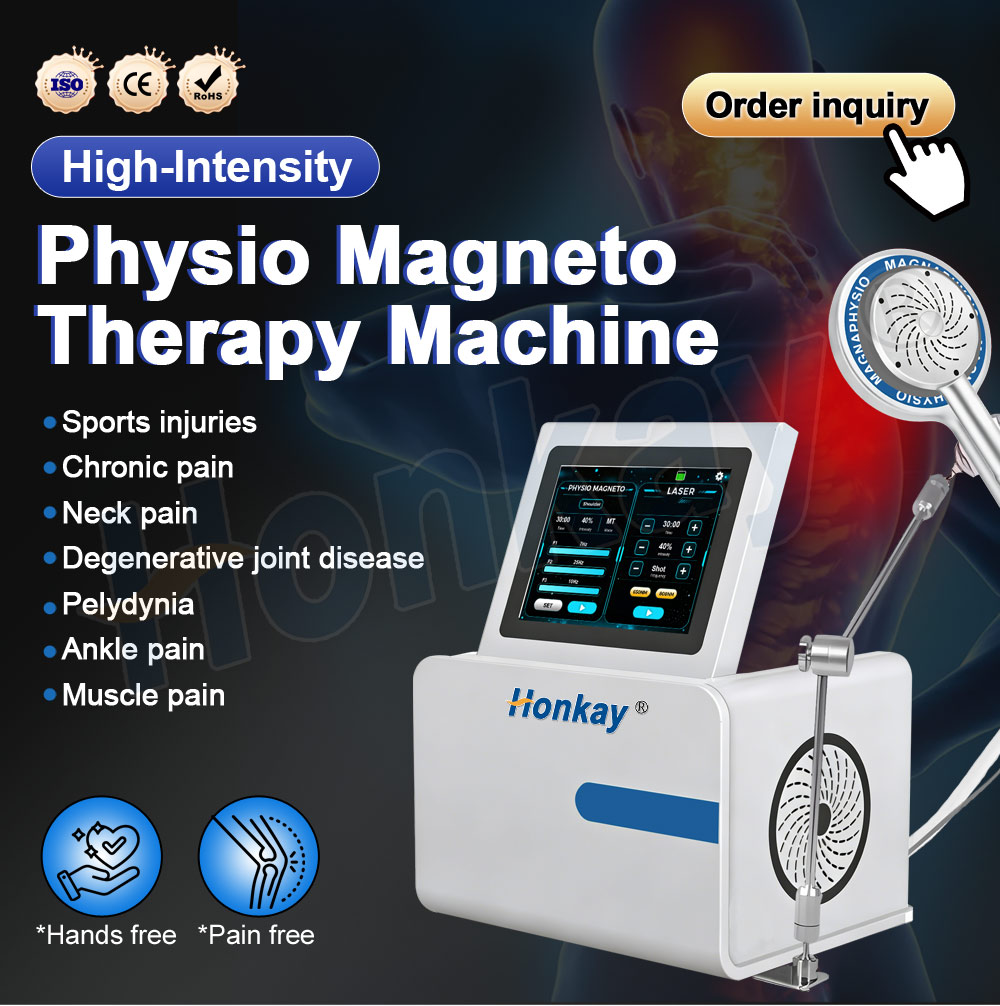
The applicator family on a current dual-control console is split into standard and optional items. On the unit pictured here, the joint applicator ships as standard — it is the hollow ring used for ankles, knees, elbows and shoulders, and it is the applicator most clinics use for the majority of their caseload. A point applicator (trigger-point release, myofascial work) and a broad muscle applicator for large areas such as back, abdomen and gluteal regions are optional on this configuration. Some builds also pair the magnetic channel with a cold-laser applicator, used either separately or alongside the magneto channel.
Two practical consequences:
- Ask for the applicator list in writing, with diameters. A joint applicator and a muscle applicator can differ by several centimetres of coverage, which changes session length on every patient, every day.
- Check whether the second channel is genuinely independent. “Dual channel” should mean two applicators running at the same time on separate intensity, frequency and timer settings — not one channel with a switch. Independent channels are what let you treat two areas of one patient, or two patients, inside a single booked slot.
What “hands free” actually changes in a clinic day
The specifications that never make it onto a datasheet are the ones your staff will notice by the end of the first week.
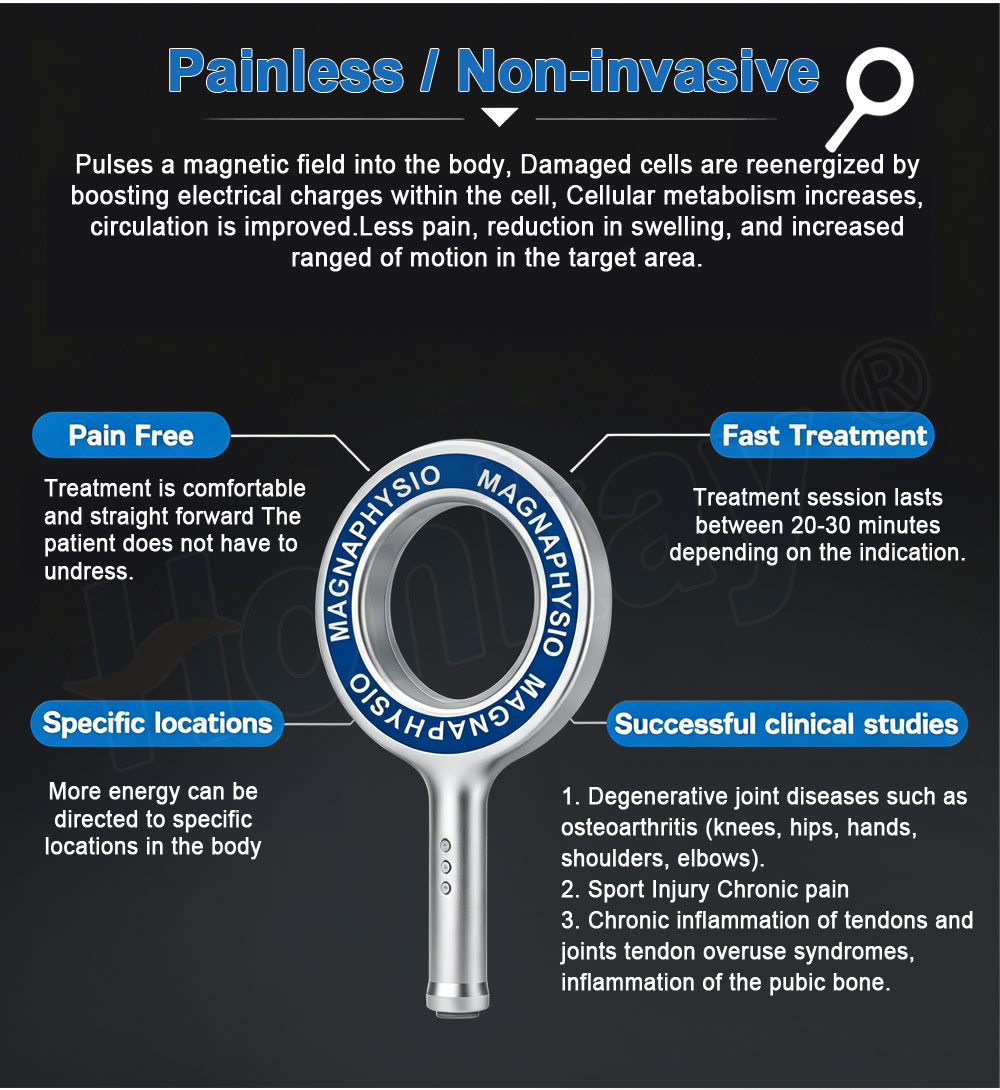
The applicator is held on an articulating arm, so the therapist sets the position and steps back. The patient does not have to undress and no gel or consumable is involved — the field passes through clothing and there is nothing to replace between patients. Sessions run in the 15–30 minute band depending on indication and area.
Compare that with a held applicator: a 20-minute session becomes 20 minutes of a therapist’s hands, which either caps your daily throughput or pushes you into longer appointment slots. On a full clinic day that difference is larger than any spec-sheet number on this page.
The consumable line is the same argument in a different form: with no gel, pads or single-use covers, the marginal cost of the tenth patient of the day is effectively zero.
What to ask before you compare two quotations
Work through this list in order. It separates a machine that fits your caseload from one that only fits the photograph.
| Question | What a usable answer looks like | Red flag |
|---|---|---|
| What is the peak magnetic intensity, and at what distance from the coil was it measured? | A range in Gauss with a stated measuring point | A number in Tesla on one document, Gauss on another |
| Is the intensity continuously adjustable across the whole range? | Yes, with the lowest usable setting stated | Only a maximum figure quoted |
| How many channels, and are they independently controlled? | Two channels, separate intensity / frequency / timer | “Dual channel” that shares one control set |
| Which applicators are standard and which are optional, with diameters? | A written list with measurements | “Complete set included” with no list |
| What are the contraindications the manufacturer screens for? | Implanted electronic devices, pregnancy, malignancy, local infection | No screening guidance at all |
| What session parameters does the manufacturer recommend per area? | A per-area table shipped with the unit | “Use your clinical judgement” |
| What are the warranty terms in writing? | A written statement with period and scope | A period quoted verbally that is not in the documents |
| Who trains the operator, and how? | Named training included in the purchase | Training sold as a separate line |
Two of these deserve emphasis. On the first: if you are pricing a pulse electromagnetic therapy machine, ask for its output in Gauss at a stated measuring point. Legitimate clinical consoles in this category typically state their output in Gauss — a professional unit in this class runs 1,000–8,000 Gauss with a 1–10 Hz pulse frequency and a 4,500 Hz oscillation frequency. If a document quotes the field in Tesla at a value far outside that band, the document and the machine’s own manual disagree, and you should ask which one is correct before you order. On the last: for a device that runs off mains power in a treatment room, the power specification matters — this class of unit draws around 850 W and is rated IP 31, which is the protection level you want specified in a clinic where a wet treatment area may be adjacent.
Frequently asked questions
What is the difference between a dual-channel and a dual-control PEMF console?
Dual-channel means two applicators can run simultaneously. Dual-control means each channel has its own intensity, frequency and timer controls, so the two do not have to share settings. Only the second configuration lets you treat two different areas or two different patients in the same slot with different parameters.
How many Gauss does a professional PEMF therapy device actually need?
Most professional tabletop consoles in this category span 1,000 to 8,000 Gauss with adjustable output. The maximum figure is less important than the ability to step down: acute, post-operative and small-animal cases sit well below the top of the range, so a console with no usable low setting will be underused.
Do I need to buy the optional applicators at the same time?
Buy the applicators that match your caseload, not the full catalogue. A clinic whose work is mostly joints can start with the standard joint applicator and add a broad muscle applicator later. Ask for the accessory list with diameters and confirm whether the price quoted includes the standard set.
Can patients be treated through clothing?
Yes — the field passes through clothing and soft tissue, so the patient does not need to undress and no coupling gel is required. Metal objects in the treatment area should be removed first, and the manufacturer’s screening list should be followed.
What should be removed from the treatment room before a session?
Anything that can be affected by a strong magnetic field: implanted electronic devices anywhere in the patient, and in the room itself, cards with magnetic strips, car keys, access cards and precision electronic equipment. Manufacturers of this class of device explicitly warn that items left near the applicator can be damaged.
Who should not be treated with a magneto console?
Follow the manufacturer’s contraindication list. It typically covers patients with implanted electronic devices such as pacemakers and analgesic pumps, pregnancy, malignant or benign tumours in the treatment area, local infections, and metal implants where vibration could cause tissue damage. Screen every patient before the first session, not just the first patient.
Can one console handle both humans and animals?
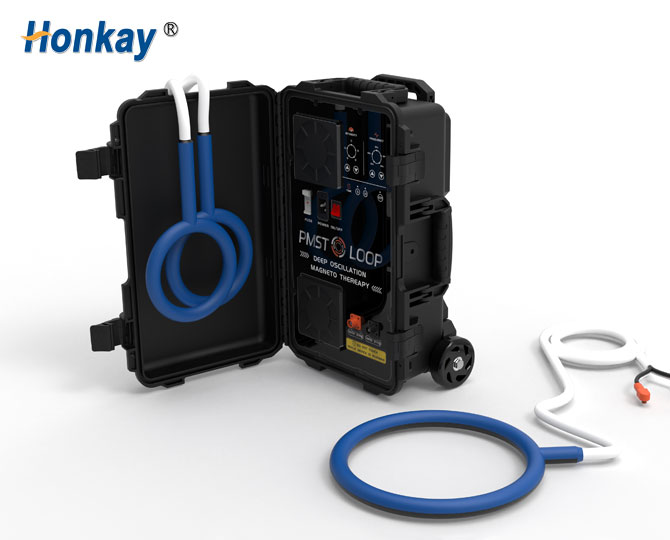
Mechanically yes — the applicator family is the deciding factor, not the console. Large-animal work needs a much larger loop than a human joint applicator, so check that the loop sizes you need are available for the model you are pricing, and confirm the maximum continuous use time per applicator.
How long does a session take and how many sessions make a course?
Manufacturer guidance for this class of device typically runs 15 to 20 minutes per single area, with a maximum of about 30 minutes on one applicator, and roughly six to eight sessions as a full course, twice a week. Acute and post-operative cases follow a shorter, more frequent schedule. Use the per-area table shipped with your unit and adjust to the individual patient.
Request a quotation for a dual-control PEMF console
Tell us your caseload — joints, spine, sports recovery, large or small animal — and we will match the applicator set to it rather than sending the full catalogue. We will include the applicator list with diameters, the recommended session parameters, and the written warranty terms with the quotation, so you can compare two offers line by line.
Manager: Lisa
WhatsApp: +8613751821215
E-mail: hk6@huang-kai.com