PEMF Equipment Installation: Room, Power and the Arrival Check
A floor-standing unit arrives as a crate, not as a machine. The crate is 68 × 53 × 140 cm and the unit inside weighs 56 kg, so the installation really begins at the door — with a tape measure, a lift, and two people who know which end is heavy.
This is the part of buying PEMF equipment that quotes rarely cover: what the room needs before the unit lands, what the power supply has to provide, and the order in which to check the machine on the day it arrives, while the delivery driver is still there.
What the crate tells you before you open it
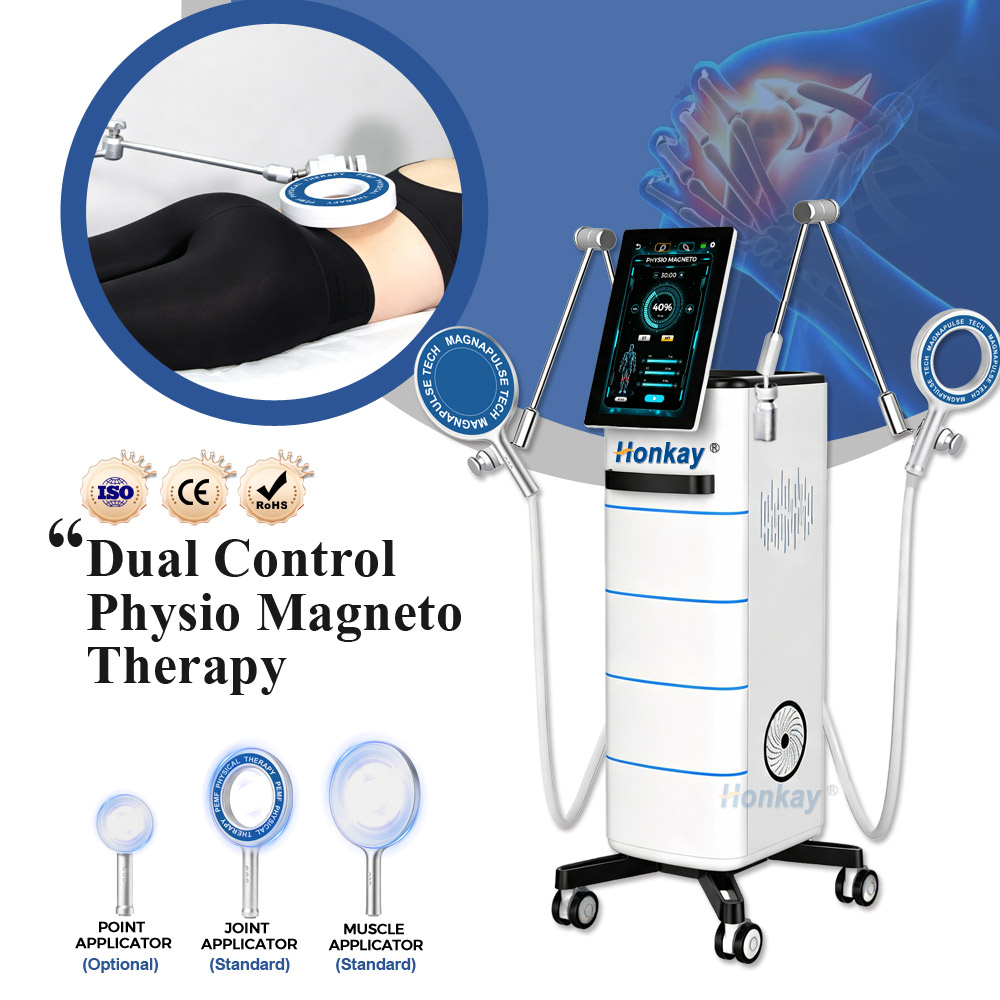
Two numbers decide whether delivery is a ten-minute job or a two-hour problem: the packed size, 68 × 53 × 140 cm, and the packed weight. Both are on the packing list, and both should be checked against the route into the building before the shipment leaves the factory.
- Door and lift clearances. A 68 cm crate needs a doorway wider than 68 cm plus hand clearance. If the only route is a stairwell, measure the turn, not just the width.
- Lift capacity and cabin height. 140 cm standing upright rules out many passenger lifts; a crate this shape usually travels lying down on a pallet, which changes both the footprint and the lifting method.
- Who lifts it. A 56 kg unit is a two-person lift, and the crate is the heavier of the two. Ask whether the delivery includes a liftgate and inside delivery, or whether it stops at the kerb.
The footprint that actually matters
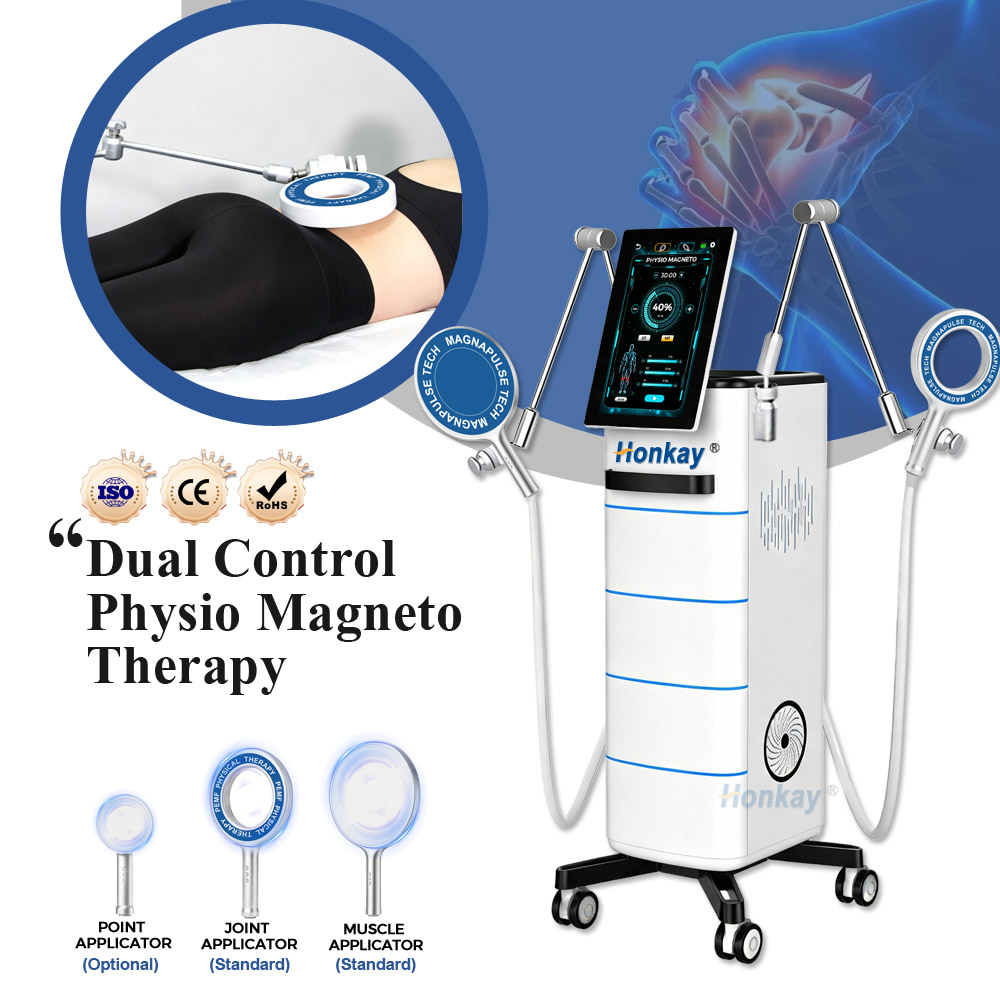
The cabinet is 46 × 39 cm at the base and 143 cm tall. That is the number people plan with, and it is not the number that matters in a working room, because the applicator arms swing outward and the operator needs space behind them.
| What to measure | Figure to plan with | Why it matters |
|---|---|---|
| Cabinet base | 46 × 39 cm | The floor area the casters occupy |
| Height with screen | 143 cm | Screen top; check shelf and ceiling clearance |
| Arm reach in use | about 121 cm to the applicator head | The real working envelope around the cabinet |
| Clear aisle | 60–80 cm on the working side | Space for the operator and a treatment couch |
| Caster movement | full base plus 10 cm | The unit is moved, not pushed into a corner |
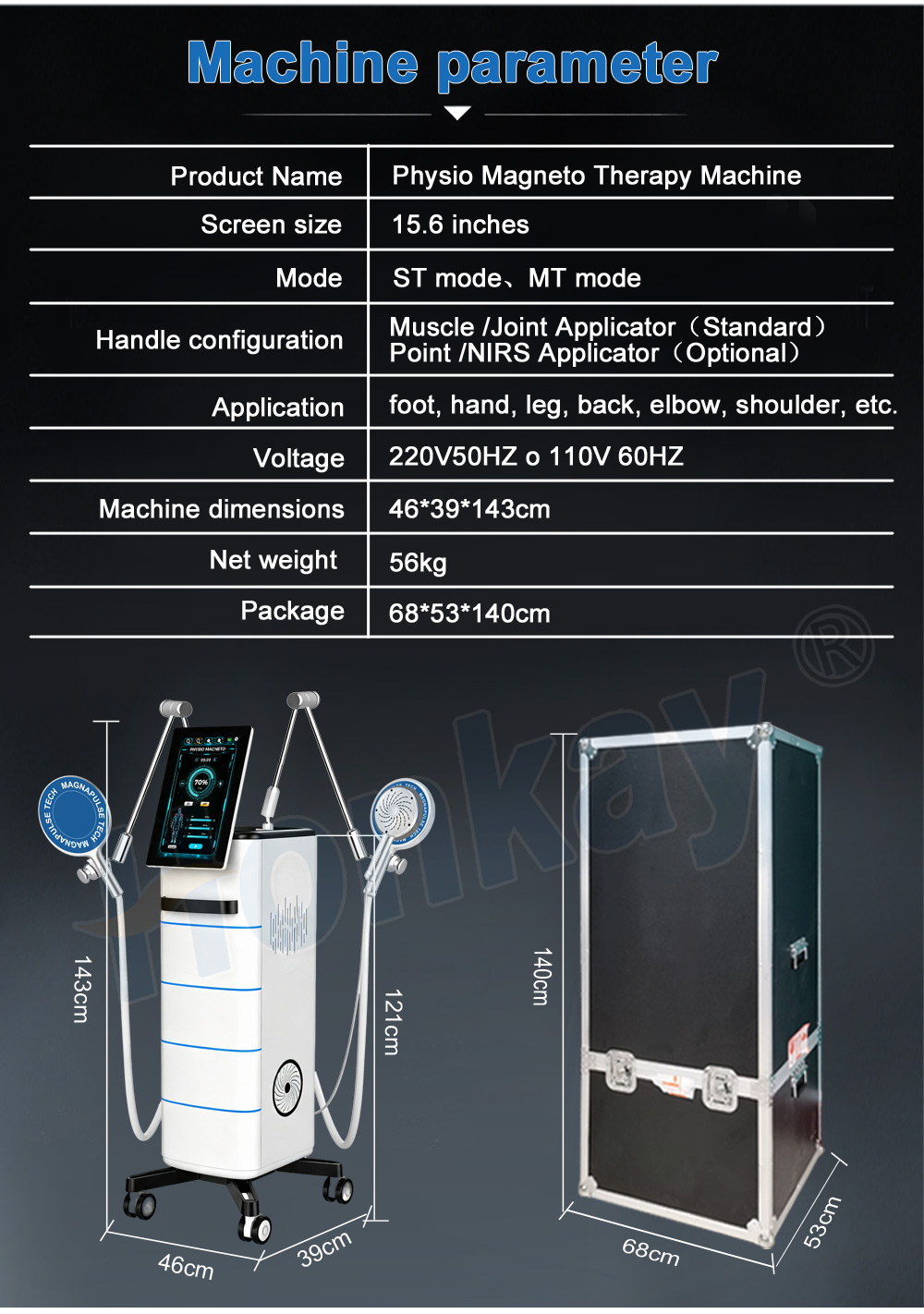
Two practical consequences follow. First, a pulse magnetic therapy machine of this size stands on casters and is repositioned during the day — plan a route that does not cross a cable run. Second, a room that fits the cabinet but not the arms is a room where the applicator cannot reach the treatment position, which is the most common installation mistake and the easiest to avoid with a tape measure.
Power, socket and the one question to ask
The unit is built for either 220 V 50 Hz or 110 V 60 Hz. That is a factory option, not a switch on the back, so the voltage has to be fixed before the order is placed and confirmed on the label before the unit is plugged in.
- A dedicated socket on its own circuit. The unit should not share a circuit with a sterilizer, an autoclave or a kettle.
- Correct plug for the destination. Ask for the plug type in writing; an adapter is a temporary answer, not an installation.
- Earthing. Confirm the socket is earthed before the first power-on, and have the person who wired the room confirm it.
- Cable routing. Keep the mains cable out of the walking line between the couch and the cabinet.
The arrival check, in order
Do this while the driver is still present, because a cosmetic claim is much easier to make before the paperwork is signed.
| Step | What to confirm | What to record |
|---|---|---|
| 1 | Crate condition: dents, water marks, dropped corners | Photos of all four sides before opening |
| 2 | Cabinet and screen: no cracks, no scuffs, casters turn and lock | Photos of any damage, close up |
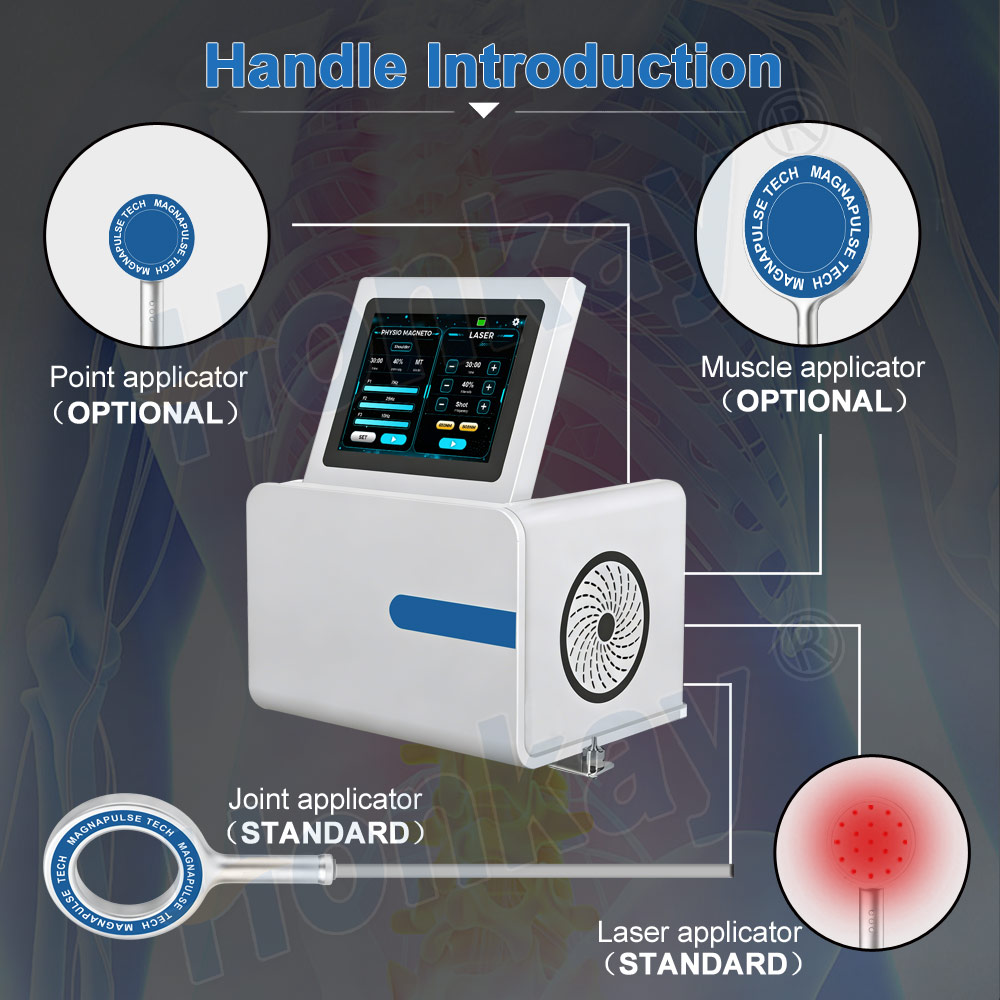
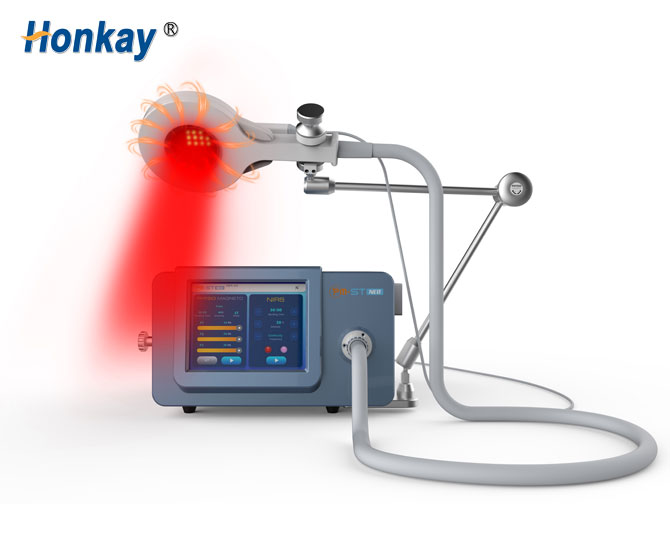
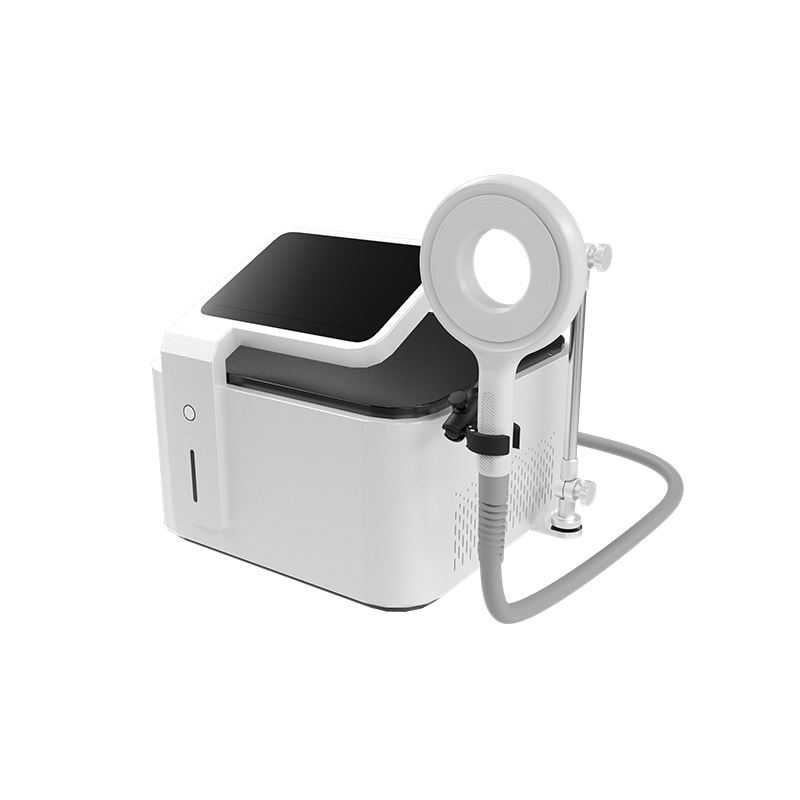
| 3 | Applicators: correct set (muscle and joint standard, point or NIRS optional) | Photo of the full set laid out |
| 4 | Power-on: screen boots, no error message | Photo of the home screen |
| 5 | Applicator recognition: each handle is detected when connected | Note which port each was tested in |
| 6 | Short run: a few minutes at low output, listening for fan noise | Note anything unusual, in writing |
| 7 | Serial number and label: voltage matches the order | Photo of the label and the serial |
If a step fails, stop and write it down before signing. The seven steps are not specific to this unit — any electromagnetic pulse therapy device of this class deserves the same order, because the failures are the same. A supplier who is told on the day can usually fix it with a part; a supplier told three weeks later is answering a different question.
Training the first week
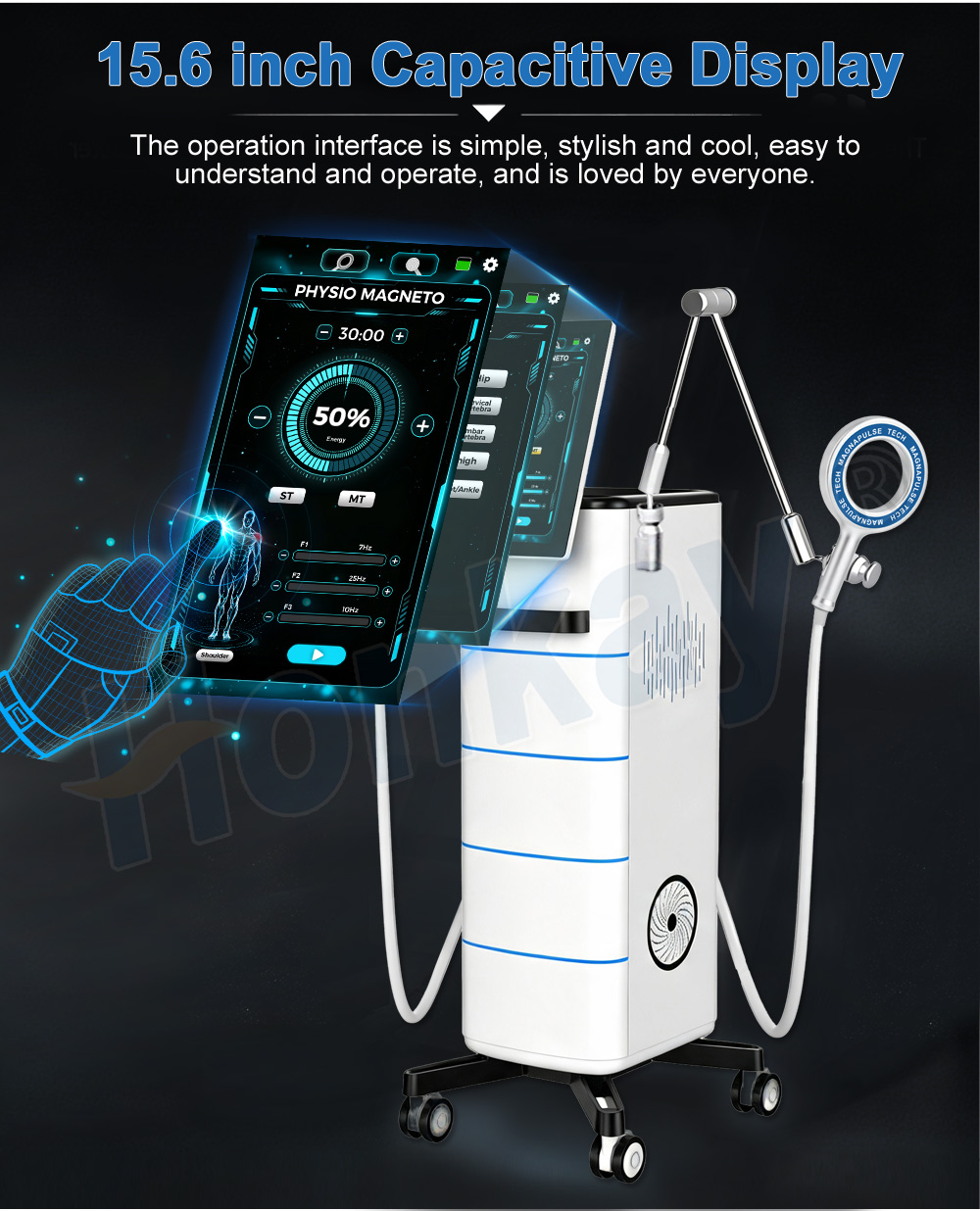
The screen is 15.6 inches and the interface is deliberately shallow: intensity, frequency and time on one page, with two working modes, ST and MT. That is not a reason to skip training — it is a reason training can be short and specific.
- Applicator choice first. Muscle and joint handles cover large areas and joints; the point handle is for small areas. Teach the choice before teaching the settings.
- One page, three settings. Intensity, frequency and time. Staff who understand those three stop improvising.
- Session length. A session runs in the range of 5 to 20 minutes; agree a default for the clinic rather than letting each operator choose.
- A written default protocol. One page per indication area, agreed with the clinician who supervises the room.
What to agree with the supplier in writing
- Voltage, plug type and the label wording that confirms both
- Delivery terms: liftgate, inside delivery, and who removes the crate
- Packing standard for the route, and what happens if the crate arrives damaged
- Spare applicator cable and the lead time for a replacement handle
- On-site or remote training, and in what language
- Warranty terms, and the date they run from
Warranty on this unit is 24 months from the factory shipment date, so the arrival date and the shipment date are not the same thing — record both on the same sheet as the serial number.
Frequently asked questions
How much floor space does a floor-standing PEMF unit need?
Plan on the cabinet footprint plus the arm envelope and an operator aisle: roughly 1.2 m by 1.2 m of usable floor, with 60–80 cm clear on the working side. A room that fits only the 46 × 39 cm base will not fit the treatment position.
Can it run on a standard wall socket?
It runs on 220 V 50 Hz or 110 V 60 Hz depending on how it was built, and it should have its own circuit rather than sharing with heavy equipment. Confirm the voltage on the label before the first power-on.
Does the machine need to be assembled on site?
No. The cabinet arrives assembled; what is assembled is the applicator arms, which attach to the cabinet and are adjusted to the treatment height. Allow half an hour for that and for the arrival check.
What if the crate arrives damaged?
Photograph it before opening, note the damage on the delivery paperwork, and open it in front of the driver if the schedule allows. Damage noted later is much harder to attribute.
How long does it take to train a therapist?
Two to three hours is enough for the interface, the applicator choice and the default protocols, provided the trainer uses the clinic’s own caseload rather than a generic script. The first week of use is what actually fixes the habits.
Can one unit serve two treatment rooms?
Only if it is moved between them, and moving it means re-checking the arm position each time. If two rooms run in parallel, plan for two units or accept that one room waits.
What should be in the spares kit from day one?
One applicator cable, one spare handle of the type used most, and the fuse rating written on the inside of the cabinet door. Those three cover the failures that stop a day.
Is the unit suitable for adjunctive use alongside other therapy?
It is intended for adjunctive use alongside professional care, and the protocol should be set by the clinician responsible for the case. It is not a replacement for diagnosis or treatment.
About Honkay
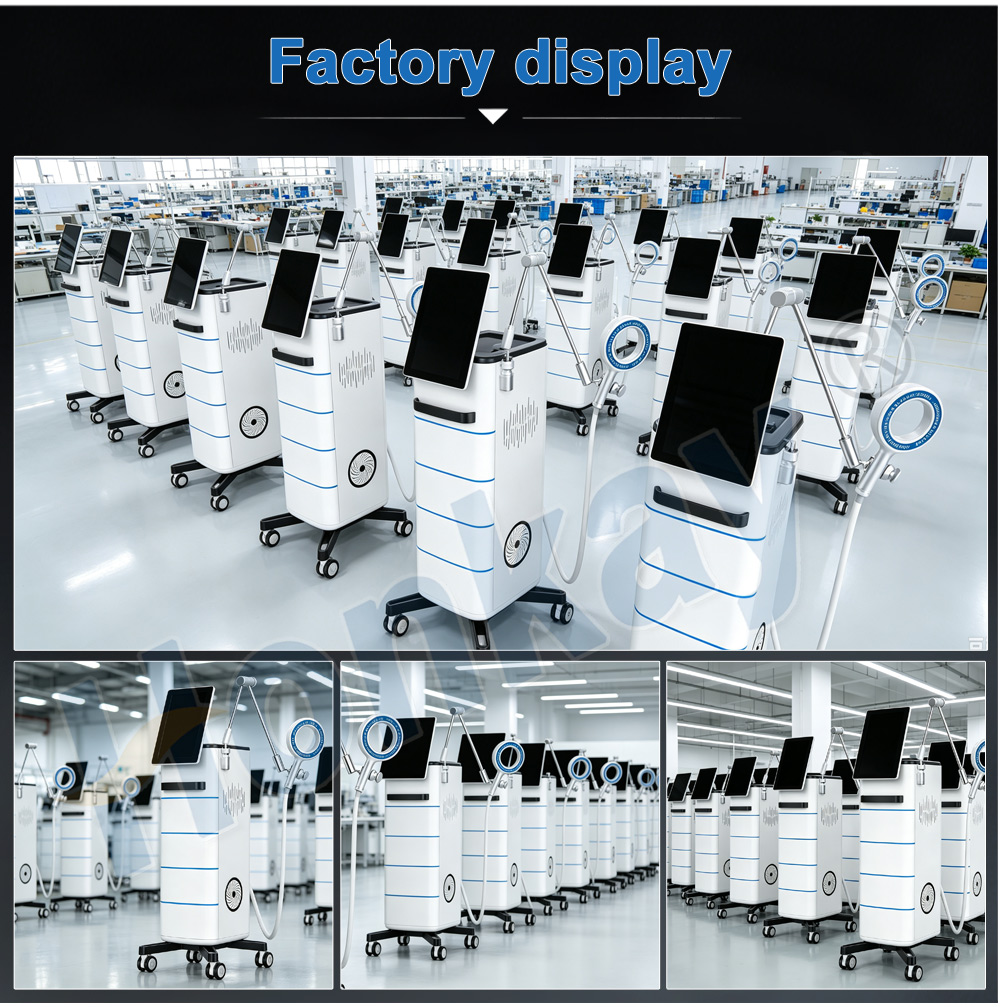
Honkay is a physiotherapy equipment manufacturer working with clinics, distributors and OEM buyers. The range covers pulsed electromagnetic field systems, focused and radial shockwave platforms, TECAR and pressotherapy, built in the company’s own facility and shipped with documentation for the destination market. OEM and ODM projects are handled by the same team that builds the standard units, which is why the questions above — voltage, plug, packing, spares — have answers rather than policies.
Talk to us before you order
Send the room dimensions, the destination country and the voltage you need, and the Honkay team will confirm the configuration, the packing and the delivery terms in writing before anything ships.
- WhatsApp: +8613751821215
- E-mail: hk6@huang-kai.com
- Manager: Lisa
This device is intended for adjunctive use alongside professional care, not as a replacement for diagnosis or treatment. Suitability should be confirmed with a qualified clinician; individual experience varies.