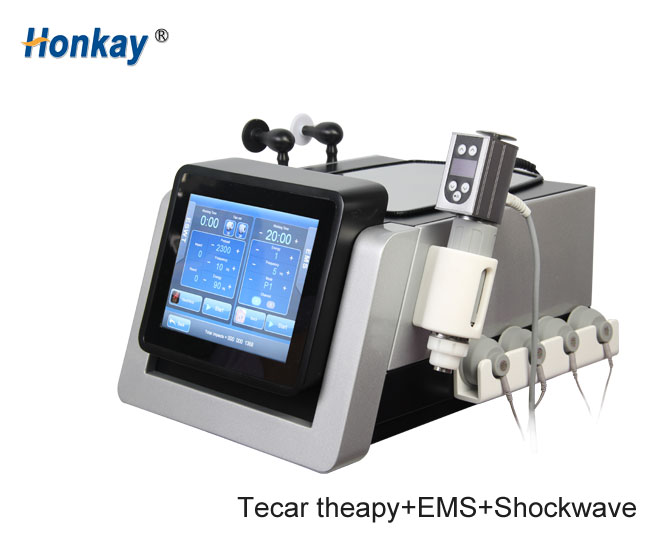
TECAR Therapy Machine: CET, RET and PAD — Which Handpiece Does What
TECAR equipment is sold as one machine, but it behaves like three. The console stays the same; what changes is the electrode in the operator’s hand, and that choice decides which tissue the 448 kHz current actually loads into. Buyers who compare two units on frequency alone are comparing the part that matters least.
If you are still at the stage of asking what is TECAR therapy, the short answer is that it is diathermy delivered by radiofrequency current between an active electrode and a return path, with the tissue heated by the current rather than by an external source. The long answer is that the electrode in the operator’s hand decides where that heating concentrates — which is the part this guide is about.
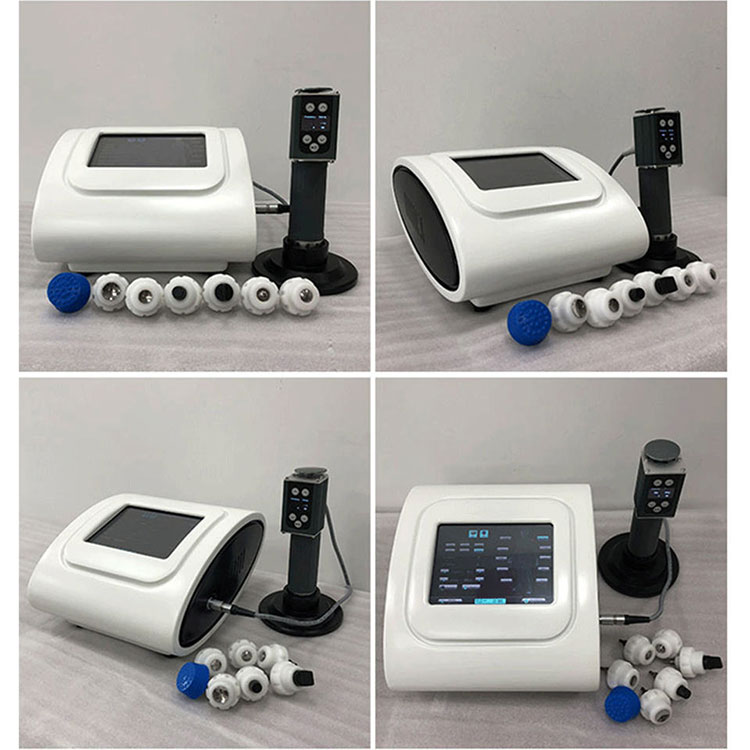
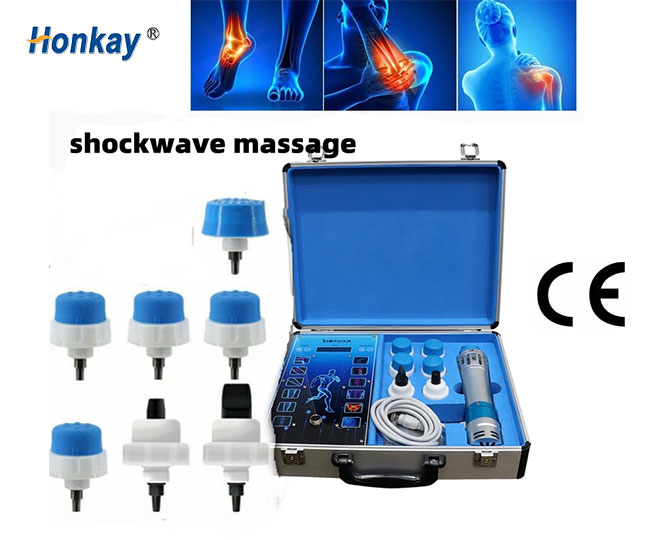
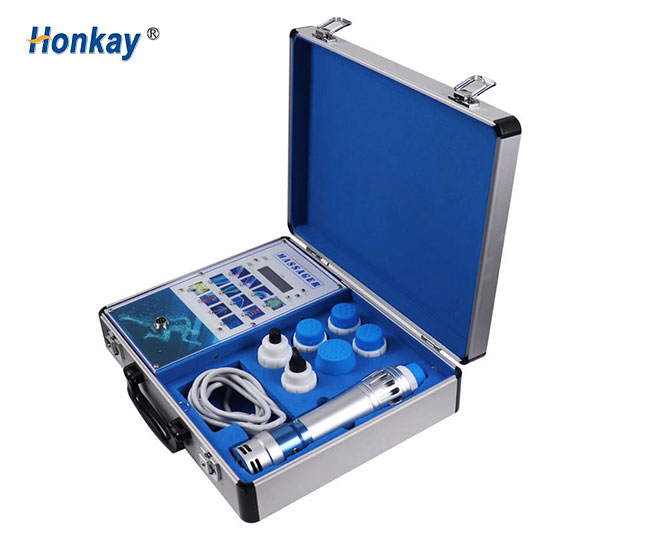
It covers the three electrode families, what each one couples to, and the practical details that decide whether the machine fits a clinic — footprint, packing, session length and the counter on the screen.
One console, three electrode families
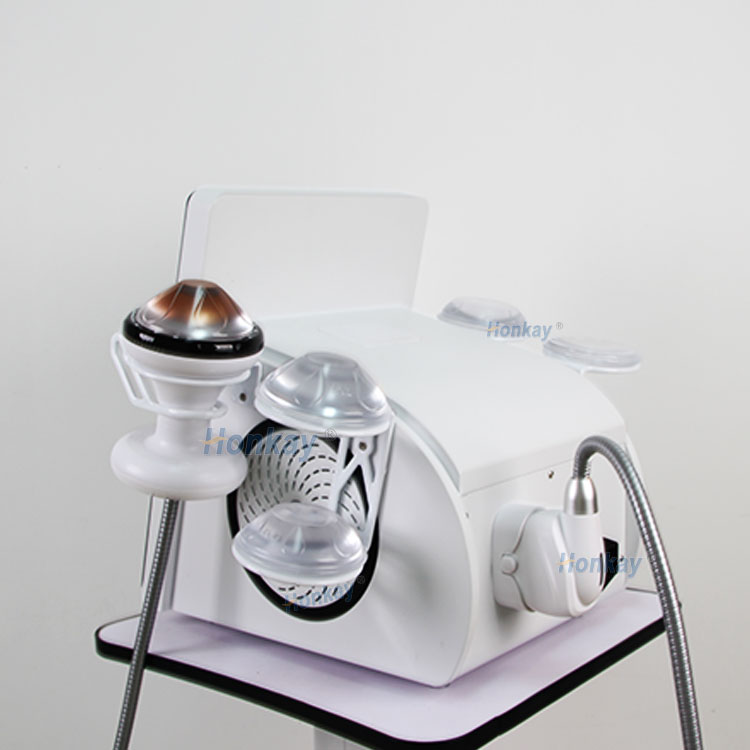
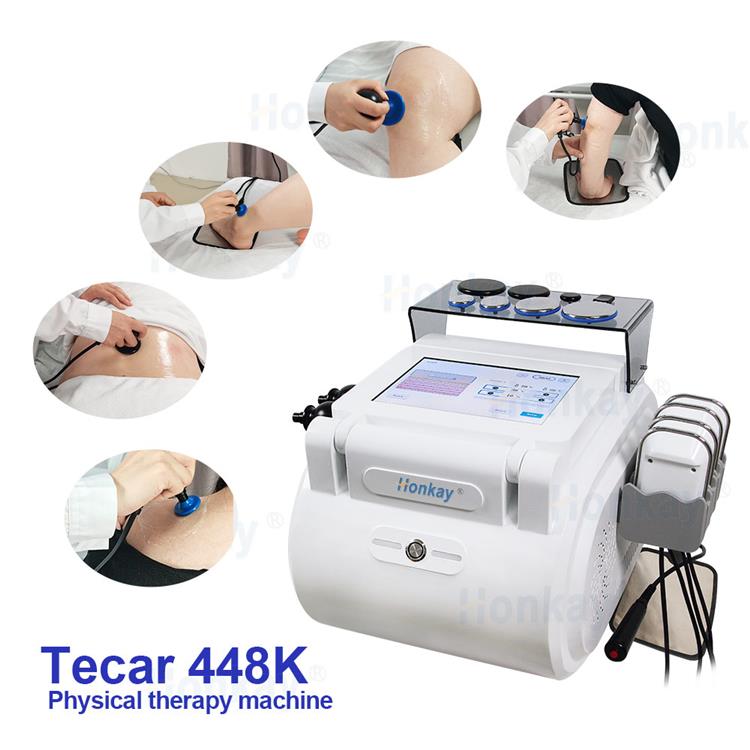
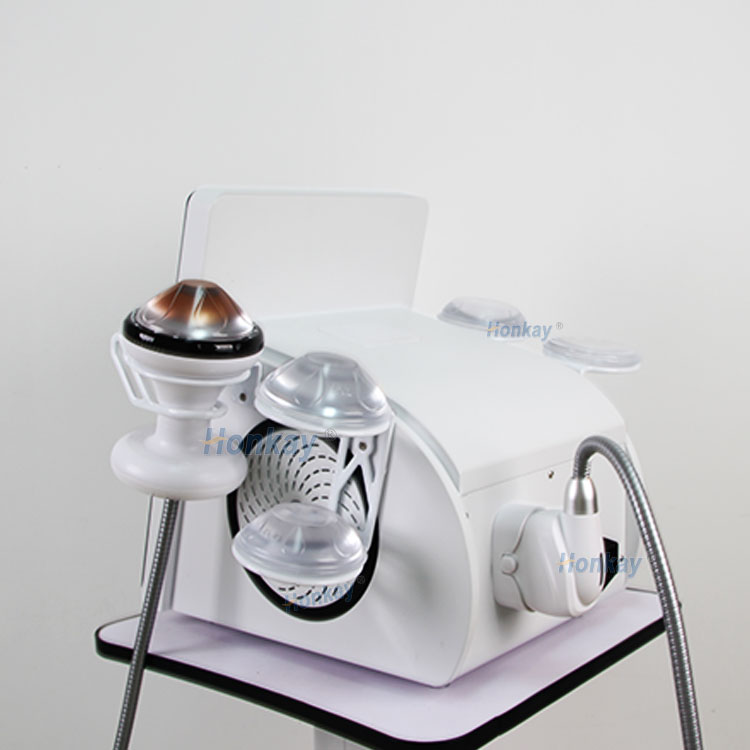
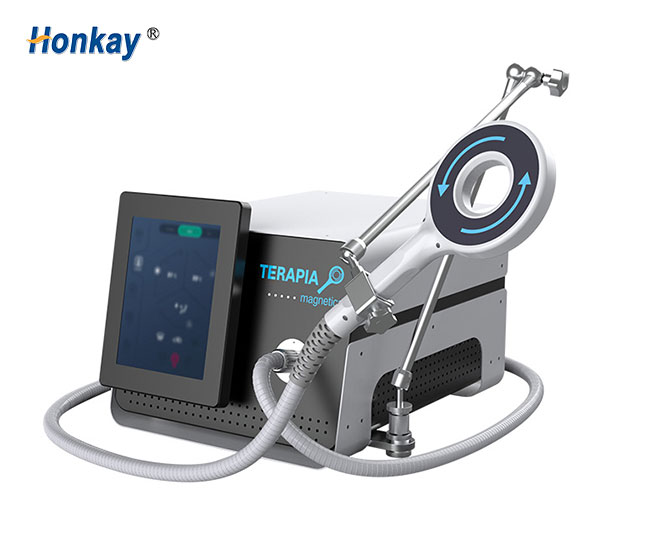
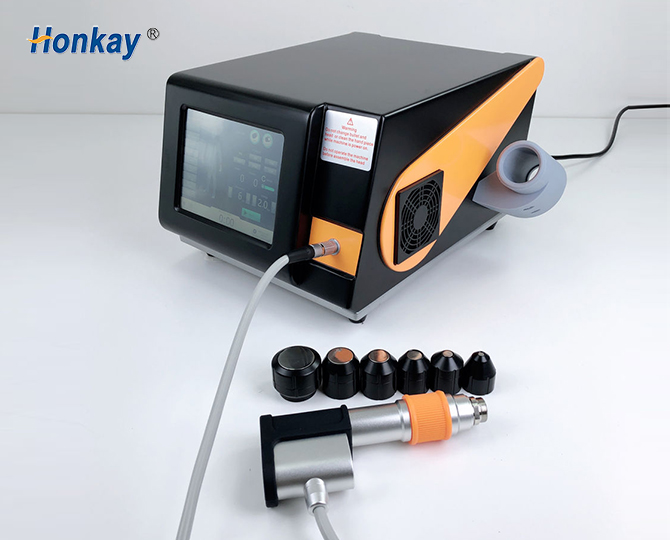
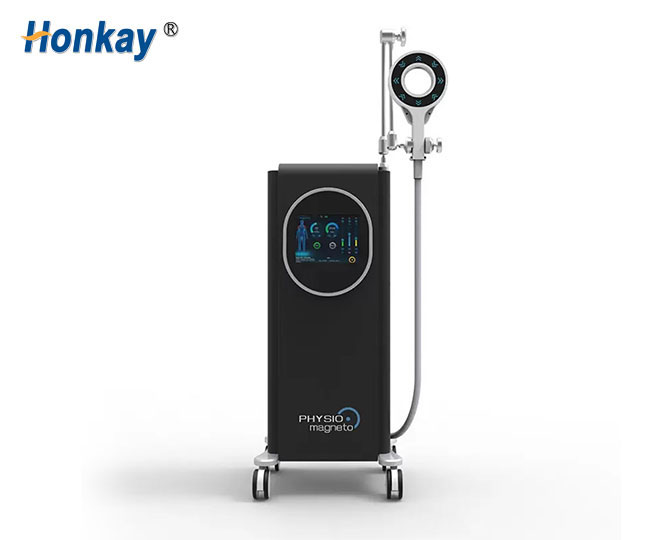
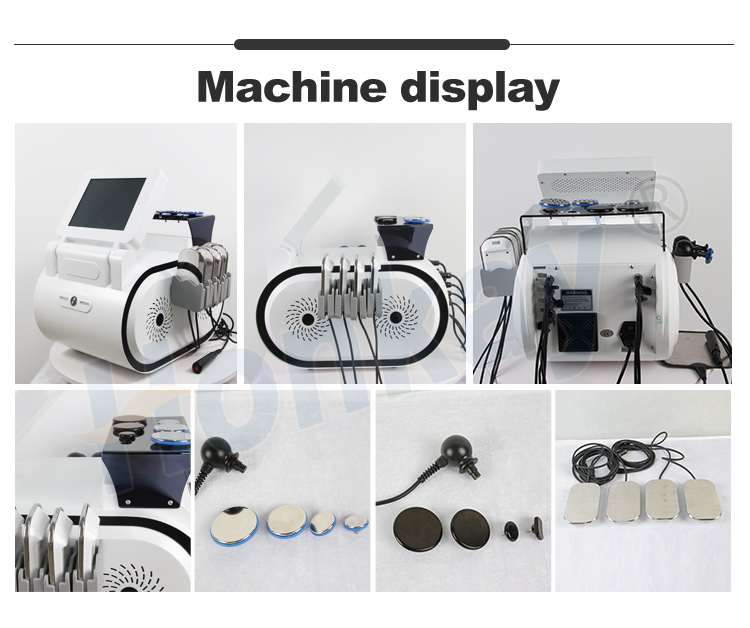
The platform runs at 448 kHz and ships with capacitive, resistive and pad electrodes. They are not interchangeable accessories; each couples to tissue differently.
| Electrode | Coupling | Tissue it loads into | Typical use |
|---|---|---|---|
| CET — capacitive | Insulated electrode, current crosses the dielectric | Superficial to mid layers, wider area | Broad areas, larger surfaces |
| RET — resistive | Bare metal electrode, direct contact | Higher-impedance tissue: tendon insertions, tendon bodies, bone surfaces | Localised, deeper work |
| PAD — resistive pads | Hands-free pads held by straps | Large or awkward surfaces for a prolonged hold | Back, limbs, multi-point sessions |
The distinction is physical rather than marketing. A capacitive electrode has an insulating layer, so the current crosses a dielectric and distributes over a wider field. A resistive electrode contacts the skin directly, so the current concentrates where impedance is highest — which is why the same energy setting produces a different sensation through each.
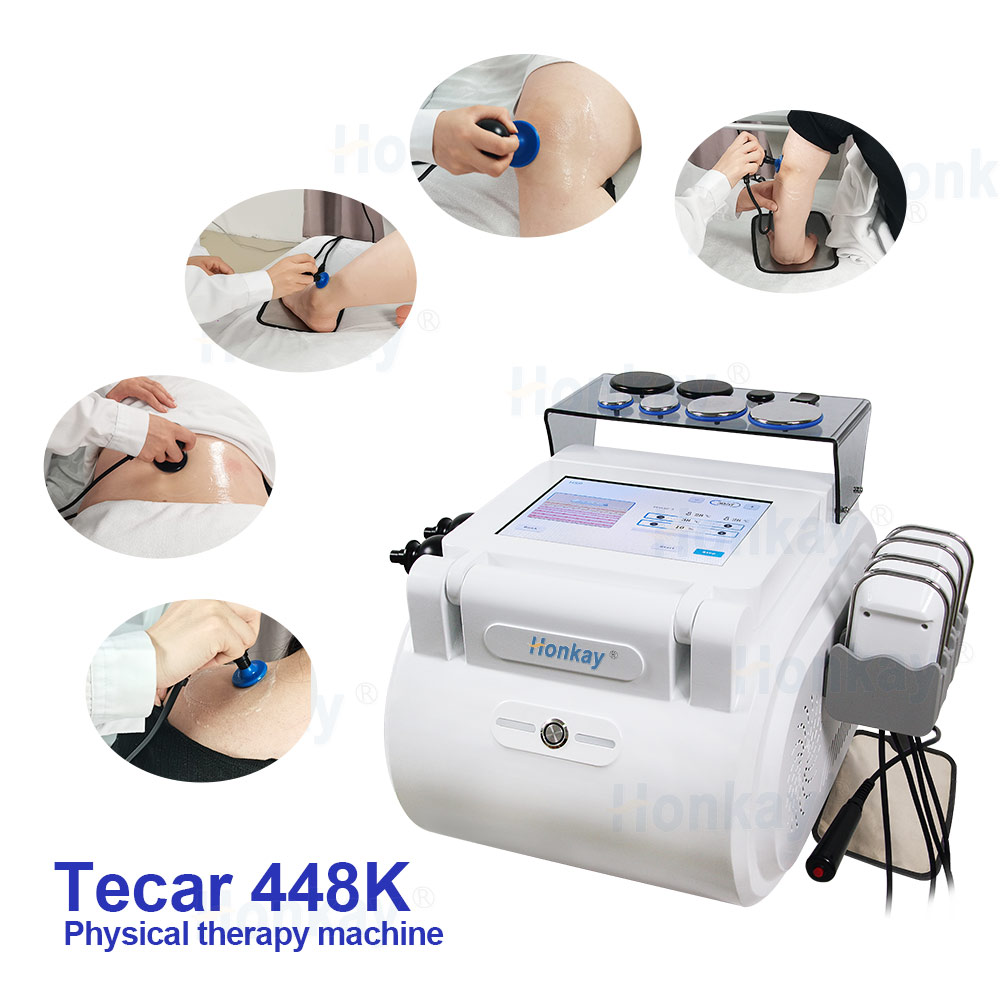
Why RET is the electrode operators underuse
The resistive electrode is the one that gets left in the holder, for a practical reason: it demands more precision. Because the current concentrates at higher-impedance tissue, the electrode has to be placed deliberately over a tendon or an insertion, with the coupling medium managed, and moved in a controlled pattern.
That precision is also the point. Tendons and insertions are exactly where a broad capacitive field is least selective, so a clinic that only ever uses CET is running a wide-field device for narrow-field problems.
Two working rules help:
- Fit the electrode to the target, not to the habit. If the target is a tendon body or an insertion, RET is the electrode designed for it. If the target is a broad region, CET distributes more evenly.
- Keep the pair in the same session log. Recording “TECAR, 20 minutes” without the electrode tells the next operator nothing reproducible.
PAD is a positioning tool, not a lesser option
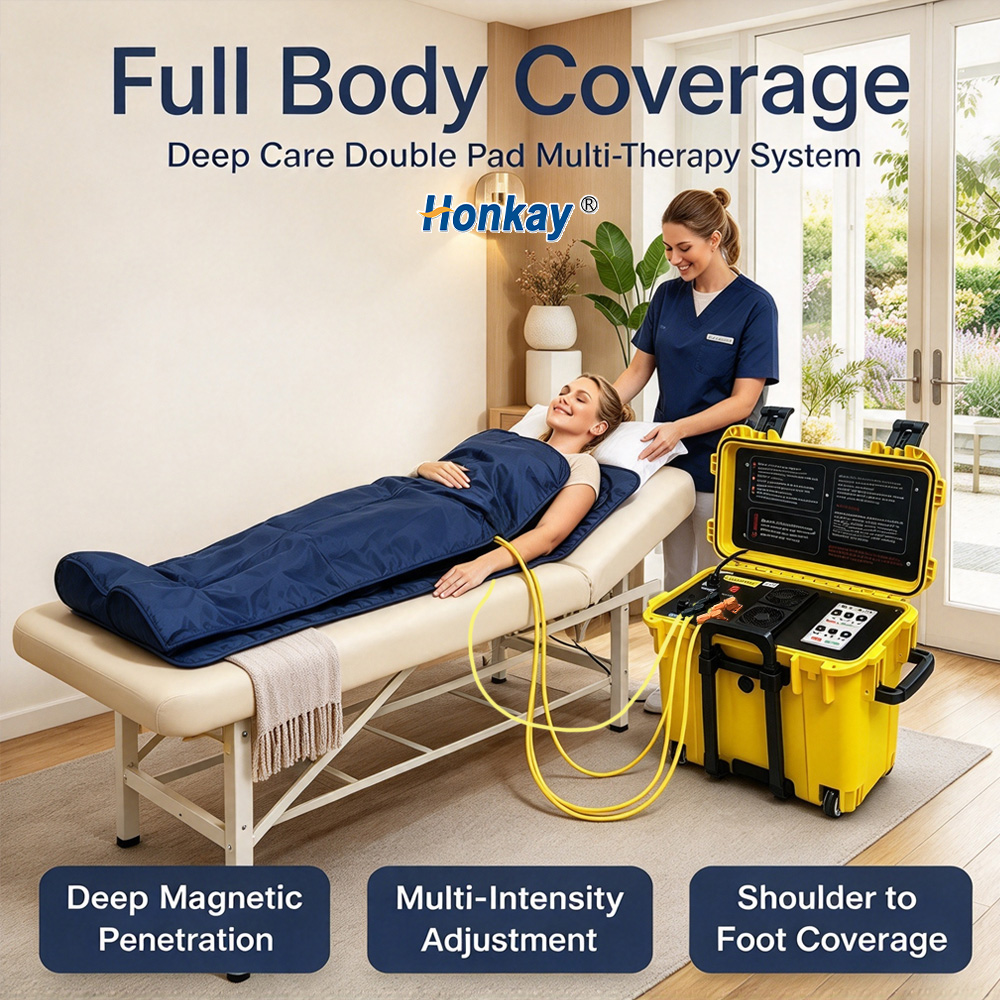
The pads are resistive electrodes in a flat housing, held against the body with straps. Their value is not that they deliver something the handpieces cannot — it is that they stay in place, so a multi-point session or a long hold does not occupy an operator’s hand.
That matters for throughput. A clinic running back-to-back appointments can leave pads on one region while working another area by hand, which is not possible with a single handpiece.
The trade-off is control. A hand-held electrode can be repositioned in a second; a strapped pad cannot. For areas with complex topography, the handpiece remains the better instrument.
What the counter on the screen is for
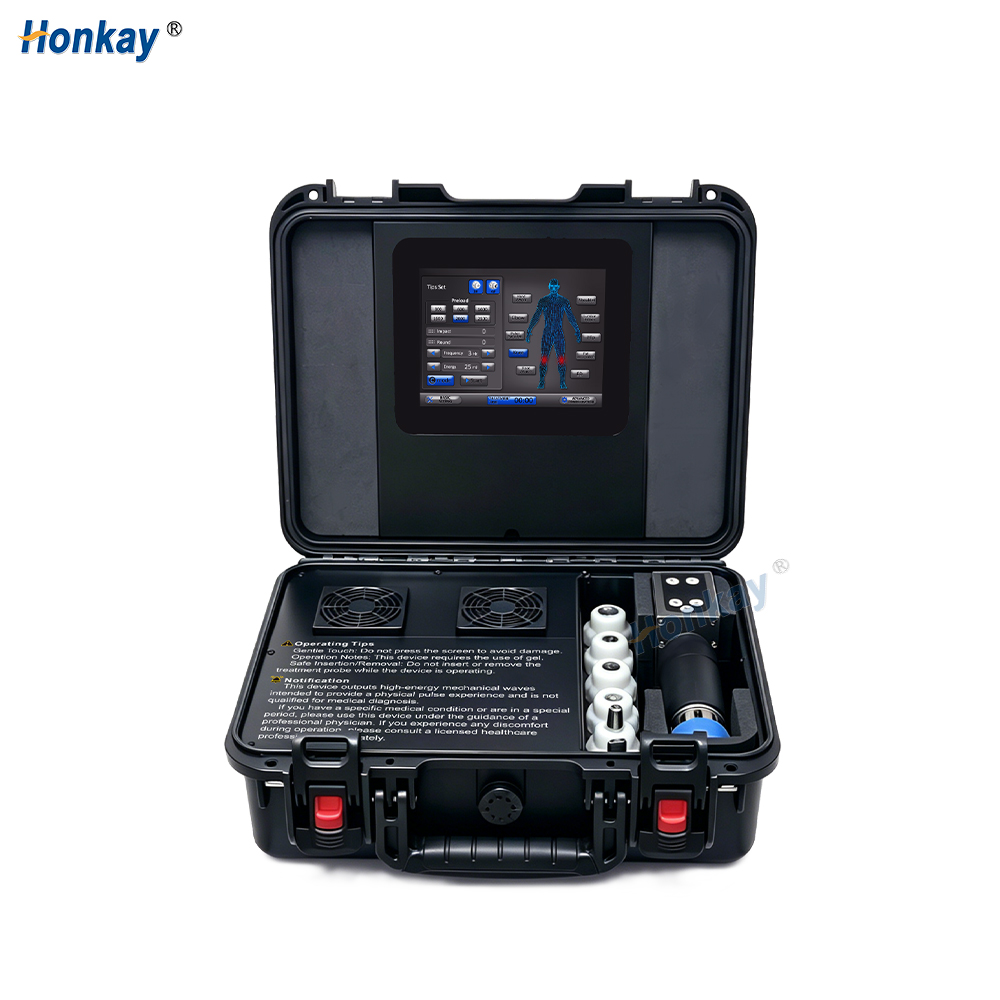
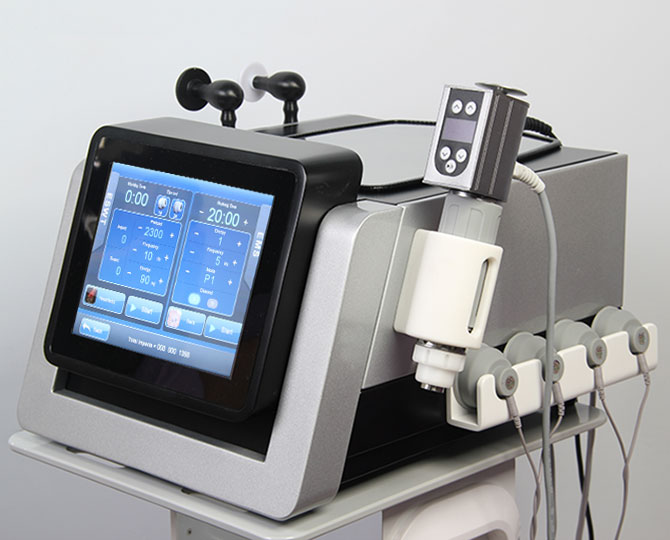
The console displays a running pulse count and a temperature readout alongside the frequency and energy settings. Both are worth writing into the session record, because they are the only objective trace of what was delivered.
A record with four fields — electrode used, energy setting, total pulses, elapsed time — lets a second operator reproduce a session and lets the clinic compare one course against another. Without it, every session is an experiment that starts from zero.
Footprint, packing and installation
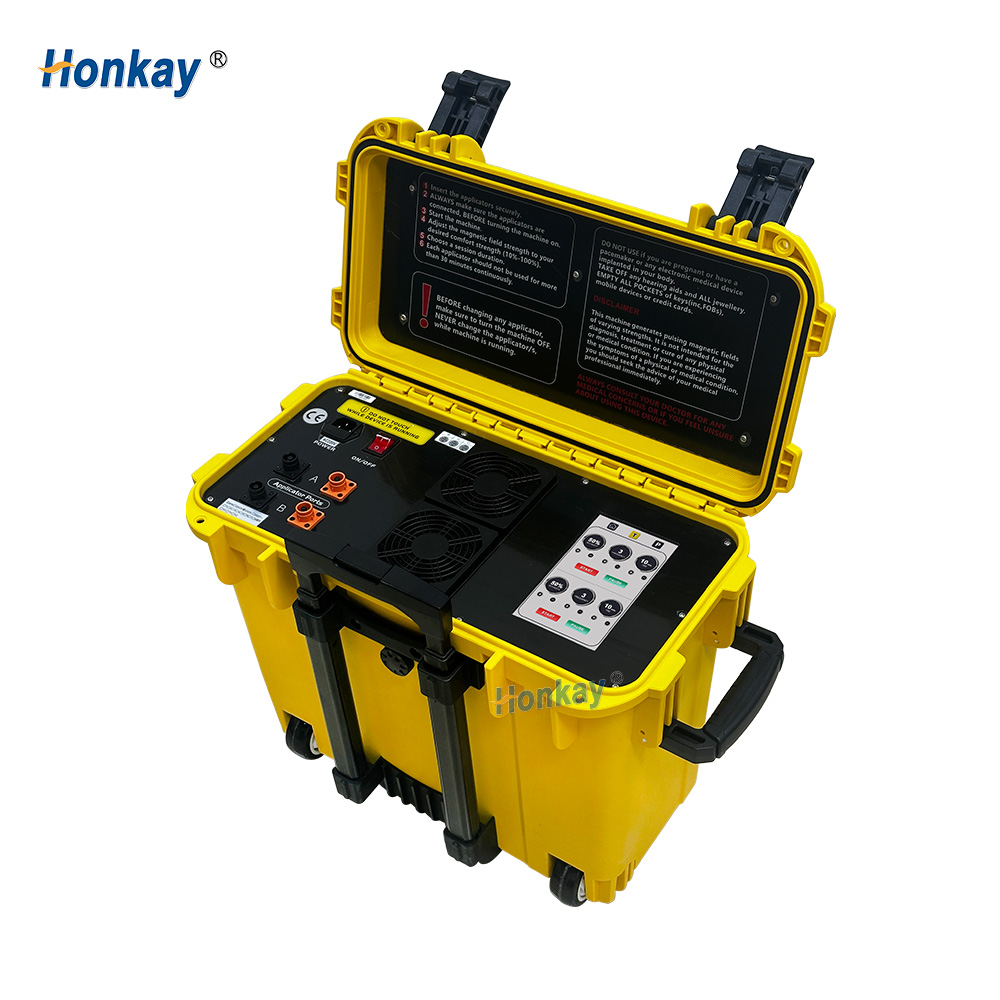
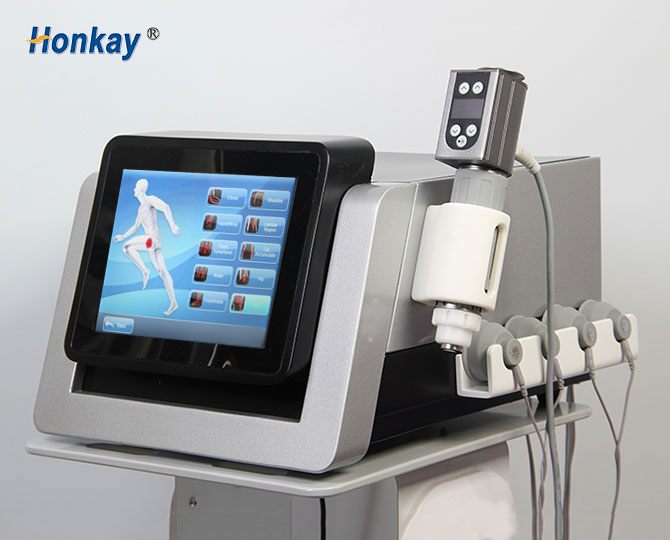
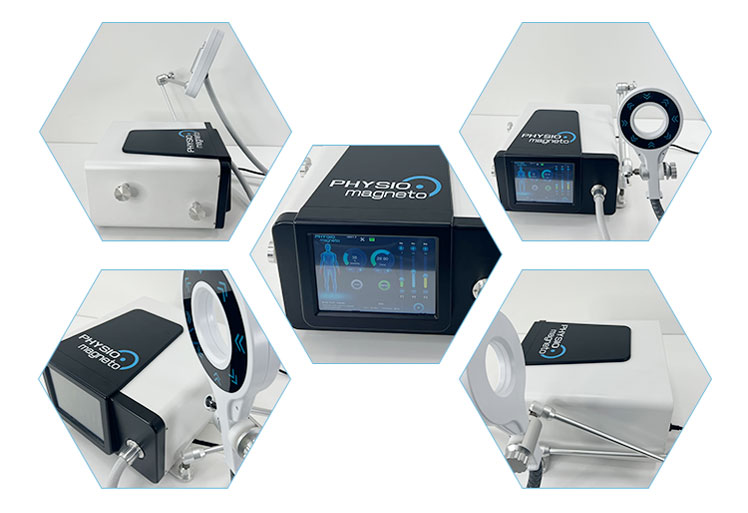
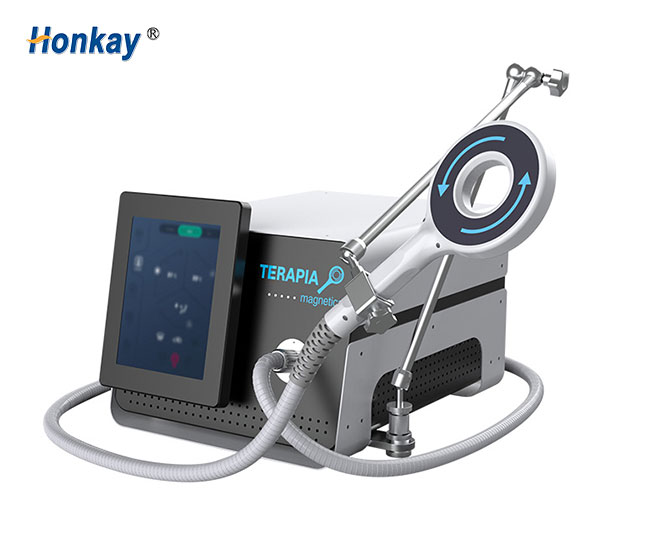
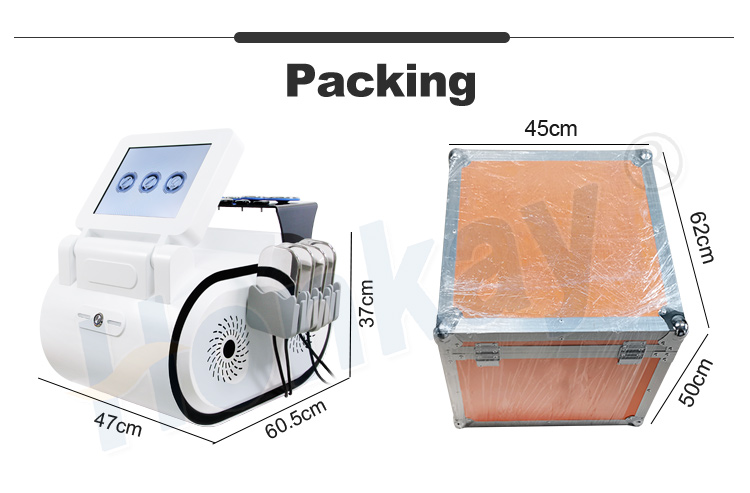
The unit measures 47 × 60.5 × 37 cm and ships in a carton of 45 × 50 × 62 cm. Two things follow for planning:
- Bench depth. The console plus the electrode holders and the pad bracket need a deeper surface than a standard treatment trolley top. Measure before delivery rather than after.
- Storage. The carton is the unit’s transport case; keep it if the machine will ever move between rooms or sites.
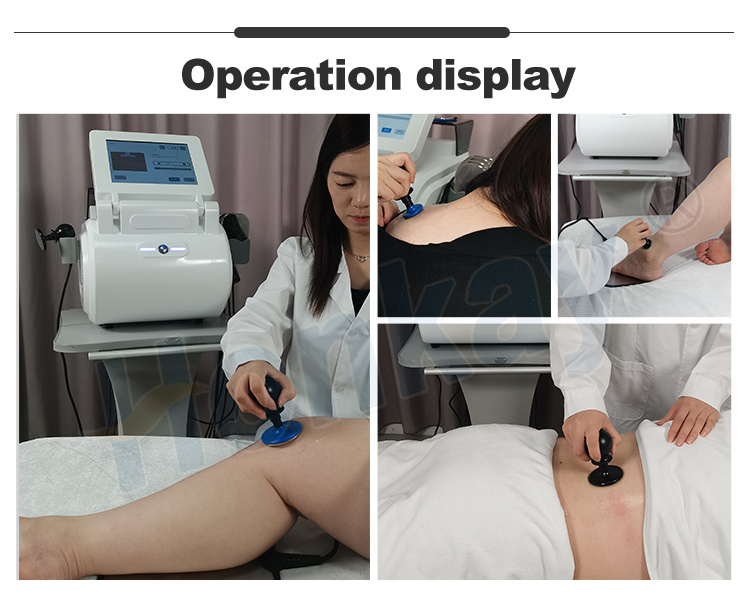
A session, start to finish
The sequence is short enough to standardise across operators.
- Select the electrode for the target tissue.
- Apply coupling medium appropriate to that electrode.
- Set energy and frequency; confirm on the display.
- Work the area, watching the temperature readout rather than relying on feel.
- Note the pulse count at the end and record it.
- Clean the electrode and return it to the holder.
Sessions on this platform are typically around 20 minutes per area, with a course of several sessions — which makes the record-keeping habit more valuable than it looks: a course of eight sessions produces eight data points that either confirm consistency or reveal drift.
What to confirm before ordering
| Question | Why it changes the answer |
|---|---|
| Which electrodes are included in the quoted price? | CET, RET and PAD sets are sometimes itemised separately; a low headline price can exclude two of the three |
| Are spare electrodes available, and at what price? | Electrodes are wearing parts; a machine with unavailable spares is a fixed-term purchase |
| What is the bench footprint with holders fitted? | 47 × 60.5 cm body plus bracket overhang; it decides whether the unit fits the room you have |
| Is the interface and housing branding configurable? | Interface artwork, housing logo and handle options are configuration items on OEM orders |
| Does the warranty run from shipment or delivery? | On sea freight the two dates can be six weeks apart |
Frequently asked questions
What does 448 kHz mean in practice?
It is the carrier frequency of the radiofrequency current the platform delivers. It is a constant across this class of equipment, so it is a poor basis for choosing between units.
What is the difference between CET and RET?
CET uses an insulated electrode so the current crosses a dielectric and spreads over a wider field. RET uses a bare electrode in direct contact, concentrating current in higher-impedance tissue such as tendon insertions and bone surfaces.
Do I need all three electrode types?
If the caseload includes both broad regions and localised tendon work, yes. A clinic using only capacitive electrodes is not using the platform’s full range.
How long is a session?
Around 20 minutes per area on this platform, typically repeated across a course rather than delivered as a single appointment.
Can the pads be used while treating another area by hand?
Yes, and that is their operational value. The pads hold position without occupying an operator, which is what makes multi-point sessions practical.
What is the bench footprint?
The unit body is 47 × 60.5 × 37 cm. Add the electrode holders and pad bracket when planning the surface.
Is the machine available with custom branding?
Interface artwork, housing logo and handle options are OEM configuration items. Ask for an artwork proof before the production run.
What warranty applies?
24 months from the factory shipment date on this range. Confirm whether your supplier dates it from shipment or delivery.
About Honkay
Honkay manufactures physiotherapy and aesthetic equipment in its own facility — TECAR and radiofrequency platforms, pulsed electromagnetic field systems, shockwave platforms and pressotherapy — and supplies clinics, distributors and OEM buyers directly. Documentation is prepared for the destination market rather than assuming a domestic one, and voltage configuration, electrode options and branding are handled as configuration questions by the same engineering team that builds the standard range. A 24-month warranty from factory shipment applies across the range.
Ask which electrodes are in the price
Send the Honkay team your caseload and the destination country, and the reply will list the electrodes included, the spare part prices, the bench footprint with holders fitted and the packing dimensions — before any price discussion.
- WhatsApp: +8613751821215
- E-mail: hk6@huang-kai.com
- Manager: Lisa
This device is intended for adjunctive use alongside professional care, not as a replacement for diagnosis or treatment. Suitability should be confirmed with a qualified clinician; individual experience varies.