Physio Magneto Therapy Machine: Which Applicators Are Actually Included
Two quotes for the same machine can differ by a third of the price and neither is dishonest. The difference is usually the applicator set: on this platform the joint ring and the laser head are standard, while the muscle disc and the point head are optional extras. A buyer who compares on “number of applicators” without checking which of the four are in the base price is comparing two different packages.
This guide sets out the applicator matrix, what each head covers, and the machine specification that decides whether it fits the room — so a quote can be read line by line rather than in total.
The configuration trap
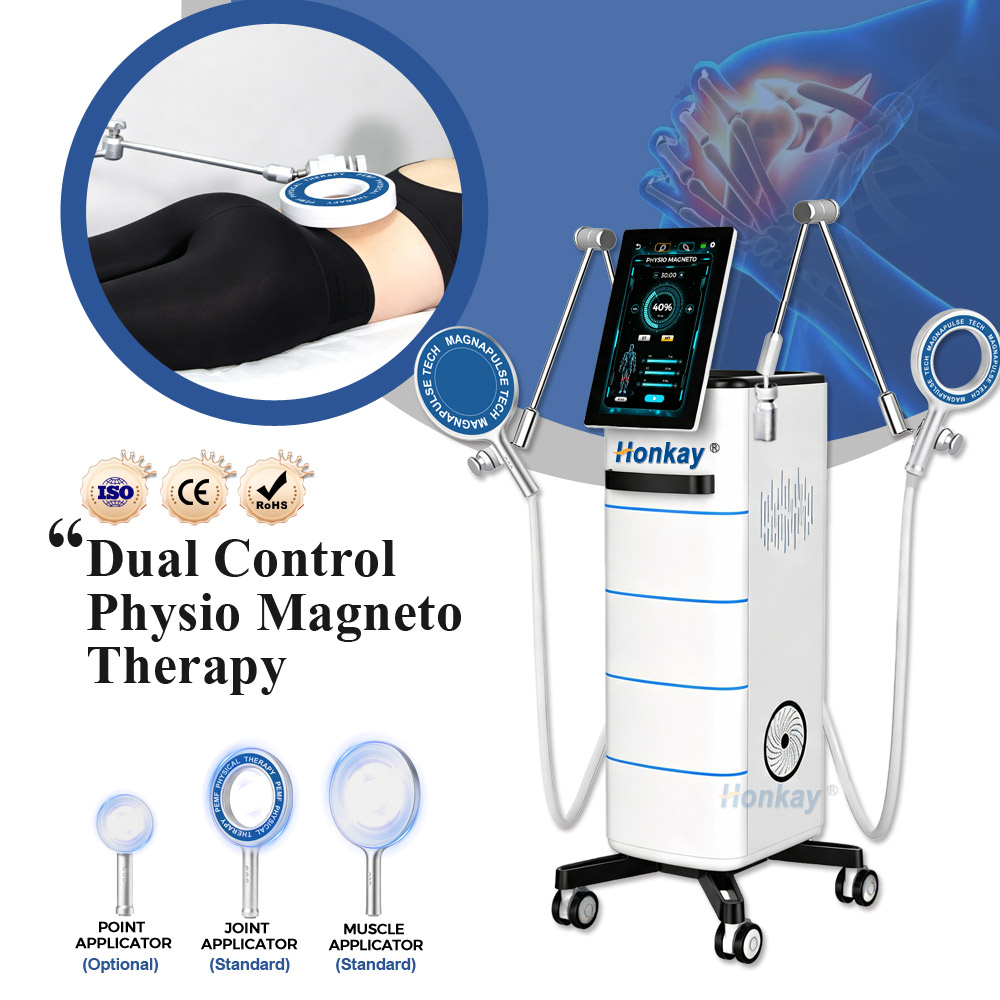
The machine is sold as a four-applicator platform, and the datasheet lists the split explicitly:
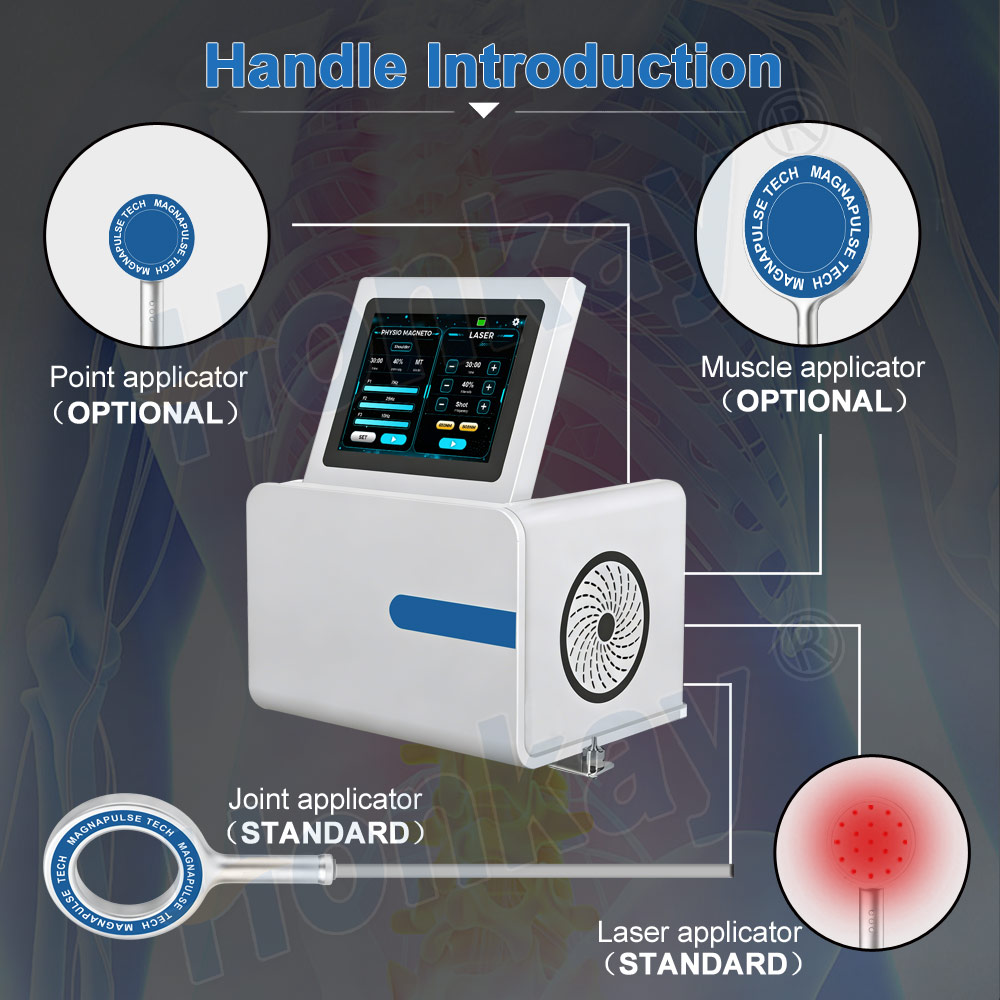
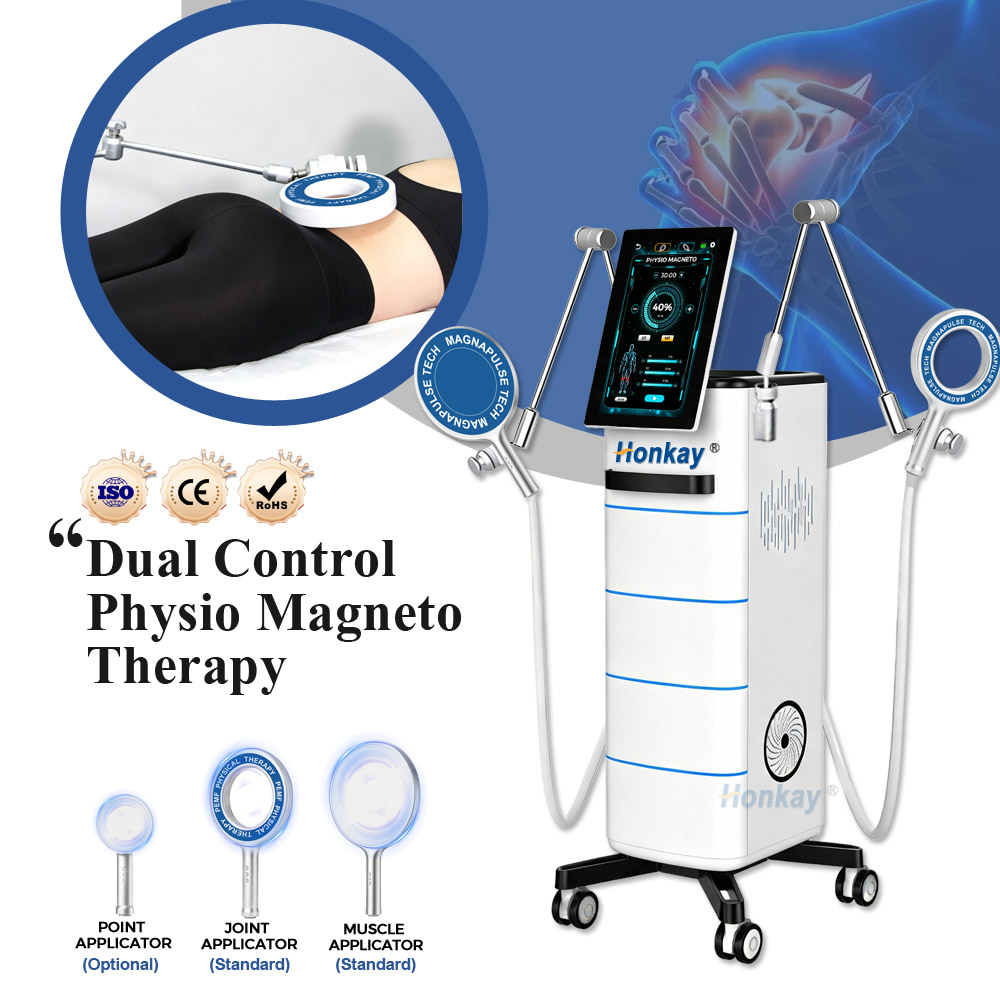
| Applicator | Head diameter | Status | Area it covers |
|---|---|---|---|
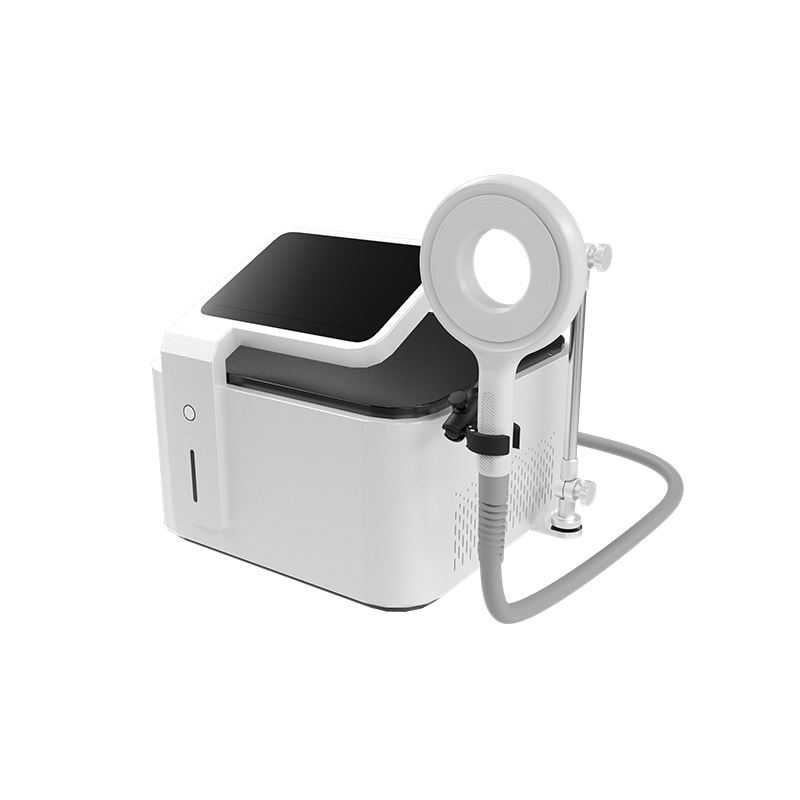
| Joint | 22.4 cm | Standard | Ring-shaped, hollow centre, sized around knees, ankles, elbows and shoulders |
| Laser (NIRS) | — | Standard | 650 nm / 808 nm, used alongside the magnetic head |
| Muscle | 27.4 cm | Optional | Wide flat area for back, abdomen and larger muscle groups |
| Point | 12.4 cm | Optional | Narrow area for arms, waist, thighs and calf |
Three consequences follow, and each one changes what you should ask before signing:
- A “four-head” quote may be a two-head quote. Ask for the packing list, not the product name.
- The optional heads are the ones a clinic actually uses. The muscle disc is the head for broad areas; the point head is the head for a small region. A base machine with only the joint ring is a joint-specific device.
- Spare and replacement heads are a separate negotiation. Confirm the per-head price at the time of purchase, because it will not be in the original quote.
Why the joint applicator is a ring, not a disc
The joint head is hollow in the centre, which is not a styling decision. A ring concentrates the field around a joint line while leaving the bony prominence in the middle outside the strongest part of the field, and it lets the head sit over a knee or an elbow without the patient having to hold a position.
That geometry is also why the joint head is standard on a machine sold for physiotherapy: knees, shoulders, elbows and ankles are the joints most often worked on, and a ring fits all four. The trade-off is that a ring covers less total area than a same-diameter disc, which is exactly why the muscle disc exists as a separate item.
The laser head and what it adds
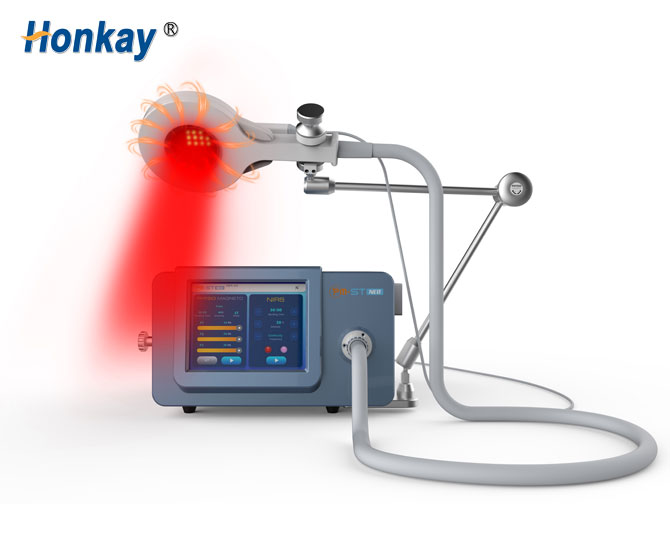
The second standard head is a near-infrared laser, offered at 650 nm and 808 nm. It is a different modality sharing the same console and the same treatment session, not a replacement for the magnetic head.
Two practical points for buyers:
- It changes the operator’s workflow. A session may include both a magnetic pass and a laser pass, so the time per patient in the price comparison is longer than a magnetic-only machine implies.
- Eye protection becomes part of the equipment list. A laser head means goggles and a treatment-room protocol. Ask whether they are included; they often are not.
The screen, the modes and the timer
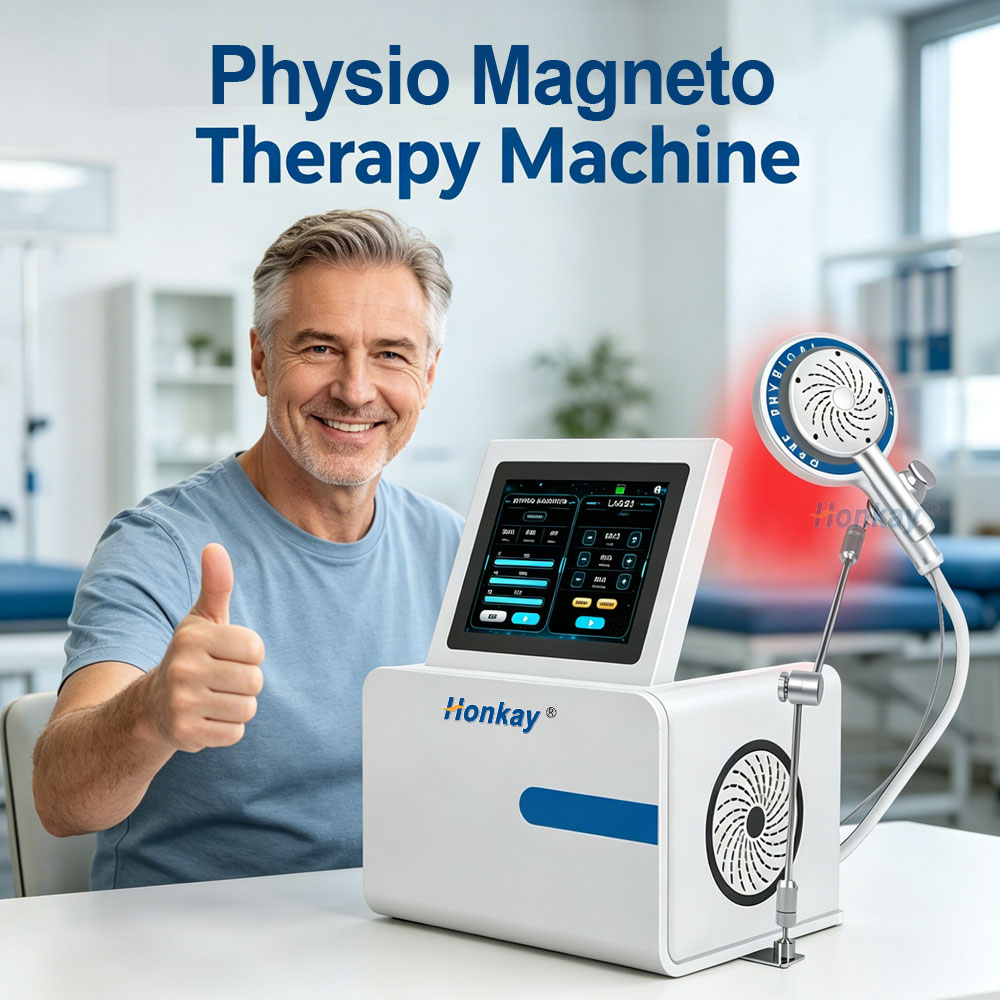
The console is a 10.4-inch capacitive touchscreen with a body-map selector, an energy percentage, a session timer and three frequency presets selectable per channel. Two operating modes — ST and MT — are selectable from the main screen.
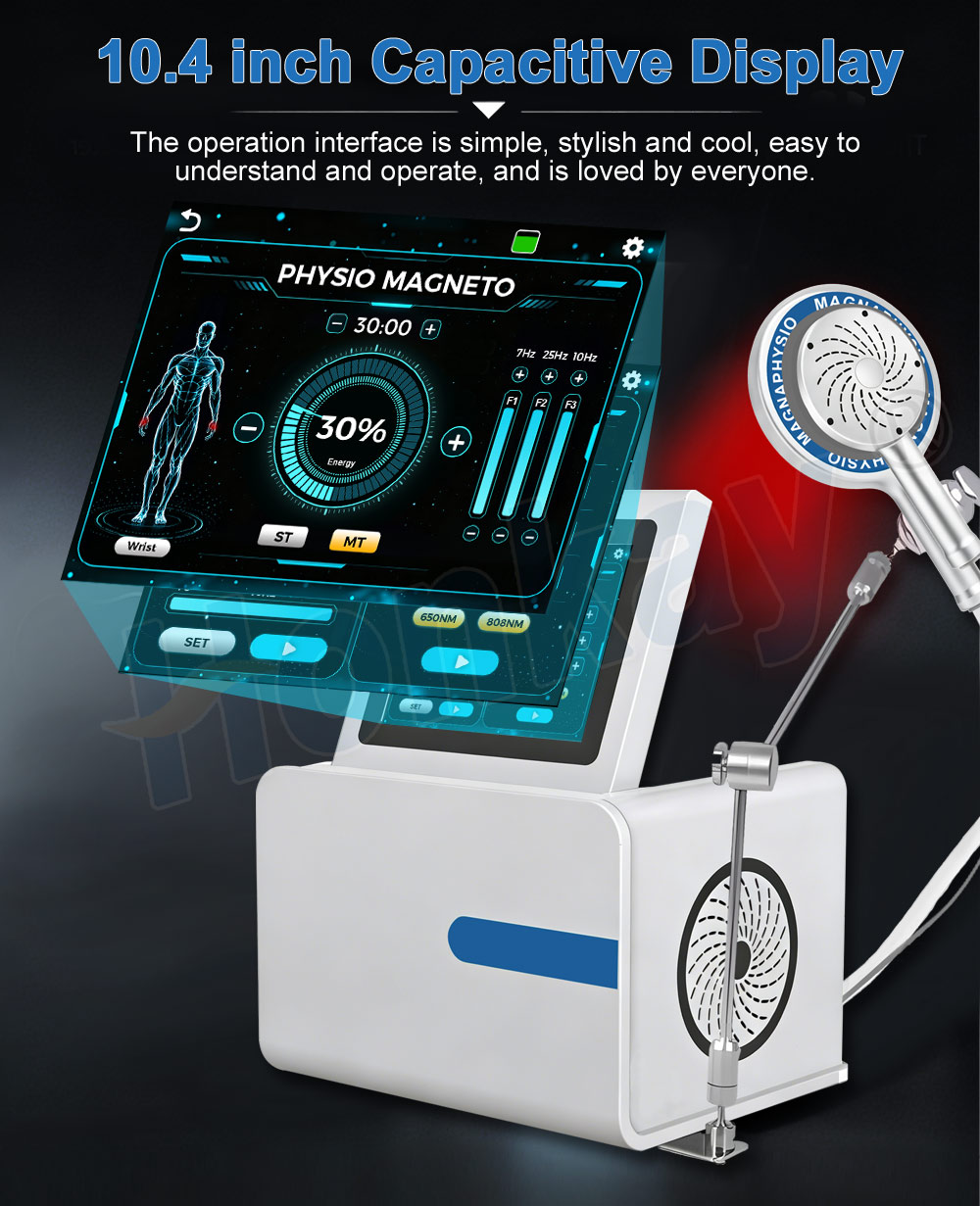
For a clinic, the useful detail is that the timer is set on-screen and counts down: an operator can start a session and attend to something else briefly without losing the interval. That matters when the applicator is on the holding arm rather than in a hand.
The holding arm is the throughput feature
The adjustable arm holds the applicator in position over the treatment area, so the operator’s hand is free. That single component is what separates a machine that occupies a therapist for the whole session from one that does not.
It also has a limit worth stating plainly: the arm holds one applicator over one area. It does not turn a single-channel device into a two-patient machine. If throughput is the goal, the honest calculation is session length plus setup, not session length divided by two.
Set-up time is the number buyers underestimate. Positioning the arm, selecting the head, choosing the mode and setting the timer typically takes a few minutes per patient, and it is repeated every appointment.
Machine specification
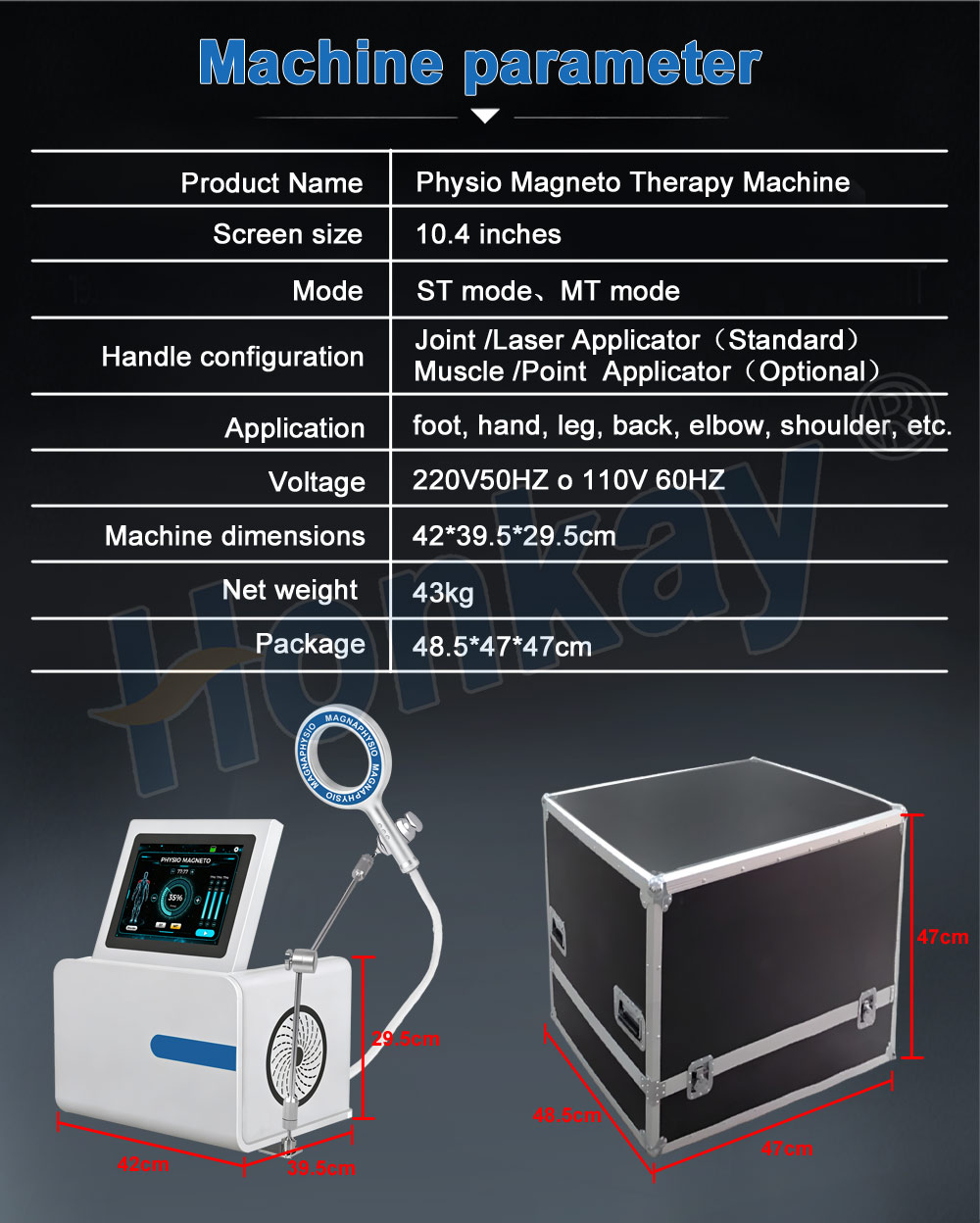
| Parameter | Value |
|---|---|
| Screen | 10.4 inch capacitive touchscreen |
| Modes | ST and MT |
| Applicators | Joint and Laser standard; Muscle and Point optional |
| Voltage | 220 V / 50 Hz or 110 V / 60 Hz |
| Machine dimensions | 42 × 39.5 × 29.5 cm |
| Net weight | 43 kg |
| Package | 48.5 × 47 × 47 cm |
Two of these numbers decide logistics. At 43 kg net, the unit is a two-person lift and belongs on a trolley or a fixed bench rather than being carried between rooms. At 48.5 × 47 × 47 cm packed, it ships as a single carton, which keeps freight quoting simple compared with multi-carton equipment.
The dual voltage listing matters more than it looks: 110 V / 60 Hz covers North America and parts of Latin America, 220 V / 50 Hz covers most of Europe, the Middle East and Asia. Confirm which build is being quoted, because the voltage is fixed at manufacture.
What to confirm before ordering
- The packing list, itemised by applicator. Two heads or four, and which two.
- Replacement head prices. They are consumable-adjacent parts and will need replacing.
- Goggles and coupling consumables. Included or not.
- Voltage build. 110 V / 60 Hz or 220 V / 50 Hz, stated on the proforma.
- Warranty start date. Factory shipment or arrival — on sea freight these differ by weeks.
- Bench or trolley requirement. 43 kg plus the arm’s reach.
Frequently asked questions
How many applicators come with the machine?
Two are standard — the joint ring and the laser head. The muscle disc and the point head are optional. Ask for the packing list to confirm what a specific quote includes.
What is the difference between the joint and muscle applicators?
The joint head is a 22.4 cm ring with a hollow centre, shaped to sit around a joint line. The muscle head is a 27.4 cm disc for broader areas such as the back or a large muscle group.
Do I need the point applicator?
If the caseload includes small regions — forearm, calf, a single tender area — yes. It is the 12.4 cm head and it is an optional item, so it should be ordered with the machine rather than added later.
What does the laser head do?
It adds a 650 nm / 808 nm near-infrared modality to the same console, used as a separate pass in a session. It requires eye protection and a room protocol.
How long is a session?
The timer is set per session on screen; treatments on this platform are typically in the 20–30 minute range depending on the area and whether both modalities are used.
Can two patients be treated at once?
No. The holding arm positions one applicator over one area. Treating two patients simultaneously requires two consoles.
What power supply does it need?
It is built for either 220 V / 50 Hz or 110 V / 60 Hz. The build is fixed at manufacture, so confirm it on the proforma before production.
What warranty applies?
24 months from the factory shipment date on this range. Confirm whether your supplier dates it from shipment or from delivery.
About Honkay
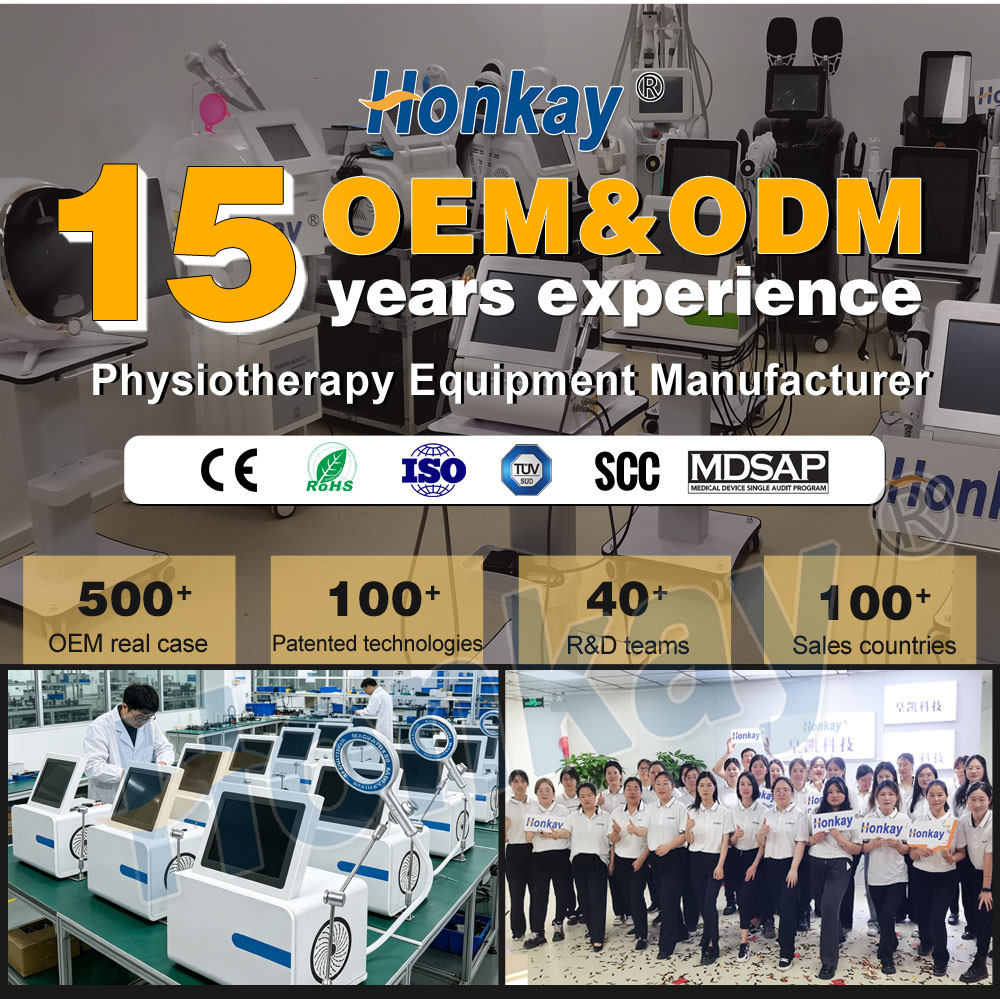
Honkay manufactures physiotherapy and aesthetic equipment in its own facility — pulsed electromagnetic field platforms, shockwave systems, TECAR and radiofrequency units and pressotherapy — and supplies clinics, distributors and OEM buyers. Applicator configuration, voltage build, housing branding and interface artwork are treated as configuration items by the engineering team that builds the standard range, and a 24-month warranty from factory shipment applies across it.
Ask for the packing list, not the product name
Send the Honkay team your caseload and the destination country. The reply will itemise which applicators are in the base price, the replacement head prices, the voltage build and the packed dimensions — before any price discussion.
- WhatsApp: +8613751821215
- E-mail: hk6@huang-kai.com
- Manager: Lisa
This device is intended for adjunctive use alongside professional care, not as a replacement for diagnosis or treatment. Suitability should be confirmed with a qualified clinician; individual experience varies.