
PEMF Mat Lead Time and Order Build: What Happens Between Deposit and Delivery
How a PEMF mat order moves from spec sheet to dispatch: the four production stages, what QC can and cannot catch, the four delays that sit on the buyer side, and what belongs in the purchase order.
A PEMF mat order rarely goes wrong at the specification stage. It goes wrong in the gap between the deposit and the dispatch date, where nothing visible happens and nobody is quite sure what stage the order is at. Buyers who understand that gap ask better questions, and they stop being surprised by dates.
This page walks through how a mat order is actually built, what can still be changed at each stage, and which delays come from the factory versus which come from the buyer’s own side of the table.
The order is a spec sheet long before it is a production slot
Before anything is wound or packed, the order exists as a set of decisions: mat size, coil count, controller, plug type, label language, packaging, and what documentation travels with the carton. Each of those decisions has a different cut-off point. A plug type can be swapped surprisingly late; a coil layout cannot be swapped at all once the mat body is assembled.
The practical consequence is simple: the date you are quoted is only as firm as the least-finished item on that list. If artwork is still open, the date is provisional even when the factory says otherwise.
Four stages, and what you can still change at each
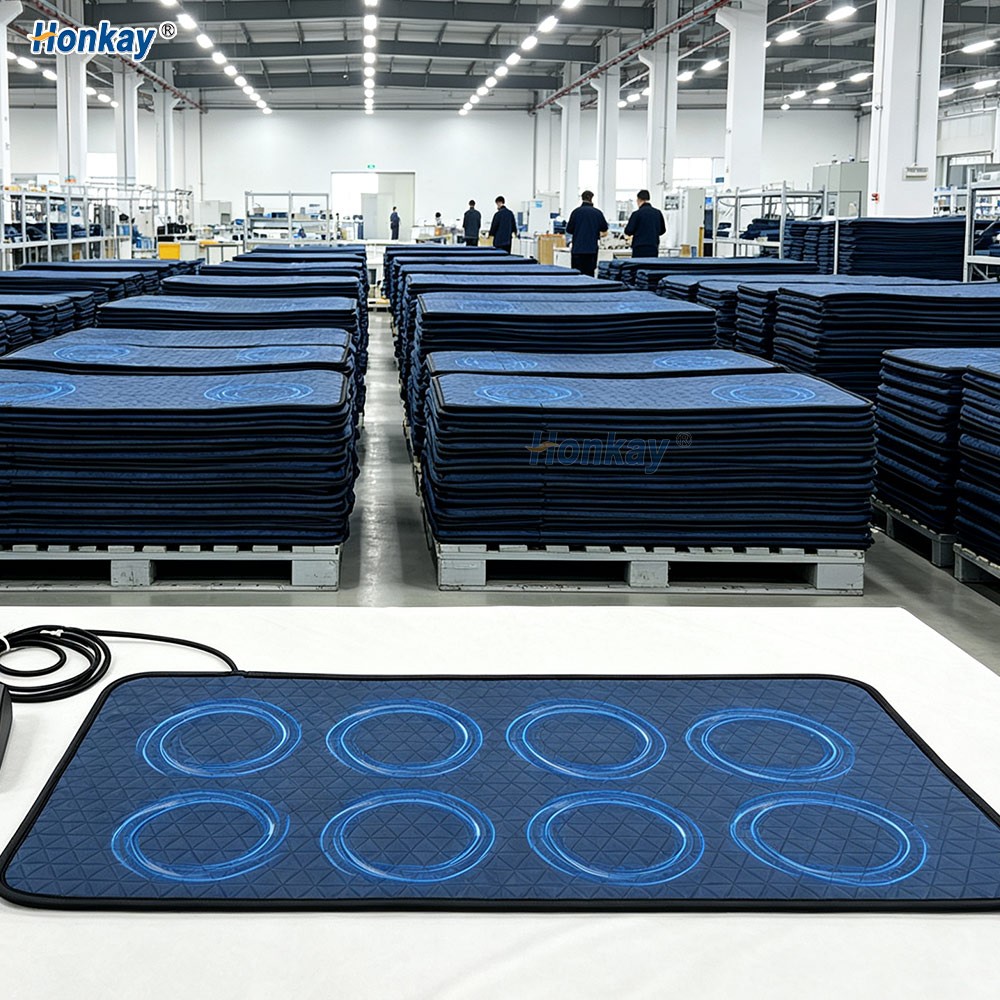
Most factories run the same four stages. The names differ; the sequence does not. What matters for a buyer is the third column, because that is where changes become expensive.
| Stage | What happens | Still changeable |
|---|---|---|
| Materials | Fabric, foam, coil wire and controllers are pulled against the order | Mat colour, label text, carton print |
| Assembly | Coils are laid out, bonded and joined to the controller | Plug type, cable length if asked early |
| Test | Each unit runs through a burn-in and an output check | Nothing on the unit itself |
| Packing | Units are bagged, boxed, weighed and staged for the forwarder | Shipping marks, pallet pattern |
The question to ask at quotation is not “how long is production” but “at which stage does my order sit right now”. A factory that cannot answer that is quoting a habit rather than a schedule.
Where the calendar time actually goes
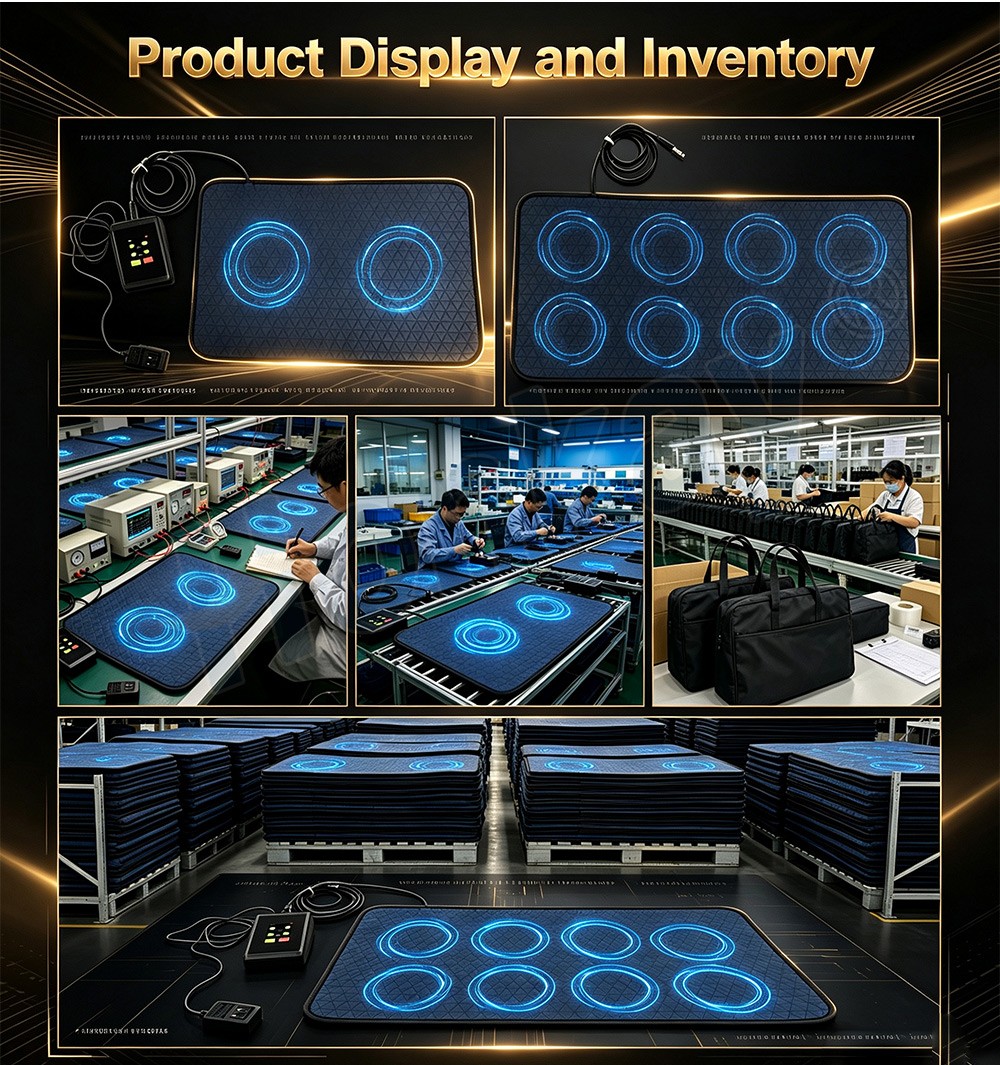
Buyers tend to imagine a single production line running their order from start to finish. In practice the elapsed time is spread across waiting points that are not visible from outside: materials arriving from a fabric supplier, controllers being matched to mats, units sitting in a burn-in rack, cartons being printed.
Two of those points are worth naming in the order confirmation. The burn-in stage is the one that occasionally stretches, because a unit that fails is reworked rather than shipped, and rework adds a second pass. The carton stage is the one that fails quietly, because printed boxes with the wrong market’s labelling have to be reprinted, and nothing on the unit is wrong at all.
A useful habit: ask for the dispatch date and the two intermediate dates before it. An order with three dates is being tracked. An order with one date is being promised.
What QC can catch, and what it cannot
End-of-line testing verifies that a unit powers on, that the controller accepts its settings, and that output is present. It does not verify how the mat will feel after six months on a clinic floor, and it does not verify that the buyer’s own staff will understand the programs. Those are separate problems with separate owners.
| Check | How it is done | What it does not tell you |
|---|---|---|
| Power-on and display | Unit is started and the panel is read | Whether the buttons survive daily use |
| Output present | Coil activity confirmed across the mat | How the mat behaves under a body’s weight |
| Timer and programs | Each preset is run once | Whether your staff will use them correctly |
| Accessories in the box | Counted against the packing list | Whether the list matches what you actually need |
Sample, pre-production, mass production: three different approvals
The word “sample” covers three things that buyers often treat as one. A sample pulled from stock confirms what the product is. A pre-production unit confirms what your configuration will be, including label and packaging. Mass production confirms that the line can repeat it.
Approving only the first is the most common source of disappointment, because stock samples are usually a standard configuration. If your order changes the label, the plug or the carton, the approval that matters is the second one, and it should be photographed from the angles you will complain about later: the seam, the label corner, the cable exit.
Packing and the handover to the forwarder
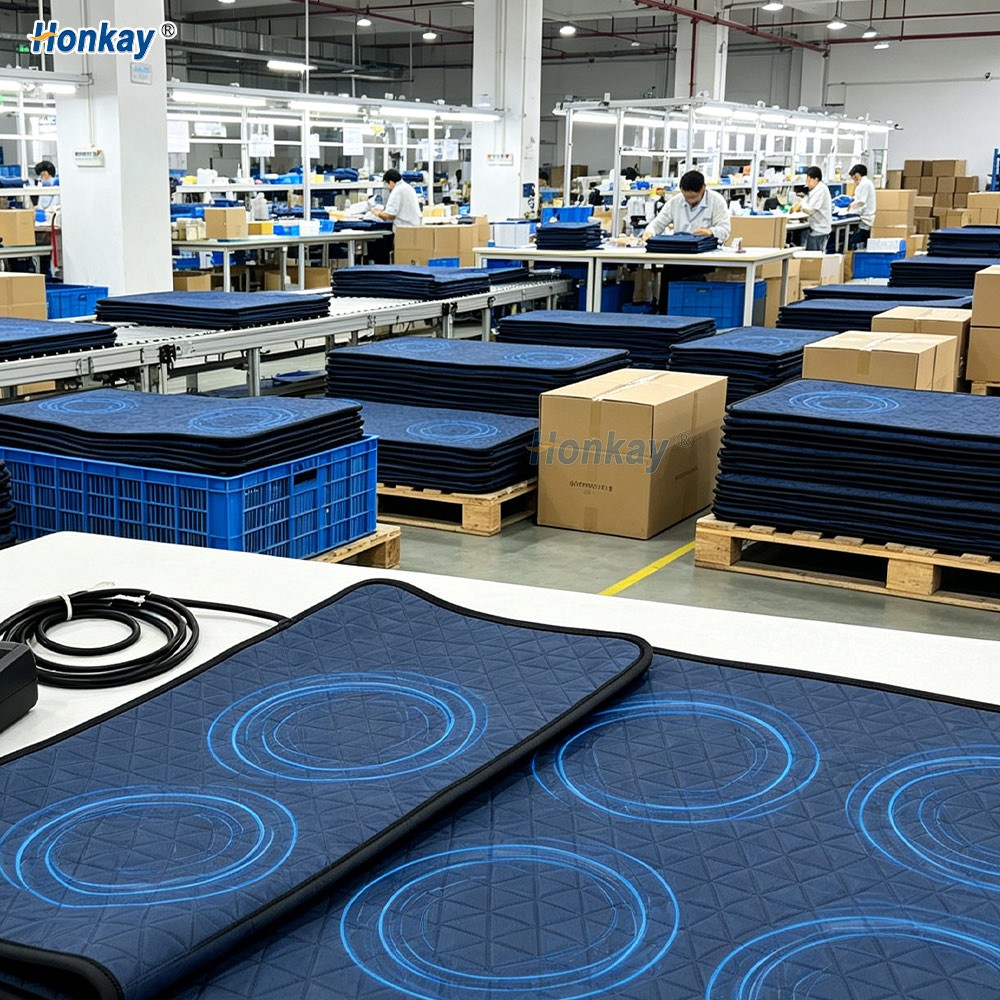
Packing is where an order stops being a product and becomes freight. From that moment the controlling numbers are carton dimensions, gross weight and the number of cartons per pallet, because those decide the volumetric charge and the container fill.
Ask for the carton data before the goods leave, not when the forwarder asks. If you are consolidating with other suppliers, an unplanned pallet height can cost more than the mat’s accessories. The same is true of the shipping marks: a carton without your reference on it becomes anonymous the moment it enters a shared container.
The four things that quietly delay an order
In practice, most slippage is not caused by the production line. It comes from four decisions that sit on the buyer’s side of the table.
Artwork approval. A logo file that arrives late, or arrives in a format that has to be redrawn, holds the printing stage without appearing in any schedule.
Plug and voltage confirmation. Markets with more than one standard need a written answer, not an assumption. It is a small part and an expensive surprise.
Payment mechanics. A transfer that lands after the production slot was released pushes the whole order back by the length of the next slot, not by the length of the delay.
Documents for import. Certificates, invoices and packing lists that do not match the cartons will stop the goods at the destination, long after the factory has done its part.
What belongs in the purchase order
A purchase order that prevents arguments is short but specific. It names the size and coil count, the controller, the plug, the label language, the carton print, the accessory list, and the documentation set. It also states the two facts that decide any later claim: the serial numbering rule and the warranty start date.
That last point matters more than it looks. A warranty measured from the factory shipment date is standard practice, but it is not the same as a warranty measured from the day the goods clear customs, and the difference can be several weeks on a sea shipment. Writing down which one applies costs one line and prevents a conversation six months later.
The first 48 hours after delivery
Open one carton fully before the pallet is broken down. Check the label against the order, check the plug, run one unit, and photograph the carton condition before the forwarder leaves. Damage claims are decided by what was documented at handover, not by what is discovered a week later.
Frequently asked questions
How long does production take?
It depends on the configuration and on where the order sits in the queue, so the useful answer is a schedule rather than a number. Ask for three dates, materials ready, assembly complete and dispatch, and compare them at the next update.
Can the size be changed after the order is placed?
Only before the mat body is assembled. Once coils are laid out and bonded, changing the layout means rebuilding the unit, which is a new order rather than a modification.
Will I see photos before the goods are packed?
Ask for them explicitly, and specify the angles: the label corner, the seam, the cable exit and the carton print. These are the four places where a mismatch is normally discovered after arrival.
What artwork format should I supply?
A vector file for the logo and a print-ready layout for the carton. A screenshot cannot be reprinted cleanly, and redrawing it is the most common cause of a late printing stage.
Can accessories be packed separately?
Yes, if it is written in the purchase order. It changes the carton count and therefore the freight calculation, so it belongs in the quotation rather than in a message after the order is placed.
When does the warranty start?
On this range, the 24-month warranty runs from the factory shipment date. If your accounting needs it measured from arrival instead, confirm that in writing before the order is placed, because the two dates can be several weeks apart on a sea shipment.
What documents travel with the goods?
An invoice, a packing list, a user manual and a warranty card as standard, with certificates and declarations as agreed in the order. Check that the model reference on every document matches the cartons before the goods leave.
About Honkay
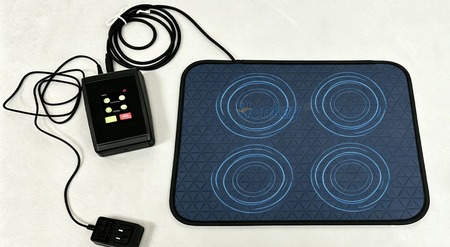
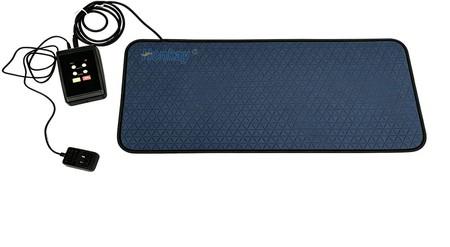
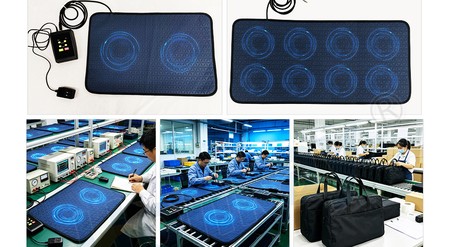
Honkay has manufactured physiotherapy and aesthetic equipment since 2005, with 20 years of OEM and ODM work behind the range. The mat comes in four sizes with two, four, four and eight coils, supplied with the pad, control unit, connection cable, power adapter, carry bag and manual, at 1 to 100 Hz across ten intensity levels. Orders are built against a written specification and covered by a 24-month warranty running from the factory shipment date.
If you are planning an order and want the schedule checked against your own delivery window, send the configuration and the date you need the goods in hand. The team can map it onto the four stages above and tell you where the risk sits.
This device is intended for adjunctive use alongside professional care, not as a replacement for diagnosis or treatment. Suitability should be confirmed with a qualified clinician; individual experience varies.
Chat with the Honkay team on WhatsApp | Email hk6@huang-kai.com