PEMF Unit Ownership: Consumables, Maintenance and Service Explained
The purchase price is the easy part of the decision. What catches clinics out is everything after it: which parts wear, what has to be restocked, who comes out when something stops working, and how long the machine stays serviceable. Those questions are usually answered after the order rather than before it.
This is a look at the ownership side of a pemf unit — the loop and mat accessories, the maintenance tasks, the packing and shipping reality, and the after-sales route you should have named in writing before paying a deposit.

What a pemf unit costs to own, not to buy
Running cost in this category is low, but it is not zero, and the items that recur are predictable.
Three cost lines cover almost all of it:
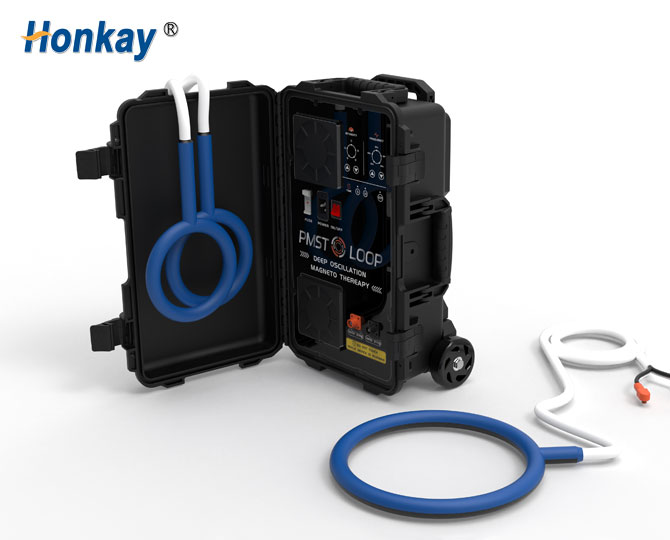
- Loop and cable assemblies. These are the parts that move every session, get bent around limbs and coiled for storage. They are the first thing to fail, and availability matters more than price.
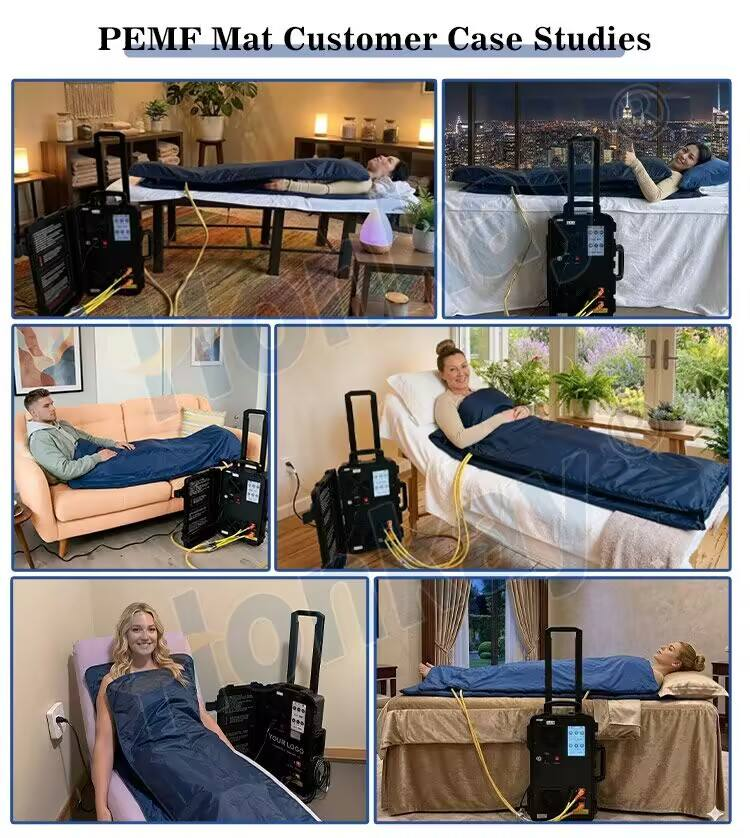
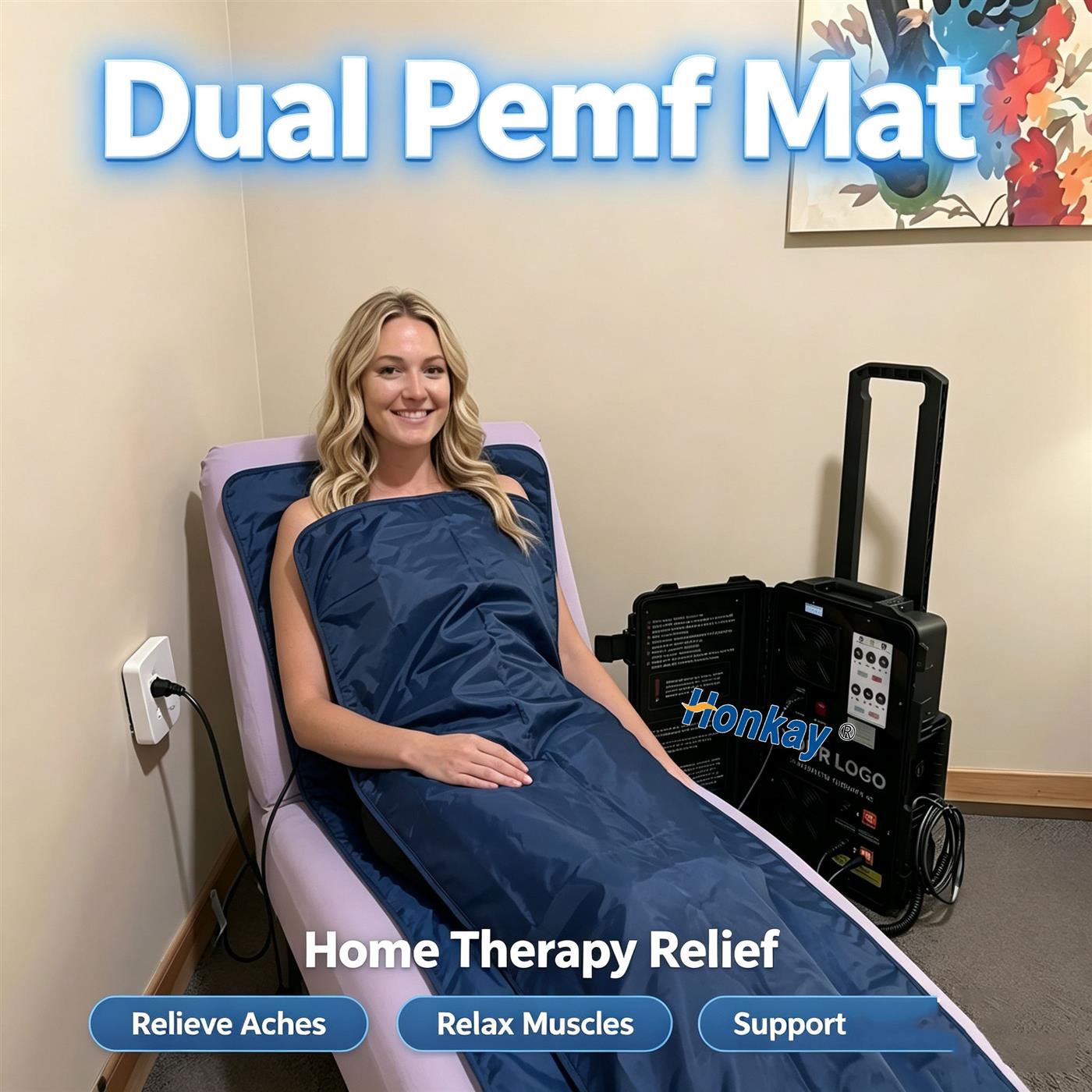
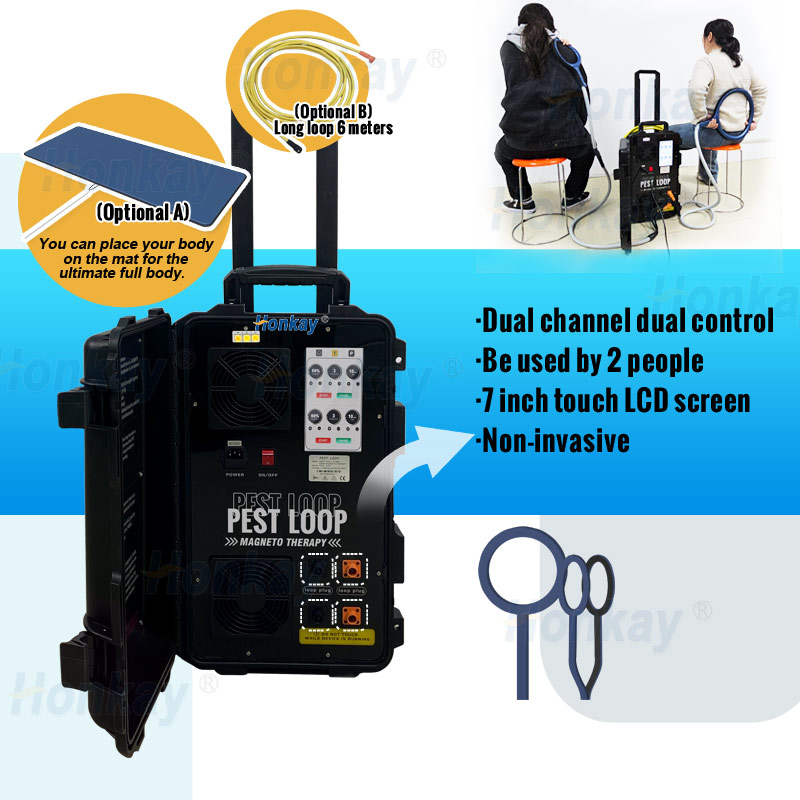
- Mat and pad accessories. A mat turns a loop machine into something you can use for a full-body or back session. If your list includes patients who cannot sit for a loop treatment, the mat is not optional.
- Service and spares. Bearings, fans, connectors and the controller are the items most often replaced over a machine’s life.
Notice what is not on that list: there is no per-session consumable in the way gel is used with shockwave. That difference matters when you compare running costs across modalities, because a machine with no per-patient consumable has a flatter cost curve the busier it gets.

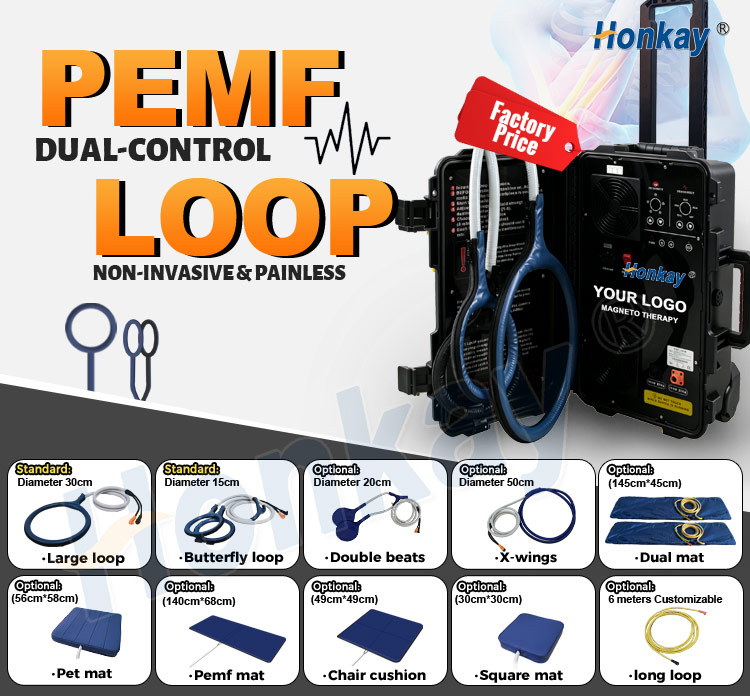
The accessory set decides how much of your list you can treat
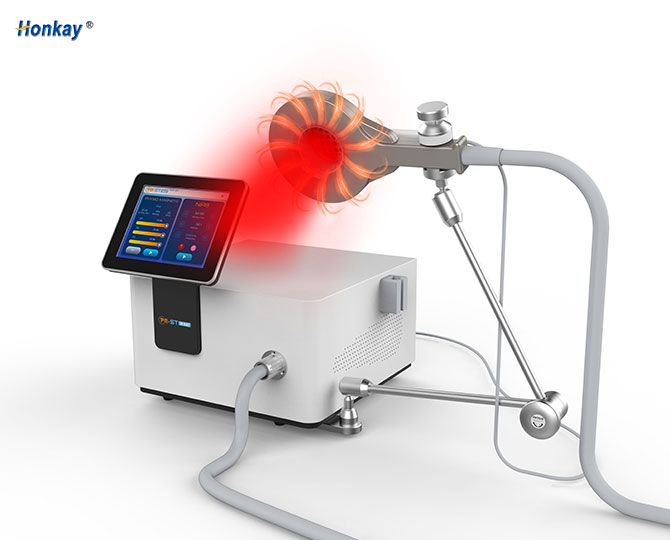
The console is one part of the system. What you can actually treat depends on the applicators that ship with it.
Look at how the accessories map onto a treatment list:
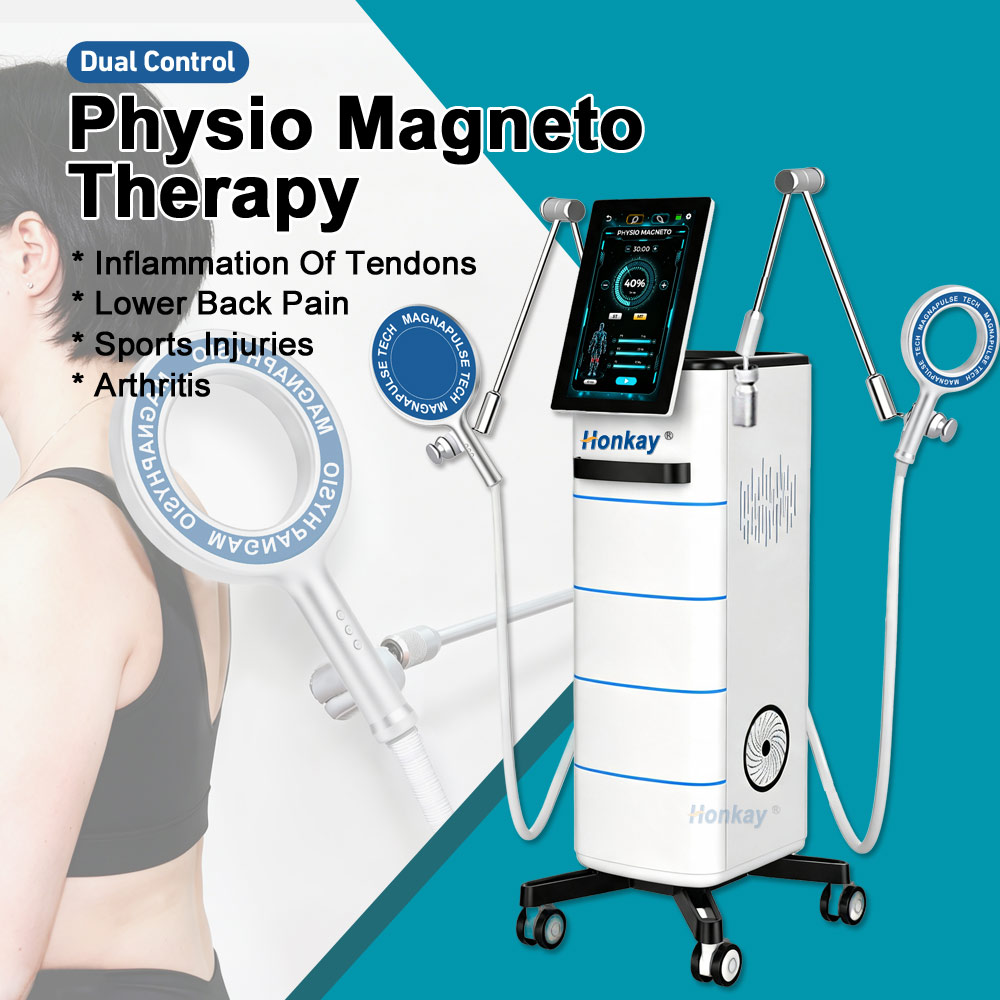
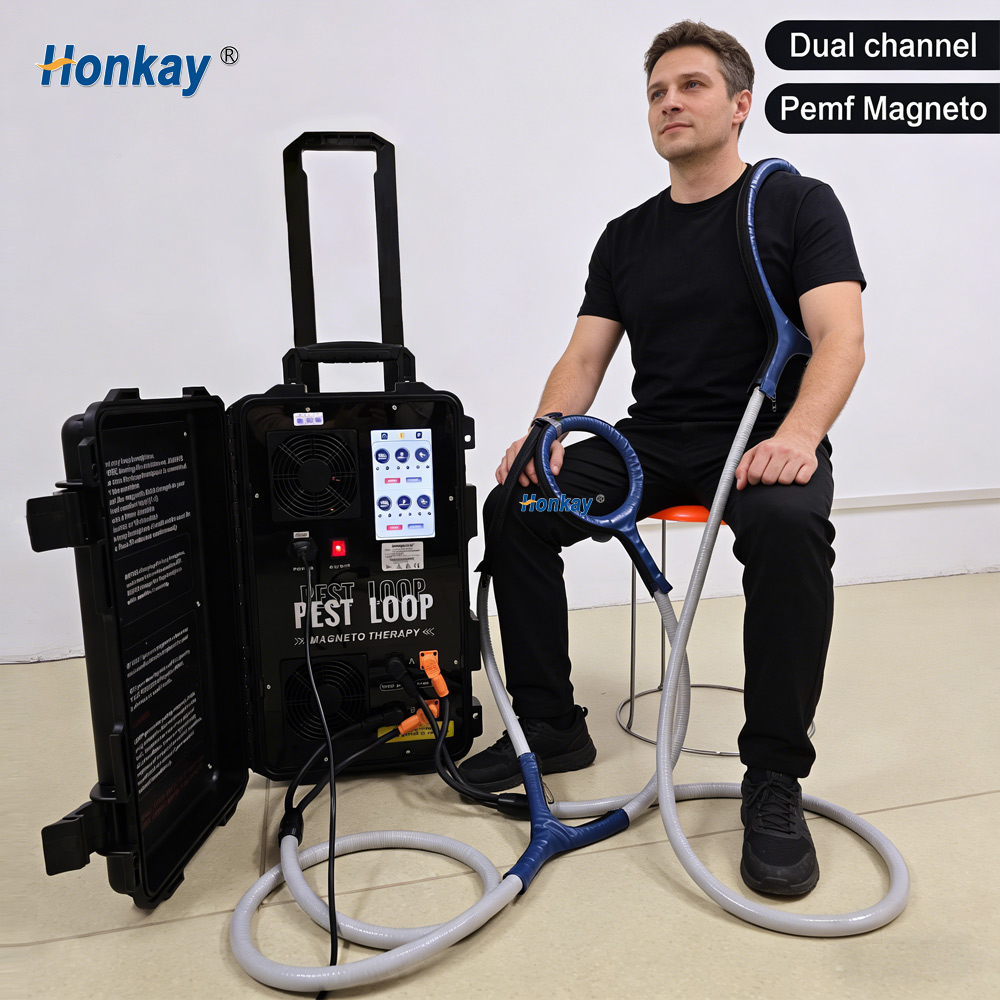
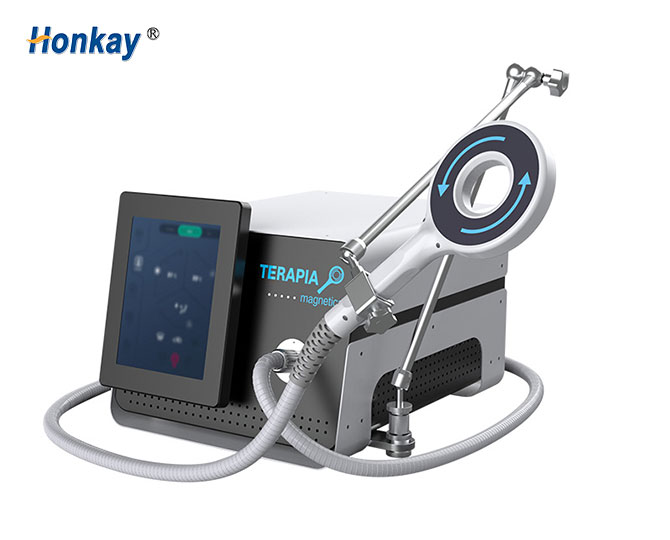
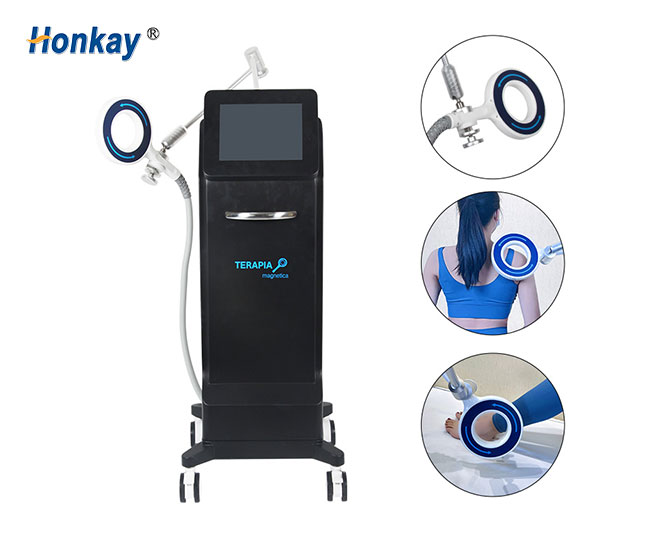
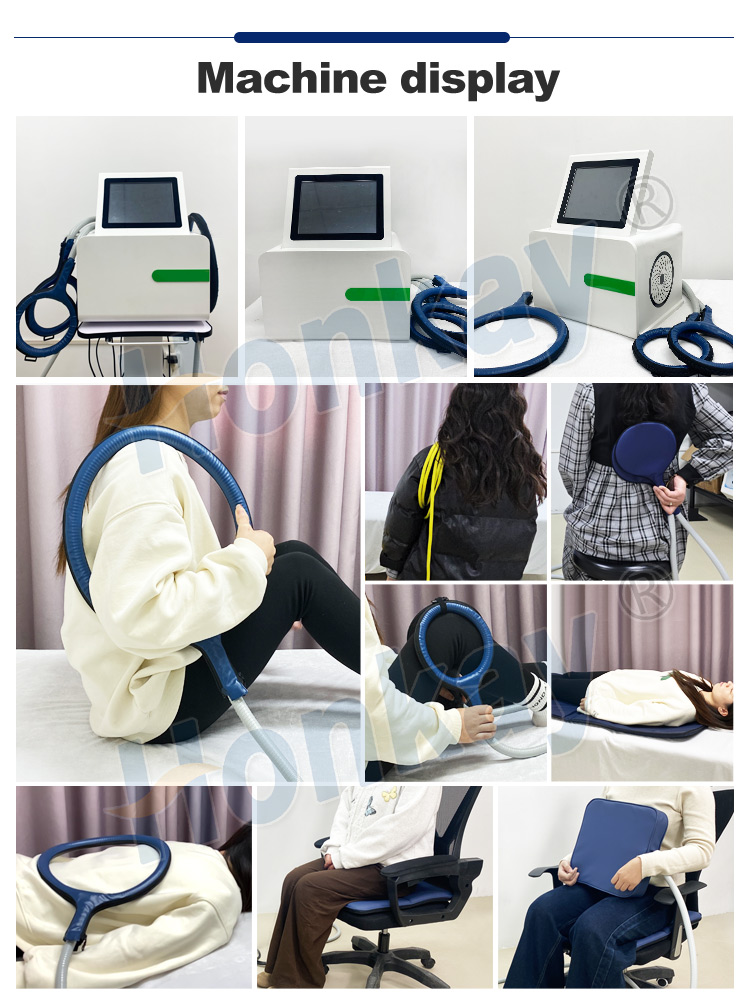
- Loop applicators wrap or sit against a limb, which suits knees, shoulders, elbows and ankles — defined areas where the field has to be localised.
- The mat covers the back and larger regions, and lets a session run without the patient holding a position for the whole treatment.
- Two loops mean two areas can be worked in one appointment rather than two.
The practical test is to write down your actual caseload and check it against the accessory list. If most of your patients need localised limb work, loops do the job. If a meaningful share needs back or full-body coverage, the mat has to be in the order from the start, not added later as an afterthought.
Packing, shipping and floor space
Ownership logistics are decided at the quotation stage and are hard to change afterwards, so it is worth reading the packing drawing rather than the brochure photograph.
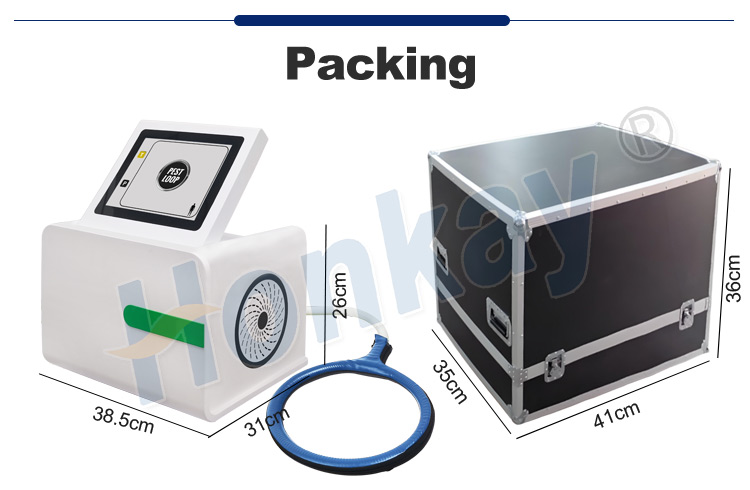
The drawing above gives the console as 38.5 cm wide and 26 cm high, the loop as 31 cm, and the transport case at 35 × 41 × 36 cm. Three consequences follow:
- Floor space is small. A console of that footprint sits on a treatment trolley or a side table. It does not need a dedicated room, which is the main reason this class of device suits smaller clinics and mobile practitioners.
- The case is the shipping unit, not the machine. Dimensional weight is calculated on the case, so the shipping quote should be built from the case dimensions rather than the console’s. Ask for it in writing.
- A cased unit is a transportable unit. If your service includes visiting patients or working at more than one site, a machine that packs into a 41 cm case is a genuine option rather than a compromise.
Ask the supplier for the packed weight and the case dimensions before you agree a shipping method, because door-to-door air freight, express courier and sea freight are priced on different metrics and the cheapest option changes with volume.
Maintenance, warranty and the after-sales route
Three things determine how a machine behaves in year three, and all three can be settled before the order.
What the operator does. Routine care in this category is light: keep the loops and cables free of sharp bends, store them coiled rather than folded, keep the console vents clear, and check connectors periodically. That is a staff task, not an engineer visit.
What the supplier covers. Warranty terms should be stated in writing as a period and a scope. For this series the standard position is a 24-month warranty from the factory shipment date. Ask explicitly for the scope: which components are covered, whether shipping of replacement parts is included, and whether on-site attendance is ever provided or whether the arrangement is parts and remote support.
Who answers when it breaks. The most common failure in this category is a loop or cable, and the difference between a two-day and a two-week interruption is stock, not policy. Ask where spares are held.
| Ownership question | The answer you want in writing |
|---|---|
| Which parts are expected to wear | Loop and cable assemblies named as wear items |
| Spare loops held in stock | Stated lead time for a replacement loop |
| Warranty period and scope | 24-month warranty from the factory shipment date, with component and freight scope |
| Remote support and training | Named contact, response expectation, and training included rather than sold separately |
| Service documentation | Manual with a parts list, not just an operation guide |
| Packed weight and case dimensions | Figures to build a freight quote on |
| Electrical configuration | Voltage and plug standard for your market, confirmed before shipping |
| Accessory availability two years out | Confirmation that loops and mats remain orderable |
Frequently asked questions
Does a pemf unit need consumables per session?
No per-patient consumable is required in the way coupling gel is used with some other modalities. The recurring cost sits in wear parts — loop and cable assemblies, and mat or pad accessories — rather than in something you buy per treatment. That makes the running cost flat as your patient volume rises.
How long do the loop applicators last?
That depends on handling more than on hours. Loops and cables that are coiled properly and kept free of sharp bends last far longer than ones that are folded into a drawer. Ask the supplier to name the loop as the wear item and to state a replacement lead time, so a failure does not stop the clinic.
Do I need the mat as well as the loops?
If any part of your list involves back work or patients who cannot hold a position for a full session, yes. Loops localise the field on a limb; a mat covers a broad region and lets a session run without the patient maintaining a position. Buying it later is possible but it changes what you can treat in the meantime.
How much space does the machine take?
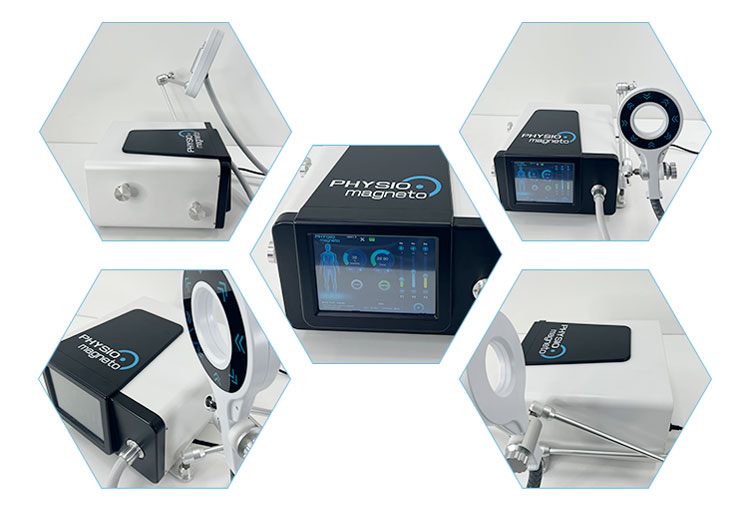
The console in this series is 38.5 cm wide and 26 cm high, and the loop is 31 cm. It sits on a table or trolley rather than needing a room. The transport case is 35 × 41 × 36 cm, which is the figure you should use for freight.
What warranty should I expect?
A 24-month warranty running from the factory shipment date is the standard position for this series. Ask for the scope alongside the period, because a period without a scope does not tell you whether freight, parts or on-site attendance are covered.
What maintenance does the machine need from staff?
Light, periodic care: store loops coiled rather than folded, keep cables away from sharp edges, keep the console vents unobstructed and check connectors. This is routine housekeeping rather than a service schedule, and it should be written into the machine’s manual.
Can the machine be used for home visits or at more than one site?
Yes, and that is one of the stronger arguments for this format. A console that packs into a 41 cm case with the loops is transportable by car. Confirm the packed weight and whether a carry case is included, since that determines whether one person can move it between sites.
What should I confirm before paying a deposit?
The accessory list and what each item lets you treat; the wear parts and their replacement lead time; the warranty period, scope and freight terms; packed weight and case dimensions for freight pricing; voltage and plug standard for your market; the training and remote-support route with a named contact; and confirmation that loops and mats remain orderable in two years’ time.
Request a quotation
Send us your treatment list and how you intend to work — single clinic, multiple sites, or home visits — and we will confirm which accessory set covers it and what the ownership position looks like. The quotation states the loop, mat and accessory list, the wear parts and their replacement route, the packed weight and case dimensions for freight, the voltage and plug standard for your market, the training and remote-support contact, and the warranty period and scope in writing.
Manager: Lisa
WhatsApp: +8613751821215
E-mail: hk6@huang-kai.com